




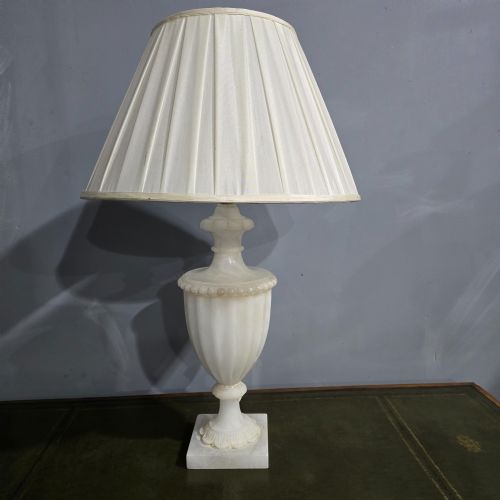


Carved Urn Lamps
Carved urn lamps are sculptural lighting pieces drawing on classical forms, offering a stately silhouette for interior spaces.
Carved Urn Lamps
Carved urn lamps take their primary form from classical vessel shapes, frequently rendered in stone, wood, or metal to serve as table lighting. These pieces draw upon Neoclassical, Classical Revival, and Victorian design traditions, translating ancient motifs into domestic illumination.
Materials and Craftsmanship
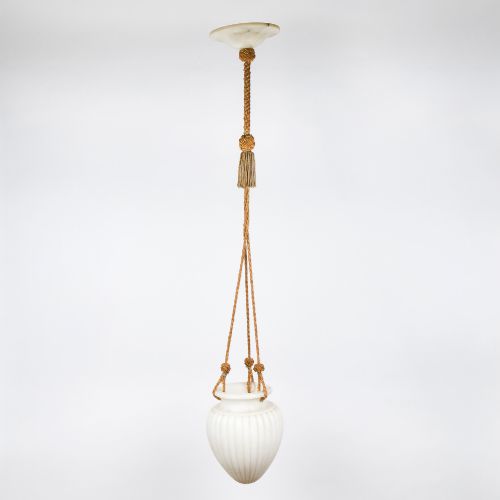
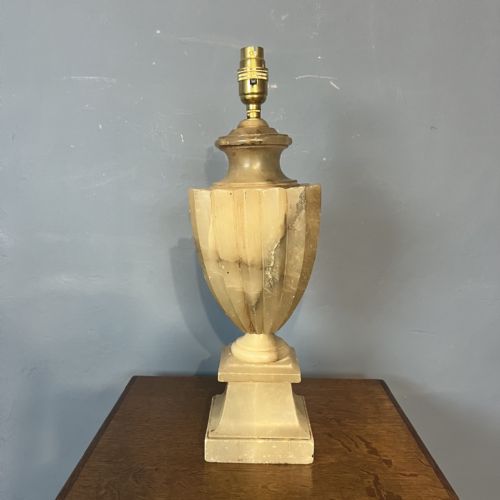
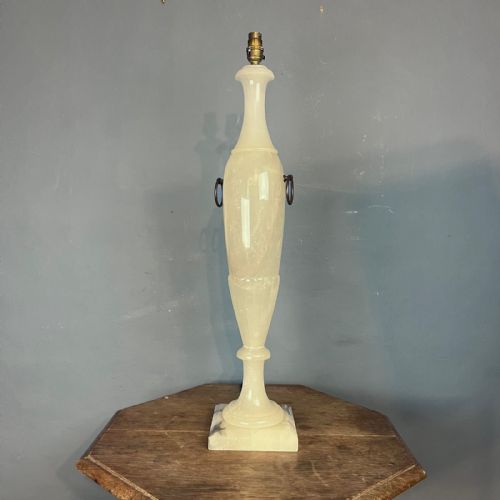
The construction of these pieces relies heavily on the turning and hand-carving of dense materials such as Italian alabaster, white marble, and various hardwoods including rosewood and mahogany. Artisans shaped these heavy media on lathes or worked them by hand to achieve smooth contours and fluted bodies.
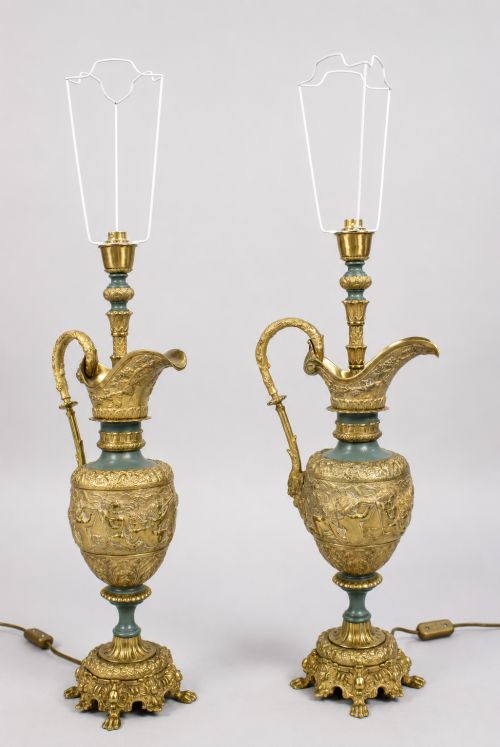
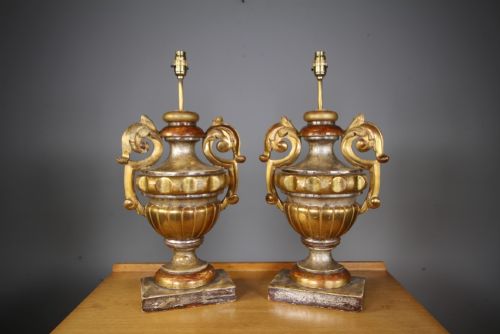
Metal components utilise brass, gilt bronze, or ormolu mounts, cast and chased to frame the stone or timber bases. Gilding is applied to carved pine or wood surfaces to enrich the decorative effect, matching the opulent aesthetic of nineteenth-century reception rooms.
One unexpected variant pairs translucent Italian glass fruit with a solid alabaster campana urn base.
Assessing Standard and Execution
The distinction between standard examples and finer pieces lies in the crispness of the carving and the purity of the chosen medium. High-quality alabaster and marble show subtle translucency and natural veining without distracting inclusions, while lesser items rely on uniform moulded plaster or heavy paint finishes.
Metal mounts reveal quality through the depth of the chasing and the warmth of the original gilding rather than flat surface plating. Proportion also dictates worth, as successful classical revival pieces maintain balanced proportions between the urn body, stem, and base.
The Carved Urn Lamps Glossary
- Alabaster
- A fine-grained, translucent stone prized for its smooth texture and ability to diffuse light softly. It forms the primary body for many twentieth-century classical revival lamps.
- Ormolu
- Gilded bronze or brass applied as decorative mounts and feet upon nineteenth-century lamp bases. The technique involves treating metal with a mercury-gold amalgam to achieve a rich metallic lustre.
- Campana
- A bell-shaped vessel form commonly utilised as the foundational silhouette for classical urn lamps. This ancient Roman shape provides a wide opening tapering gracefully to a narrow stem.
- Ewer
- A large jug with a wide spout and handle, adapted in nineteenth-century metalwork to serve as the sculptural body for table lighting. These pieces often feature classical handle scrolls and cast botanical relief.
- Giltwood
- Wood, typically pine or oak, that has been coated with a thin layer of gold leaf or gold paint. It appears on decorative bases designed to catch and reflect interior candlelight or early electric illumination.
Carved Urn Lamps: Frequently Asked Questions
What periods do these lamps date from?
The pieces span the nineteenth century through the early twentieth century, encompassing Victorian output and later Edwardian interpretations.
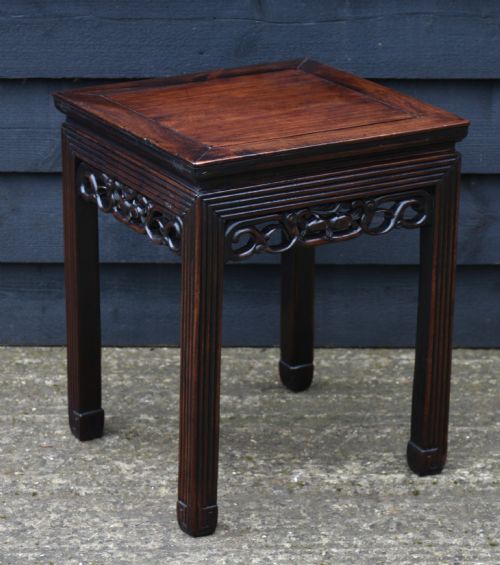
Stylistic revivals during these decades drew heavily on classical antiquity and Chinese export designs, creating a rich mix of regional European and Asian craftsmanship.
Are these lamps sold as pairs?
Many listings comprise matched pairs, reflecting their original purpose as garnitures or balanced mantel and sideboard lighting.
Single lamps also appear frequently, often surviving from larger sets or designed as distinct focal points for smaller tables.
How do I identify alabaster from marble?
Alabaster possesses a notable translucency that allows light to pass through the stone body when illuminated from within or nearby.
Marble tends to be denser and more opaque, featuring distinct veining patterns and a heavier physical weight relative to its size.
How do I integrate a stone urn lamp into a modern room?
The neutral tones of white marble, alabaster, and giltwood blend naturally with both contemporary minimalism and traditional interiors.
Placing them on side tables, pedestals, or low cabinets allows the sculptural silhouette to function as both a light source and a decorative object.