
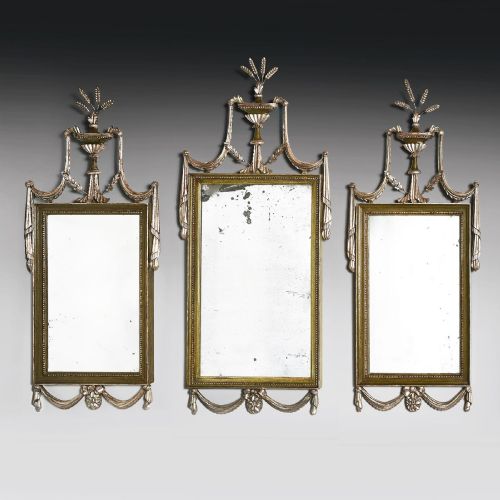

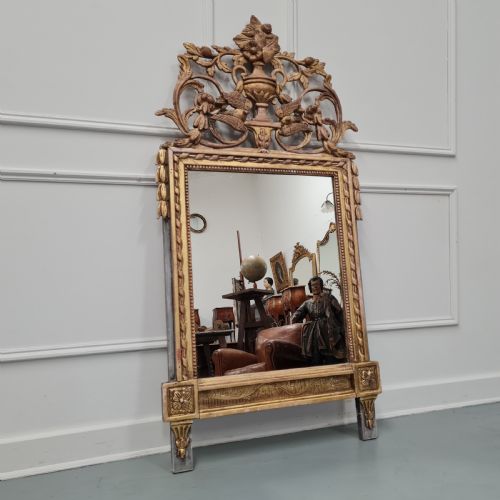


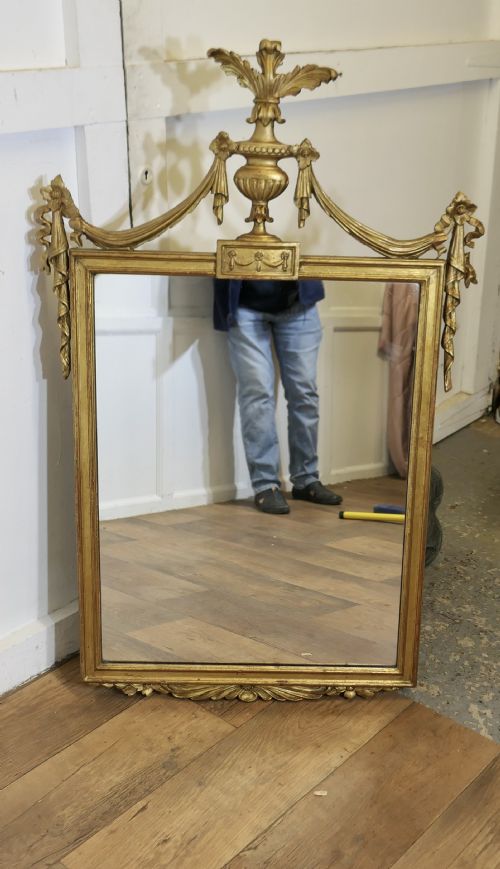
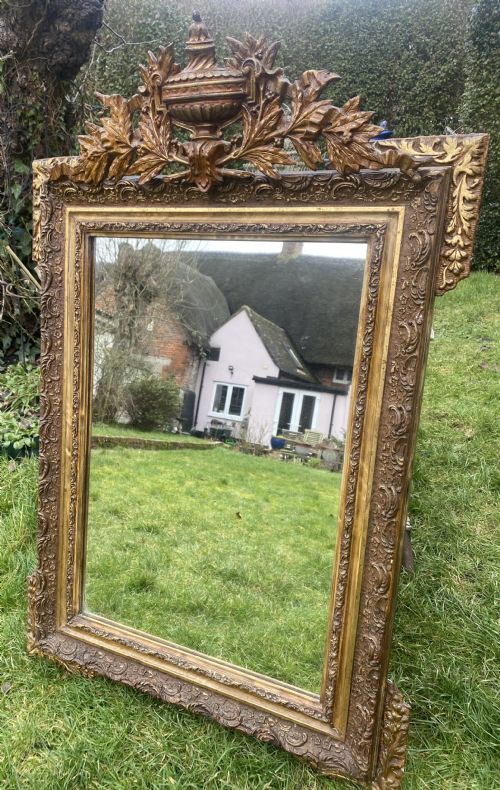


Carved Urn Crest Mirror
A carved urn crest mirror brings neoclassical elegance to a room, framing light through classical motifs and carved wooden detail.
Carved Urn Crest Mirror
These wall mirrors draw upon 18th century forms, with the carved urn crest mirror featuring prominent classical vessels at the apex. Pieces on this page span the 18th century, Regency, Victorian, and Edwardian periods.
Makers embraced French and English neoclassical styles, including Adam Revival and Louis XVI designs. Forms range from vertical wall mirrors to large overmantel mirrors and oval formats.
Origins stretch between English workshops and French ateliers, producing wall mirrors and marriage mirrors executed in wood, oak, and ebonised frames.
Materials and construction
Craftsmen shaped frames from wood and oak, applying gesso to build up crisp decorative detail before finishing the surfaces. Giltwood, silver leaf, and gold leaf provide the luminous metallic sheens seen across these listings.
Some pieces employ two colour gilt treatments or ebonised contrasts to highlight the carved motifs and mirror glass plates. Traditional silvered and mirror glass elements complete the optical depth of each frame.
Listings span from the 18th century through the Victorian and Edwardian eras, uniting English Adam designs with French neoclassical styles.
Assessing quality in carved urn crest mirrors
The sophistication of the carved detail defines the upper tier of these pieces, where floral swags and urns display sharp undercut definition. Lesser examples rely on heavier, simpler moulding with less refined hand carving.
The integrity of the original giltwood or gold leaf surface dictates visual success, as honest patination outweighs heavy modern regilding. Balanced proportions between the crest and the primary glass plate reveal the maker's eye.
Gillows Of Lancaster
The Carved Urn Crest Mirror Glossary
- Giltwood
- Wood that has been coated with gold leaf or metal leaf. This surface treatment creates a warm metallic reflection suited to neoclassical interiors.
- Gesso
- A plaster mixture applied to wood frames as a base for gilding. It allows carvers to shape intricate relief ornamentation before applying leaf.
- Neoclassical
- A style reviving classical Roman and Greek motifs. Urns, swags, and symmetry dominate this aesthetic seen in Adam Revival pieces.
- Overmantel
- A large mirror designed to hang above a fireplace mantelpiece. These substantial pieces anchor the proportions of a principal reception room.
- Ebonised
- Wood stained or finished to imitate ebony. This dark treatment provides a dramatic contrast against gilt highlights.
Carved Urn Crest Mirror: Frequently Asked Questions
Where should I hang a carved urn crest mirror?
These mirrors suit principal reception rooms, halls, or above a fireplace where their vertical proportions draw the eye upward.
Position them opposite a window to maximise natural light and enhance the decorative impact of the carved crest.
How do I date an antique carved urn crest mirror?
Dating relies upon examining the construction of the wooden frame, the composition of the gesso, and the backboards.
Stylistic cues such as Adam Revival or Louis XVI details also point toward specific manufacturing decades.
Are French and English mirrors different?
French mirrors often incorporate playful Louis XVI or Napoleon III curves, while English examples lean toward strict Adam neoclassical symmetry.
Both traditions utilise carved urn motifs, though regional woodworking techniques distinguish their origins.
How do I clean a giltwood frame?
Dust giltwood frames gently with a soft dry brush to protect the delicate gold leaf or gesso surface.
Avoid liquid cleaners and moisture entirely, as water causes irreversible damage to historic water gilding.