

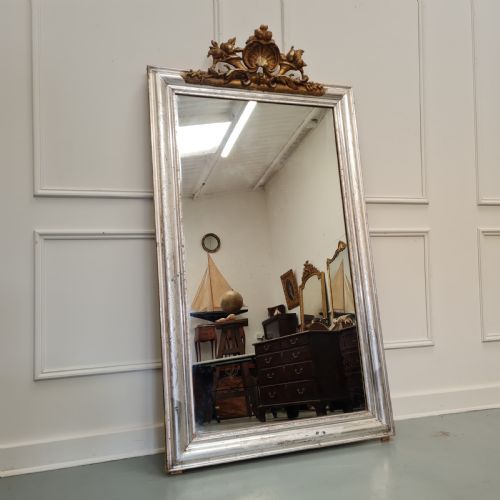


Silvered Wood Mirror
A silvered wood mirror brings a cool, reflective elegance to a room through centuries-old metal leaf and carved timber frames.
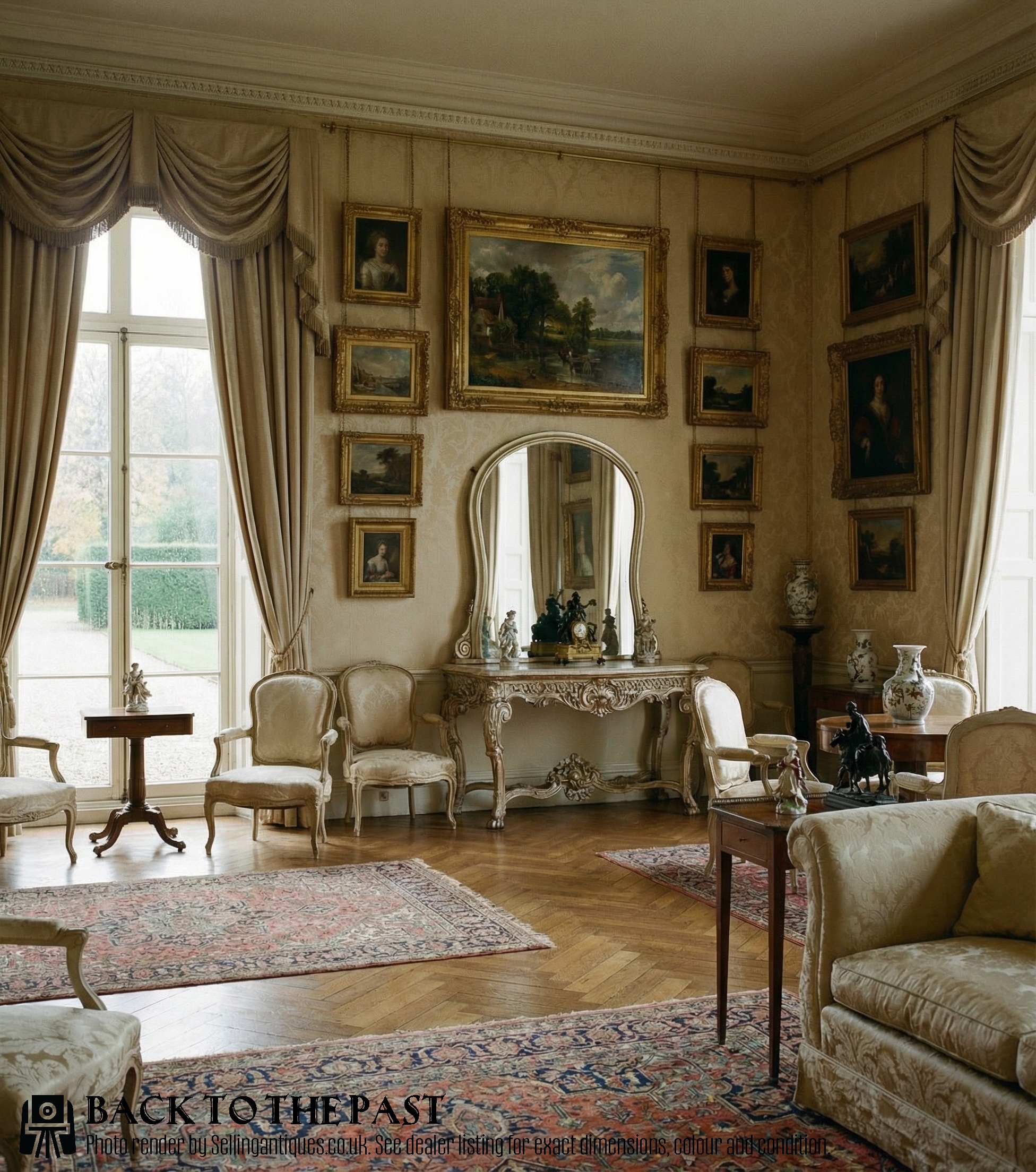
Silvered Wood Mirror
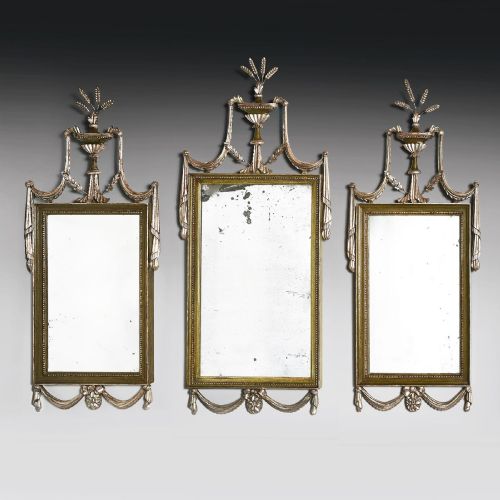
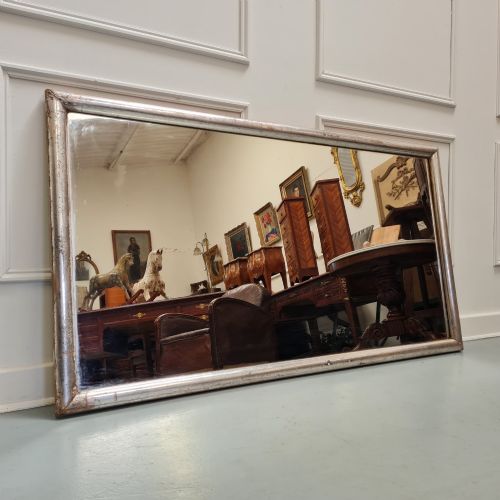
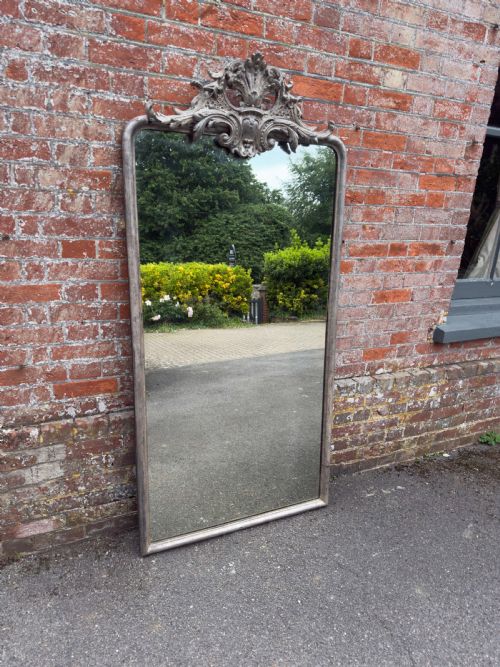
The selection extends from grand Louis Philippe and overmantel formats down to smaller bistro mirrors and table variants. Italian baroque and Venetian styles also appear, alongside Arts and Crafts interpretations utilising silvered copper and wood.
Many items display the marks of age, such as original mercury glass or softened paint finishes layered over the underlying silvering. These characteristics define the domestic and decorative utility of the category.
How They Were Made
Carved timber frames form the structural foundation, often built from pine, walnut, or rosewood depending on the period and origin. Artisans applied successive coats of gesso to the carved wooden surface to create a smooth, responsive ground for subsequent gilding.
Silver leaf or gold leaf was then laid onto the prepared gesso, sometimes combined with paint, ebonising, or parcel-silvering. The reflective plates themselves included mercury glass in older editions, held within rebated frames or secured behind moulded bezels.
Listings span from the seventeenth century through the Art Deco era, encompassing French, Italian, and British origins.
What Varies in Quality
The standard of carving in the wooden substrate dictates much of the visual depth, distinguishing crisp, hand-chiselled acanthus leaves and moulded borders from softer, repetitive factory work. The integrity of the original gesso and metal leaf layers also separates pieces, particularly where surface distress reveals the warmth of the material underneath.
The character of the mirror plate itself influences desirability, with original mercury glass displaying subtle foxing and oxidisation that modern replacements lack. Proportions relative to the intended architectural setting, such as balanced overmantel dimensions or harmonious arched frames, complete the distinction.
Gillows Of Lancaster·A.J Rowley
The Silvered Wood Mirror Glossary
- Gesso
- A plaster mixture applied to carved wooden frames to provide a smooth base for laying metal leaf. It allows for crisp relief moulding.
- Silver Leaf
- Extremely thin sheets of beaten silver applied to frames to create a reflective, metallic surface. It tarnishes naturally over time.
- Louis Philippe
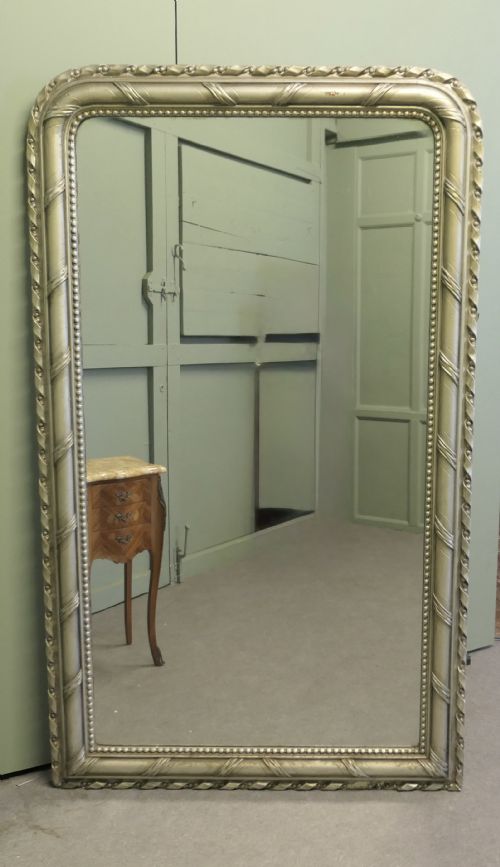
- A mid-nineteenth-century French style characterised by simple arched tops, restrained classical proportions, and beaded inner borders.
- Overmantel Mirror
- A wide mirror designed specifically to hang on the wall directly above a fireplace mantelpiece. They often feature extended horizontal proportions.
- Girandole
- A decorative wall mirror fitted with one or more candle branches attached to the frame. The arms multiply the reflected light in a room.
Silvered Wood Mirror: Frequently Asked Questions
How do I clean a silvered wood frame?
Dust the carved wooden frame gently with a soft, dry brush to protect the delicate silver leaf and gesso layers from damage.
Avoid using liquid cleaners or chemical polishes, as moisture can lift the metallic leaf and accelerate corrosion on the exposed timber.
What is mercury glass in old mirrors?
Mercury glass refers to historic mirror plates backed with a silver-and-mercury amalgam rather than modern aluminium or chemical silvering. This technique produces a characteristic mottled depth and soft reflection.
Over decades, the amalgam reacts with air and moisture to create natural dark spots known as foxing, which collectors prize for authenticity.
How do I hang a heavy overmantel mirror?
Heavy antique overmantel mirrors require secure wall fixings attached directly into structural studs or masonry rather than plaster alone. Professional mirror hanging brackets distribute the substantial weight safely.
Ensure the hanging wire or integrated D-rings on the wooden back frame match the rated capacity of your wall fixings.
How do I date a silvered wood mirror?
Dating relies on examining the construction of the wooden frame, the composition of the gesso, and the style of the bevelling or plate. Nineteenth-century French pieces often combine distinct arched top profiles with original distressed silver leaf.
Earlier examples from the seventeenth and eighteenth centuries show heavier hand-carved mouldings and deeper patination across both the timber and the glass.