




Carved Timber Urn
These carved timber urn pieces offer sculptural presence for an interior, bringing classical form and rich material texture to a room.
Carved Timber Urn
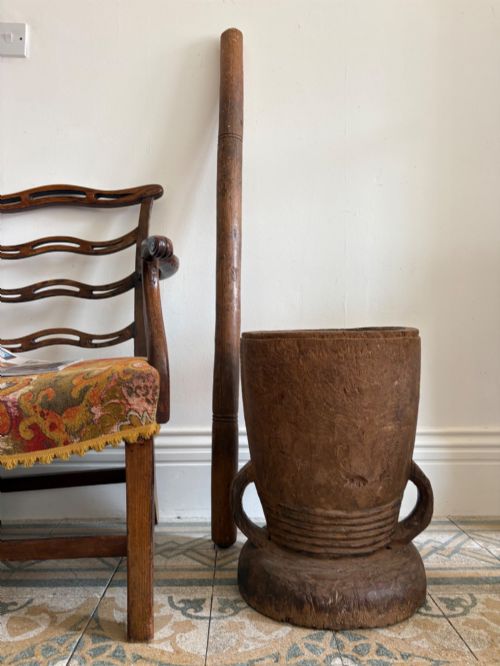
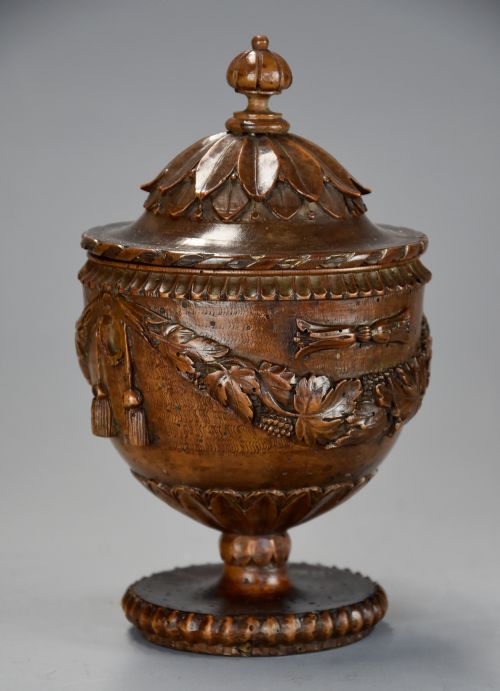
A carved timber urn search brings up a varied selection of sculptural vessels, pedestals, stands, and architectural elements from the eighteenth and nineteenth centuries. You find decorative lidded vessels alongside utilitarian mortars, plant stands, and occasional tables that share a turned or carved wooden form.
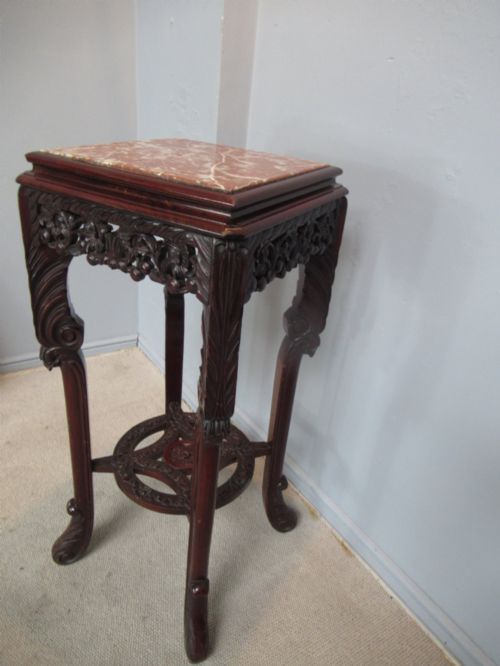
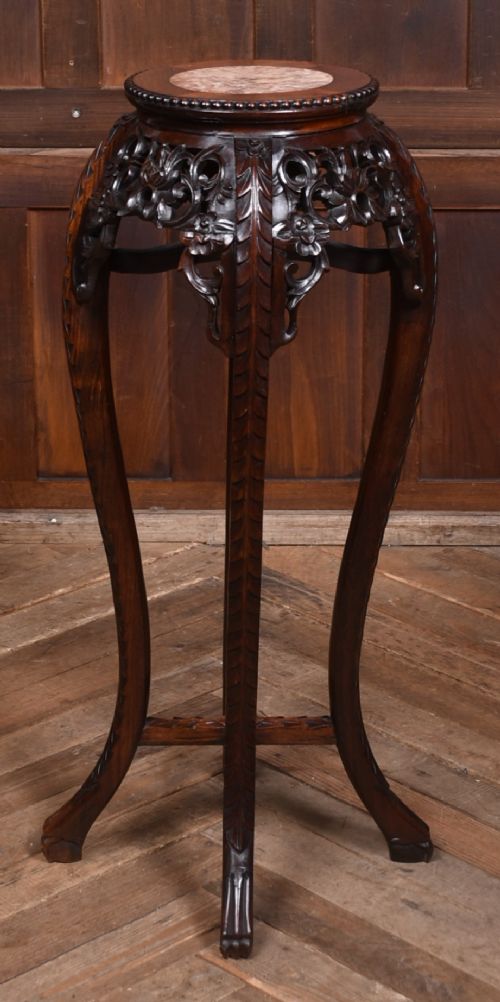
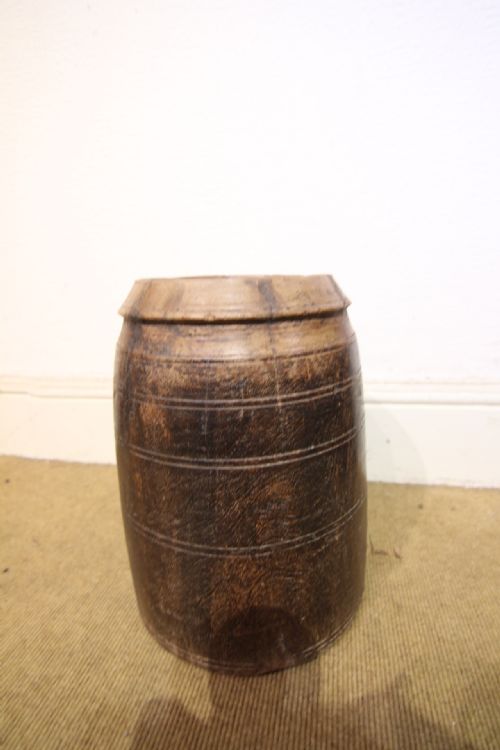
The pieces on this page lean heavily towards nineteenth-century examples, including Victorian mahogany columns, French neoclassical mirrors, and Chinese hardwood jardinieres with marble inserts. African tribal vessels and Black Forest planters also appear, showing how widely makers interpreted the carved wooden vessel form across different traditions.
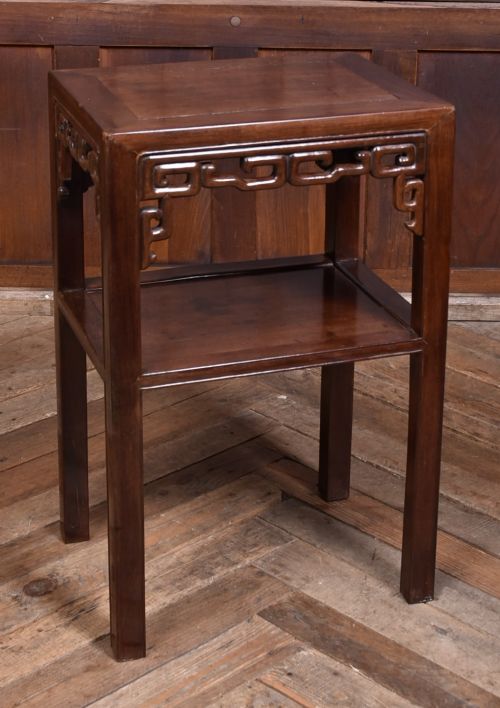
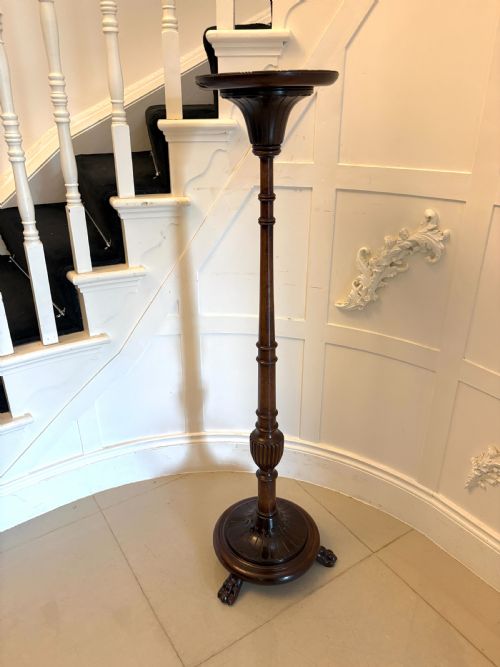
Most items function as supports or display pieces rather than hollow vessels, with pedestals, torchieres, and vase stands dominating the selection. These items were designed to elevate decorative objects or plants within a grand interior, combining sturdy timber construction with ornamental carving.
How they were made
Workshops relied on dense timbers such as mahogany, walnut, rosewood, oak, and general hardwoods to achieve crisp architectural mouldings and deep relief carving. These materials provided the necessary weight and structural stability for tall plant stands and heavy decorative urns.
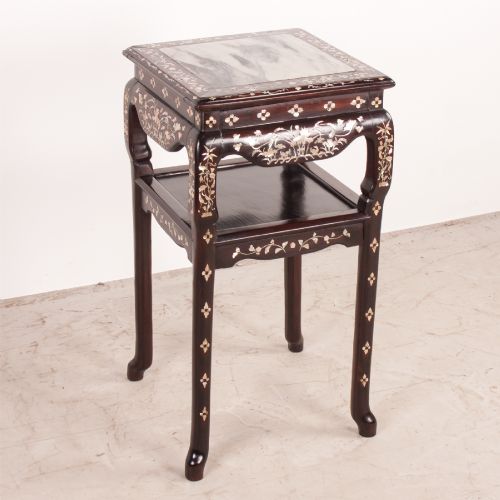
Craftsmen employed traditional turning on a lathe alongside hand chiselling for classical motifs, caryatids, and foliage. Some pieces incorporate contrasting elements like marble tops, mother of pearl inlay, or gilded details to enhance the visual texture of the timber base.
At least one pair of pedestals hides a secret compartment, offering a clever concealed space for valuables within the carved timber.
What varies in quality
Quality rests in the crispness of the hand carving and the selection of the timber grain, where superior examples show deep, deliberate chiselling rather than soft, mechanical moulding. The articulation of classical details, such as neoclassical urn motifs or caryatid figures, distinguishes fine workshop production from simpler country items.
Structural integrity and the clever integration of secondary materials dictate the standing of a piece. Well-fitted marble inserts, stable tripod joints, and smoothly operating secret compartments show a higher standard of cabinetmaking than basic turned vessels.
The Carved Timber Urn Glossary
- Torchere
- A tall stand designed to support a candle, lamp, or decorative vase. These slender columns often feature carved timber shafts and tripod or circular bases.
- Jardiniere
- An ornamental stand or container intended to hold a plant or flower arrangement. In nineteenth-century furniture, these often featured marble tops or waterproof liners.
- Caryatid
- A sculpted female figure serving as an architectural support taking the place of a column or pilaster. Carved wooden examples frequently support the corners of pedestals and tables.
- Neoclassical
- A style spanning the eighteenth and nineteenth centuries that drew inspiration from the classical art and architecture of ancient Greece and Rome. It prioritises symmetry, proportion, and restrained decorative motifs such as urns and swags.
- Hardwood
- Timber derived from broad-leaved trees, prized in antique furniture for its density and durability. Common varieties in these listings include mahogany, walnut, and rosewood.
Carved Timber Urn: Frequently Asked Questions
What is a carved timber urn used for?
These pieces function primarily as decorative focal points, display pedestals for vases, or plant stands within a room.
Historically, larger lidded urns stood on side tables or mantelpieces as classical ornamentation, while pedestals elevated sculptures to eye level.
How do I identify Victorian pieces?
Victorian items often display heavier proportions, dark mahogany or walnut timbers, and robust carved details like barley twist columns or classical motifs.
Makers of this era frequently drew inspiration from earlier periods, resulting in revival styles with dense ornamentation.
Are these pieces solid wood?
Most listings utilise solid hardwoods such as mahogany, walnut, or oak for their structural components and carved surfaces.
Some pieces incorporate contrasting materials like inset marble tops or mother of pearl inlay to complement the timber structure.
How do I care for antique timber stands?
Keep wooden pieces away from direct heat sources and strong sunlight to prevent the timber from drying out or splitting.
Dust regularly with a soft, dry cloth and apply a quality beeswax polish sparingly to maintain the lustre of the hardwood.