


Eighteenth Century Urn
An eighteenth century urn brings classical proportion and substance into a room, fashioned from walnut, faience or delft.
Eighteenth Century Urn
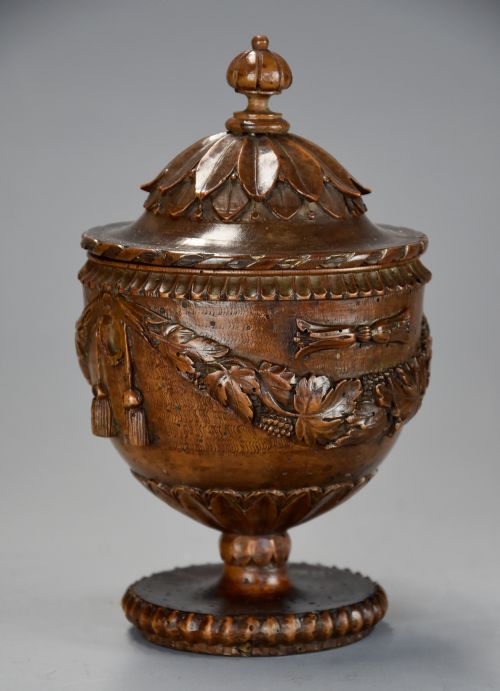
An eighteenth century urn captures the enduring classical taste of the period, taking form as a lidded vessel carved from walnut or shaped in earthenware. These decorative pieces often reflect broader stylistic movements such as Neoclassical design or French Rococo influence.
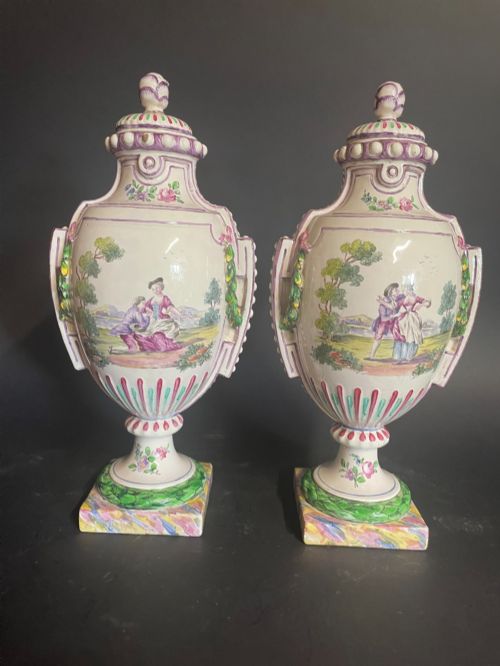
Buyers searching for an eighteenth century urn encounter a variety of forms including large delft vessels with handles, tin-glazed earthenware, and polychrome painted ceramics. The selection spans Italian, Dutch and English origins, each carrying the distinct aesthetic of its workshop.
The objects listed under this term range from finely carved wooden lidded vessels to tin-glazed storage jars and faience vases. Such pieces served both decorative and functional purposes in period interiors, remaining focal points on mantelpieces or side tables.
Materials and construction
Makers shaped these vessels from dense hardwoods like walnut, employing fine carving techniques to achieve classical profiles. Earthenware and faience pieces relied on tin glazing and polychrome painting to create finished surfaces.
Potters and ceramists formed vessels by hand or on the wheel before applying white tin glazes and hand-painted mineral pigments. Woodworkers turned and carved solid timber blocks to create lidded decorative forms.
Early tobacco jars double as unexpected conversation pieces when placed upon a modern bookshelf.
Distinctions in quality
The clarity of the hand-carved detail on wooden pieces and the precision of the tin-glazed brushwork on ceramics define the upper tier of quality. Superior examples show careful proportion and deliberate execution in every decorative element.
Surface preservation separates standard examples from exceptional ones, particularly regarding the integrity of the glaze on ceramics and the original patina on turned walnut. Pieces with intact hand-painted decoration command greater visual presence.
Sceaux Faience·Derby Porcelain·Zachariah Boreman
The Eighteenth Century Urn Glossary
- Delft
- Tin-glazed earthenware associated with the Netherlands, known for painted blue and white or polychrome decoration. It often takes the form of jars and vases.
- Neoclassical
- A style spanning the mid to late eighteenth century inspired by classical Greek and Roman art. It emphasises symmetry, straight lines and classical motifs.
- Walnut
- A heavy, durable timber favoured for furniture and decorative objects during the eighteenth century. It accepts fine carving and develops a deep patina over time.
- Tin glaze
- An opaque white ceramic glaze containing tin oxide. It provides a smooth surface for hand-painted decoration on earthenware bodies.
Eighteenth Century Urn: Frequently Asked Questions
What is an eighteenth century urn made from?
These vessels appear in materials such as carved walnut, tin-glazed earthenware, and faience. Each material dictates the weight and visual texture of the piece.
Makers selected timber for turned wooden lidded vessels or employed clay for glazed ceramic vases and jars.
Where were these pieces made?
Origin points include workshops in Italy, France, the Netherlands and England. Regional styles reflect local ceramic traditions and cabinet-making techniques.
Continental pieces often utilise tin glazes and polychrome painting, whilst English and Italian examples frequently explore carved hardwoods.
How do I style an urn in a modern room?
An urn works well placed centrally on a mantelpiece, sideboard or console table where its classical silhouette provides a focal point. Their sculptural forms complement both period and contemporary interiors.
Pair ceramic vases with neutral backgrounds to highlight the hand-painted tin-glazed decoration.
How do I tell an 18th century piece from a later copy?
Examine the surface wear, tool marks, and glaze characteristics to understand the age of the object. Hand-carved walnut shows tool marks consistent with period execution.
Ceramics exhibit the characteristic crazing, pigment settling and glaze pooling associated with historical kiln firings.