



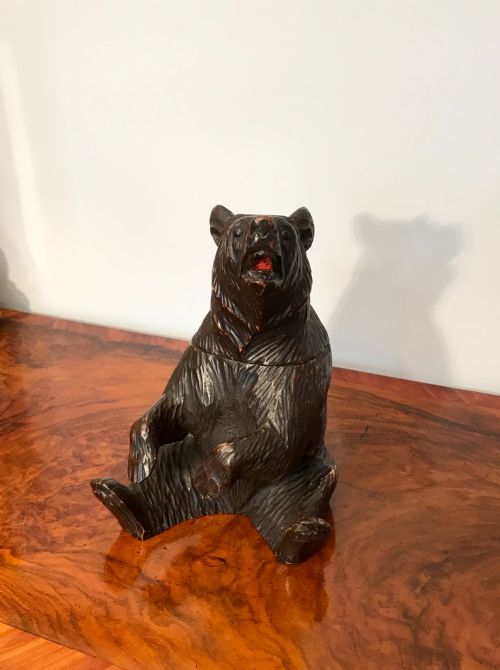
Carved Wood Jar
These pieces known as a carved wood jar span centuries of domestic storage, drawing collectors toward expressive animal forms and dense indigenous timbers.
Carved Wood Jar
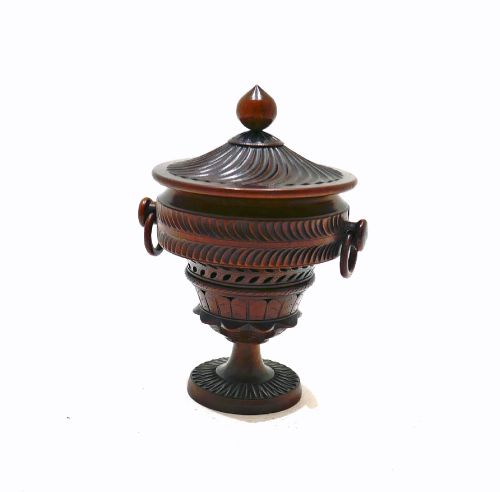
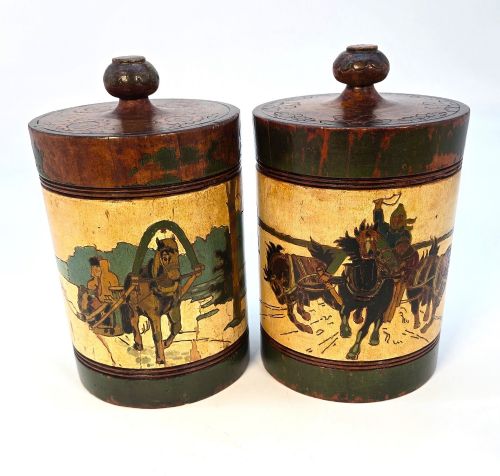
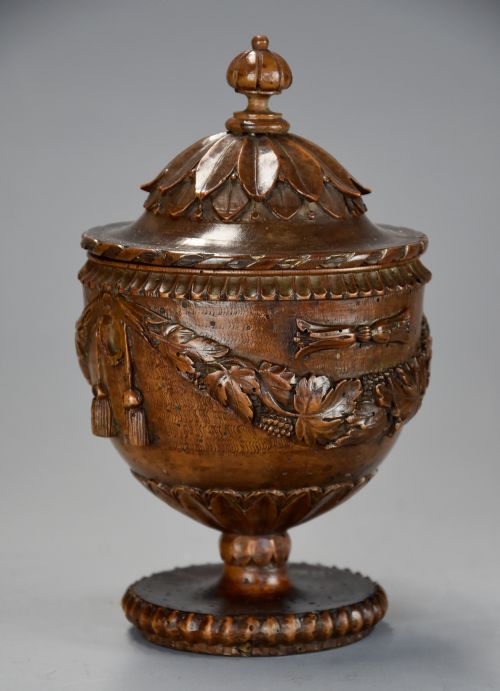
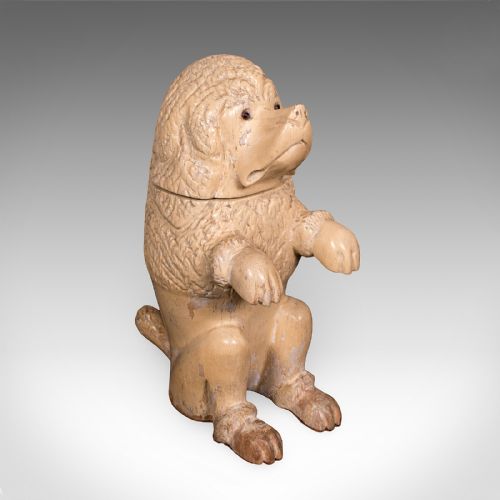
When you search for a carved wood jar, you enter a sphere of utilitarian vessels, lidded containers, and decorative stands shaped by varied hands. The grouping includes European figural tobacco holders alongside Asian display plinths.
The objects frequently take the form of lidded boxes, humidor caskets, or vessels designed to hold plant pots and vases. Many pieces serve a dual function of practical containment and sculptural display.
Continental workshops and traditional carvers produced much of the domestic work, utilising fruitwood, walnut, and linden wood. These domestic items sit alongside sturdy hardwood stands intended for heavy ceramic vessels.
How They Were Made
Makers shaped these objects primarily from dense hardwoods and pale fruitwoods, employing linden wood for intricate European animal figures and rosewood or padouk for structural stands. Craftsmen turned circular bodies on lathes or hand-carved solid blocks into complex organic shapes.
Artisans applied relief carving, piercing, and painted decoration to achieve textured surfaces on lids and bodies. Glass eyes appeared in figural animal containers to heighten realism, while marble inserts provided stable tops for display stands.
Listings feature 19th-century Black Forest animal containers alongside traditional Chinese hardwood jardiniere stands and European treen.
What Varies in Quality
The definition of the carving separates standard containers from exceptional works, particularly in the rendering of fur on animal forms or the crispness of foliage and geometric borders. Deep relief work requires superior technical competence from the carver.
Material selection dictates durability and visual depth, with dense fruitwoods and figured hardwoods holding sharper details over time compared to softer substitutes. The integration of secondary elements like inset marble tops or original glass eyes influences the integrity of the piece.
The Carved Wood Jar Glossary
- Treen
- Small wooden domestic objects made by turning or carving. These items include boxes, cups, and household utensils shaped from dense local timber.
- Humidor
- A lidded container designed to store tobacco while keeping the contents moist. Many examples take whimsical animal shapes such as bears and owls.
- Padouk
- A heavy, durable tropical hardwood with a reddish hue. Furniture makers utilised this timber for sturdy stands and decorative vessels.
- Linden wood
- A pale, fine-grained timber favoured by European carvers for detailed sculpture. The soft nature of the wood allows for deep, expressive relief work.
- Jardiniere
- An ornamental pot or stand intended to hold plants or flowers. These items often feature carved wooden frames with inset marble tops.
Carved Wood Jar: Frequently Asked Questions
What were carved wood jars used for?
Makers designed these lidded vessels primarily to hold tobacco, pomanders, or dried goods within domestic spaces.
Larger variants served as protective containers or functioned as structural stands for heavy ceramic vases and plant pots.
How do I care for antique wooden vessels?
Keep wooden containers away from direct heat sources and drastic humidity changes to prevent timber splitting.
Apply a light application of appropriate wax occasionally to maintain the natural lustre of the carved surface.
What is Black Forest carving?
This style originates from the wooded regions of central Europe, where artisans carved domestic items from local linden wood and walnut.
Carvers frequently depicted natural subjects, notably bears, dogs, and owls, integrated into functional boxes and humidors.
How can I identify the wood used?
Examine the grain pattern, weight, and natural colour of the timber exposed on the base or interior.
Fruitwoods present a fine, tight grain, while tropical timbers like padouk and rosewood display denser, heavier structures with reddish tones.