
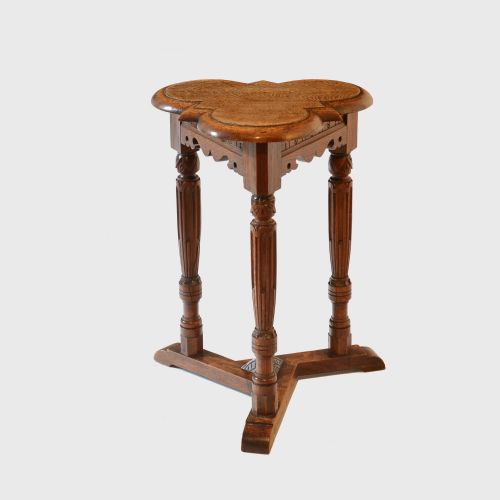
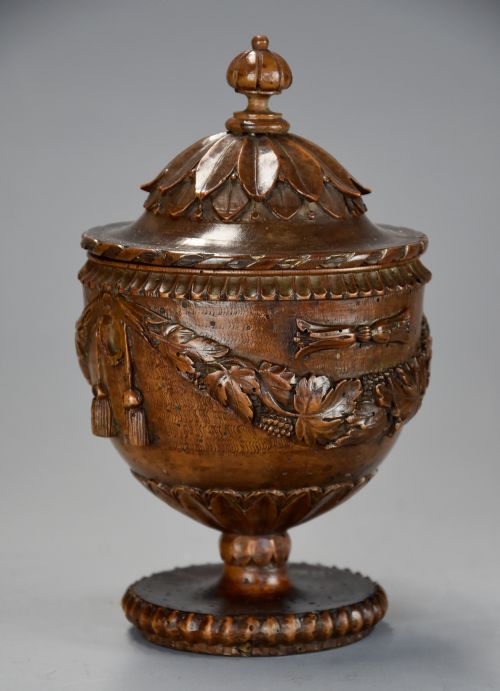

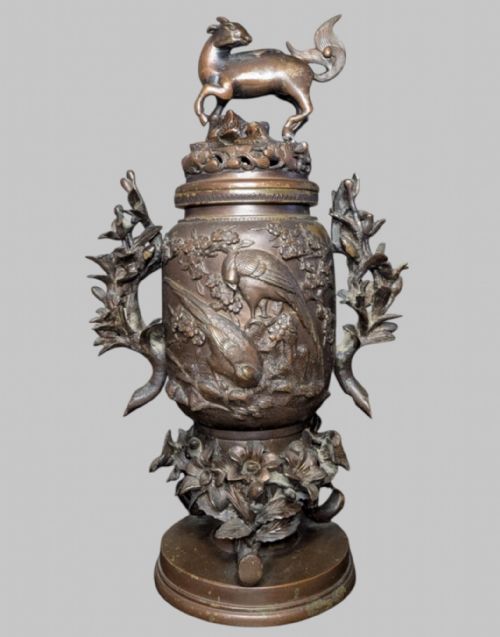


Brown Carved Urn
These brown carved urn pieces bring heavy timber, dark bronze and classical lines into a room, offering genuine historical weight for a collector.
Brown Carved Urn
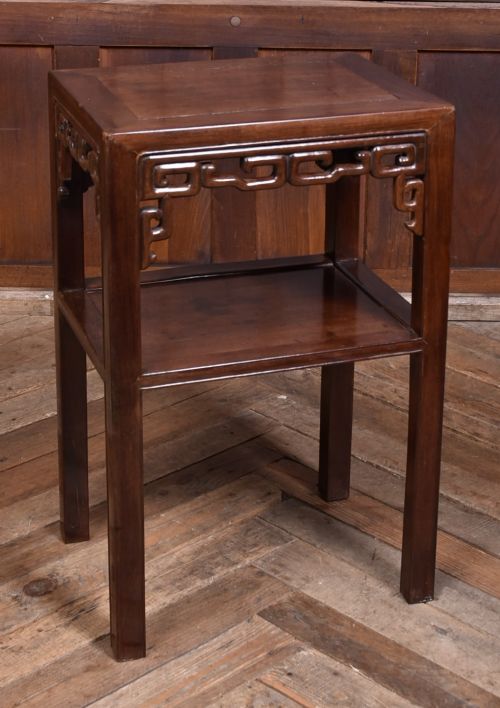
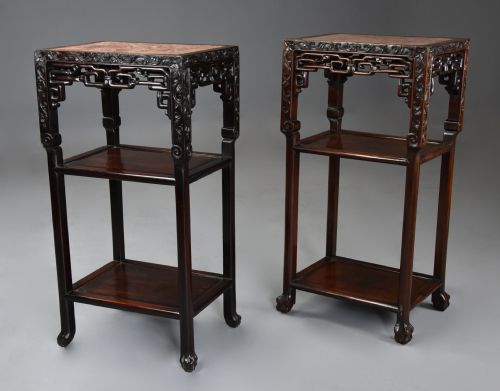
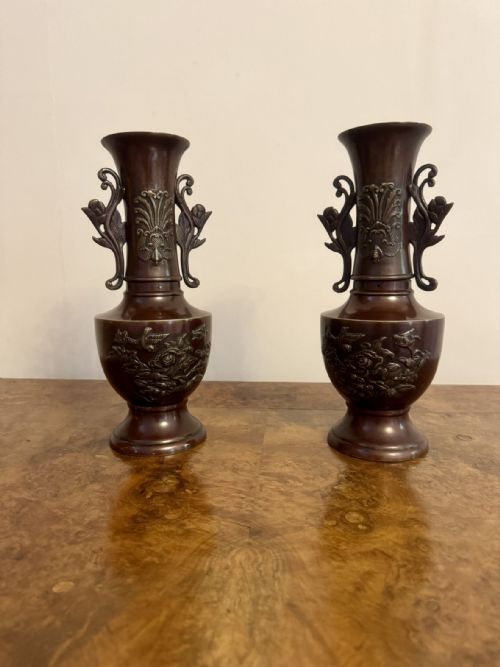
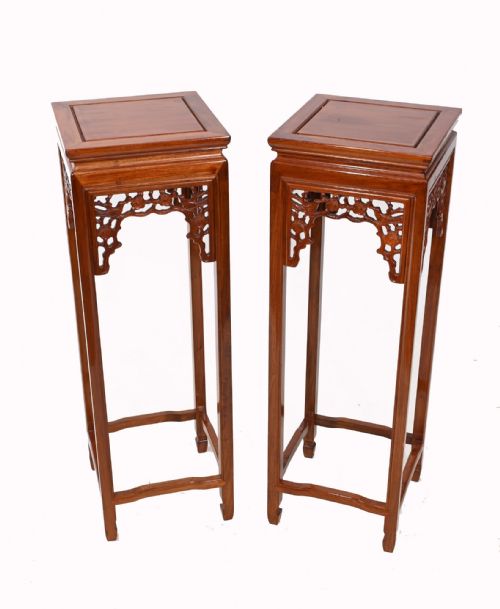
When searching for a brown carved urn, a buyer encounters a diverse group of objects spanning the eighteenth, nineteenth, and early twentieth centuries. These pieces cross various cultural traditions, encompassing Chinese hardwood stands, Japanese bronze vessels, and European walnut carvings.
The selection frequently includes lidded chalices, decorative urns, incense burners, and pedestal plant stands rather than strictly single-form vessels. Hardwood and bronze dominate the visual landscape, shaped by Neoclassical, Gothic Revival, and East Asian design sensibilities.
Originating from English country houses, Swiss workshops, and Asian studios, these items served decorative or functional roles in period interiors. The pieces reflect the craftsmanship of diverse makers working across more than a century of stylistic evolution.
Materials and construction methods
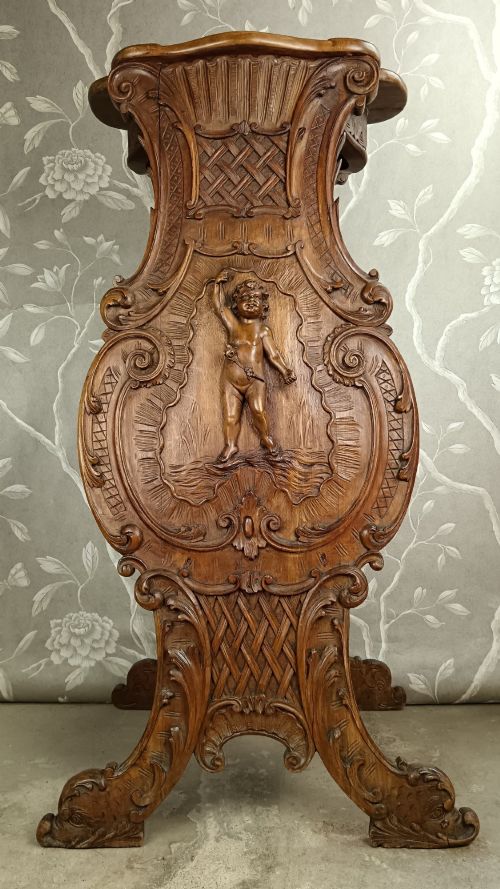
Makers relied heavily on dense hardwoods such as mahogany, oak, walnut, and exotic Asian timbers like huali, carving them with deep relief motifs. These woods provided the substantial weight and dark patination characteristic of the period.
Metalworkers utilised cast bronze for vases and incense burners, often applying intricate surface chasing and patination to achieve dark brown or patinated finishes. Stonework appears through marble inserts, adding contrasting texture to wooden plant stands and tables.
Listings demonstrate a strong presence of nineteenth-century pieces, combining English oak and walnut furniture with imported Chinese hardwood stands and Japanese bronze vessels.
Distinctions in quality
Quality rests in the crispness and depth of the carving, where confident chisel work separates master output from simpler provincial pieces. Wood selection dictates the grain pattern and rich tone, while bronze pieces depend on the precision of the casting and surface detail.
Proportion and structural integrity define the superior examples, ensuring that stands, pedestals, and vessels maintain balance and harmonious form. The integration of contrasting materials, such as marble tops set into carved hardwood frames, demonstrates elevated craftsmanship.
The Brown Carved Urn Glossary
- Torchiere
- A tall decorative stand designed to support a light source or decorative ornament. These tall wooden pedestals often feature carved columns and tripod or circular bases.
- Caryatid
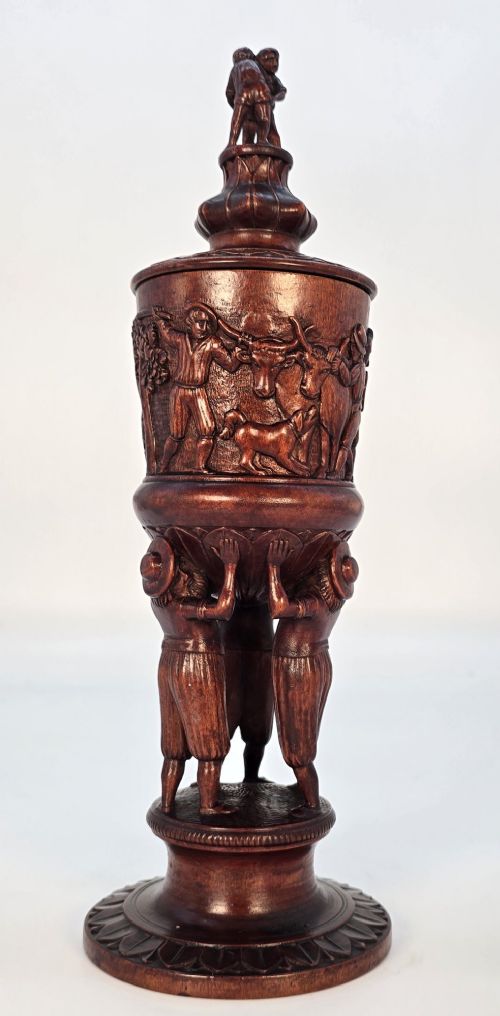
- A sculpted female figure serving as an architectural support taking the place of a column or a pillar. They appear carved into wooden pedestals and furniture supports.
- Koro
- A traditional Japanese incense burner typically cast in bronze with intricate detailing and fitted lids. These vessels often incorporate mythological animal finials.
- Huali
- A prized Chinese hardwood known for its rich colour and distinctive grain patterns. Artisans utilised this timber for elaborately carved vase stands and small tables.
- Trefoil
- A graphic ornament consisting of three overlapping rings or leaf shapes. This motif appears frequently in Gothic Revival woodwork and furniture design.
Brown Carved Urn: Frequently Asked Questions
What is a brown carved urn used for?
These pieces functioned primarily as decorative vessels, incense burners, or display bases for plants and art objects within period interiors. They added sculptural presence and cultural interest to Victorian and Edwardian rooms.
Today, collectors utilise them as focal points on side tables, mantels, or as standalone pedestals. Their substantial materials allow them to integrate smoothly into traditional and eclectic modern spaces alike.
How do I identify the period?
Dating relies upon examining the timber species, tool marks, and stylistic motifs present in the carving. Neoclassical and Gothic Revival clues help narrow down the decades.
Comparing the object to dated examples from the nineteenth and early twentieth centuries provides a reliable window of origin. Maker signatures on bronze or distinct regional carving styles offer further chronological proof.
Are these pieces made of solid wood?
The listings show substantial construction using dense timbers such as mahogany, oak, walnut, and oriental hardwoods. These materials provided the structural integrity required for heavy plant stands and vessels.
Makers avoided thin veneers in favour of carved solid timber blocks, which aged to develop deep patination. This solid construction accounts for the lasting durability of the surviving items.
How do I care for antique bronze and wood?
Wooden surfaces require occasional feeding with appropriate wax to preserve the natural moisture and rich colour of the timber. Avoiding direct sunlight prevents the dark finishes from fading over time.
Bronze items need only gentle dusting with a soft cloth to protect the patinated surface. Chemical cleaners should be avoided to preserve the historical finish.