





Carved Timber Religious Statue
A carved timber religious statue brings centuries of devotion, ritual and master handwork straight into a room.
Carved Timber Religious Statue
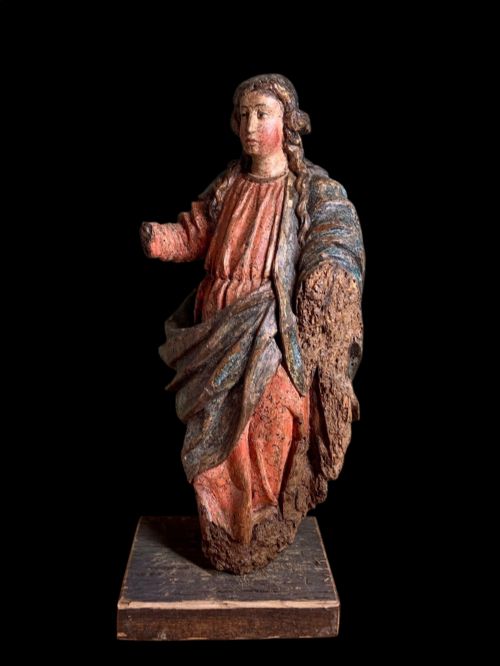
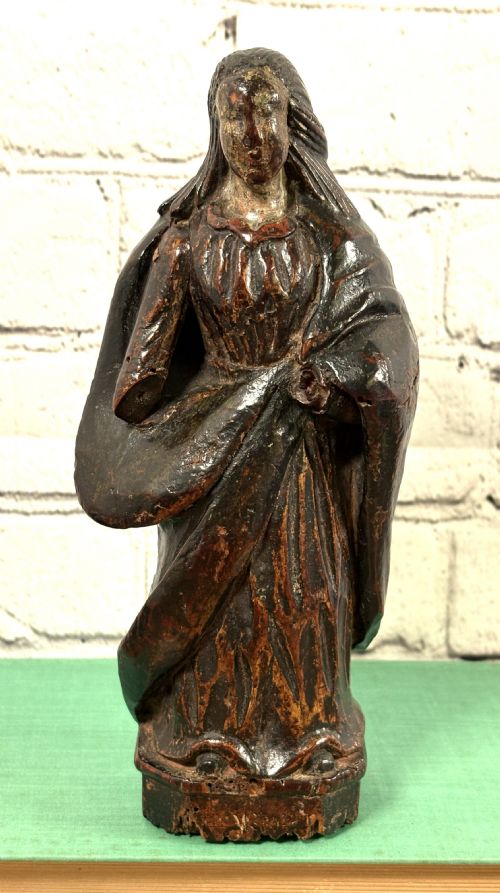
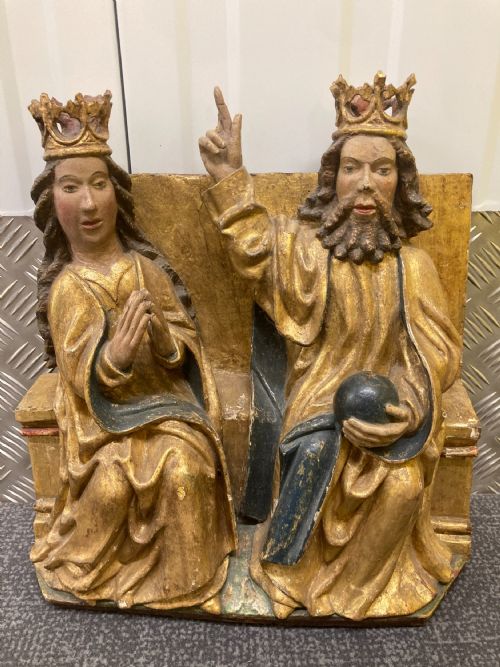
A carved timber religious statue is a devotional figure or ecclesiastical carving originating from European churches, domestic shrines and Asian temples. Buyers encounter works depicting saints, apostles, the Virgin Mary and Buddha created across centuries of faith and artistic tradition.
The pieces on this page span from pre-sixteenth century medieval fragments and sixteenth-century Gothic pairs to eighteenth-century Baroque figures and nineteenth-century studies. Oak, pine, limewood and hardwood form the bedrock of these historical representations.
European ecclesiastical subjects sit alongside Asian deities such as Guanyin and Buddha, reflecting diverse sacred traditions. Most examples take the form of standing figures, grouped panels or kneeling angels intended for contemplation.
Materials and construction methods
Carvers shaped these figures from dense timbers including oak, walnut, limewood, applewood and pine using traditional gouges and chisels. Grain direction dictated the depth of relief and the survival of delicate drapery folds over centuries.
Many surfaces received a preparation layer of gesso before painters applied polychrome pigments, oil colours or gold leaf. Gilding and paint layers interact with the timber underneath, creating complex textures as the centuries pass.
Angels carved in the seventeenth century kneel permanently on timber clouds, frozen mid-prayer for over three hundred years.
What distinguishes finer examples
The preservation of original polychrome paint and gold leaf significantly elevates a piece. Surface integrity, where historical layers remain undisturbed by heavy restoration, determines the historical weight of the carving.
Franz Keller
The Carved Timber Religious Statue Glossary
- Polychrome paint
- Pigments applied to sculpture to give lifelike colour to robes, flesh and hair. This technique was widely used in medieval and religious art.
- Gesso
- A plaster mixture applied to wood as a smooth base for gilding and painting. It helps bind the decorative surface to the timber.
- Gold leaf
- Extremely thin gold beaten into sheets and applied to surfaces over size or gesso. It created divine radiance on ecclesiastical figures.
- Gothic Revival
- A nineteenth-century style drawing inspiration from medieval architecture and sculpture. Makers recreated the devotional forms of earlier centuries.
- Ecclesiastical
- Relating to the Christian church or clergy. These objects were originally made for worship in chapels, churches and abbeys.
Carved Timber Religious Statue: Frequently Asked Questions
How old is my carved timber religious statue?
Dating relies on tool marks, timber species, stylistic conventions and the composition of underlying gesso layers. Medieval and Renaissance pieces show distinct hand-adze work and theological iconography.
Later nineteenth-century Gothic Revival pieces often employ softer machinery cuts or display historical revival traits unique to that era.
Were these statues painted originally?
Many ecclesiastical figures were finished with gesso and polychrome paint or gold leaf to enhance realism and devotional impact. Paint schemes often underwent multiple layers of redecoration during active periods of worship.
Traces of pigment surviving beneath later patination help authenticate the age and ritual history of the carving.
How do I care for a wood statue?
Timber sculptures require stable indoor humidity away from direct heat sources and strong sunlight to prevent wood shrinkage and paint flaking. Gentle dusting with a soft, dry brush is sufficient for routine maintenance.
Avoid applying modern waxes or moisture to original gesso and polychrome surfaces, as historic finishes are easily damaged.
How do European and Asian statues differ?
European examples typically represent Christian saints, angels and Biblical figures carved in oak, walnut or pine within Gothic and Baroque traditions. Asian sculptures frequently depict Buddha or Guanyin carved in hardwoods or lacquered timber.
Both traditions utilise carved wood to embody spiritual presence and devotional focus.