
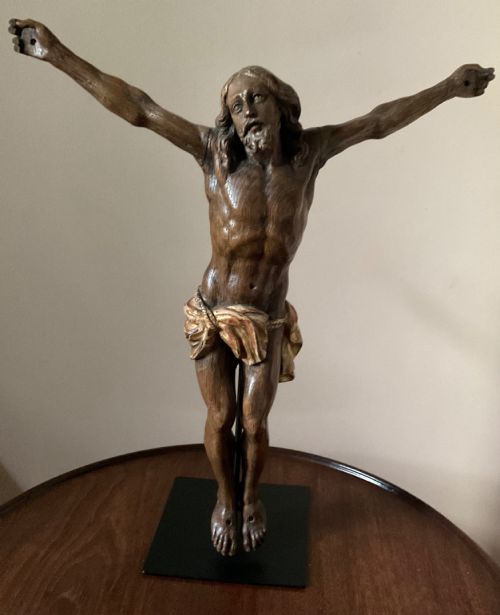
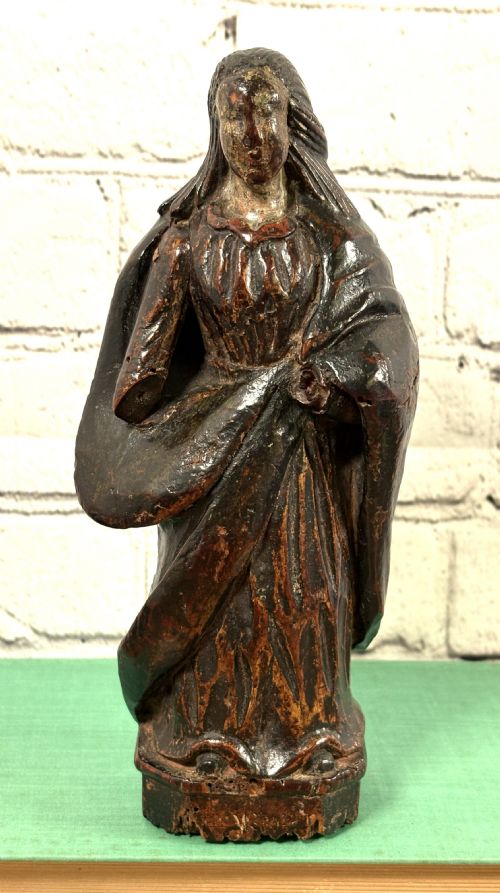


Religious Art Sculpture
Religious art sculpture encompasses centuries of devotion, spanning carved timber saints, bronze figures and polychrome altarpieces that bring centuries of craftsmanship into a room.
Religious Art Sculpture
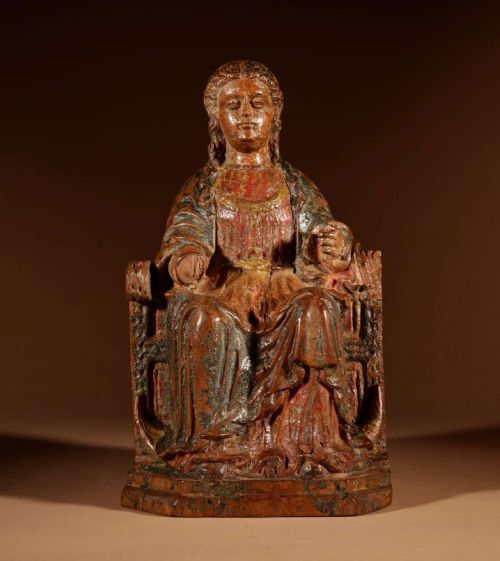
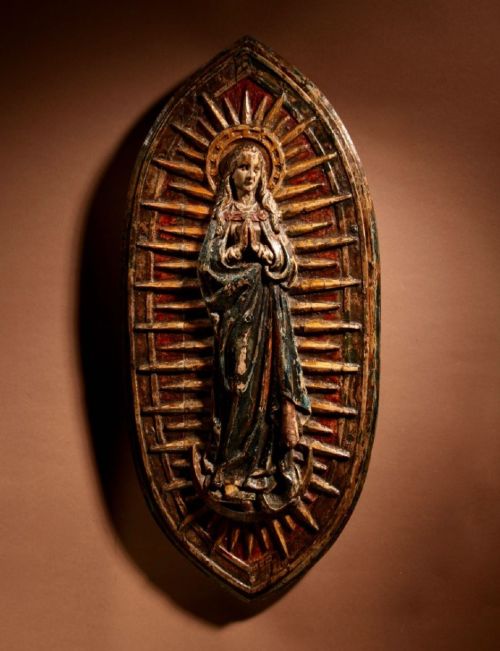
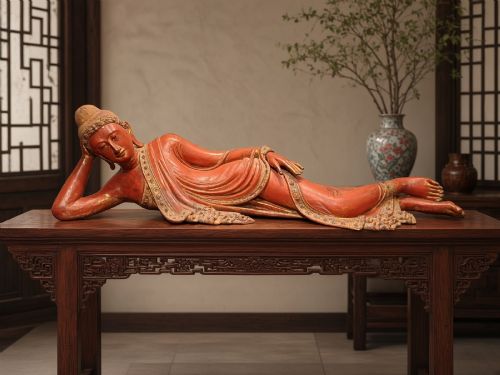
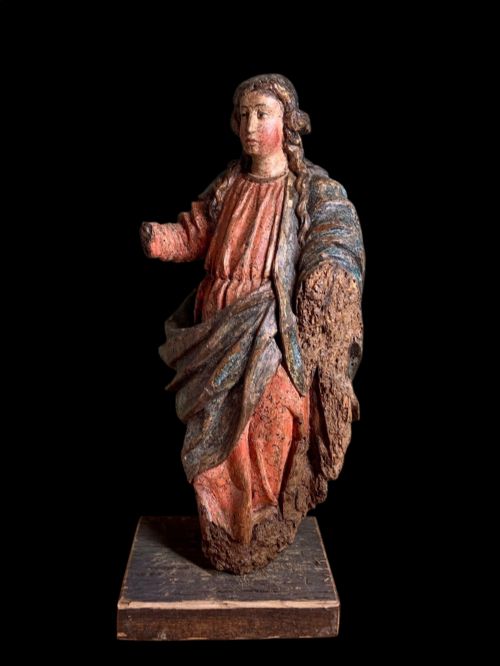
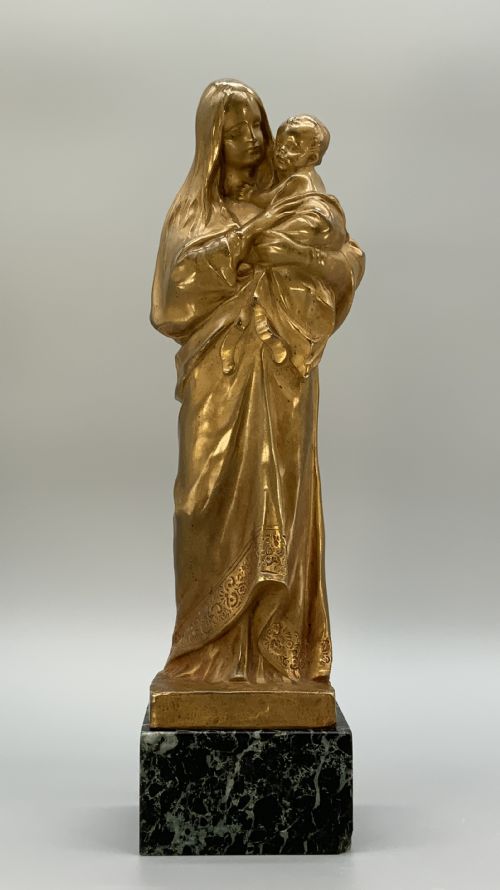
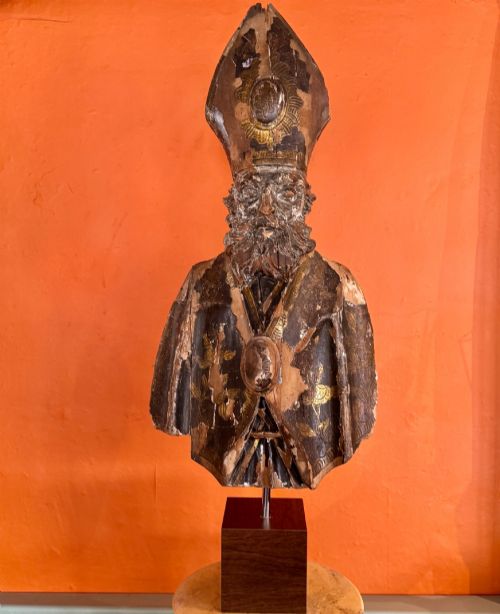
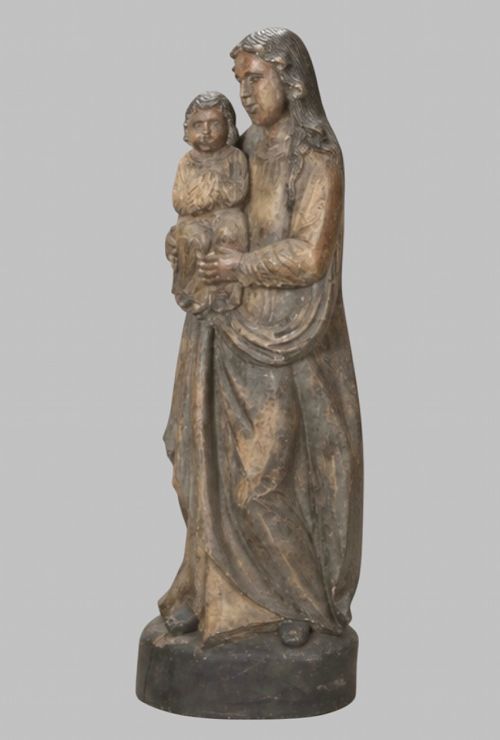
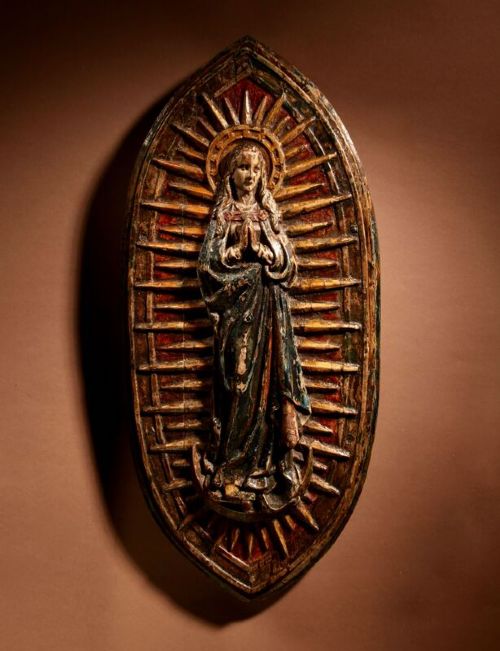
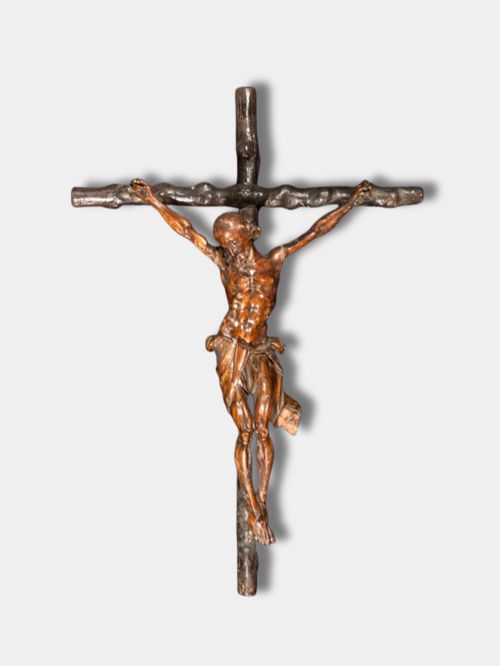
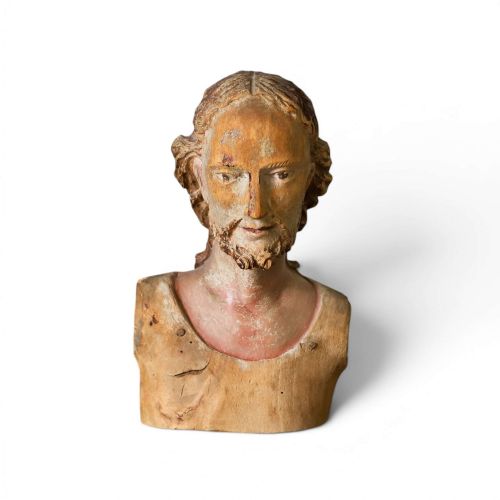
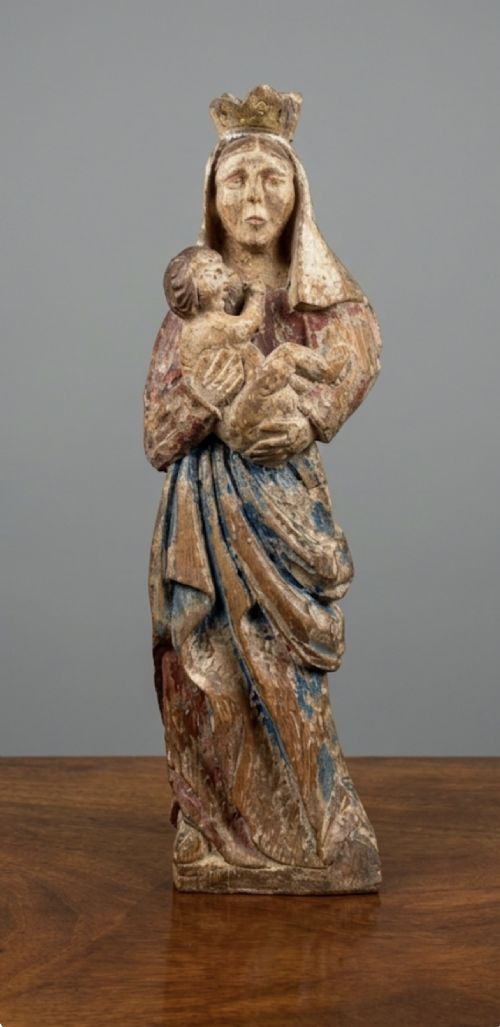
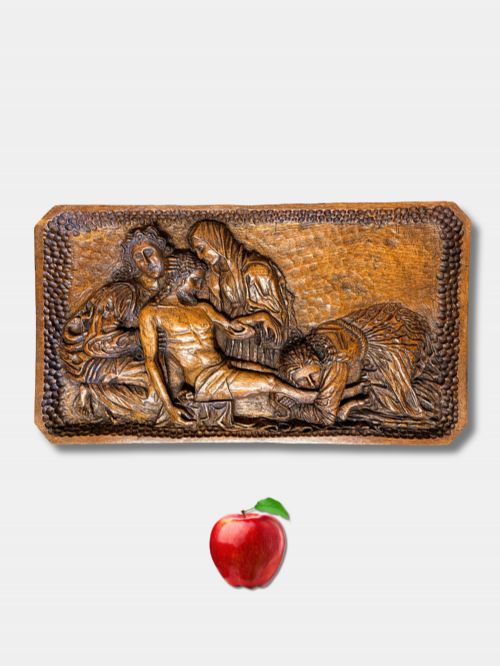
Religious art sculpture spans centuries of devotional craftsmanship, taking the form of freestanding figures, altarpiece panels, and ecclesiastical busts. These works depict figures such as the Madonna and Child, saints, and scenes of the Passion, originating from workshops across Europe, Asia, and Burma.
The versions most commonly met on this page include carved wooden figures from the sixteenth to the nineteenth centuries, alongside bronze and gilt metal devotional objects. Continental European workshops produced many of the wooden saints and panels, while eastern traditions are represented by carved and gilt wood or bronze Buddha figures.
How they were made
Makers shaped these sculptures from woods such as oak, limewood, walnut, chestnut, and olive wood using traditional hand-carving chisels and gouges. Timber pieces often received an application of gesso as a smooth ground for subsequent layers of paint, polychrome, or gold leaf.
Metal sculptures utilise bronze casting techniques, ranging from sand-casting to the lost-wax method, sometimes finished with a dark patination or gilding. Wooden panels and reliefs relied on joinery techniques suited to large altarpieces, while polychrome surfaces were hand-painted with mineral pigments.
Listings feature carved wood, gesso, and gold leaf applied across periods from the sixteenth century to nineteen-hundred.
What varies in quality
The survival of original surface treatments defines the upper tier of these objects, particularly where early polychrome, gesso, and gold leaf remain intact beneath centuries of gentle wear. Pieces stripped to raw timber or subjected to heavy modern repainting lose the historical coherence found in untouched examples.
Hans Müller·George Kemper·George Minne·Franz Keller
The Religious Art Sculpture Glossary
- Polychrome
- Decoration in multiple colours applied to wood or stone sculpture. This technique was widely used in medieval and baroque religious art to bring lifelike realism to figures of saints and biblical scenes.
- Gesso
- A plaster mixture used as a smooth base applied to wooden sculptures before gilding or painting. It provides a bright, stable ground that adheres gold leaf and pigment to the carved surface.
- Corpus Christi
- The body of Jesus Christ depicted on a crucifix. These figures highlight anatomical study and emotional intensity in wooden and metal devotional sculpture.
- Altarpiece
- A structured work of art set above and behind an altar, often featuring carved wooden panels or relief sculptures. Central panels typically depict significant religious figures or narrative scenes.
- Giltwood
- Wood that has been treated with a thin layer of gold leaf or gold powder. This finish catches candlelight in ecclesiastical settings and denotes works of higher status.
Religious Art Sculpture: Frequently Asked Questions
How are wooden sculptures dated?
Dating relies on tool marks, timber species, stylistic conventions of drapery, and the composition of underlying gesso layers. Examining the back of a panel or figure often reveals period construction methods.
Comparative study with documented altarpieces and church furnishings helps narrow the period of origin within a specific century.
What is polychrome paint?
Polychrome paint is the multi-coloured pigment applied directly to carved wood or gesso surfaces. Artisans used these colours to render realistic flesh tones, vibrant garments, and theological attributes.
Over time, these painted layers develop craquelure and patina, which help confirm the age of the sculpture.
Where were these sculptures displayed?
These figures originally stood within churches, private household chapels, and monastic refectories as focal points for prayer and meditation. Altarpieces formed the architectural backdrop for religious services.
Smaller devotional figures were also used in domestic settings or carried in religious processions.
How should antique wood be cared for?
Antique wooden sculpture requires stable room humidity and protection from direct sunlight to prevent timber shrinkage and paint flaking. Dusting should be performed gently with a dry, soft brush.
Avoid applying modern household polishes or oils, as these can soften fragile gesso and alter the historical surface.