

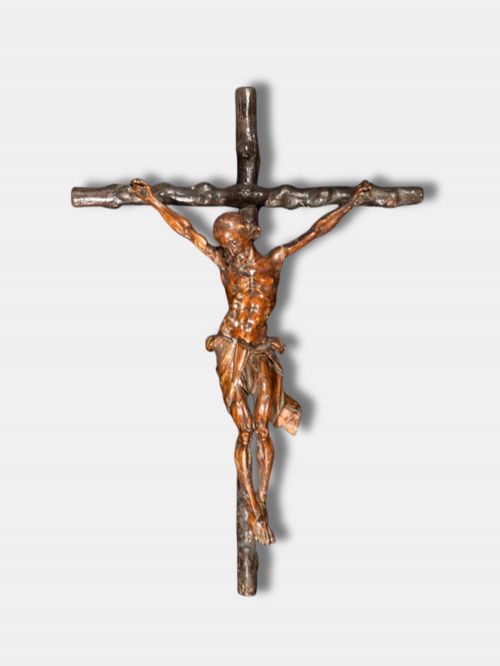
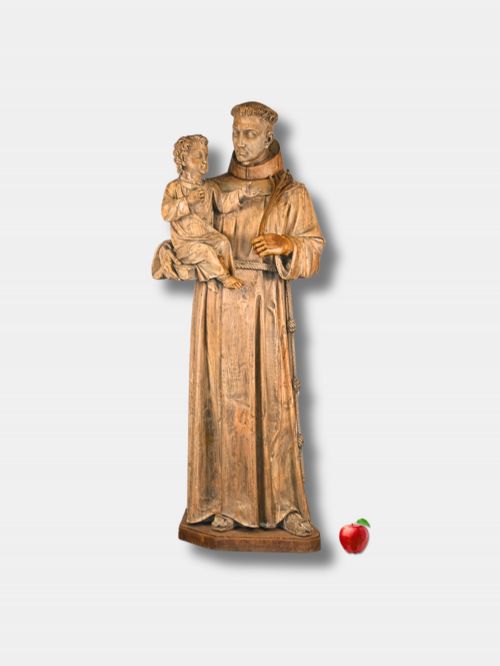
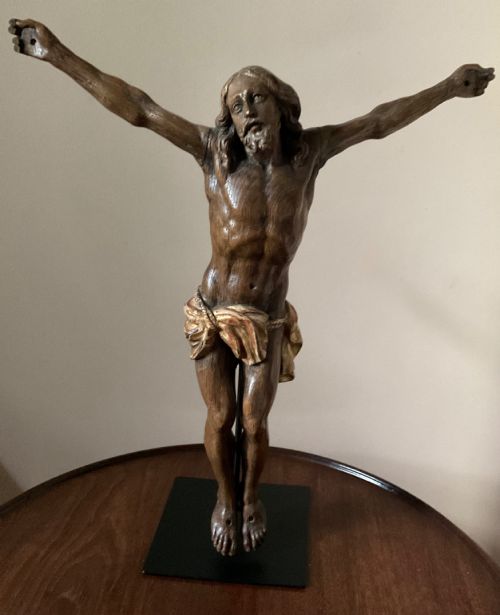


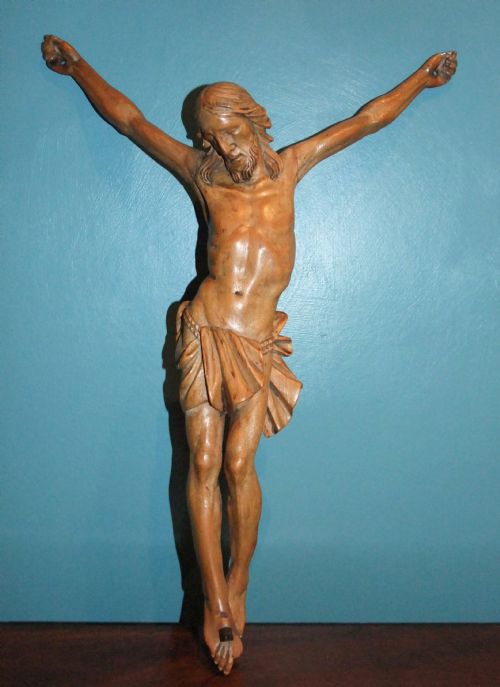


Brown Wood Jesus Sculpture
These brown wood jesus sculpture examples combine centuries of devotional craftsmanship with rich material patination.
Brown Wood Jesus Sculpture
A brown wood jesus sculpture encompasses religious figures, crucifixes, and ecclesiastical groups spanning the seventeenth to the early twentieth century. Buyers encounter carved representations originating from Spain, France, and Italy, reflecting distinct regional liturgical traditions.
The selections on this page concentrate heavily on corpus christi figures and carved wall crucifixes alongside freestanding statues. Pieces range from intimate domestic devotional carvings to life-size church figures.
Spanish Baroque works and seventeenth-century Low Country pieces appear frequently alongside nineteenth-century French and Italian ecclesiastical carvings. Fruitwood, oak, and olive wood dominate the material palette of these devotional objects.
Materials and construction
Artisans carved these sculptures from dense hardwoods including fruitwood, olive wood, and oak, often utilising local timber available in European workshops. Selected woods allowed for intricate detailing in drapery and facial expressions.
Certain figures incorporate polychrome paint or parcel gilt surfaces over the carved wood base to heighten visual drama and devotional focus. Tool marks left by gouges and chisels remain visible across the unpainted hardwood surfaces.
Brown Wood Jesus Sculpture Retail Price Guide 2026
Typical asking prices for brown wood jesus sculpture among the pieces listed under this phrase on Sellingantiques today, from the lower quarter to the upper quarter. They describe what is for sale here now, not the wider market.
Listings feature items from the seventeenth, eighteenth, and nineteenth centuries, alongside pieces dated specifically to 1700, 1850, 1880, and 1910.
Assessing quality and execution
The integrity of the original wood surface and the retention of early polychrome or parcel gilt elements influence the standing of a piece. Finer sculptures maintain their structural cohesion without extensive replacement of integral limbs or cross components.
Bohumil Kafka
The Brown Wood Jesus Sculpture Glossary
- Corpus Christi
- Latin for Body of Christ, this term specifically denotes a sculptural representation of Jesus Christ on the cross. It forms the central focus of traditional crucifixes.
- Polychrome
- The practice of decorating sculptural surfaces in multiple colours using paints or pigments. This technique brought devotional figures to life in church settings.
- Parcel Gilt
- A decoration method where selected areas of a wooden sculpture receive a thin application of gold leaf while other areas remain exposed wood. This creates a contrasting luminous effect.
- Ecclesiastical
- Pertaining to the Christian church or its clergy, describing items made for liturgical use in chapels, monasteries, or cathedrals. These objects carry specific theological iconography.
- Fruitwood
- Dense timber sourced from fruit-bearing trees such as pear, apple, or cherry, favoured by carvers for its fine grain and smooth finish. It permits crisp detail work without splintering.
Brown Wood Jesus Sculpture: Frequently Asked Questions
How old are these wooden sculptures?
The pieces span from the seventeenth century through to the early twentieth century. Workshops in Spain, France, and Italy produced the majority of these ecclesiastical carvings.
Specific dates are attributed based on stylistic markers, tool techniques, and the historical context of European religious art.
Were these made for churches?
Many items originated in churches, monasteries, or private domestic chapels for devotional prayer. Scale varies from intimate domestic crucifixes to large monumental statues.
Ecclesiastical commissions dictated the formal iconography and the choice of dense hardwoods like oak and olive wood.
How should I clean the wood?
Maintain the surface by dusting gently with a dry, soft cloth without applying liquid polishes or modern chemical cleaners. Traditional wood finishes and polychrome layers require careful handling to preserve their historic patination.
Keep the sculptures away from direct sunlight and extreme humidity fluctuations to protect the timber.
What woods were used?
Carvers utilised dense regional hardwoods including fruitwood, oak, and olive wood. These timbers provided the structural stability needed for detailed sculptural work.
Surfaces were occasionally finished with parcel gilt or polychrome paint over the carved wood base.