





Carved Wooden Corpus Christi
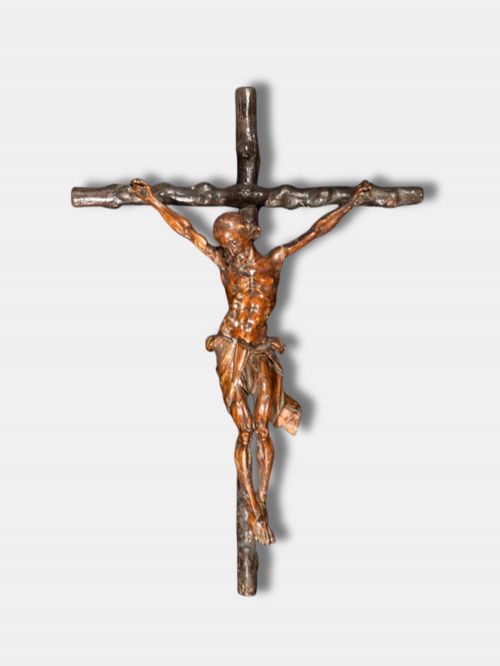
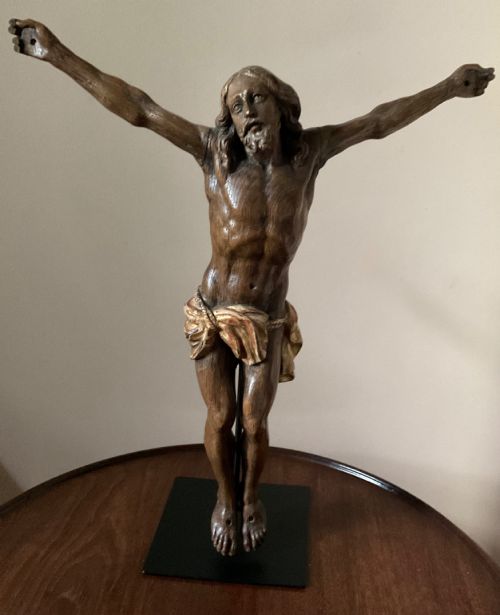
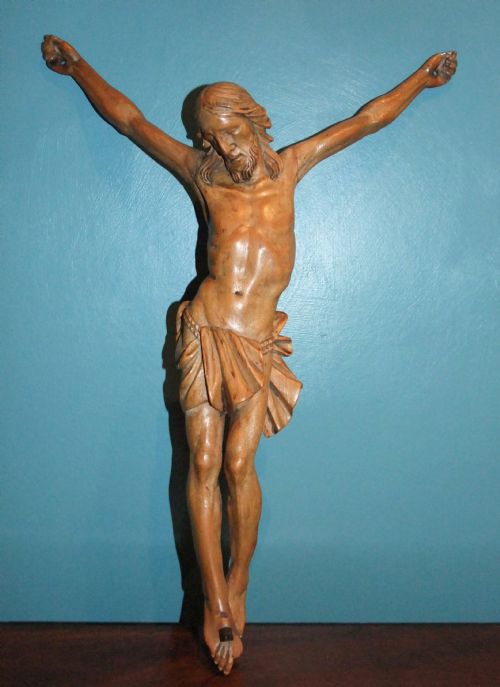
A carved wooden corpus christi brings centuries of devotional craft into a room, taking the form of figures carved from oak, box wood, and fruitwood.
Carved Wooden Corpus Christi
A carved wooden corpus christi represents the figure of Christ on the cross, shaped by hands across the sixteenth, seventeenth, and eighteenth centuries. These devotional pieces range from intimate box wood sculptures to life size figures, reflecting regional workshops in France, Spain, and the Low Countries.
The versions most commonly met on this page belong to the seventeenth and eighteenth centuries, often executed in fruitwood, oak, or lime wood. Some retain traces of parcel gilt or polychrome surfaces, while others present the bare warmth of aged timber.
Makers approached the subject through distinct regional lenses, moving from the restrained power of sixteenth century lime wood to the theatrical drama of Spanish Baroque carving. The resulting objects function both as standalone religious sculptures and as figures mounted upon timber crosses.
Materials and Carving Methods
Carvers selected dense hardwoods such as box wood, walnut, and fruitwood to achieve sharp anatomical detail without splintering the grain. Lime wood also served sculptors well, providing a receptive surface for polychrome pigments and parcel gilt applications.
Figures were hewn from single blocks of timber or assembled from seasoned sections for larger works, minimising later movement in the wood. Chisels and gouges shaped the musculature and drapery before polish or gesso was applied to seal the surface.
Carved Wooden Corpus Christi Retail Price Guide 2026
Typical asking prices for carved wooden corpus christi among the pieces listed under this phrase on Sellingantiques today, from the lower quarter to the upper quarter. They describe what is for sale here now, not the wider market.
Listings feature pieces spanning from the sixteenth century to the 1930s, utilising oak, fruitwood, box wood, and lime wood.
Judging Quality and Execution
Quality rests in the anatomical understanding of the carver, where master hands convey tension in the limbs and hands rather than relying on symmetrical stiffness. Superior pieces demonstrate deep undercutting in the drapery and hair, creating natural shadows across the timber.
The preservation of original surface treatments elevates a piece, particularly where traces of parcel gilt or polychrome remain undisturbed by later cleaning. The choice of timber also dictates refinement, with box wood and fine fruitwoods allowing a level of crisp detail that coarser oaks cannot match.
The Carved Wooden Corpus Christi Glossary
- Corpus Christi
- The physical figure of Christ on the cross. Sculptors rendered this subject in wood, metal, and ivory across various centuries.
- Polychrome
- Painted decoration in multiple colours applied to wood or gesso. This finish often weathered or wore away over centuries of handling.
- Parcel Gilt
- A surface treatment where specific areas receive a thin layer of gold leaf while other parts expose the bare wood beneath.
- Fruitwood
- Dense timber gathered from fruit bearing trees such as pear or apple. Carvers favoured it for its fine, even grain and warm tone.
- Baroque
- An artistic style characterised by exaggerated motion and clear detail. It manifests in these figures through dramatic postures and deep drapery folds.
Carved Wooden Corpus Christi: Frequently Asked Questions
How do I date a wooden corpus christi?
Dating relies on the tool marks left behind, the style of the carving, and the natural ageing of the timber. Seventeenth and eighteenth century pieces often display specific regional postures and drapery conventions.
Examination of the wood grain and any remaining gesso layers helps confirm the period. Experts look at how the arms were joined to the torso, as construction methods shifted over the centuries.
Where were these figures originally displayed?
These sculptures stood in private chapels, monastic spaces, and churches across Europe. Smaller box wood examples served personal devotion in domestic settings.
Larger versions were mounted on substantial wooden crosses above altars or carried in religious processions. Their scale and finish depended entirely on their intended sacred context.
How do I care for antique wood?
Keep the sculpture away from direct sunlight and sudden temperature shifts to prevent the timber from splitting. Stable indoor humidity protects both the wood and any surviving surface finishes.
Dust the surface gently with a dry, soft brush rather than using wet cloths or polishes. Allowing the wood to breathe preserves its natural patina.
What is the difference between French and Spanish pieces?
Spanish carvings from the Baroque period often emphasise intense emotion and dramatic physical tension. French pieces tend toward a more restrained classical elegance in the posture and facial expression.
Regional preferences also influenced the choice of wood, with Spanish workshops frequently utilising local hardwoods finished with rich polychromy.