


Antique Corpus Christi
An antique corpus christi holds centuries of devotion, carved in wood or cast in brass to anchor private prayer and ecclesiastical spaces.
Antique Corpus Christi
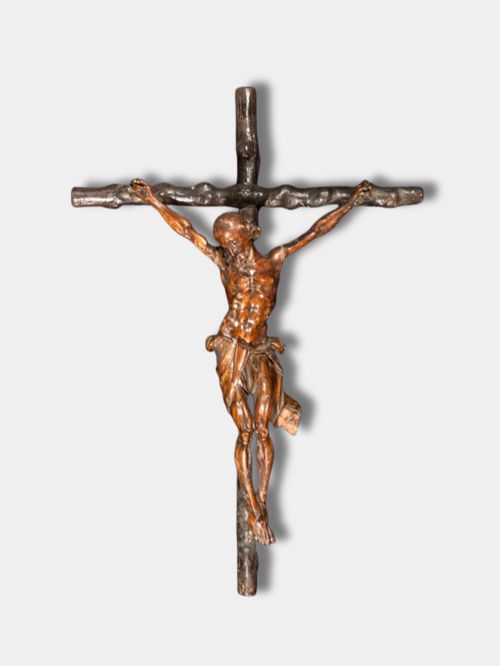
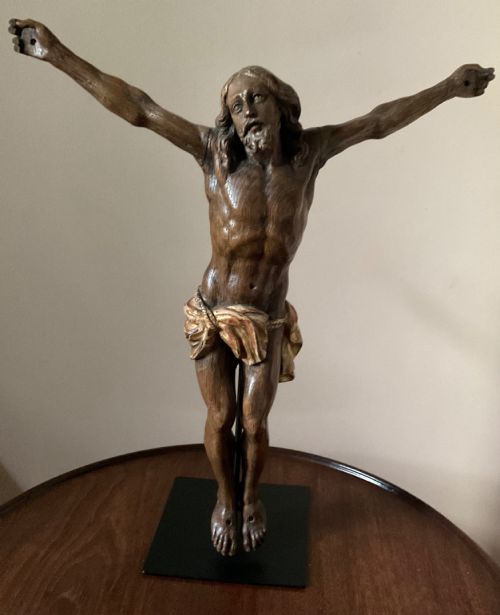
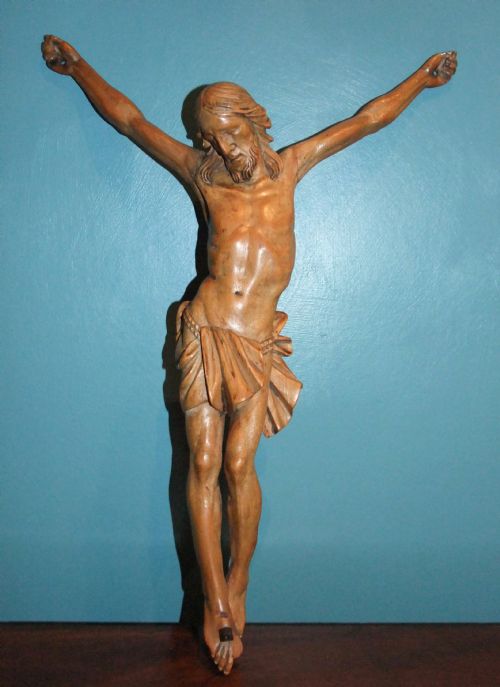
An antique corpus christi represents the figure of Jesus Christ on the cross, taking the form of isolated carved figures or complete standing crucifixes. These pieces emerge from private devotion and church settings across several centuries, reflecting diverse regional styles from Spain, France, Italy, and the Low Countries.
The objects span centuries from the sixteenth through to the twentieth century, moving from Renaissance and Baroque expressions into later Gothic Revival and Art Deco interpretations. Buyers encounter everything from small boxwood figures to life-sized sculptures and substantial altar crosses.
Wooden carvings predominate, executed in fruitwood, oak, walnut, lime wood, and boxwood, alongside metal examples cast in brass and silver. Many retain traces of parcel gilt or polychrome surfaces, while others rely on the natural warmth and deep patina of aged timber.
How they were made
Carvers shaped these figures from dense hardwoods such as boxwood, fruitwood, and lime, employing gouges and chisels to articulate anatomical details and flowing drapery. Workshops often combined separate wooden elements for the cross and the figure, joining them with pegged tenons or metal fixings.
Metal versions utilised traditional foundry casting techniques, pouring molten brass or silver into moulds before chasing the surface details by hand. Patination was achieved through natural handling over time or through applied finishes that enhanced the depth of the carved or cast contours.
Antique Corpus Christi Retail Price Guide 2026
Typical asking prices for corpus christi among the pieces listed under this phrase on Sellingantiques today, from the lower quarter to the upper quarter. They describe what is for sale here now, not the wider market.
An eighteenth-century skull carved alongside the timber cross reminds viewers of mortality in traditional memento mori fashion.
What varies in quality
Quality rests in the anatomical conviction of the carving and the sensitivity with which the sculptor rendered expression and musculature. Finer pieces demonstrate a deep understanding of human form, whereas simpler workshop outputs rely on stylised repetition.
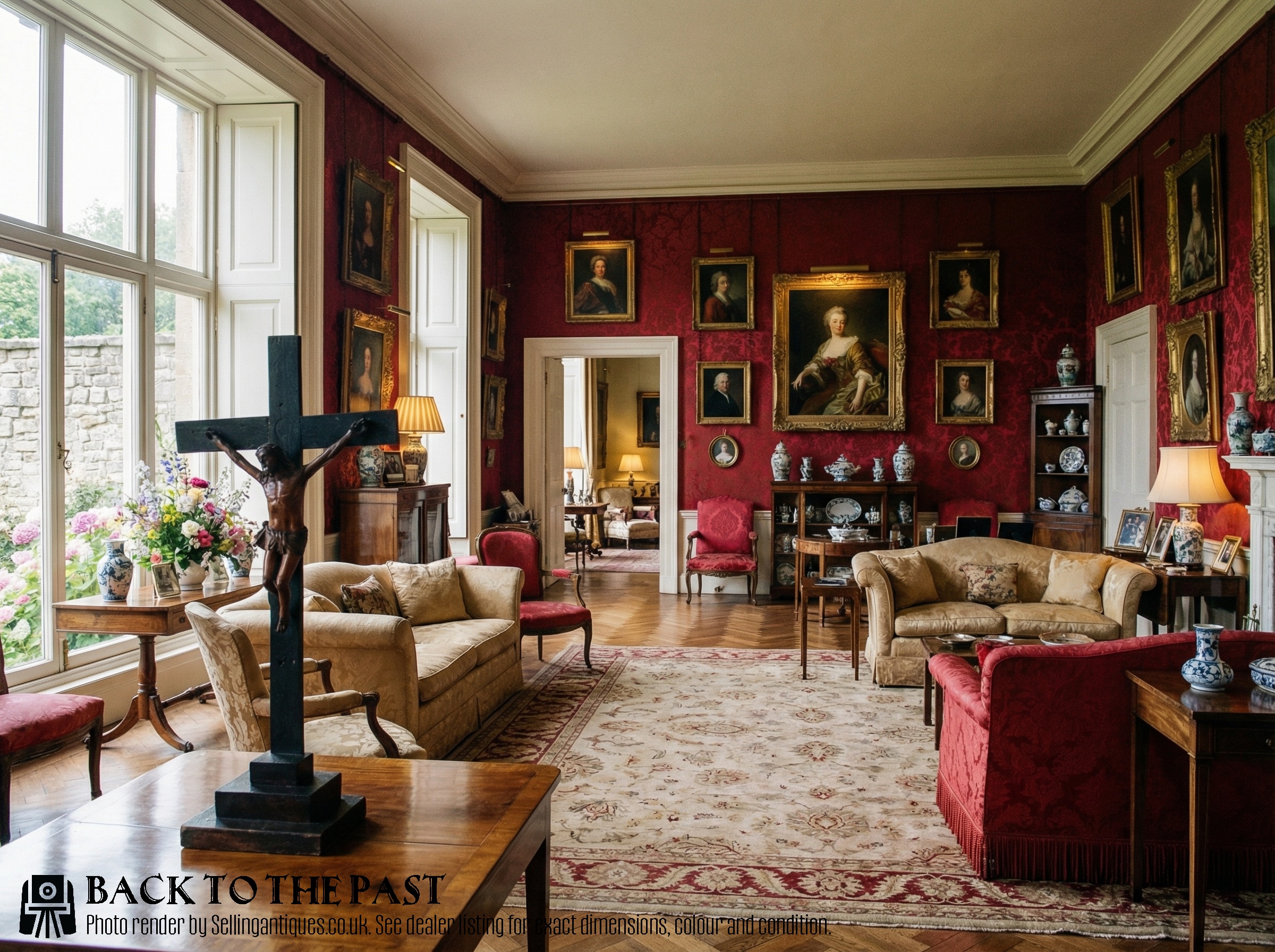
The survival of original surfaces, such as parcel gilt, polychrome pigments, or undisturbed historic patination, elevates the standing of a piece. Associated elements like original wooden crosses and fitted bases further distinguish exceptional examples from isolated figures separated from their supports.
Spanish Baroque workshops·French ecclesiastical carvers·Italian boxwood carvers
The Antique Corpus Christi Glossary
- Corpus Christi
- Latin for the body of Christ, specifically denoting the sculpted or cast figure of Jesus on the cross. This term applies whether the figure remains attached to a cross or exists as a standalone carving.
- Polychrome
- Painted in several colours, a technique applied to wood or stone sculptures to render lifelike flesh tones and vestments. Traces of these historic pigments often survive in protected recesses.
- Parcel Gilt
- Partially gilded with thin sheets of gold leaf, highlighting specific areas of a sculpture or cross while leaving other surfaces exposed. This method created dramatic contrast against dark wood or patinated metal.
- Patina
- The lustrous surface sheen developed on wood or metal through age, handling, and environmental exposure over centuries. A deep patina indicates uncompromised historic surfaces.
- Altar Cross
- A freestanding crucifix designed to stand upon an ecclesiastical altar or domestic devotional table. These objects typically feature a substantial base to support the vertical shaft and corpus.
Antique Corpus Christi: Frequently Asked Questions
How do I date an antique corpus christi?
Dating relies upon stylistic markers such as the theatrical dynamism of the Baroque or the clean geometry of Art Deco pieces. Tool marks, wood species, and the presence of historic polychrome or parcel gilt provide further chronological indicators.
Comparison with documented examples from specific regional traditions helps narrow down the period. One examines the structural joins and the wear patterns on the base and cross for consistency with purported ages.
Were these figures made for homes or churches?
Corpus christi sculptures served both private domestic devotion and public ecclesiastical liturgy. Smaller boxwood and fruitwood examples were typically commissioned for private antechambers or travel altars.
Larger standing crucifixes and life-sized figures originated in parish churches, chapels, and monastic foundations. Their scale and material richness generally reflected the wealth and purpose of the commissioning institution.
How should I care for a wooden corpus christi?
Wooden sculptures require stable environmental conditions with moderate relative humidity to prevent the timber from splitting. Direct sunlight and proximity to heat sources must be avoided to protect aged finishes and historic patination.
Dusting should be performed gently with a soft, dry brush rather than cloths that might snag on delicate carved extremities. Polishes and chemical cleaners are entirely unsuitable for historic wood and metal surfaces.
What is the difference between a crucifix and a corpus christi?
A crucifix specifically denotes a cross bearing the physical figure of Jesus Christ. The term corpus christi refers strictly to the sculptural figure itself, which may be viewed independently or mounted upon a cross.
In the marketplace, pieces described simply as a corpus christi often include the original cross, while others are offered as isolated figures. Understanding this distinction clarifies whether a piece retains its structural mount.