



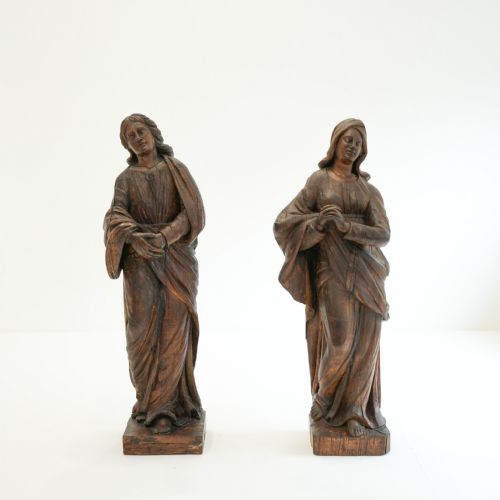


Continental Religious Carving
Continental religious carving encompasses wooden devotional figures and statues spanning several centuries from European workshops.
Continental Religious Carving
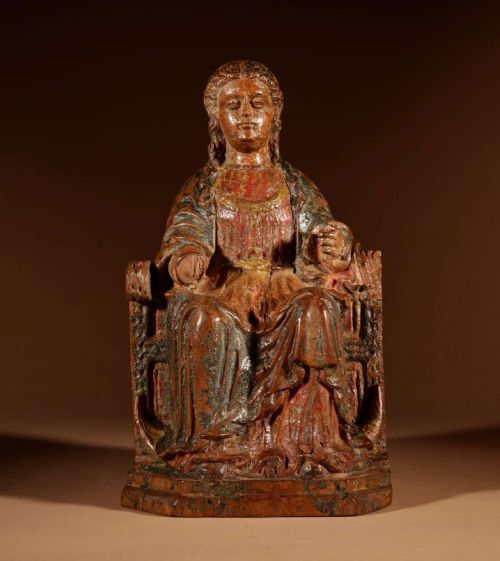
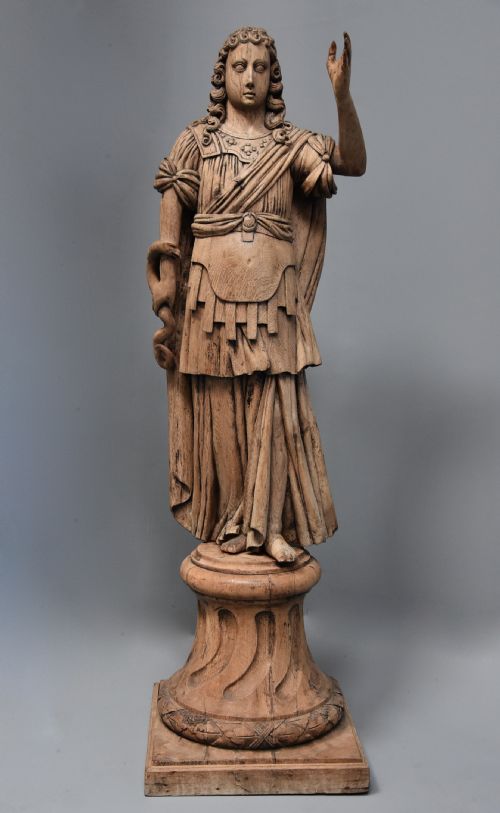
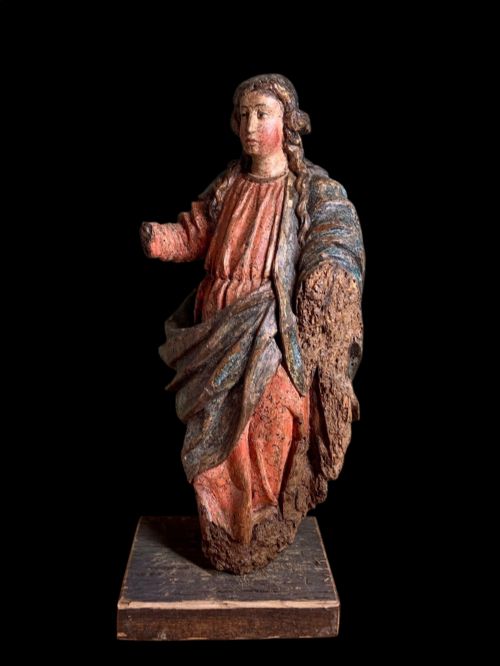
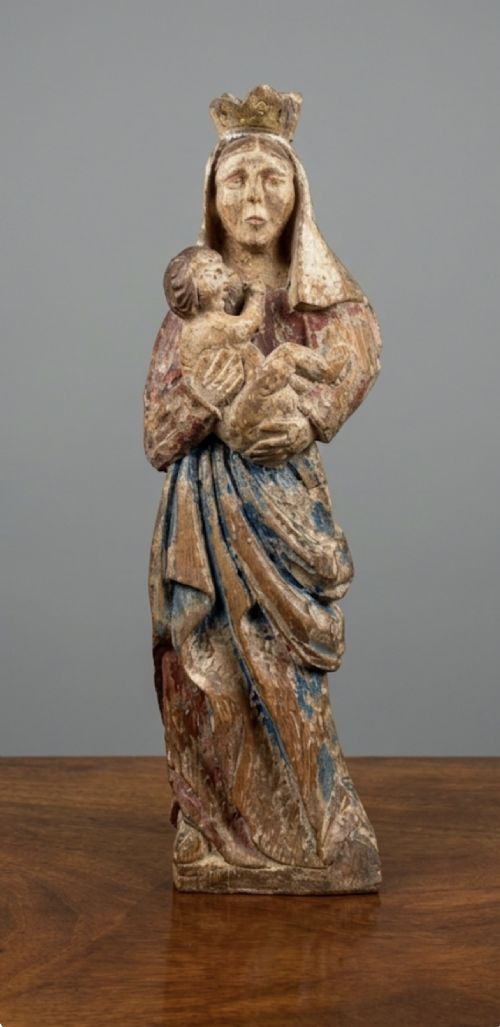
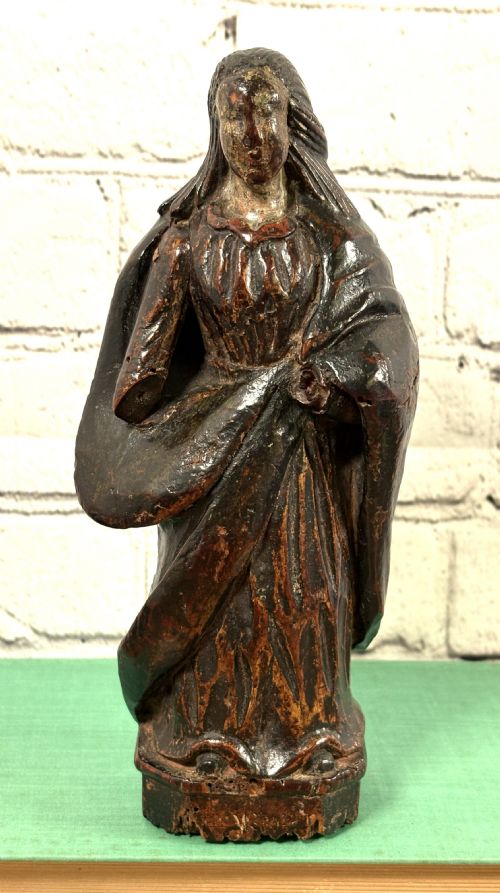
These works comprise figures of saints, Madonnas, and biblical figures originating from European regions during the medieval, Renaissance, and Baroque periods. Pieces range from small domestic devotional miniatures to large life-size church figures carved from solid timber.
Oak, limewood, walnut, and pine serve as the primary substrates for these sculptures, often finished with gesso, polychrome paint, or gold leaf. Many items reflect distinct regional traditions from Italy, Germany, and beyond, displaying styles from early Gothic to ornate Baroque.
Materials and Techniques
Carvers utilised native timbers such as oak, limewood, walnut, pine, and applewood, selecting tight-grained woods that accepted fine chisel work without splitting. Figures were often hewn from single blocks of timber or assembled from jointed sections for larger life-size statues.
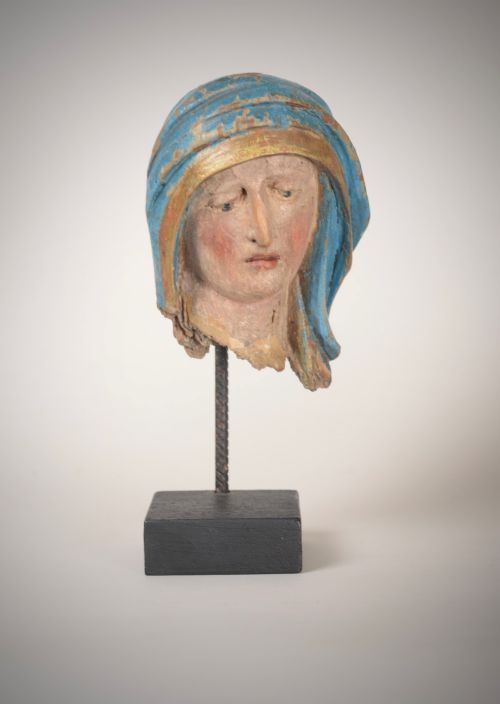
Surfaces were frequently prepared with a gesso ground layer applied over the wood to receive subsequent layers of polychrome paint, silvering, or gold leaf. Pigments and metallic leaf brought realism and devotional splendour to the carved drapery and facial expressions.
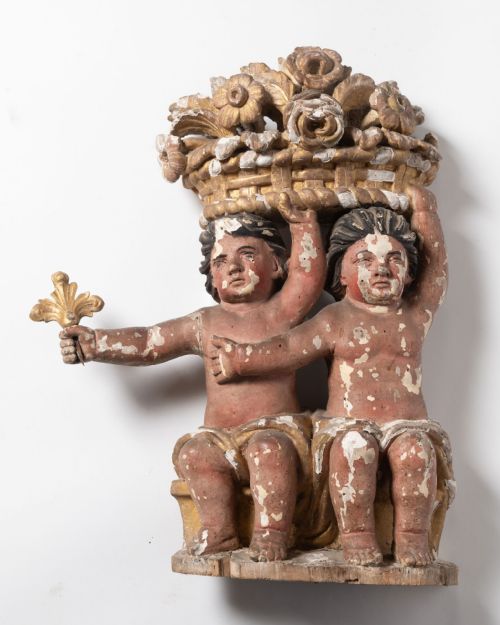
Several heavenly figures on this page appear to be taking a perpetual rest, captured as angels kneeling comfortably upon fluffy wooden clouds.
Craftsmanship and Execution
The sophistication of the carving dictates the distinction between ordinary workshop production and master craftsmanship, particularly in the handling of drapery folds, facial anatomy, and hand gestures. Limewood and boxwood carvings often display greater intricacy due to the cooperative nature of the dense timber.
The preservation of original surface treatments, including traces of early polychrome paint and gilding beneath later layers, significantly influences the integrity of a piece. Pieces retaining their early gesso and pigment layers demonstrate greater historical survival than stripped or heavily repainted surfaces.
The Continental Religious Carving Glossary
- Polychrome
- Painted in several colours. This term describes wooden sculptures finished with pigmented layers over a gesso ground.
- Gesso
- A plaster mixture used as a base for paint or gold leaf. It created a smooth surface on carved wood.
- Corpus Christi
- The body of Jesus represented on the cross. These carvings focus specifically on the figure of Christ.
- Limewood
- A pale timber favoured by European carvers. Its uniform grain allows for detailed undercut chisel work.
- Santos
- A carved figure of a saint or religious figure. The term frequently appears in relation to devotional statues.
Continental Religious Carving: Frequently Asked Questions
How were these carvings used originally?
Devotional carvings served as focal points for prayer within churches, domestic shrines, and roadside altars across Europe. Larger figures stood in niches or on plinths, while smaller miniatures aided personal contemplation.
Many pieces formed parts of larger altarpieces or architectural church schemes before being dispersed into private collections over subsequent centuries.
How should I care for an antique wood carving?
Keep wooden sculptures away from direct heat sources and dramatic fluctuations in humidity to prevent timber splitting. Gentle dusting with a soft, dry brush is sufficient for routine maintenance.
Avoid applying liquid polishes or modern cleaning agents to antique surfaces, particularly where historic gesso or polychrome paint remains intact.
How can I tell the period of a carving?
Stylistic indicators such as the heavy drapery of Gothic figures or the dynamic movement of Baroque sculpture offer initial chronological clues. Tool marks, timber selection, and the composition of underlying gesso layers provide further evidence of age.
Comparative analysis with dated examples from specific regions like Germany or Italy helps narrow down the century of manufacture.
What is the difference between oak and limewood figures?
Oak figures typically date from earlier medieval and Renaissance periods, utilising a coarse-grained timber suited to bold architectural forms. Limewood became popular for its fine grain, allowing carvers to achieve intricate details in hair and facial expressions.
Limewood pieces frequently originate from German-speaking regions during the Baroque era.