



Medieval Religious Sculpture
Medieval religious sculpture carries the carved devotion of centuries, bringing tactile historical presence into modern interiors.
Medieval Religious Sculpture
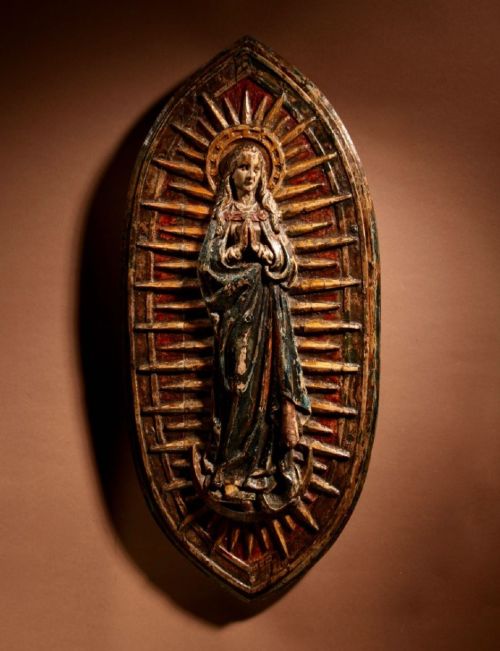
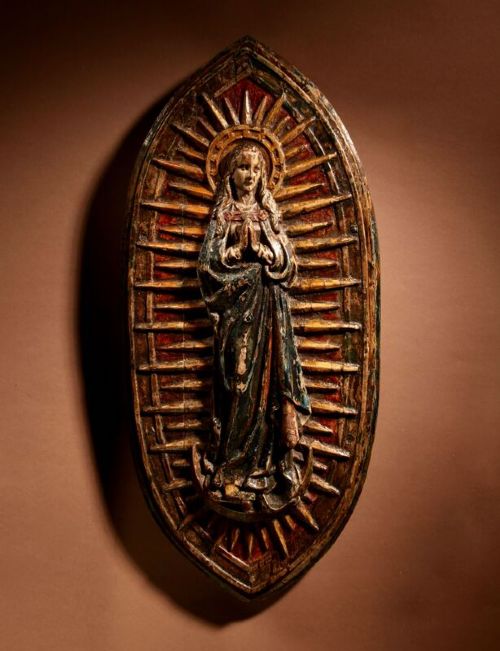
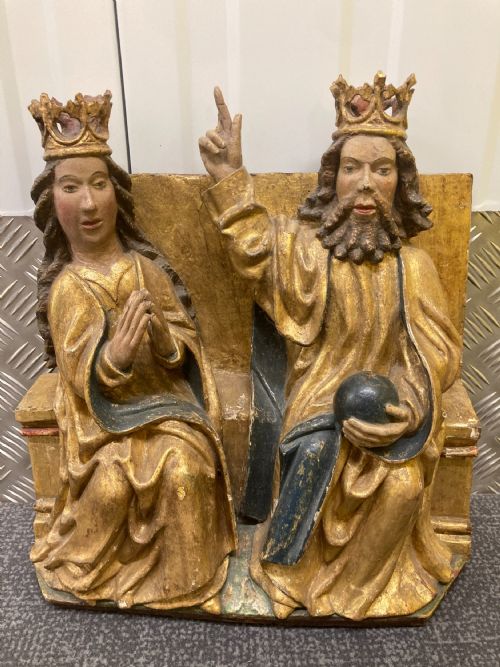
Medieval religious sculpture encompasses devotional wooden and stone carvings created to furnish sacred spaces across Europe. These pieces typically take the form of altarpiece panels, freestanding saints, and commemorative church figures. When exploring medieval religious sculpture, buyers most frequently encounter oak and polychromed wood carvings originating from the fifteenth and sixteenth centuries.
The inventory on this page ranges from pre-sixteenth century church figures to early sixteenth-century French and Flemish works. Surviving examples often depict figures such as the Virgin and Child, saints, and scenes including the Pieta and Christ as a man of sorrow. These artefacts represent the intersection of faith, regional craftsmanship, and domestic or ecclesiastical devotion.
How they were made
Carvers shaped these figures primarily from solid oak, pine, and stone using specialised chisels and gouges. Artisans frequently applied gesso as a smooth ground layer before finishing the surfaces with polychrome paint and gold leaf. This combination of carved wood, pigment, and gilding gave liturgical figures a lifelike and luminous presence within dimly lit sanctuaries.
Many sculptures survive as fragments or panels from larger altarpieces, reflecting the dismantling and dispersal of church furnishings over time. The application of polychrome paint and gesso often varied by region, reflecting distinct workshop traditions across Germany, France, and the Low Countries.
Listed periods span pre-sixteenth century, the sixteenth century, and the year nineteen hundred.
What varies in quality
The sculptural depth and expressive capability of the carving distinguish finer pieces from simpler workshop production. Master carvers achieved nuanced facial expressions, fluid drapery folds, and dynamic anatomical proportions that elevate figures like the Pieta or Madonna and Child. Conversely, utilitarian church figures often display rigid postures and heavier, less detailed toolwork.
The survival of original surface treatments, including traces of polychrome paint, gesso, and gold leaf, significantly impacts the historical integrity of a piece. Carvings that retain their early decorative layers offer clearer insight into medieval aesthetics than those stripped down to bare wood.
The Medieval Religious Sculpture Glossary
- Polychrome
- Decorated in a variety of colours. This technique involved applying paint directly to wood or over a gesso ground to render sacred figures more lifelike.
- Gesso
- A plaster mixture used as a base coat on wood carvings. It provided a smooth surface for subsequent layers of paint and gold leaf.
- Pieta
- A subject in Christian art depicting the Virgin Mary supporting the dead body of Christ. It appears frequently in late medieval wood and stone sculpture.
- Altarpiece
- A structure set above or behind an altar. Central panels from these large wooden assemblies often survive as standalone sculptures.
- Giltwood
- Wood that has been covered with a thin layer of gold leaf. This opulent finish highlighted important figures within liturgical settings.
Medieval Religious Sculpture: Frequently Asked Questions
What subjects do these sculptures depict?
These carvings portray biblical figures, saints, and devotional scenes such as the Madonna and Child, the Pieta, and various church bishops.
Subjects were chosen to inspire prayer and reflect the religious narratives central to medieval and Renaissance worship.
How should I display medieval sculpture at home?
Place wooden and stone carvings on sturdy tables, consoles, or mount them securely as wall sculptures away from direct heat sources.
Stable indoor humidity helps preserve ancient wood, gesso, and surviving polychrome paint.
How can I tell the period of a carving?
Dating relies on stylistic clues such as Gothic drapery folds, facial expressions, and the specific iconography associated with fifteenth and sixteenth-century workshops.
Material choices, including regional oak usage and underlying gesso layers, also point toward specific historical eras.
Are these pieces from churches?
Many surviving figures originated as components of larger church altarpieces, rood screens, or devotional niches.
Over the centuries, changes in architectural fashion and the dispersal of ecclesiastical furnishings led to these pieces entering private collections.