
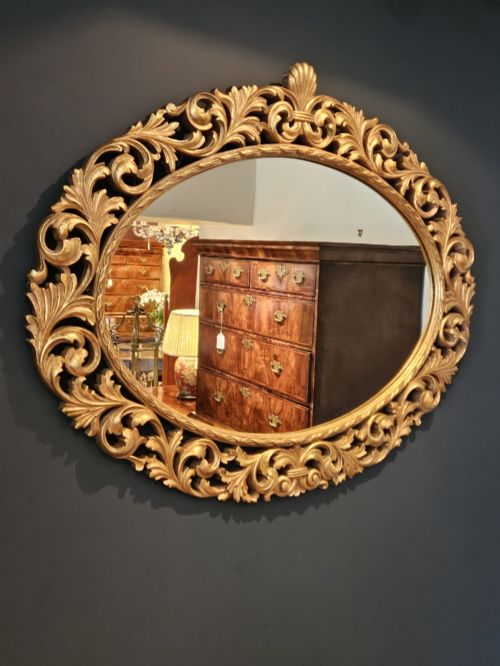
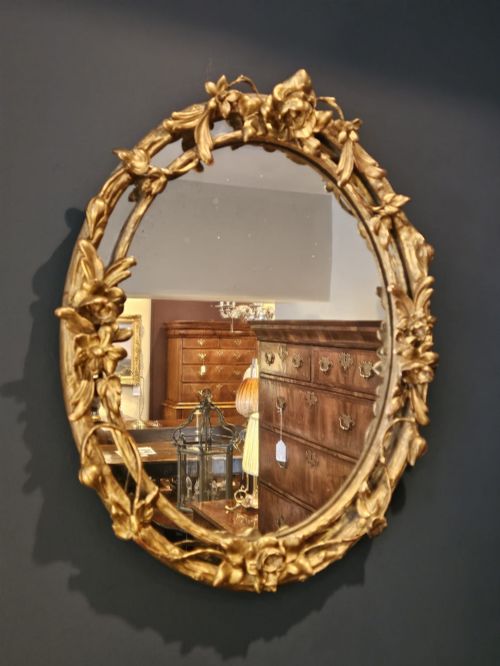
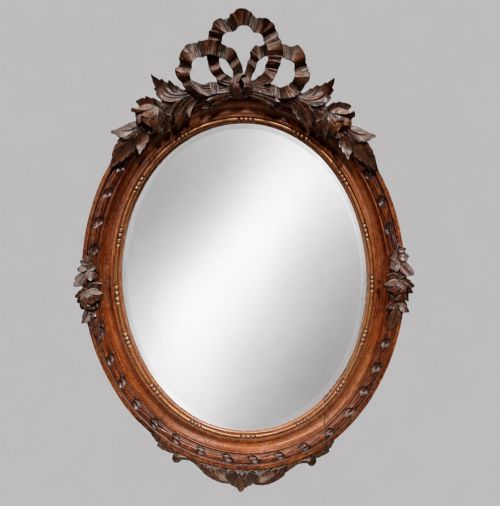
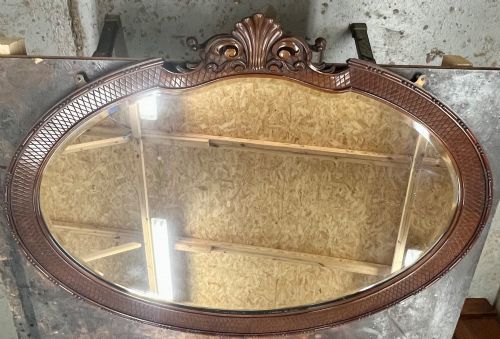
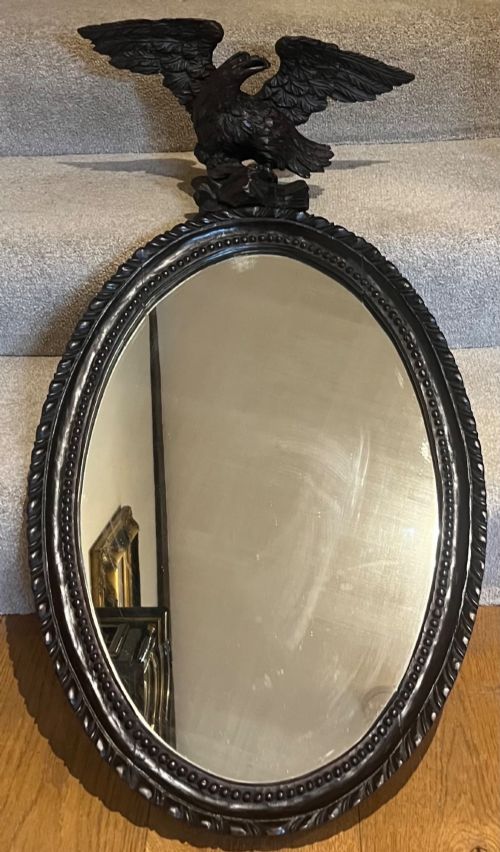


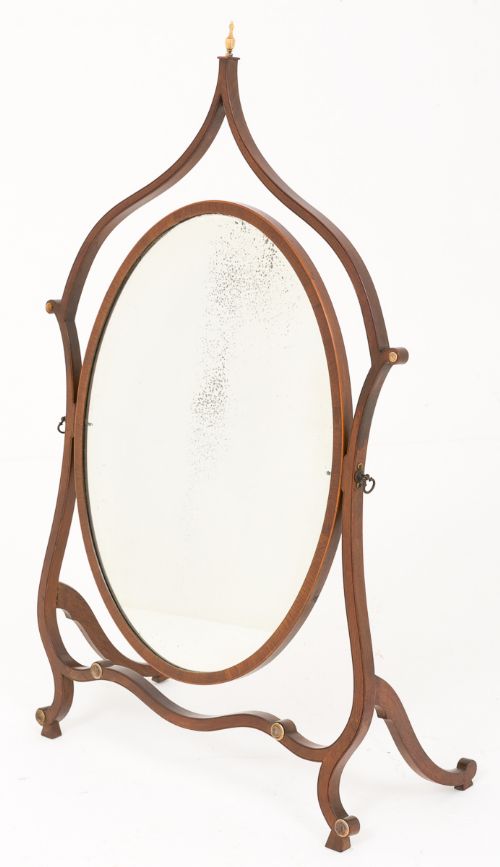
Carved Timber Oval Mirror
These carved timber oval mirror pieces bring warmth and refined proportion to a wall, offering rich grain and historic handwork.
Carved Timber Oval Mirror
When you search for a carved timber oval mirror, you are looking at wall and cheval mirrors framed in solid woods like mahogany, walnut, and giltwood. The form spans the Victorian and Edwardian eras, stretching from the late nineteenth century into the nineteen-twenties.
The version you are most likely to meet on this page is a nineteenth-century wall mirror with carved wood detailing. These pieces often feature gilded finishes or rich dark timbers shaped into classical or revival styles.
Makers shaped these frames to hang vertically or horizontally in principal rooms, combining utility with decorative carving. The curved outline softens the geometry of a room, providing a traditional focal point above a mantelpiece or console.
How they were made
Frames are constructed from timbers such as mahogany, walnut, and general carved wood, shaped by hand using traditional joinery. Artisans applied gold leaf and giltwood finishes to highlight the relief work on select Victorian and revival pieces.
Glass plates, including bevelled examples, are fitted into the timber rebates, often retaining their original backing and silvering. Carvers worked directly into the solid wood to create motifs such as rose vines, eagles, and flowing rococo scrolls.
Some Victorian frames feature carved wooden rose vines so detailed you can almost smell the garden.
What varies in quality
The depth and crispness of the hand-carving dictate the distinction between standard production and superior craftsmanship. Sharp undercut details and well-defined motifs reflect a more skilled hand at the bench.
The choice of primary timber and the application of gold leaf or gilt finishes affect the visual weight of the frame. Heavier, dense woods with rich natural grain or even, bright gilding elevate the presence of the piece on the wall.
The Carved Timber Oval Mirror Glossary
- Giltwood
- Timber that has been coated with gold leaf or metallic gilt paint. This finish catches the light and adds brightness to darker interior spaces.
- Bevelled glass
- A mirror plate with edges that are ground and polished at an angled slope. This technique creates a decorative prismatic border around the reflection.
- Cheval mirror
- A freestanding full-length mirror mounted in a frame that swivels between vertical upright supports. These allow the glass to tilt to various angles.
- Rococo revival
- A nineteenth-century design style mimicking the ornate, asymmetrical scrolls and naturalistic motifs of the eighteenth-century French movement. It appears frequently on Victorian mirror frames.
- Black Forest
- A style of wood carving originating from the mountain region of central Europe, known for deeply rendered natural subjects and forest animals. These pieces display dark timber and robust relief work.
Carved Timber Oval Mirror: Frequently Asked Questions
Where should I hang a carved timber oval mirror?
These mirrors suit spaces above a fireplace, in an entrance hall, or above a bedroom dressing table. The vertical curve draws the eye upward and breaks up flat expanses of wall.
Ensure the wall fixings match the weight of the timber and the heavy glass plate. Secure mounting to solid masonry or timber studs keeps the piece safe.
How do I identify a Victorian mirror?
Victorian examples often display heavy timber frames, deep mouldings, and motifs like rose vines or gothic influences. The construction methods on the reverse typically show period fixings and older backing boards.
Materials commonly include walnut, mahogany, and heavy giltwood. Comparing the carved details to established revival styles helps confirm the nineteenth-century origin.
Are the mirror plates original?
Many pieces retain their original glass, which may show light foxing, small blemishes, or gentle age spots. These characteristics confirm the historic nature of the glass plate.
Replacement glass is occasionally fitted if the original was damaged. Inspecting the silvering from the back often reveals clues about the age of the plate.
How do I care for giltwood frames?
Giltwood and gold leaf surfaces require gentle dusting with a soft dry brush to avoid disturbing the fragile finish. Water and harsh cleaning products must be kept away from the gilded timber.
Positioning the frame away from direct sunlight and damp conditions preserves the wood and prevents the gesso foundation from cracking over time.