



Ornate Floral Crest Mirror
An ornate floral crest mirror brings light and botanical carving into a room, offering the decorative presence collectors seek.
Ornate Floral Crest Mirror
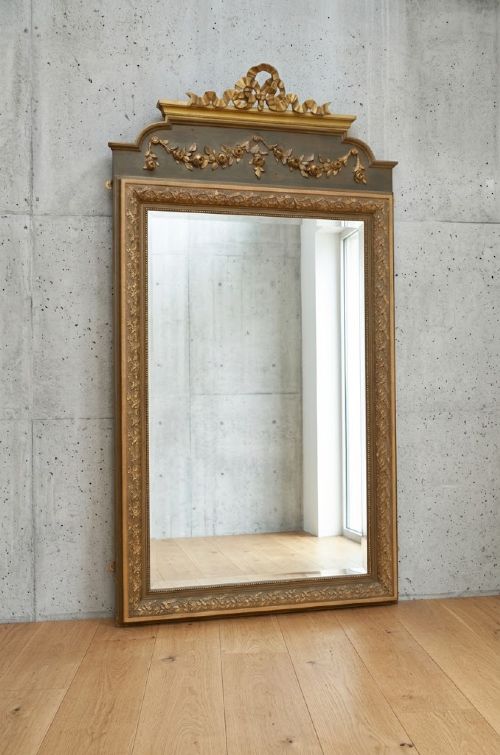
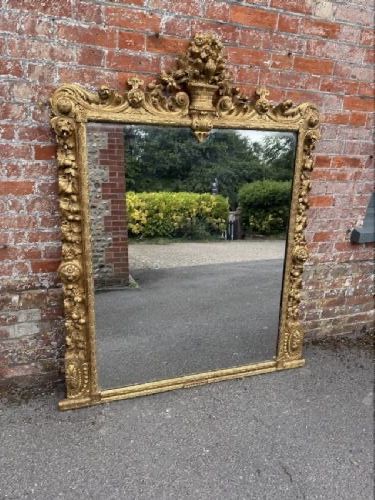
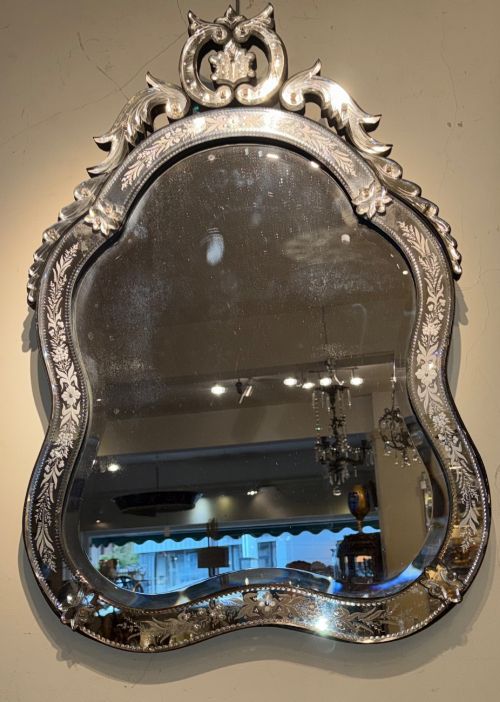
An ornate floral crest mirror is a wall or overmantel glass piece defined by sculptural crests, botanical flourishes and traditional frames. These pieces appear across Victorian, Belle Epoque and early twentieth-century periods, with Venetian and French Rococo Revival styles prevailing.
The buyer meets carved giltwood, gesso and painted wood frames hung on walls or positioned above mantels. Wall mirrors and overmantel mirrors dominate the selection, ranging from compact oval formats to large English and continental formats.
How they were made
Carpenters carved wooden frames by hand before applying layers of gesso to build up intricate floral and ribbon crest details. Gilding or paint finished the surface, creating metallic sheen or soft painted tones over the carved substrate.
Mirrored glass plates, including bevelled and foxed plates, were fitted into the prepared rebates. Artisans combined joinery and sculptural modelling to achieve the substantial architectural weight seen in nineteenth-century and early twentieth-century examples.
The selection includes Venetian, French Rococo Revival, and Victorian styles, ranging from compact wall mirrors to large carved overmantels.
What varies in quality
The depth and crispness of the carved floral motifs separate standard production from superior examples. Skilled hand-carving retains sharp botanical detail in the wooden crests, whereas weaker pieces show soft or heavily filled ornament.
The integrity of the original giltwood or gesso surface determines the aesthetic success of the piece. Fine mirrors maintain harmonious patination across the frame, while lesser versions suffer from heavy, unsympathetic re-gilding or poor surface repairs.
The Ornate Floral Crest Mirror Glossary
- Giltwood
- Wood that has been coated with thin gold leaf or gilt paint. This finish creates a bright reflective surface that catches interior light.
- Gesso
- A plaster-like mixture applied to wood frames to create a smooth base for carving and gilding. It allows artisans to shape sharp decorative details.
- Overmantel Mirror
- A large mirror designed to sit directly above a fireplace mantel. These pieces anchor the domestic reception room.
- Foxed Plate
- Mirrored glass showing spots of oxidation and dark ageing. Collectors value this natural degradation for historical authenticity.
- Bevelled Plate
- Glass with an angled, ground edge around the perimeter. This technique adds refracted light and depth to the mirror.
Ornate Floral Crest Mirror: Frequently Asked Questions
How do I date an antique mirror?
Dating relies on examining the construction of the wooden frame, the materials used for the backing, and the characteristics of the glass plate itself. Hand-carved elements and early framing techniques point clearly to nineteenth-century manufacture.
Secondary clues include the type of gilding and any foxing present on the mirrored glass. Comparing these physical traits to documented period styles helps confirm the decade of origin.
Where should I hang an overmantel mirror?
An overmantel mirror looks best mounted securely directly above a fireplace mantel in a reception room. Its generous scale reflects light across the space and anchors the architectural focal point of the room.
Ensure the wall fixings match the substantial weight of carved wood and gilt frames. Professional installation guarantees safety for heavy nineteenth-century pieces.
How do I clean an antique giltwood frame?
Dust the carved floral crests gently using a soft, dry brush to prevent damage to fragile gesso and gilding. Avoid liquid cleaners or moisture, which can lift the gold leaf or degrade the wooden substrate.
Regular, careful dusting preserves the original surface patination. Professional conservation is recommended for deep cleaning or repairing loose crest work.