

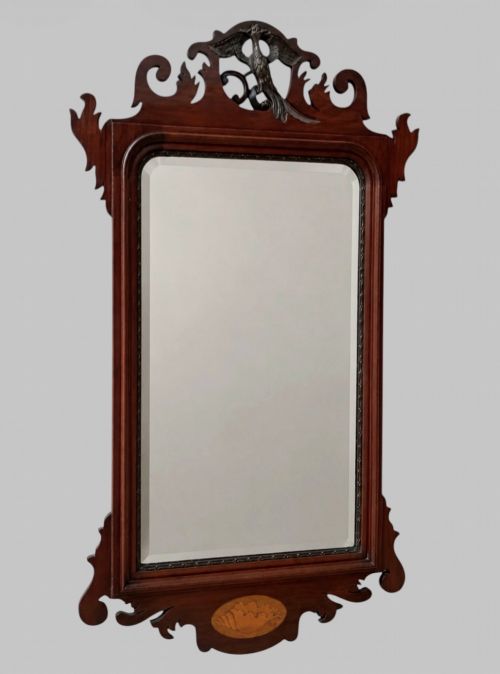


Carved Shell Mirror
A carved shell mirror brings classical motif and reflective depth to a room, drawing the eye with carved coastal detail.
Carved Shell Mirror
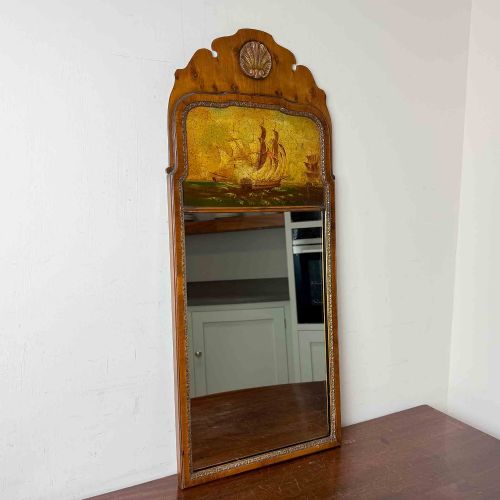
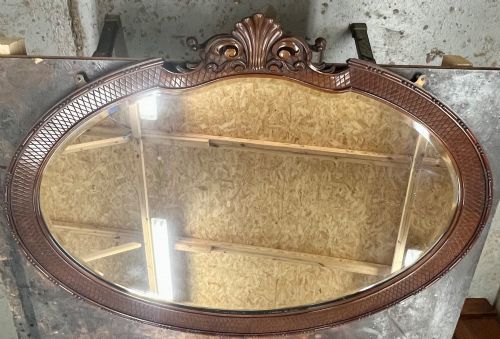
A carved shell mirror combines wooden or gilt framing with decorative shell motifs, appearing across periods from the seventeenth century to the twentieth century. These pieces function primarily as wall mirrors, overmantel mirrors, pier mirrors, and cheval mirrors in various rooms.
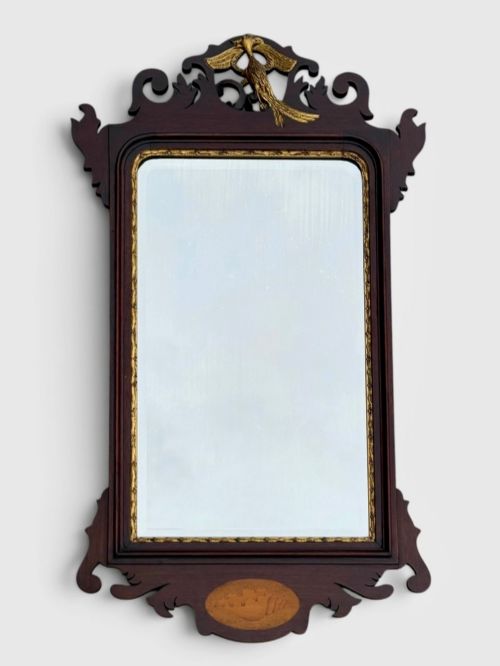
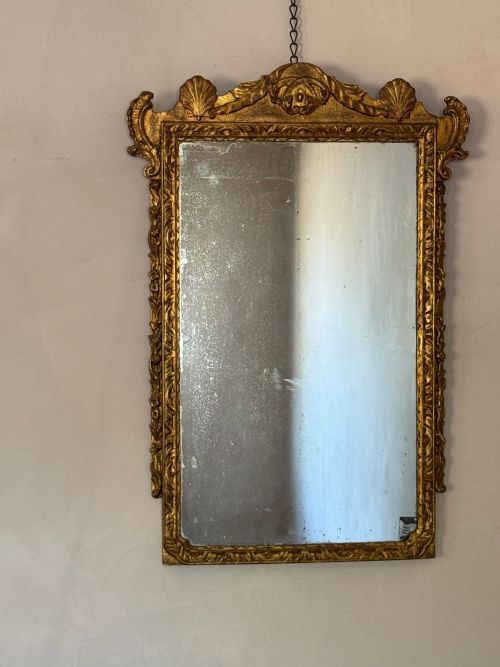
The version most commonly met on this page is the walnut or mahogany wall mirror bearing revival styling, alongside nineteenth-century giltwood pieces. Makers incorporated shell carvings into frames shaped by Queen Anne, Georgian, and Rococo traditions.
Surviving examples span centuries of cabinetmaking, showing how carvers adapted maritime themes into domestic furnishings. The phrase encompasses both antique originals and revival interpretations constructed with traditional timber and glass.
Materials and construction methods
Frames rely on solid timbers such as walnut, mahogany, yew wood, pine, and gessoed wood, often finished with gilt or paint. Artisans shaped these materials using fretwork, carving, and parcel gilding to achieve ornate visual depth.
Reflective surfaces consist of mirror glass fitted into rebated frames, sometimes featuring bevelled edges. Gilding was applied over gesso to create luminous surfaces on giltwood and overmantel frames.
Listings feature walnut, mahogany, giltwood, and gesso across periods spanning from the seventeenth century through the twentieth century.
Judging the quality of the work
Quality rests on the crispness of the carving within the shell motif and the framing details, such as fretted scrolls and bird carvings. Finer pieces demonstrate precise joinery and balanced proportions across the wooden or gilt structure.
The integrity of the original glass and the application of gesso and gold leaf distinguish superior examples from standard production. Depth of tone in the walnut or mahogany veneer also indicates higher grade cabinetmaking.
The Carved Shell Mirror Glossary
- Giltwood
- Wood that has been coated with gold leaf or a gold-coloured finish. This technique creates a bright, reflective surface popular on ornate frames.
- Trumeau mirror
- A decorative mirror integrated into a wall panel or painted surround. These pieces often feature painted scenes or carvings above the glass.
- Pier mirror
- A tall mirror designed to hang on the narrow pier of wall between windows. They maximise light in classical interiors.
- Overmantel mirror
- A wide mirror intended to be hung above a fireplace mantel. These frames frequently echo the architectural style of the room.
- Fretwork
- Ornamental design worked in wood with a fretsaw, creating open patterns. It appears frequently on eighteenth-century and revival frames.
Carved Shell Mirror: Frequently Asked Questions
Where should I hang a carved shell mirror?
These mirrors suit placement above a fireplace, across from a window to reflect light, or in an entrance hall. Their decorative frames make them effective focal points in living spaces.
Ensure the wall structure supports the weight of heavier giltwood or overmantel pieces before hanging.
How do I care for antique mirror glass?
Clean the glass gently using a soft cloth and mild cleaning solution applied to the cloth rather than directly to the surface. Avoid harsh chemicals that could damage original silvering or adjacent timber.
Dust carved wooden and gilt frames with a dry brush to protect delicate details.
What is the difference between antique and revival pieces?
Antique pieces were manufactured during the primary period of a style, such as the eighteenth century for early walnut frames. Revival pieces date to later eras, such as the late nineteenth or early twentieth century, but replicate earlier aesthetic movements.
Both categories utilise traditional woodworking techniques and materials.
How can I identify the period of a mirror?
Examine the timber species, framing style, and construction methods used at the back of the piece. Stylistic markers like Queen Anne curves or Rococo asymmetry offer clues to the era of manufacture.
Screws, fixings, and the condition of the mirror glass also help date the object.