


Carved Scrollwork Mirror
These carved scrollwork mirror examples combine centuries of cabinet-making skill with decorative presence, offering instant depth and light to a room.
What They Are
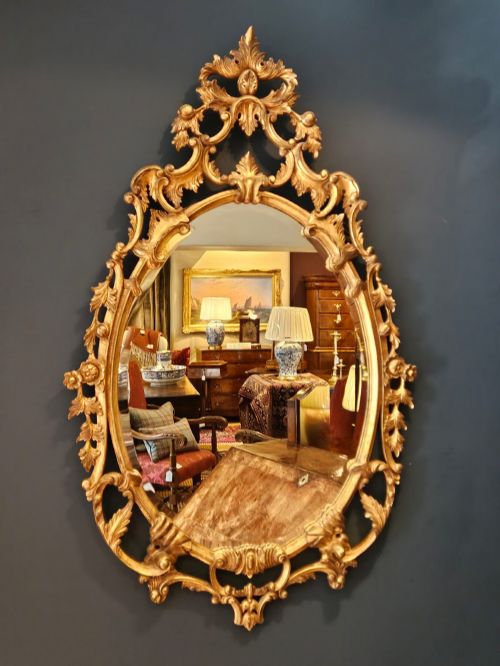
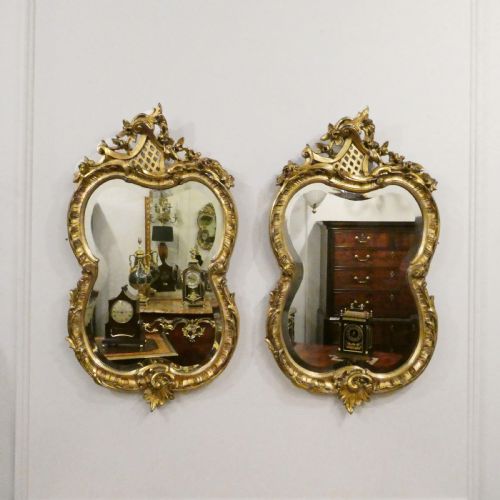
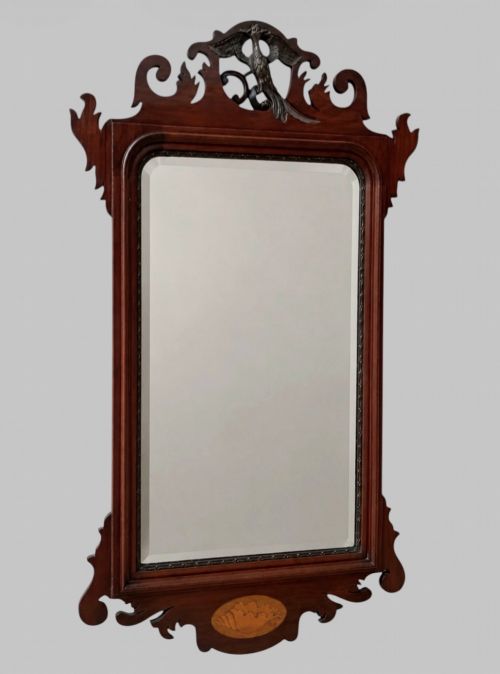
A carved scrollwork mirror delivers ornate wooden framing characterised by sweeping curves, acanthus leaves and pierced fretwork details. These wall mirrors appear across several distinct historical periods, running from eighteenth-century Georgian examples to later nineteenth-century revivals and early twentieth-century interpretations.
The version most commonly met on this page is the nineteenth-century wall mirror drawing on earlier Rococo or Chippendale traditions. These pieces utilise rich timbers like mahogany and walnut alongside heavily gilt surfaces to create striking focal points.
Makers drew heavily on classical ornamentation, producing forms ranging from oval giltwood shapes to large overmantle designs. Each piece reflects the aesthetic preferences of its era, bridging utility and decorative art.
How They Were Made
Craftsmen carved these frames from dense hardwoods including mahogany, walnut and padauk wood, often applying a layer of gesso before gilding the surface with gold leaf. This combination provided a stable base for intricate undercut foliage and C-scroll motifs.
Mirror glass of the period was set into the wooden rebate behind protective backboards, secured by traditional joinery methods appropriate to the century of manufacture. Fretwork panels were frequently sawn from single timber boards before receiving detailed hand-chiselling.
Retail Price Guide 2026
Typical UK retail prices for carved scrollwork mirror, calculated from the Sellingantiques database of over a million retail prices indexed since 2003. This retail price guide relies exclusively on Sellingantiques data; no external sources or auction records are used, so the figures do not describe the wider market.
Listings feature items spanning the eighteenth, nineteenth and early twentieth centuries, constructed from giltwood, mahogany, walnut and padauk wood.
What Varies in Quality
The distinction between ordinary and exceptional work lies in the depth and crispness of the hand-carved detail. Superior pieces exhibit sharp undercutting in the scrollwork and naturalistic flow in the floral elements, whereas lesser examples appear flat and mechanical.
Material selection also dictates the hierarchy, with dense padauk wood or finely figured walnut sitting alongside traditional giltwood surfaces. The integration of the frame corners and the preservation of original gilding or timber patination ultimately define the standing of each mirror.
The Carved Scrollwork Mirror Glossary
- Giltwood
- Timber coated with gold leaf over a prepared gesso ground. This finish provides a bright reflective surface that catches interior candlelight or daylight.
- Gesso
- A plaster-like mixture applied to wood frames to create a smooth surface for gilding. It allows craftsmen to model fine relief details before applying gold leaf.
- Fretwork
- Openwork wooden decoration cut with a fretsaw. This technique creates delicate geometric or organic patterns within mirror frames.
- Overmantle
- A large mirror designed specifically to hang above a fireplace mantel. These pieces occupy significant wall space and often feature extended horizontal proportions.
- Padauk
- A dense exotic hardwood valued for its deep colour and durability. It provides a stable base for intricate carving without splintering.
Frequently Asked Questions
Where should I hang a carved scrollwork mirror?
These mirrors suit principal reception rooms, hallways or above fireplace mantels where their reflective qualities amplify natural light.
Ensure the wall construction safely supports the weight of dense hardwood and gilt frames.
How do I identify the period of a mirror?
Examine the timber species, construction joints and the style of the carved ornamentation.
Eighteenth-century examples display different handling of Rococo motifs compared to nineteenth-century revivals or early twentieth-century pieces.
Are these mirrors heavy?
Solid hardwoods like mahogany, walnut and padauk combined with gesso and glass create substantial weight.
Proper wall fixings are essential for secure installation.
Can I clean the original gilding?
Original gilt surfaces require gentle dusting with a soft, dry brush to avoid damaging the delicate gold leaf.
Avoid liquid cleaners and moisture entirely on antique giltwood.