
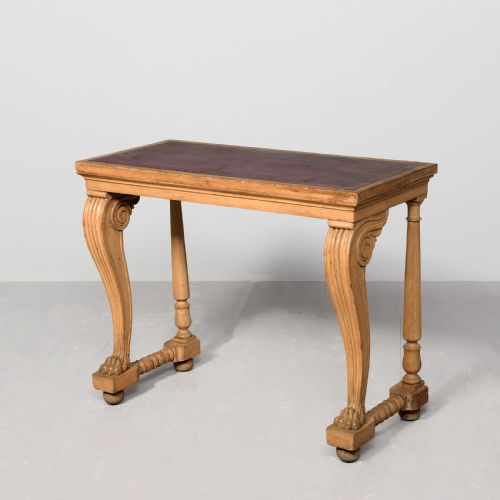
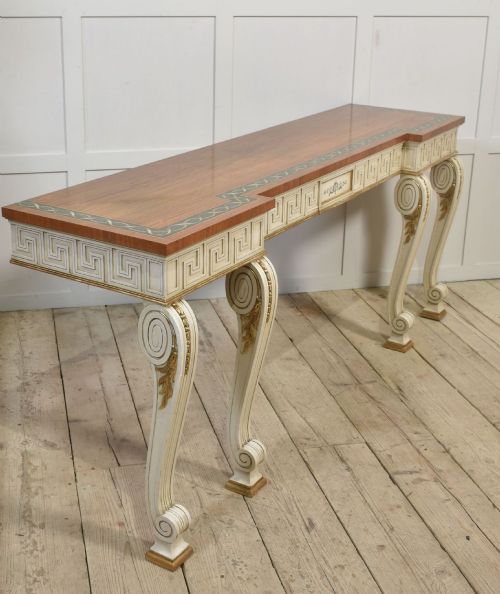
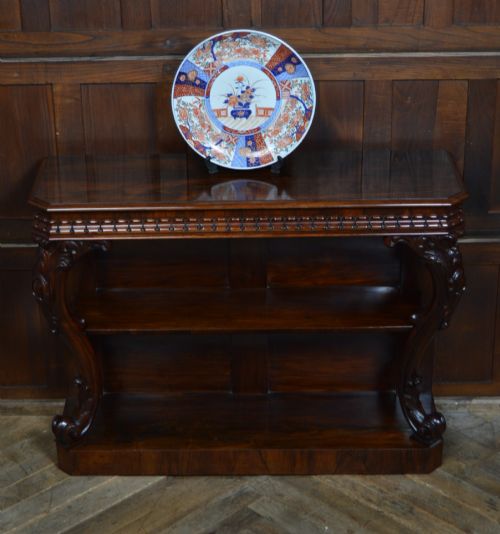

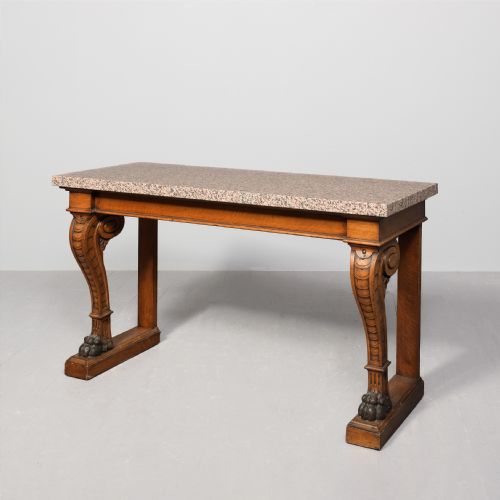
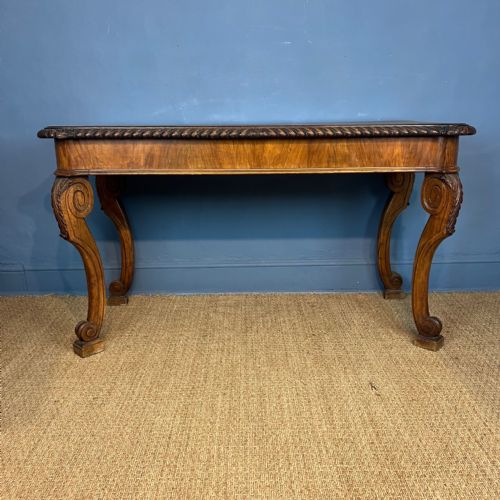


Carved Scroll Console Table
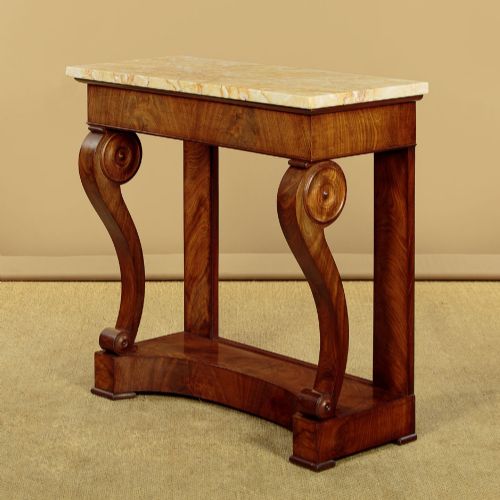
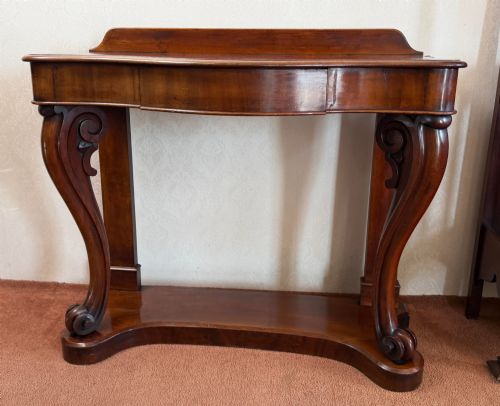
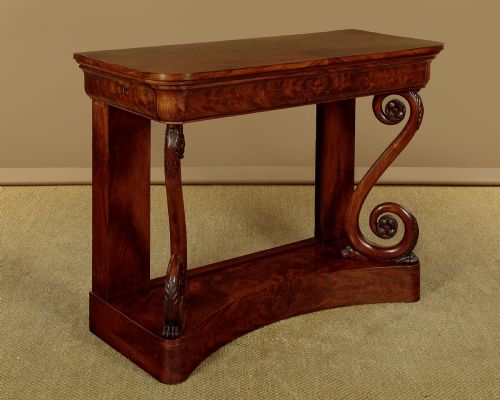
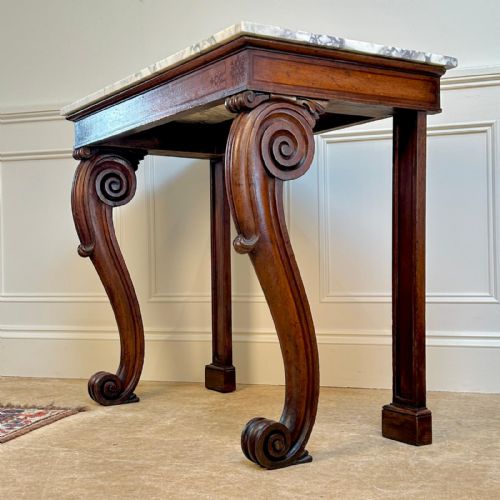
A carved scroll console table brings architectural presence and fluid woodwork to a hallway or drawing room.
Carved Scroll Console Table
A carved scroll console table is a wall-fixed or freestanding surface defined by sweeping, curved timber supports. These tables appear across multiple periods including the Regency, William IV, and Victorian eras.
Materials and construction methods
Cabinetmakers utilised dense timbers such as mahogany, walnut, and rosewood to achieve deep, crisp carving on the scroll legs and friezes. Hardwoods provided the structural integrity required to support heavy stone surfaces.
Many examples feature contrasting marble or granite tops fitted directly to the wooden base. Timber elements are shaped and joined using traditional cabinetmaking techniques suited to complex curves.
Listings span the Georgian, Regency, William IV, and Victorian periods, incorporating mahogany, rosewood, oak, walnut, and marble.
Judging the quality of the carving and timber
Quality rests in the depth and sharpness of the scrollwork, where hand-chiselled detailing shows confident execution rather than mechanical repetition. Finer pieces display well-figured mahogany or rosewood veneers matched symmetrically across the top and frieze.
The integration of heavy marble slabs requires robust framing beneath the surface to prevent structural sagging. Superior examples maintain balanced proportions where the scroll supports harmonise visually with the tabletop.
James Mein of Kelso·Robert Strahan·Alexander McKenzie of Glasgow·Whytock and Reid
The Carved Scroll Console Table Glossary
- Console table
- A table designed to stand against a wall, traditionally fixed with brackets or supported by front legs. It serves a decorative and display function in principal rooms.
- Scroll
- An ornamental architectural or furniture motif resembling a rolled-up parchment or curling wave. It forms the primary structural and decorative support on these tables.
- Frieze
- The broad horizontal band running directly beneath the tabletop, often plain or decorated with carving. On better tables, this section highlights the grain of the timber.
- Pier table
- A specialised table designed to stand against the wall between two windows, frequently positioned beneath a mirror. It shares many forms with the standard console table.
Carved Scroll Console Table: Frequently Asked Questions
Where should I place a console table?
These tables sit naturally against a hallway wall or beneath a large mirror in a living room. Their narrow profile allows them to occupy circulation spaces without blocking movement.
Because many are designed to be viewed from the front or sides, positioning them where the carved scrolls remain visible lets the craftsmanship stand out.
How do I care for a marble top?
Marble surfaces require simple wiping with a damp cloth and mild soap to remove dust and daily grime. Avoid acidic liquids or harsh chemical cleaners that can etch the polished stone.
Using coasters and placemats protects the porous surface from staining and moisture rings over time.
Are these tables freestanding?
While many console tables are designed to stand against a wall for stability, several examples on this page are built as freestanding centre tables. Traditional console tables often feature finished fronts and sides while the back remains plain.
Examining the rear finish and leg construction reveals whether a piece requires wall fixing or stands securely on its own.
How do I distinguish Regency from Victorian examples?
Regency pieces often display restrained classical lines influenced by ancient Greek and Roman design, utilising dark woods and precise brass mounts. Victorian tables tend to feature heavier proportions, bolder scrollwork, and rich rosewood or walnut veneers.
Looking closely at the carving depth and secondary timbers helps clarify the period of manufacture.