


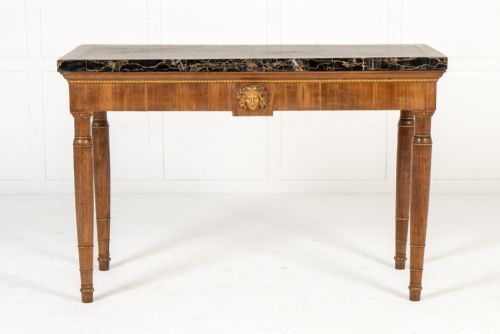
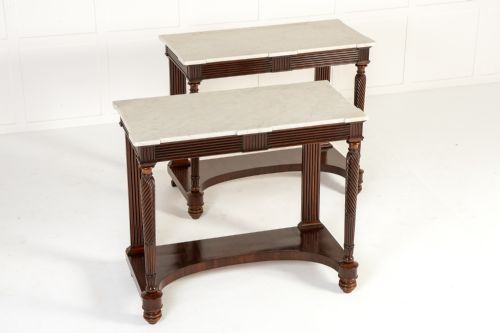
Antique Marble Entryway Table
An antique marble entryway table grounds a hallway with solid stone and period timber, offering a functional surface that has welcomed visitors for centuries.
Antique Marble Entryway Table
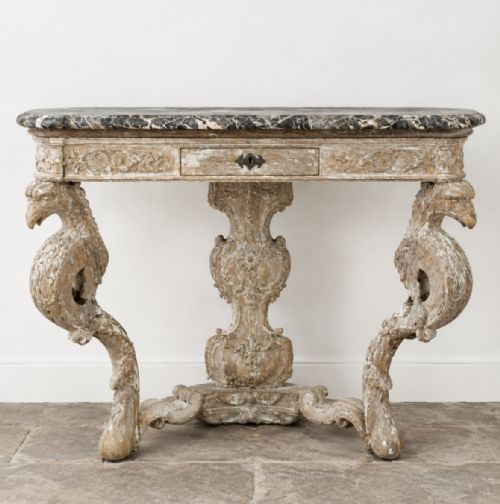
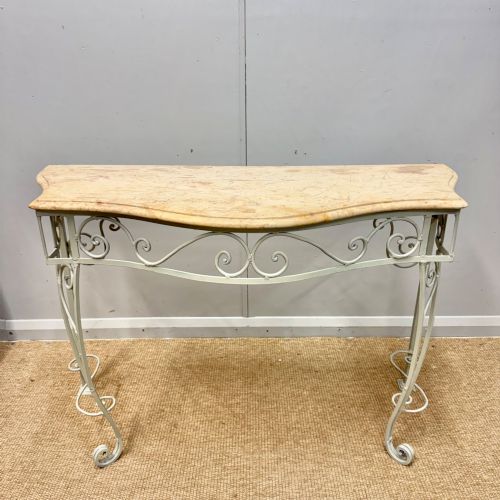
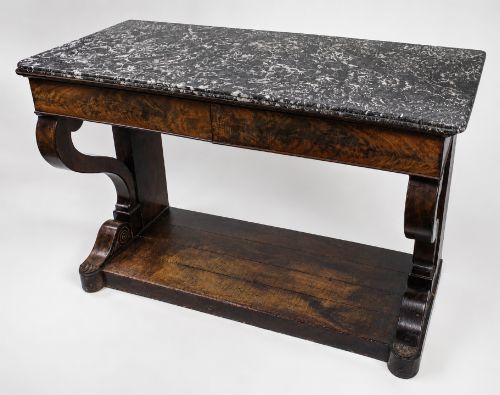
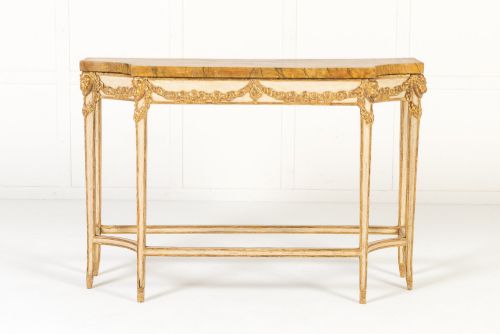
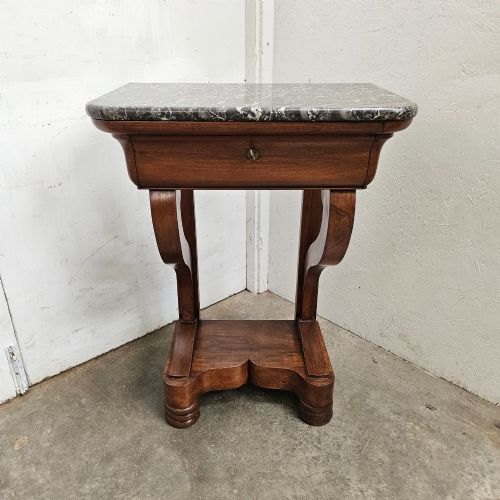
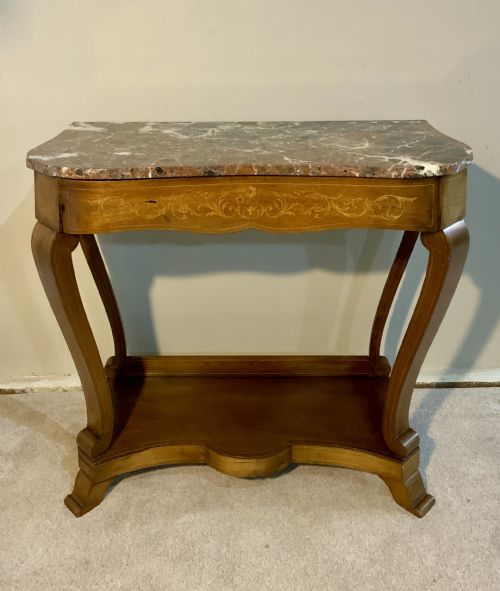
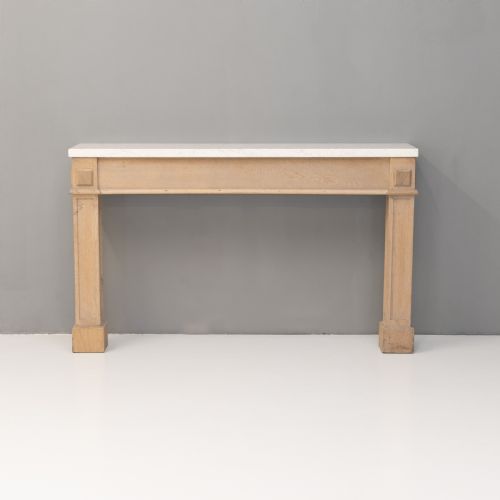
When searching for an antique marble entryway table, you encounter console tables, hall stands, and side tables designed to sit flush against passage walls. These pieces originate primarily from the eighteenth and nineteenth centuries, spanning periods from Regency and Victorian to French Empire and Italian Neoclassical designs.
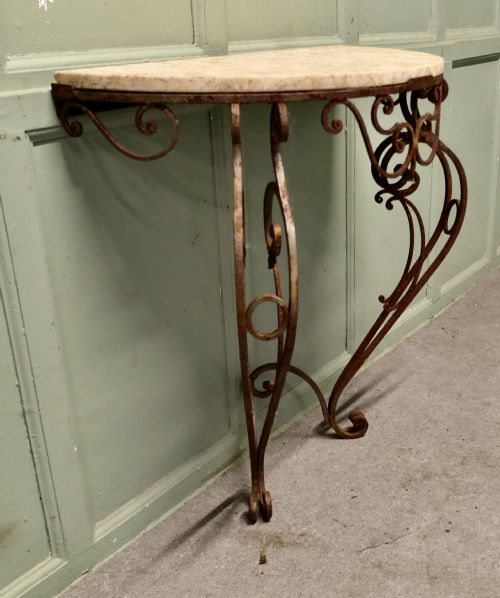
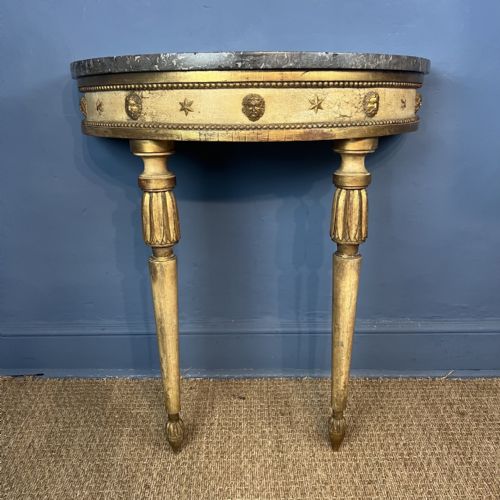
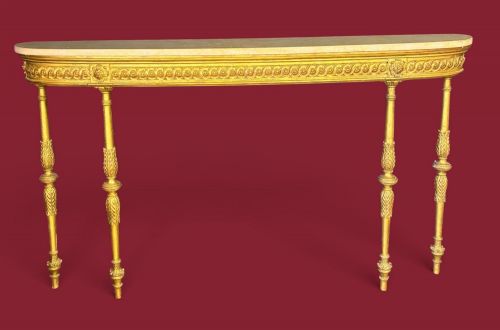
The most common formats combine a heavy stone surface with a timber or giltwood base, frequently taking console or demi-lune shapes intended for narrow spaces. French and Italian workshops dominate these examples, though English painted versions also appear alongside monumental pairs.
How they were made
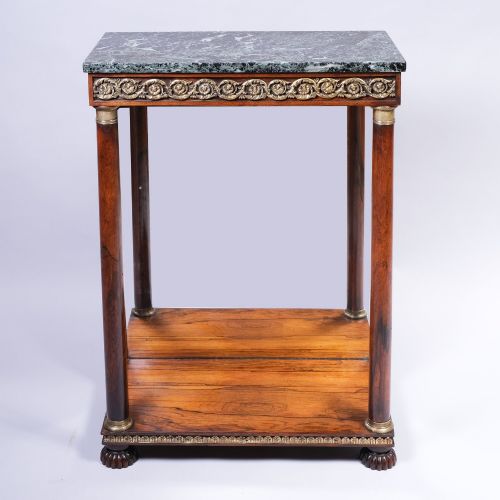
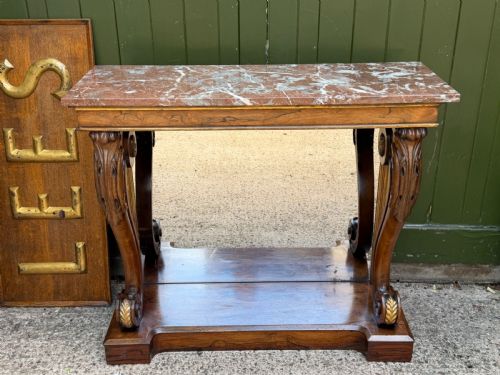
Craftsmen shaped these tables using dense timbers such as mahogany, walnut, and rosewood, often pairing them with carved giltwood, gesso, or wrought iron. Tops were fashioned from various marbles, including fossil and breccia varieties, cut and polished to fit closely upon the wooden framework.
Structural embellishments involved parcel-gilding, paintwork, brass mounts, and marquetry inlay. Many pieces incorporated mirrors at the rear or utilised carved supports like lion's paws to bear the considerable weight of the stone.
Lion's paws occasionally bear the weight of the stone, reminding visitors that even furniture must sometimes put its best foot forward.
What varies in quality
The grade of an antique marble entryway table depends upon the crispness of the wood carving and the depth of the gilding or paint finish. Elaborate details such as brass mounts, intricate marquetry, and figural supports distinguish finer metropolitan pieces from simpler provincial examples.
The character and thickness of the marble top also dictate distinction, with figured, fossil, or breccia varieties carrying greater visual weight than plain stone slabs. The harmony between the proportion of the stone and the rigidity of the underframe determines the overall integrity of the piece.
The Antique Marble Entryway Table Glossary
- Console table
- A table supported by wall brackets or console legs, designed to stand flat against a wall in a hallway or drawing room.
- Demi-lune
- A half-moon shape characteristic of tables built to fit tightly against entryway walls without obstructing passage.
- Parcel gilt
- Woodwork partially covered with thin gold leaf or powder to highlight specific carved details and mouldings.
- Breccia marble
- A multicolored stone composed of angular rock fragments cemented together, highly prized for decorative tabletops.
- Giltwood
- Timber carved and coated with gold leaf, frequently utilised in ornate Neoclassical and Rococo frames.
Antique Marble Entryway Table: Frequently Asked Questions
Where should I place an antique marble table?
These tables suit narrow entrance halls, corridors, and reception rooms where wall space permits a shallow profile. Their solid stone tops handle daily items like keys and correspondence while providing a formal focal point upon entry.
Because they traditionally rely on the wall for stability, ensure proper placement against a secure vertical surface. Pairing them with a matching mirror creates a traditional arrangement for checking attire before leaving the house.
How do I care for antique marble?
Clean the stone surface using a damp cloth and mild, pH-neutral soap rather than acidic household cleaners. Wipe away spills promptly to prevent staining, particularly on porous varieties.
Apply a specialist stone wax periodically to protect the polish. Avoid placing heavy impacts on the overhangs, as antique marble slabs can crack along natural internal fissures.
How do I identify a Regency table?
Regency pieces typically date from the early nineteenth century and feature classical motifs inspired by ancient Rome and Greece. Look for dark timbers such as rosewood and mahogany accented with brass mounts and parcel-gilding.
Legs often show saber curves or pillar formations, and mirror-backed consoles became popular during this era to reflect light in narrow hallways.
Are these tables freestanding?
Most antique console tables require attachment to the wall for complete stability due to the heavy weight of the marble top resting on slender legs. Some larger centre tables and specific side table formats stand independently, but wall-fixing brackets were standard for entryway consoles.
Check the base construction to see whether the piece was originally built to anchor against vertical architecture or function on its own in an open space.