
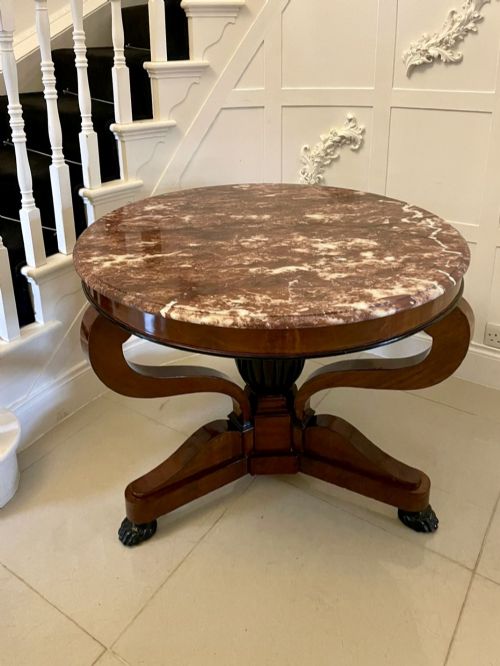
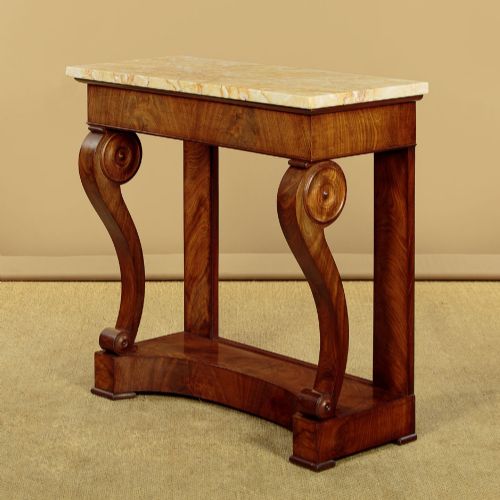
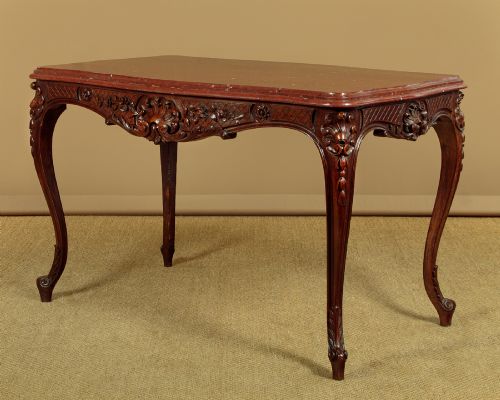
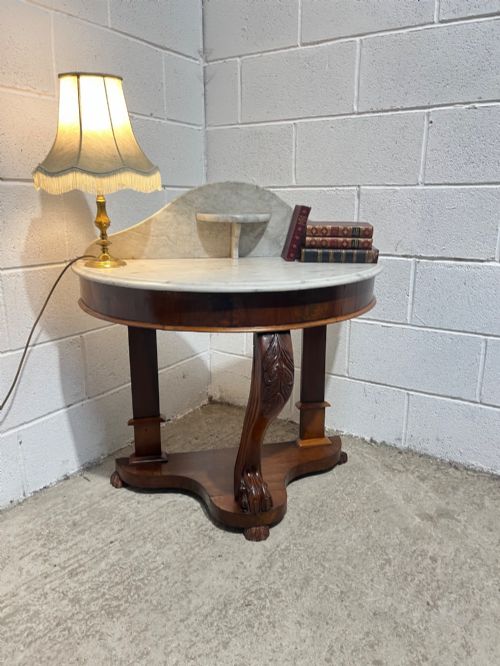


Victorian Marble Hall Table
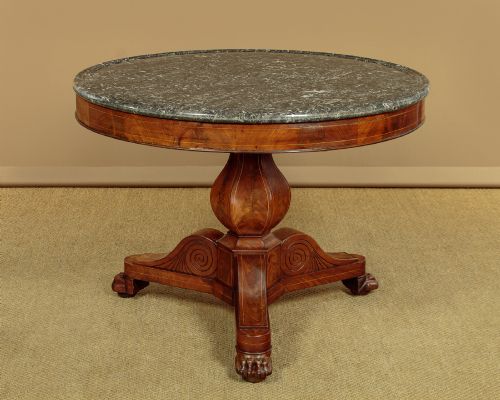
These pieces unite solid timber frames with cool stone slabs to create a sturdy surface for a hallway.
Victorian Marble Hall Table
A victorian marble hall table combines timber framework with a fitted stone top, designed for narrow passageways and entrance spaces. Buyers searching this phrase will find console tables, side tables, and washstands adapted for display.
The selections span the nineteenth century, including specific decades from the eighteen-forties to the eighteen-nineties. Mahogany and walnut appear alongside oak and pine, frequently paired with white or rouge marble surfaces.
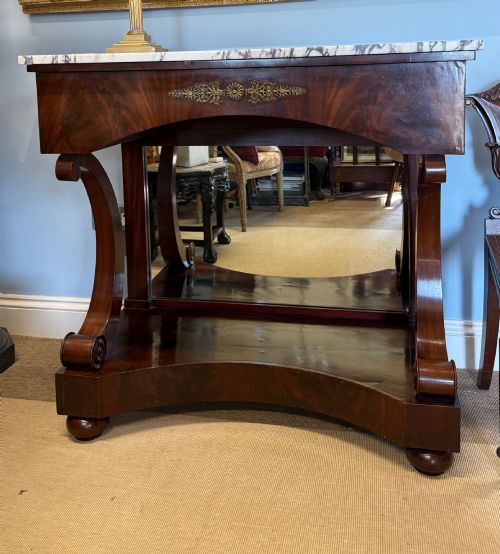
Console tables and pier tables dominate the forms, often featuring mirror backs or giltwood frames. Washstands and occasional tables also emerge within the broader Victorian category.
How they were made
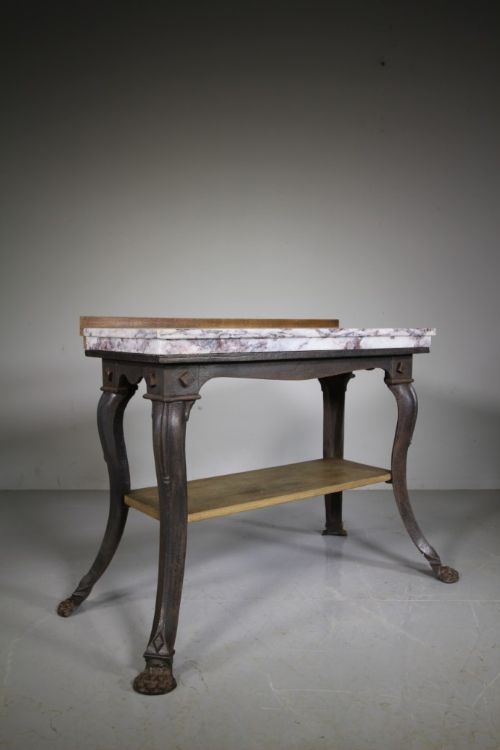
Cabinetmakers utilised dense timbers such as mahogany, walnut, and rosewood for structural stability, shaping the wood through carving and marquetry. Ormolu mounts and cast iron elements appear on specific French and English variants.
Heavy marble slabs were cut and polished to fit exact frame perimeters, serving as durable surfaces resistant to daily wear. Giltwood frames received layers of gold leaf over carved timber bases.
Some washstands disguise their practical origins with painted faux marble tops and original grain finishes.
What varies in quality
The selection of timber grain and the depth of wood carving separate standard examples from finer works. Flame mahogany and figured walnut indicate careful material sourcing by the maker.
Stone selection and edge profiling on the marble slab reveal the tier of the piece. Matching giltwood mirrors and integrated bronze or ormolu mounts elevate the status of a console table.
The Victorian Marble Hall Table Glossary
- Console table
- A table supported against a wall by ornamental brackets or legs rather than four independent posts.
- Pier table
- A low table designed to sit against the wall beneath a pier glass mirror.
- Gueridon
- A small round table supported by a central pillar, originating in seventeenth-century France.
- Ormolu
- Gilt bronze ornamentation applied to furniture frames and mounts during the nineteenth century.
- Marquetry
- Inlaid patterns of wood veneer applied to furniture surfaces to create decorative motifs.
Victorian Marble Hall Table: Frequently Asked Questions
Where should I place a marble table?
These tables suit entrance hallways, corridors, or living rooms where a slim profile is required against a wall.
The stone surface provides a durable landing spot for keys and post while maintaining a formal appearance.
How do I clean the stone top?
Wipe the marble surface with a soft damp cloth and mild soap, avoiding acidic solutions that etch polished stone.
Dry the slab thoroughly afterwards to prevent water marks on the polished finish.
Are these tables heavy to move?
The combination of dense timber frames and thick stone slabs makes these pieces substantial and weighty.
Lifting requires two people to separate the loose marble top from the timber base before moving the frame.
Did all of these tables have mirrors?
Only specific console and pier tables included matching mirror backs or companion wall mirrors in their original design.
Free-standing centre tables and washstands were built without attached glass panels.