
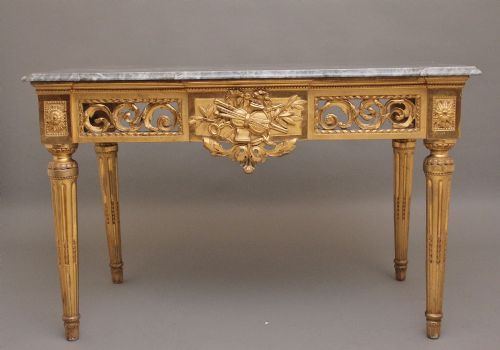
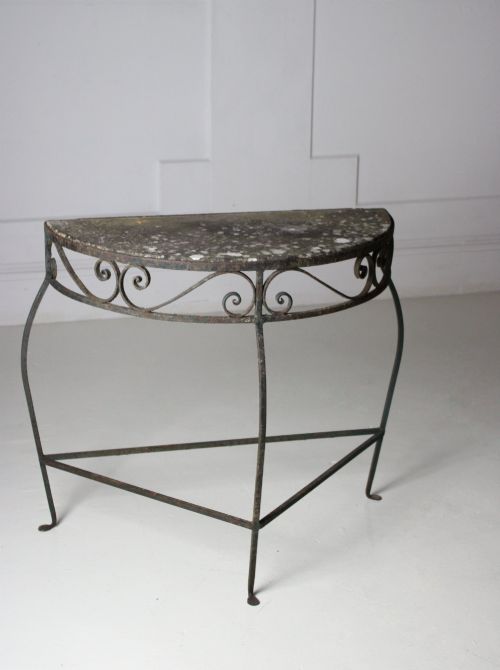
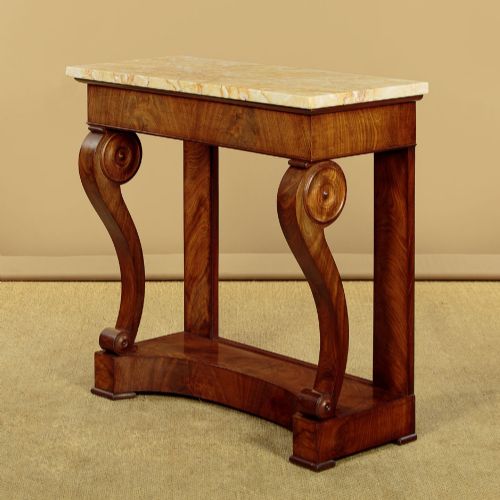
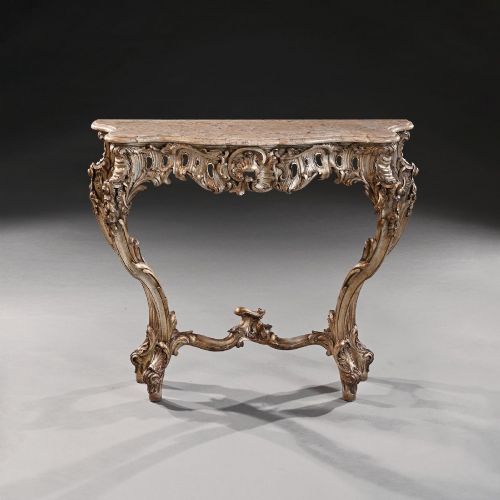
Marble Topped Wall Table
A marble topped wall table anchors a room with stone and carved timber, offering a steady surface designed to stand flush against a partition.
Marble Topped Wall Table
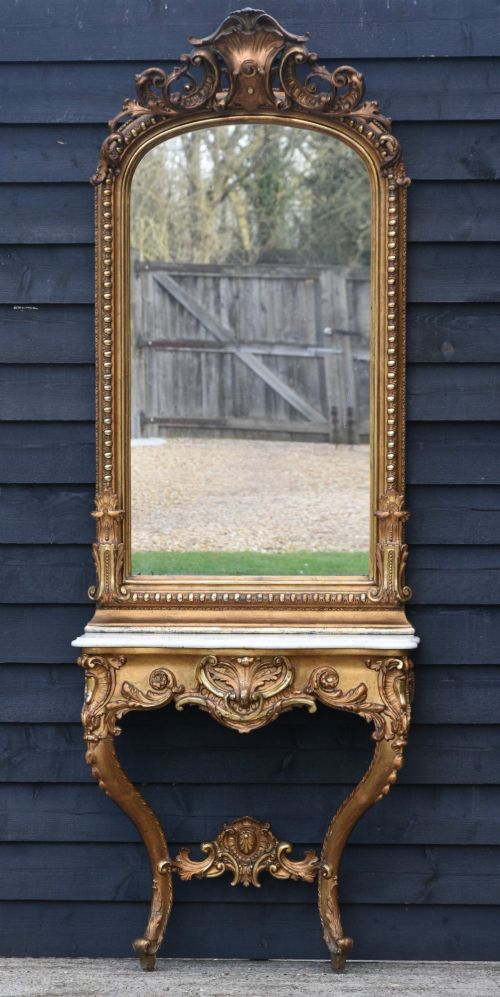
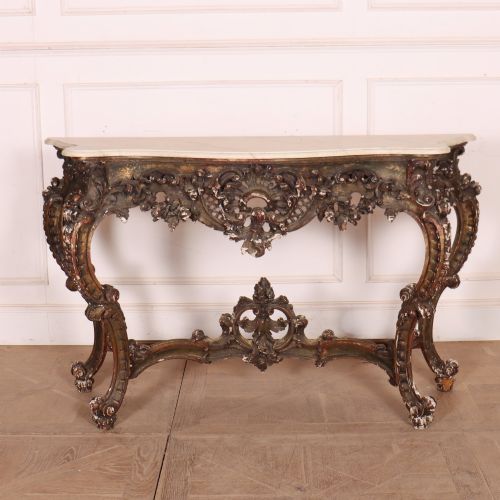
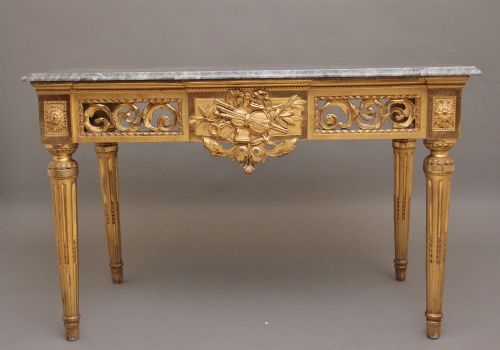
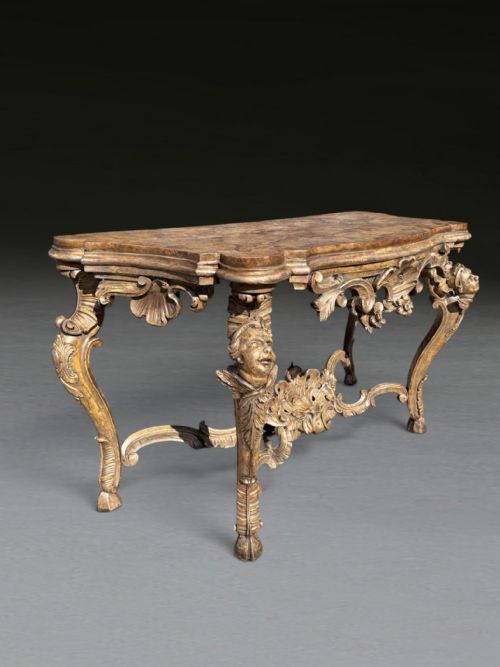
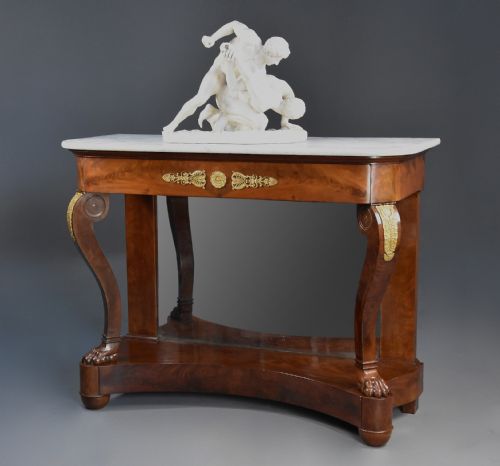
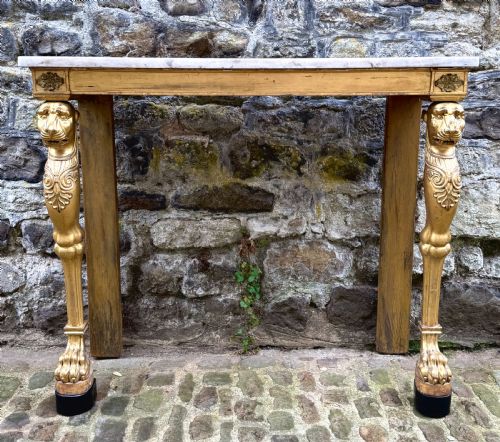
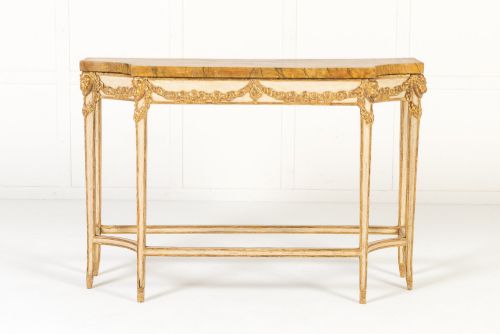
A marble topped wall table encompasses console tables, side tables, and console tables paired with matching pier mirrors designed to rest directly against a vertical room surface. These architectural ledges emerge principally across eighteenth and nineteenth century European workshops, taking structural cues from French Rococo, Italian Neoclassical, and Victorian design traditions.
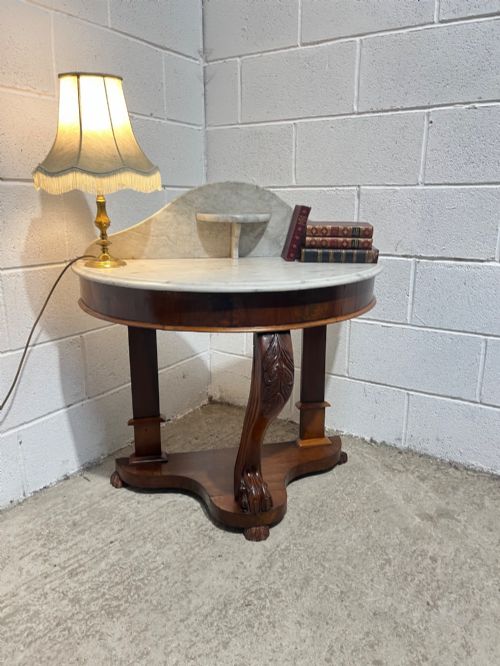
Most examples found in current records date from the nineteenth century, though earlier eighteenth century items and later Edwardian or 1930s pieces appear with regularity. They manifest as serpentine fronts, rectilinear walnut or mahogany frames, and gilded timber structures designed to hold heavy stone slabs.
Materials and Technique
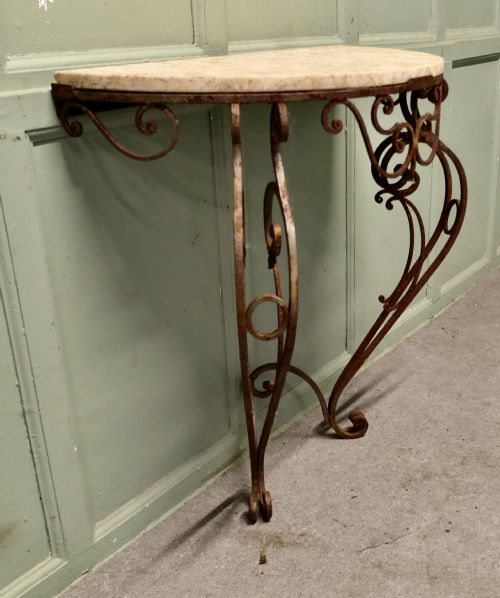
Frames rely upon timbers such as mahogany, walnut, and oak alongside carved giltwood, wrought iron, and gesso applied over carved wooden bases. Artisans shaped these structural supports using hand tools, joining joints with traditional methods suited to weight-bearing furniture.
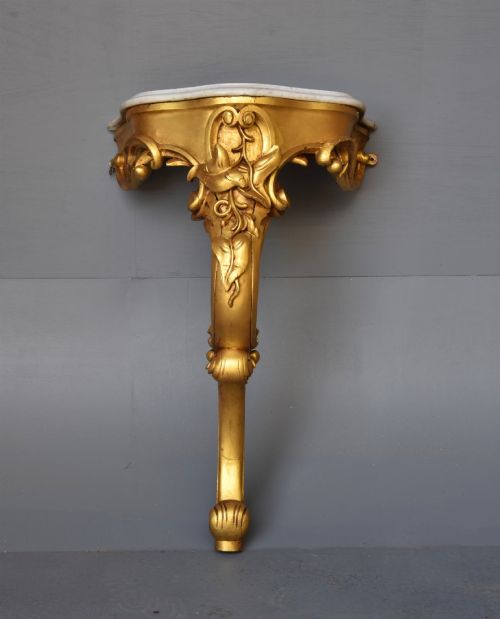
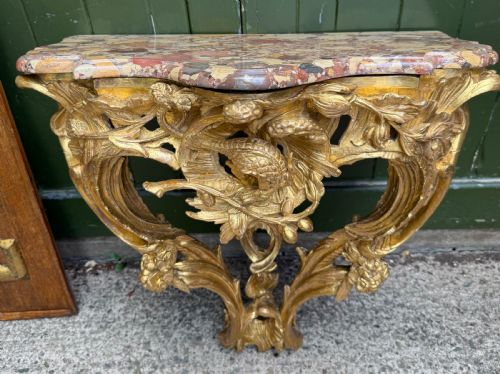
Slabs of marble, breccia, and breche d'alep rest upon the upper framework, providing a polished stone plateau that contrasts against the warm tones of gilded or polished wood beneath.
Listings demonstrate a strong presence of nineteenth-century French and Italian pieces utilising carved giltwood and figured marble.
Quality and Execution
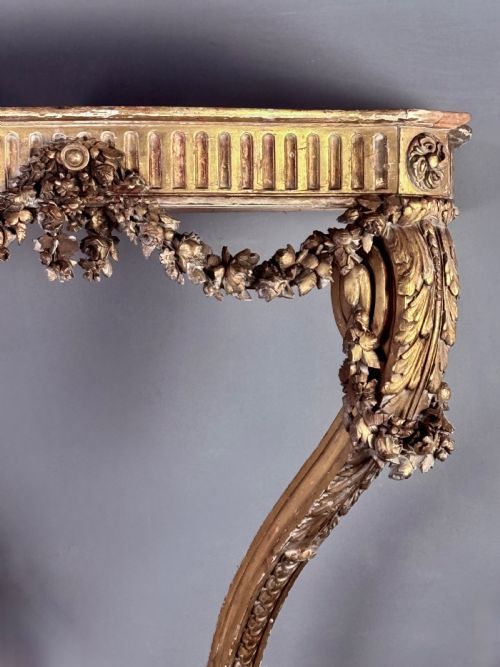
The standard of carving defines the upper echelon of these pieces, separating mechanical repetition from the fluid depth found in hand-chiseled giltwood and sculptural wooden mounts. Crisp definition in floral swags, acanthus leaves, and gilded surfaces indicates superior workshop execution.
The selection and integration of the stone top further distinguish finer examples, where figured marble slabs match the proportions of the frame without awkward overhangs or mismatched patching.
Felix-Alfred Ternisien
The Marble Topped Wall Table Glossary
- Console table
- A table designed to be fixed against a wall, frequently supported by two front legs while relying on the structural anchor of the partition behind it.
- Giltwood
- Timber coated with a thin layer of gold leaf or gold paint over a prepared gesso ground, creating a bright reflective finish.
- Breccia
- A composite marble rock made of angular fragments cemented together in a fine-grained matrix, creating a variegated patterned surface.
- Serpentine
- A curved furniture front characterised by a central convex sweep flanked by concave curves, creating an undulating outline.
Marble Topped Wall Table: Frequently Asked Questions
How do I secure a wall table safely?
These tables rely on wall fixings or brackets to prevent tipping because their heavy stone tops shift the centre of gravity forward.
Attaching the frame securely to solid masonry or timber studs ensures stability during daily use.
Were these tables used in dining rooms?
Historical domestic arrangements placed these decorative ledges in entrance halls, formal reception rooms, and drawing rooms rather than dining spaces.
Their primary function involved displaying ornamental objects and mirrors rather than serving meals.
How do I clean a antique marble top?
Maintenance requires mild soapy water and a soft cloth, avoiding acidic cleaners that etch the polished stone surface.
Regular wiping protects the natural patina built up over centuries of domestic habitation.
Can I place these tables on uneven floors?
Wall attachment provides the main structural support, meaning minor floor discrepancies matter less than wall stability.
Adjusting the contact points carefully keeps the stone surface level without putting undue strain on the wooden legs.