


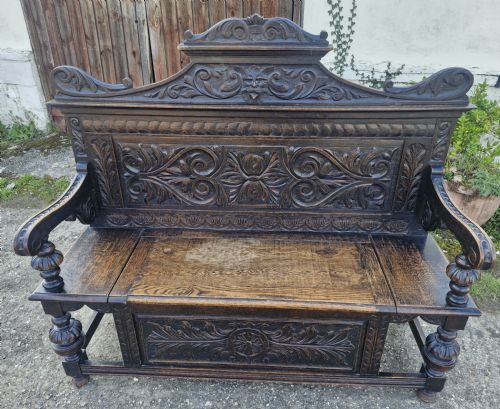


Late Victorian Hall Furniture
Late victorian hall furniture encompasses practical timber benches, stands and tables designed to greet visitors in domestic entranceways.
Late Victorian Hall Furniture
Late victorian hall furniture primarily comprises utilitarian pieces designed for entranceways, specifically hall benches, side tables, hall stands, and stick stands. These items served functional domestic roles in greeting guests and managing outdoor garments.
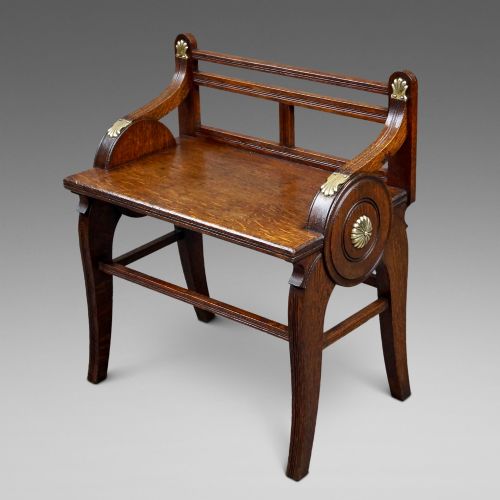
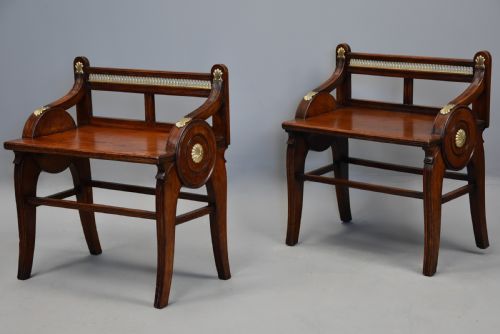
Oak and mahogany dominate the forms, frequently appearing alongside marble tops, brass mounts, and cast iron elements. Makers utilised these durable materials to construct robust furniture suited to heavy daily use in busy reception areas.
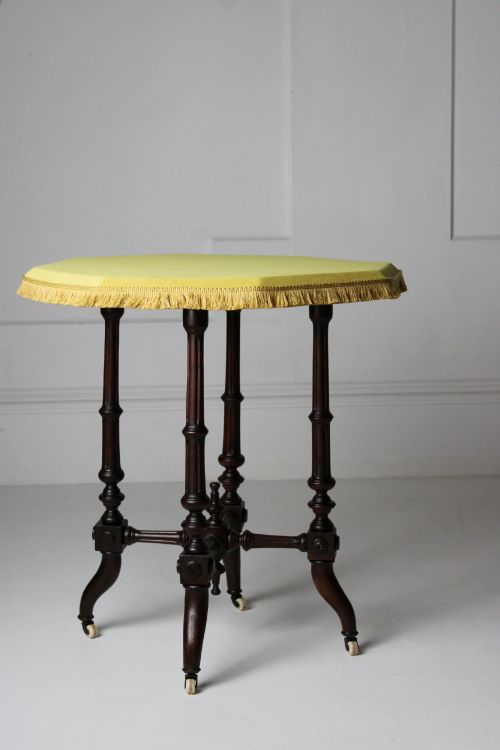
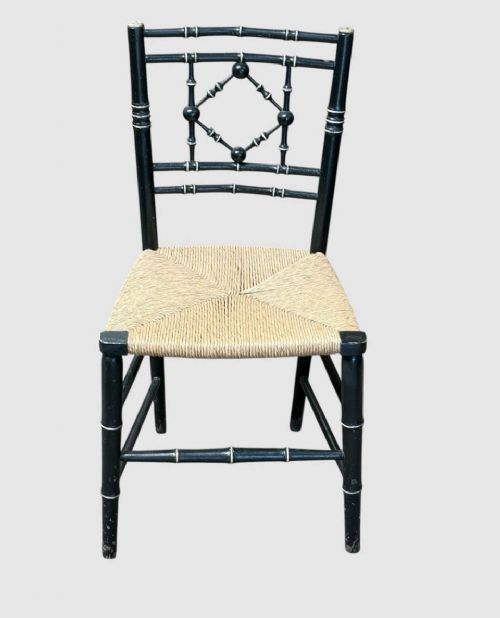
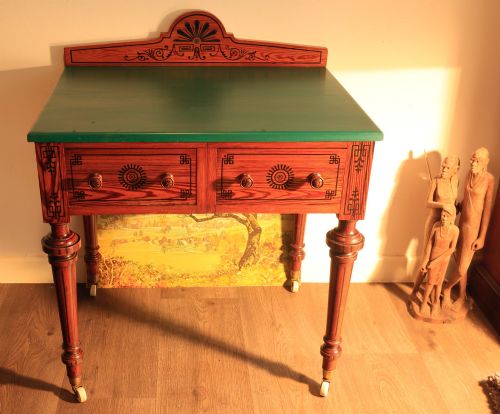
The selection reflects diverse aesthetic currents of the nineteenth century, ranging from straightforward Arts and Crafts and Aesthetic Movement designs to elaborate Victorian Gothic Revival and Moorish Revival pieces.
How they were made
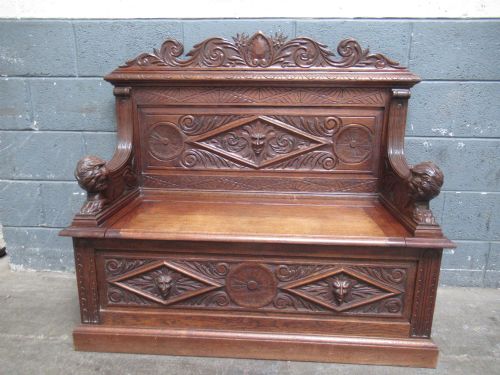
Carpenters relied heavily on solid oak and mahogany, employing traditional joinery alongside heavy carving to shape structural frameworks. Panels often received deep relief decoration, including characteristic motifs such as the Greenman.
Makers integrated functional hardware directly into the timber structures, securing brass hooks, cast iron frames, and bronze brackets to support heavy coats and umbrellas. Marble slabs were frequently fitted to table and washstand surfaces for durability.
Current listings feature oak, mahogany, satinwood, and walnut alongside marble, brass, and cast iron across various nineteenth-century styles.
What varies in quality
The depth and crispness of carved wooden ornamentation dictate the distinction between standard production items and finer commissions. Relief work on oak benches and hall stands shows varying levels of hand-chiselled precision.
Material selection separates ordinary examples from exceptional pieces, particularly in the choice of figured burr walnut, solid satinwood, or heavy inset marble slabs paired with matched giltwood mirrors.
James Shoolbred and Co·Liberty and Co·Simpsons of Kendall·Gillows
The Late Victorian Hall Furniture Glossary
- Aesthetic Movement
- A late nineteenth-century design style emphasising visual beauty over narrative subject matter. It often drew inspiration from Japanese art and featured clean geometric lines.
- Hall Stand
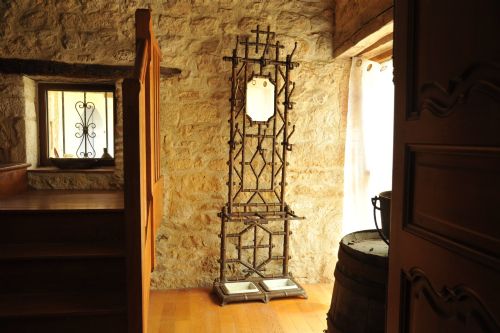
- A tall multi-functional entranceway item combining coat hooks, a mirror, umbrella racks, and a small glove drawer or bench seat. These pieces anchor the domestic hallway.
- Console Table
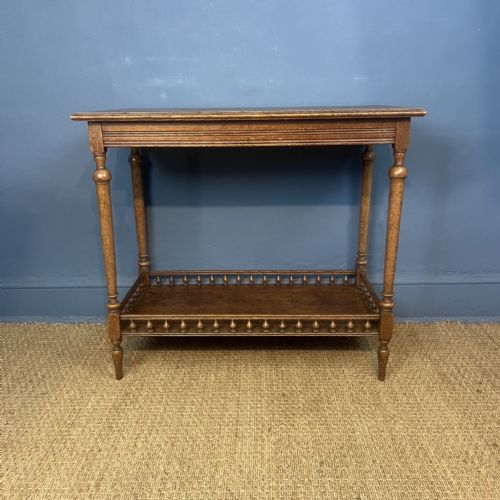
- A wall-mounted or freestanding table designed to stand flat against a hallway or reception room perimeter. They frequently incorporate marble tops.
- Stick Stand
- A dedicated receptacle for walking canes and umbrellas, constructed from materials such as cast iron, brass, or carved timber. Many include a drip tray at the base.
- Monks Bench
- A convertible wooden seat featuring a folding backrest that lowers onto the arms to transform the bench into a table. This form gained popularity during the revival styles.
Late Victorian Hall Furniture: Frequently Asked Questions
What is a hall stand used for?
A hall stand provides a central storage point in an entranceway for hanging outdoor coats, hats, and scarves upon entering the house.
Lower sections typically incorporate built-in umbrella rings and drip pans alongside a small surface for leaving keys or correspondence.
How do I distinguish Aesthetic Movement pieces?
Aesthetic Movement pieces generally feature simpler geometric forms, ebonised details, and subtle references to Japanese design rather than heavy historical revival ornament.
They frequently employ woods like mahogany or walnut without the dense relief carving found on standard Victorian oak furniture.
Where should I place a console table?
Console tables fit best against a flat wall in a narrow hallway, reception room, or entrance passage where floor space remains restricted.
Pairing the table with a matching wall-mounted mirror helps reflect light and creates a balanced focal point near the front door.