






Carved Saint Figures
Carved saint figures bring centuries of devotion into a room through the deep character of aged timber and historic pigment.
Carved Saint Figures
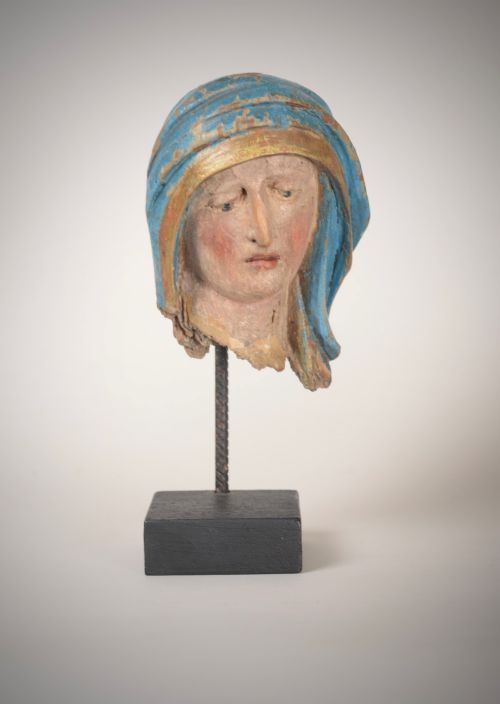
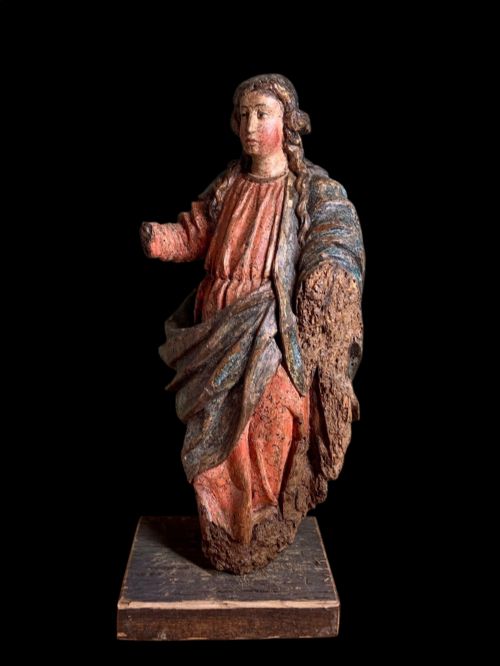
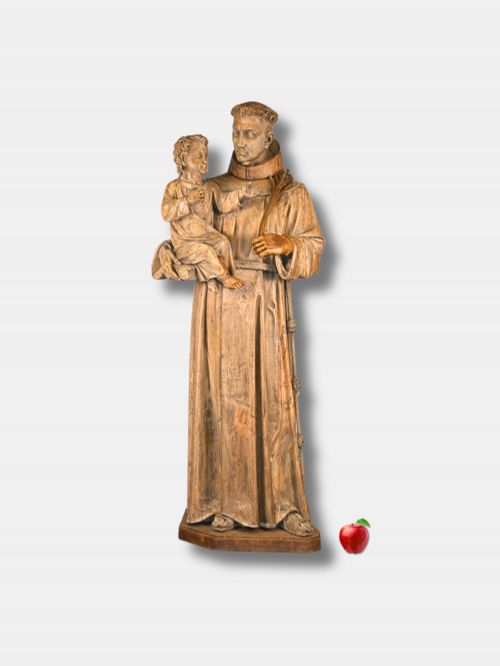
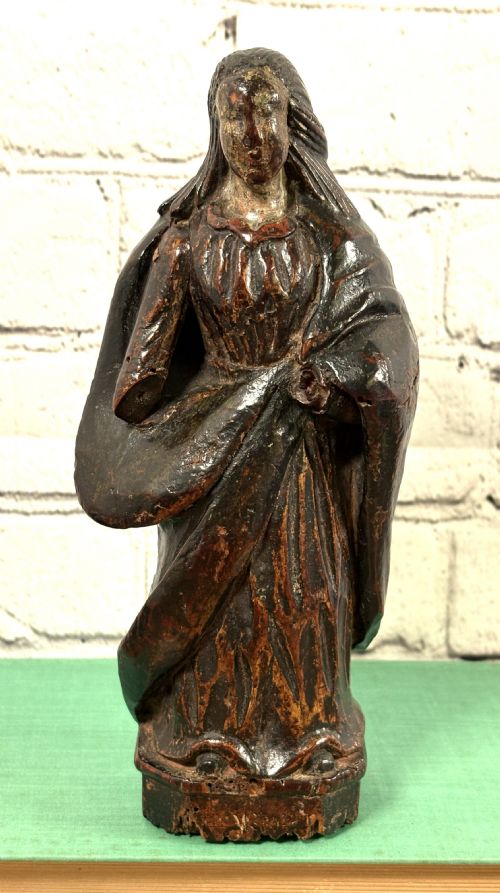
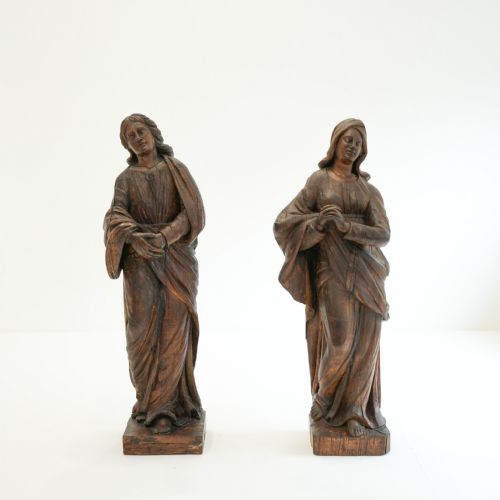
Carved saint figures span centuries of religious devotion, originating primarily from European ecclesiastical and domestic settings. When you search for carved saint figures, you encounter works ranging from pre-sixteenth century Gothic carvings to eighteenth-century Baroque sculptures. The pieces on this page appear in various timber forms, depicting figures such as Saint Jerome, Saint Anthony, and the Virgin Mary.
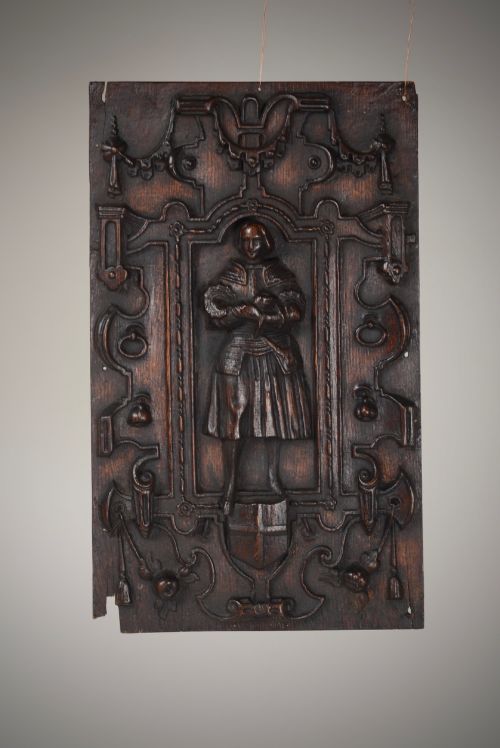
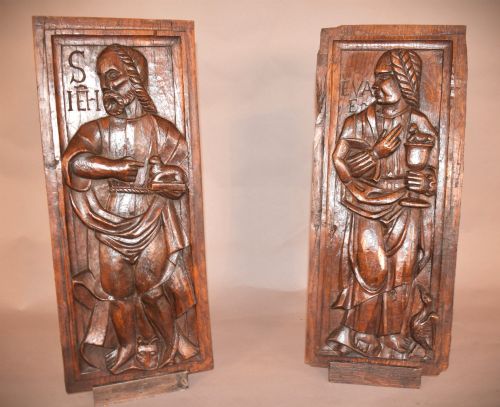
Most examples you meet here emerge from continental traditions, notably French, German, Italian, and Spanish workshops. These objects take the form of freestanding statues, processional figures, architectural fragments, and devotional panels. Subjects include specific apostles, angels, and donors carved for churches, chapels, and private shrines.
The selection includes life-size statues alongside intimate devotional carvings and panel reliefs. Oak and limewood dominate the earlier centuries, while later nineteenth-century pieces introduce diverse timber varieties and folk art interpretations. Surviving fragments and complete figures alike reveal the devotional function of these historic works.
How They Were Made
Surviving surfaces often show traces of original paint schemes alongside exposed wood grain resulting from centuries of wear. Gilding was applied using thin gold leaf overbole to highlight halos, vestments, and architectural elements. Construction methods varied from single-block carvings to multi-part figures joined with wooden dowels.
Listings feature carved saint figures spanning from the pre-sixteenth century medieval period through the Baroque and Gothic Revival eras.
What Varies in Quality
The survival of original polychrome paint and gold leaf significantly elevates a piece, as does the crispness of the underlying chisel work. Sculptures retaining their untouched surface texture provide a more direct connection to the carver's hand than those heavily stripped or re-painted over time.
Franz Keller
The Carved Saint Figures Glossary
- Polychrome
- Decorated in multiple colours. This term describes sculpture and woodwork finished with historic paints and pigments.
- Gesso
- A plaster mixture applied to wood surfaces as a smooth base for gilding and paint. It provides the foundation for intricate polychrome finishes.
- Capipote
- A Spanish devotional figure with a wooden head and hands attached to a framework designed for dressing in real textiles. These statues served active roles in religious processions.
- Giltwood
- Timber decorated with thin gold leaf applied over a prepared ground. It appears frequently on the vestments and haloes of ecclesiastical figures.
- Gothic
- A medieval art style characterised by pointed arches and vertical emphasis. In sculpture, this translates to slender figures with rhythmic, cascading drapery.
Carved Saint Figures: Frequently Asked Questions
What wood was used for carved saint figures?
Carvers utilised local timber availability, meaning northern workshops frequently employed dense oak or limewood while others turned to applewood or regional softwoods. The grain influenced the final detail possible in the carving.
Softer woods like limewood allowed carvers to execute deep, undercut folds in vestments and delicate facial expressions without splitting the material.
How can I tell the period of a wooden saint?
Dating relies on stylistic clues such as the stiffness of drapery folds, facial carving conventions, and the tool marks left behind on the unpainted reverse of the timber. Pre-sixteenth century pieces often show different chisel profiles compared to later Baroque works.
Examining the preparation layers beneath any remaining paint, such as gesso composition, also helps establish the era of creation.
Were these figures always painted?
Many sculptures received comprehensive polychrome paint schemes and gilding designed to make the figures lifelike and visible within dim churches. Flesh tones, hair, and vestments were rendered in specific pigments.
Over the centuries, many pieces lost their original paint through cleaning or stripping, leaving the bare wood visible to modern eyes.
Where were carved saints originally displayed?
These figures stood in churches, cathedrals, monastic chapels, and roadside shrines as focal points for prayer and veneration. Some served as altarpiece components while others participated in religious processions.
Smaller devotional examples were made for private domestic use in home shrines and personal chambers.