


Carved Rosewood Dining Chairs
Carved rosewood dining chairs bring rich, dark grain and sculptural form to the table, spanning the Regency and Victorian periods.

Carved Rosewood Dining Chairs
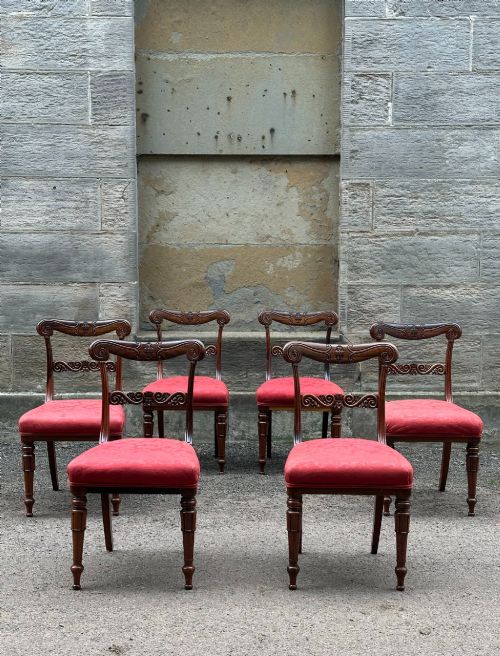
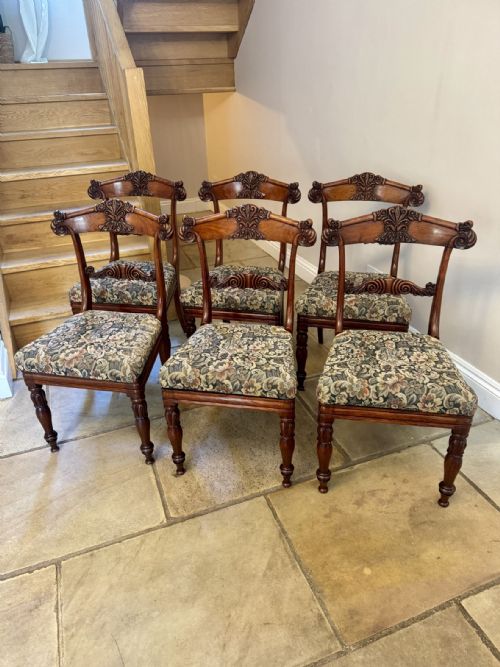
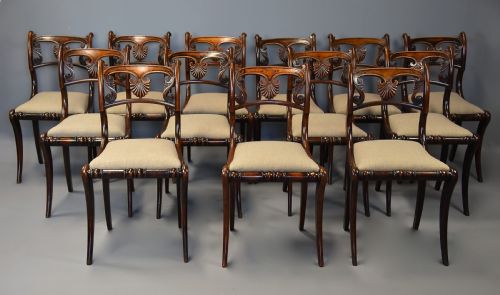
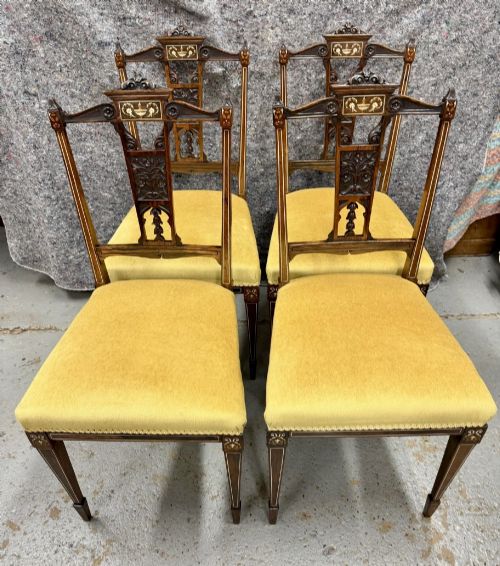
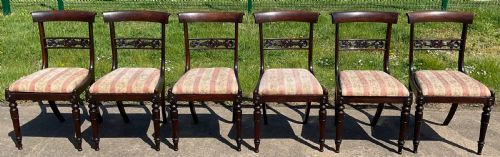
When you search for carved rosewood dining chairs, you encounter seating built primarily during the Regency and Victorian periods, stretching from the early nineteenth century towards 1900. These pieces range from single side chairs to large matching sets of ten or twelve intended for formal dining rooms.
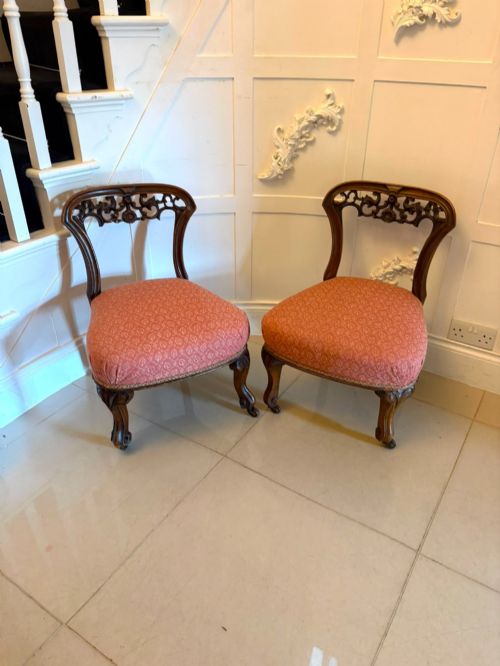
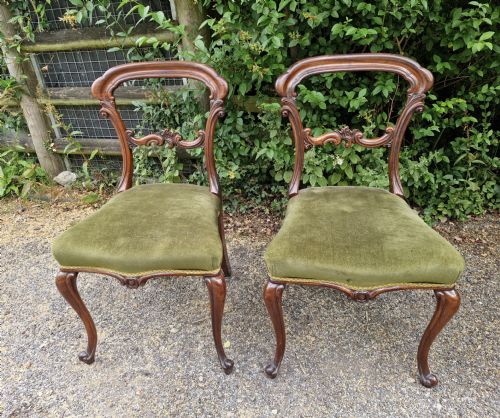
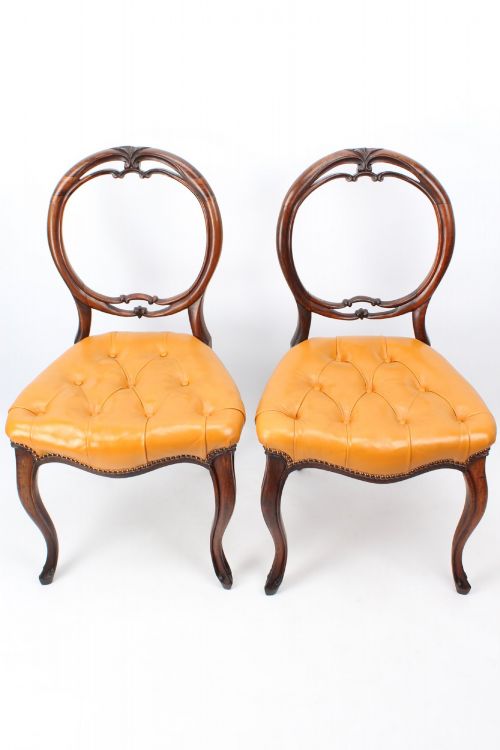
The most common examples on this page are dining chairs and side chairs exhibiting classic nineteenth-century silhouettes, including balloon backs and elaborate carved details. Workshops also produced elbow chairs and armchairs to complement these dining sets.
How they were made
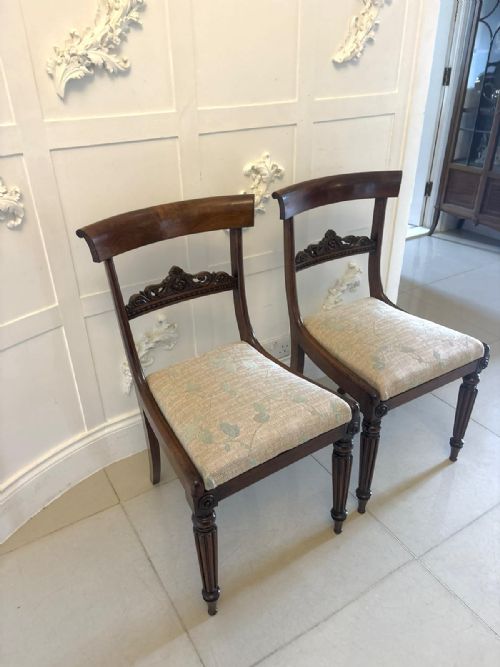
Cabinetmakers utilised dense solid rosewood or applied fine veneers over secondary timbers, often embellishing the wood with intricate hand-carved motifs. Brass inlay also appears on Regency examples, gleaming against the dark grain of the timber.
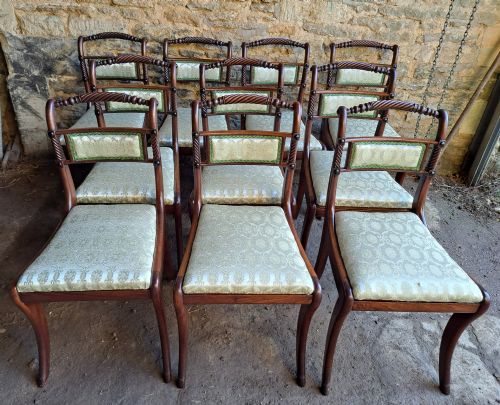
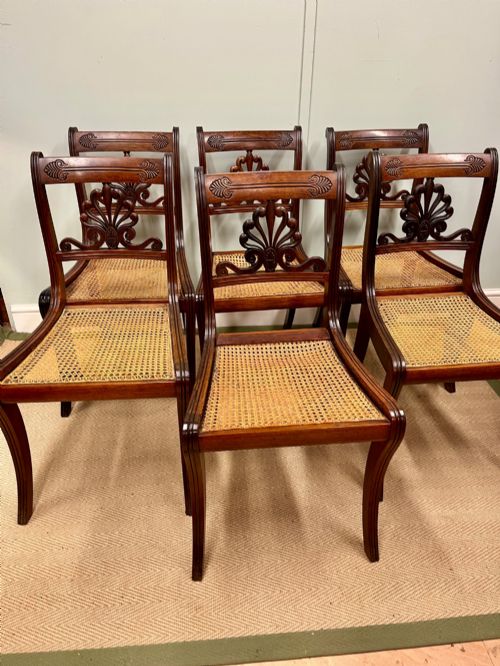
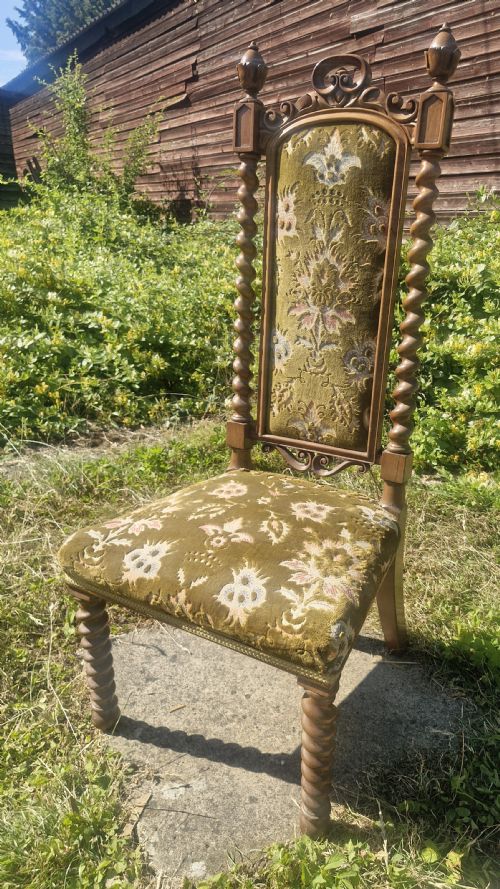
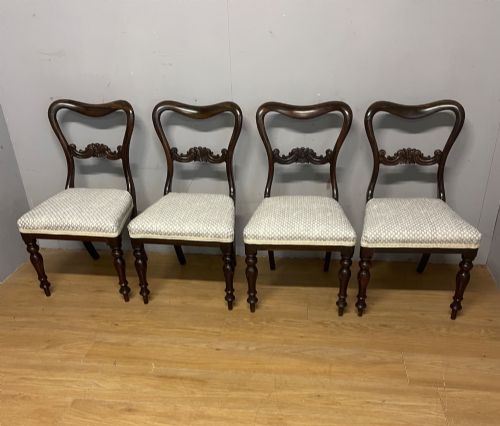
Seating portions relied on traditional upholstery methods, incorporating fabric, velvet, needlepoint, or cane inserts. Frames frequently feature structural turnings such as barley twists alongside substantial joinery to support daily use.
Carved Rosewood Dining Chairs Retail Price Guide 2026
Typical asking prices for carved rosewood dining chairs among the pieces listed under this phrase on Sellingantiques today, from the lower quarter to the upper quarter. They describe what is for sale here now, not the wider market.
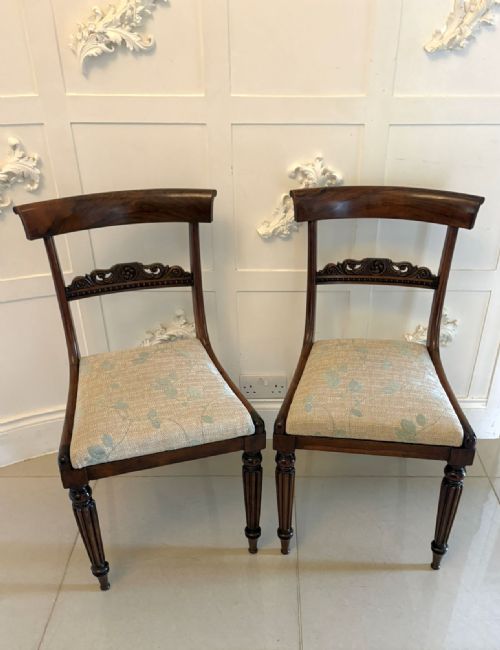
Some chairs sport duck egg blue needlepoint seats, proving that nineteenth-century dining rooms enjoyed a splash of cheerful colour.
What varies in quality
The distinction between average and exceptional pieces lies in the crispness of the carving and the depth of the rosewood grain. Higher-grade examples display fluid, deeply undercut foliage and robust framing that has survived decades of heavy use without losing its structural integrity.
Consistency across a larger set heavily influences desirability, as matching groups of six, eight, or ten require uniform colour and grain patterns. Furthermore, the selection of original materials for the seat, such as period needlepoint or velvet, elevates the overall integrity of the piece.
The Carved Rosewood Dining Chairs Glossary
- Rosewood
- A heavy, durable tropical timber known for its dark, richly figured grain and reddish-brown colour. It polishes to a high lustre and accepts fine carving.
- Balloon back
- A chair back shaped like a rounded oval or hot-air balloon, popular during the Victorian era. This curved profile provided ergonomic comfort.
- Regency
- An English design period dating from the early nineteenth century, noted for classical restraint and occasional brass inlay. Pieces from this era often look to antiquity for inspiration.
- Barley twist
- A spiral turning resembling a twisted rope, used on chair legs and vertical supports. This decorative technique added texture and movement to nineteenth-century furniture.
Carved Rosewood Dining Chairs: Frequently Asked Questions
How do I care for rosewood chairs?
Keep these chairs away from direct sunlight and excessive heat sources to prevent the rosewood from drying out or splitting. Regular dusting with a soft, dry cloth maintains the polished finish.
Condition the wood occasionally with appropriate furniture wax, avoiding silicone-based sprays. Treat the upholstered seats according to their specific fabric requirements.
Are these chairs suitable for daily use?
Nineteenth-century dining chairs were built for regular domestic service and remain structurally robust if joints are stable. Solid rosewood frames offer high durability for everyday seating.
Ensure that leg joints and carved crest rails are checked periodically by a professional if any looseness develops. Sitting with care preserves the antique joinery and original upholstery.
How do I date a rosewood chair?
Examine the overall silhouette, secondary timbers, and decorative vocabulary to determine the era. Regency pieces favour classical lines and brass inlay, while Victorian examples often feature balloon backs and heavier carving.
Construction marks, tool traces, and wear patterns on the feet also provide clues regarding age. Comparing the style to documented pieces helps narrow down the decade.
What is simulated rosewood?
Simulated rosewood involves painting or graining a more common timber, such as beech, to imitate the distinctive dark figure of genuine rosewood. Makers utilised this technique during the Regency period to achieve a luxurious look at a lower cost.
Close inspection of the grain continuity and weight reveals whether the surface is a painted illusion or solid timber. This practice was common in high-end cabinetmaking.