
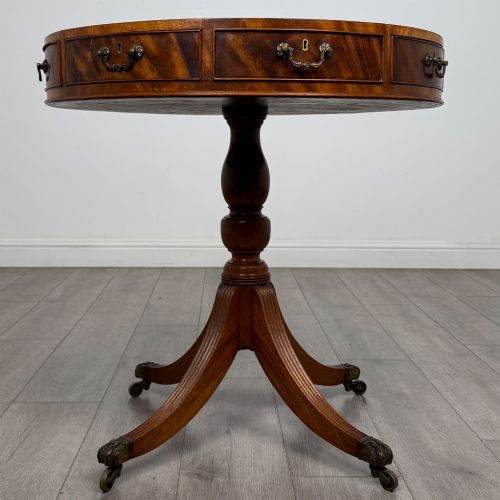
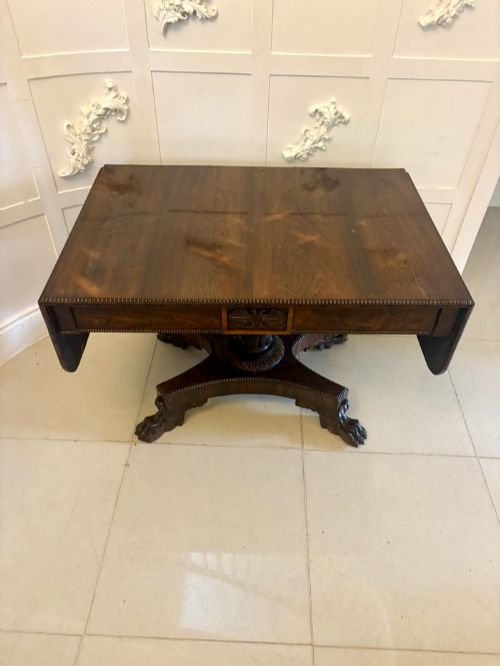
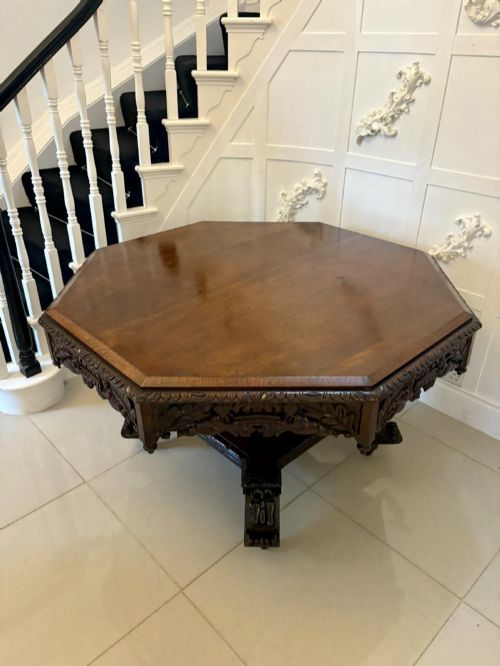
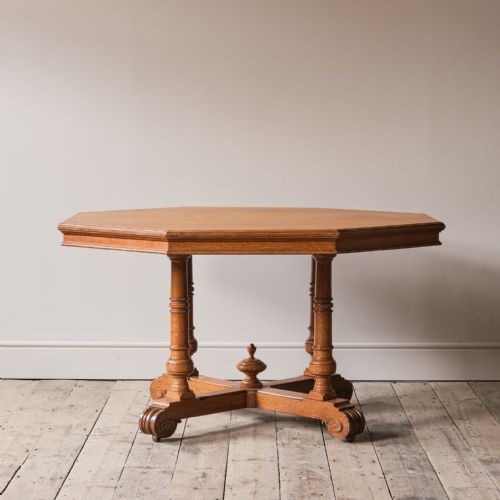
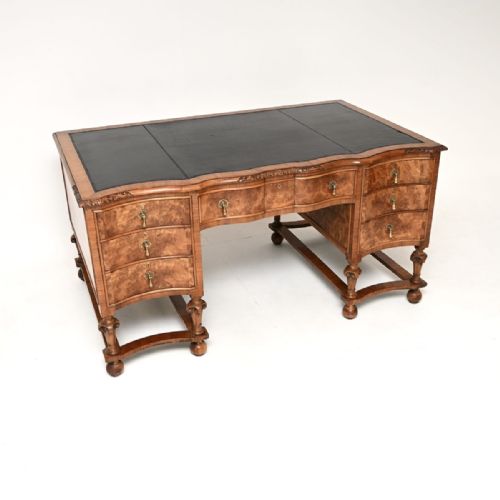
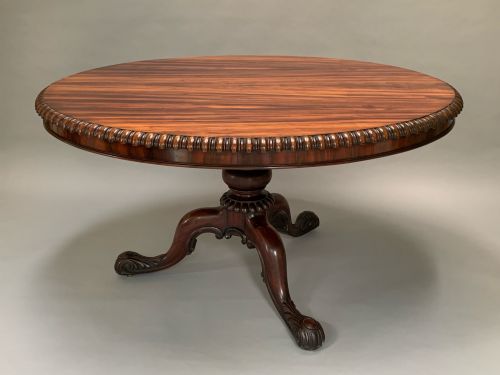
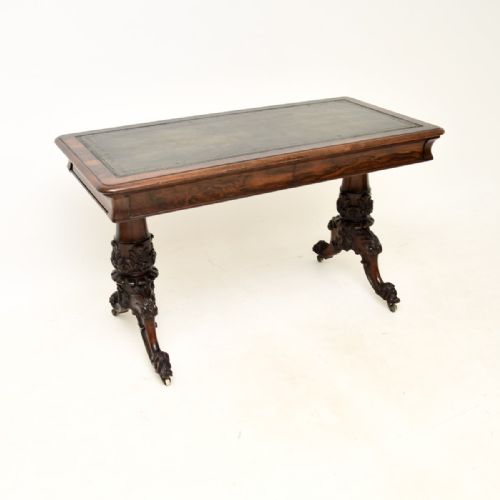
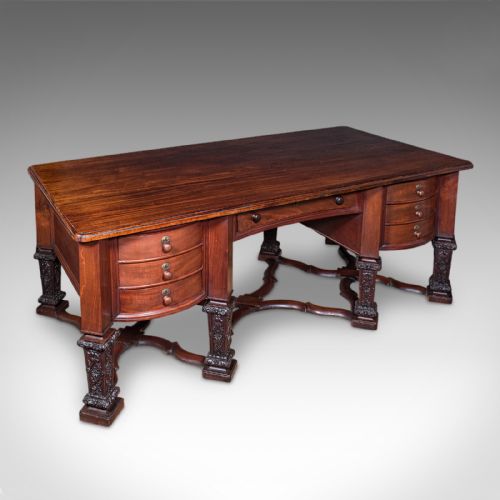
Carved Pedestal Library Table
A carved pedestal library table is a substantial writing and reading surface supported by heavy central columns or pedestals, offering both stability and classical presence.
Carved Pedestal Library Table
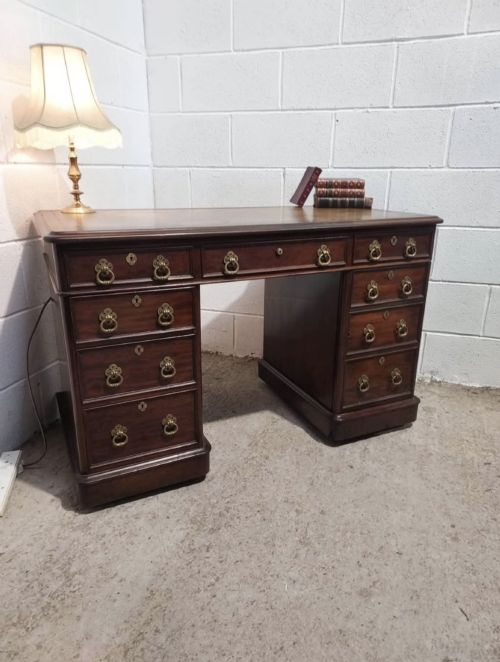
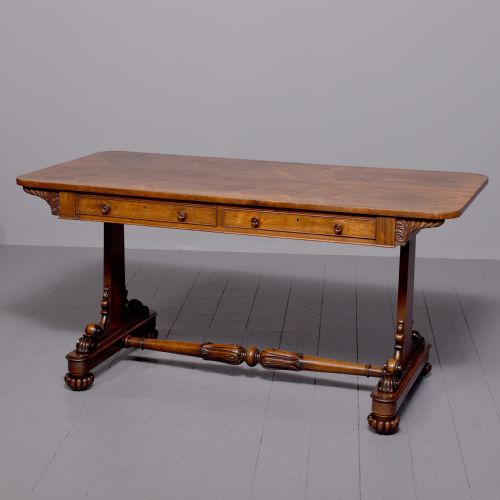
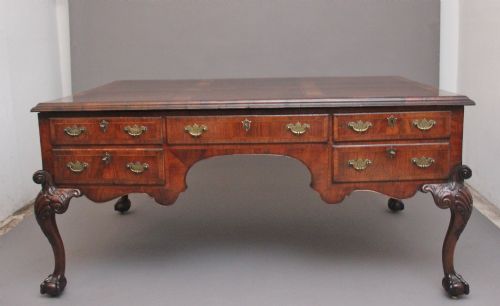
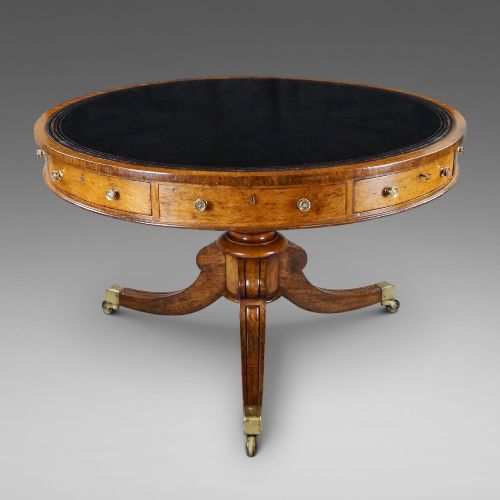
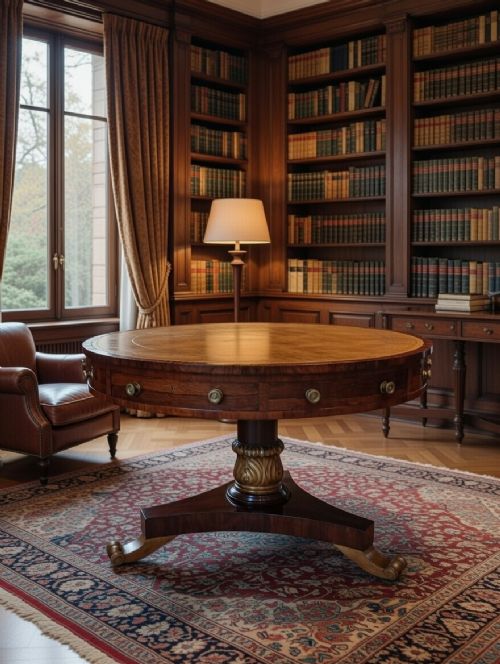
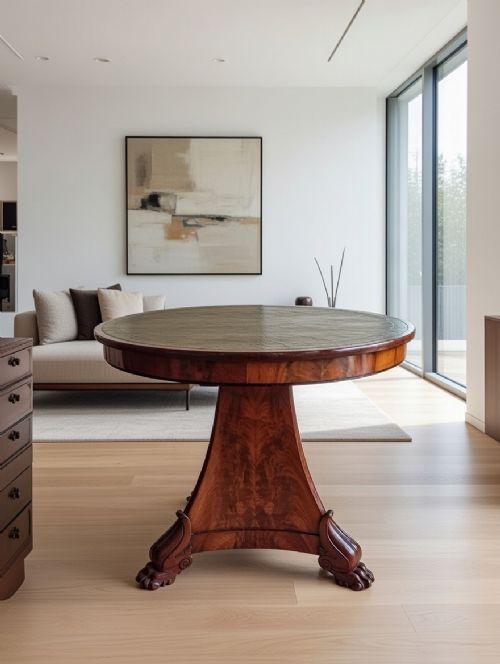
A carved pedestal library table brings together nineteenth-century workspace utility and robust architectural timber framing. When you search for this phrase, you encounter forms ranging from circular drum tables and twin-pedestal partners desks to rectangular writing tables designed for central room placement.
The periods represented stretch across the Georgian, Regency, William IV, and Victorian eras, alongside later revivals. Oak, mahogany, and rosewood dominate the structural choices, often paired with inset leather working surfaces intended for daily study and correspondence.
Materials and Construction
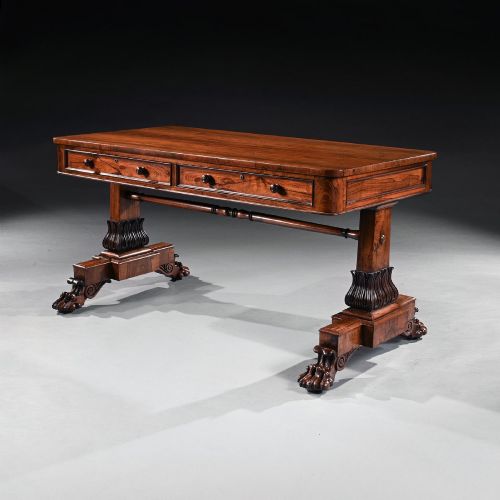
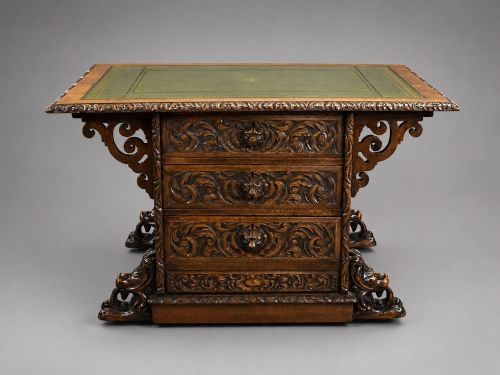
Cabinet makers utilised dense hardwoods such as mahogany, oak, rosewood, and walnut to withstand heavy daily use. Surfaces frequently incorporate inset panels of tooled leather, whilst structural detailing relies on hand carving applied to pedestals, frieze drawers, and lions paw feet.
Joinery techniques standard to the period ensure rigidity across large spans, particularly in partners desks and rotating drum tables. Brass mounts, castors, and ebonised highlights appear selectively to articulate the joinery and provide mobility.
Listings feature woods such as mahogany, oak, rosewood, burr walnut, and Gonçalo Alves across Georgian, Regency, and Victorian periods.
Assessing Quality
Quality rests in the depth and crispness of the hand carving on the pedestals and legs, alongside the selection of timber veneers like burr walnut or figured mahogany. Superior examples maintain structural integrity in their drawer linings and operating mechanisms, such as rotating drum tops.
The integration of secondary timbers, the quality of the original leather writing surface, and the reputation of makers such as Gillows or Maple and Co further distinguish exceptional workshop output from standard commercial production.
Maple and Co·Gillows·Williams and Gibton·Gill and Reigate
The Carved Pedestal Library Table Glossary
- Partners Desk
- A large double-sided desk designed for two people to work opposite one another, typically featuring banks of drawers on both pedestals.
- Drum Table
- A circular library table with a deep frieze containing drawers, usually mounted on a central pillar with tripod or platform feet.
- Sofa Table
- A small rectangular table traditionally placed in front of a sofa, fitted with drop leaves at either end and twin pillar supports.
- Gonçalo Alves
- A dense exotic hardwood imported from South America, noted for its rich contrasting figuring and utilised in high-status nineteenth-century furniture.
- Ebonised Wood
- Timber treated with a dark stain or finish to imitate ebony, commonly used for decorative banding and structural accents during the Victorian period.
Carved Pedestal Library Table: Frequently Asked Questions
What is a library table?
A library table is a heavy freestanding desk or centre table designed for reading, writing, and storing books or documents.
Unlike standard writing desks meant to sit against a wall, these pieces are finished on all sides for placement in the middle of a room.
How do I use a partners desk?
A partners desk provides matching workspace drawers and cupboards on opposite sides, allowing two people to share the furniture.
They function effectively as executive desks or statement centrepieces in spacious studies and home offices.
What woods were used for these tables?
Cabinet makers predominantly selected dense, durable hardwoods including mahogany, oak, rosewood, and walnut for strength and rich grain appearance.
Exotic veneers like burr walnut and Gonçalo Alves appear on higher-status commissions from the nineteenth century.
How do I distinguish Regency from Victorian styles?
Regency pieces often display restrained classical lines, brass inlay, and architectural influences inspired by ancient Rome and Greece.
Victorian furniture tends toward heavier proportions, deeper carving, and revivalist motifs including Gothic and Elizabethan influences.