



Antique Octagonal Desk
An antique octagonal desk brings centred symmetry and rich timber grain to a study, standing ready for daily correspondence.
Antique Octagonal Desk
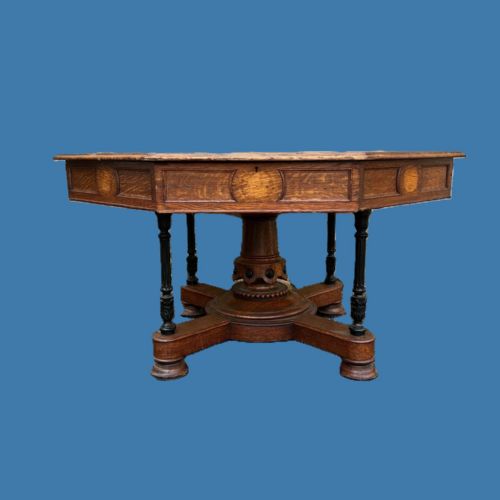
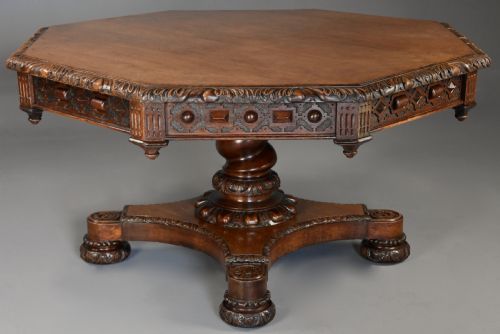
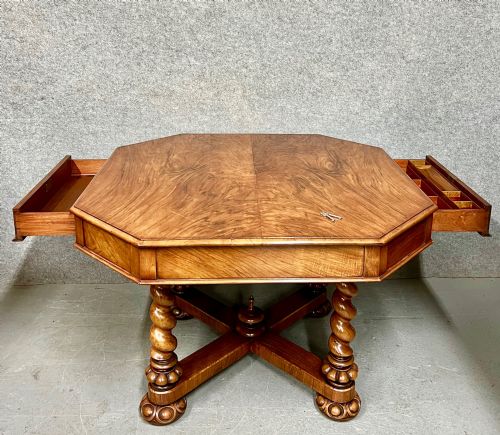
An antique octagonal desk appears as a centre or library table, offering a generous writing surface supported by robust timbers from the Georgian, Victorian, and later nineteenth-century periods. These freestanding pieces often double as library tables, designed to sit proudly in the middle of a room rather than pushed against a wall.
The selections span distinct historical revivals, including Gothic, Elizabethan, Jacobean, and Aesthetic Movement interpretations. Walnut, oak, and mahogany form the primary structural foundations of these multi-sided writing surfaces.
Materials and Technique
Cabinetmakers utilised dense hardwoods such as oak, walnut, mahogany, and rosewood to construct the eight-sided frames. These timbers were selected for their stability and capacity to accept deep polish.
Writing surfaces frequently incorporated inset panels of tooled leather or Moroccan leather, providing a durable and tactile writing plane. Brass fittings, bronze mounts, and giltwood details appeared on specific revival models.
Antique Octagonal Desk Retail Price Guide 2026
Typical asking prices for octagonal desk among the pieces listed under this phrase on Sellingantiques today, from the lower quarter to the upper quarter. They describe what is for sale here now, not the wider market.
Design influences stretch across the Georgian, Victorian, Aesthetic Movement, and Art Deco eras within the recorded inventory.
Judging Quality
The distinction between tiers rests upon the choice of timber and the precision of the joinery within the multi-sided frame. Superior examples demonstrate thoughtful grain selection across the eight panels and stable, well-engineered underframes.
Hardware execution and the integrity of the original leather insert further separate standard production from exceptional library furniture. Original locks, keys, and integrated drawer construction indicate higher workshop standards.
James Shoolbred & Co. London·Walker and Hall
The Antique Octagonal Desk Glossary
- Centre table
- A freestanding piece finished on all sides to be viewed from any angle in a room. These tables often feature octagonal top configurations.
- Library table
- A large, sturdy table utilised for reading and writing, frequently fitted with drawers beneath the top. They are synonymous with nineteenth-century scholarly interiors.
- Tooled leather
- Leather decorated with blind or gilt impressions using heated brass tools along the borders. It provided a traditional, durable writing surface.
- Gothic Revival
- A nineteenth-century design movement drawing inspiration from medieval architecture, featuring pointed arches and tracery. It heavily influenced several library tables in the evidence.
Antique Octagonal Desk: Frequently Asked Questions
Where should an octagonal desk go?
An octagonal desk works best positioned in the middle of a study or library as a freestanding centrepiece. Because the eight-sided design offers visual interest from every angle, pushing it against a wall obscures its primary architectural benefit.
Ensure there is sufficient clearance around all sides to allow comfortable movement and chair placement for writing.
How do I maintain leather desk tops?
The inset leather surface requires gentle cleaning with a slightly damp cloth followed by a neutral leather cream to keep the material supple. Avoid harsh chemical cleaners that can lift the gold tooling or dry out the leather.
Keeping the surface out of direct sunlight prevents fading and cracking of the historic hide.
Are these desks suitable for daily work?
These pieces were built for heavy use by scholars and professionals, making them robust enough for contemporary writing tasks. The generous timber construction easily accommodates modern writing implements and desk accessories.
Care should be taken with modern liquids and unpadded writing instruments to protect the historic polished wood and leather.
How do I identify a Victorian library table?
Victorian library tables often display dense oak, walnut, or mahogany timbers paired with heavy turned legs or trestle supports. Look for period characteristics such as Gothic or Elizabethan influences in the carved details.
Many examples include original tooled leather inserts and functional frieze drawers for storage.