


Victorian Drum Table
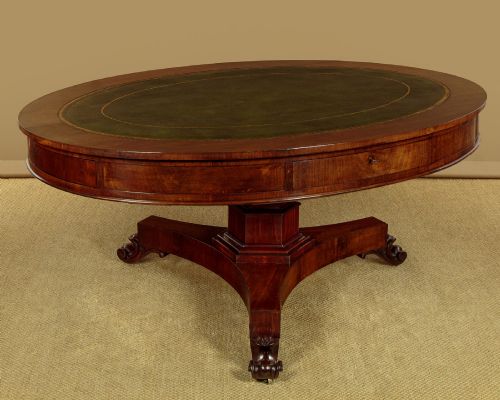
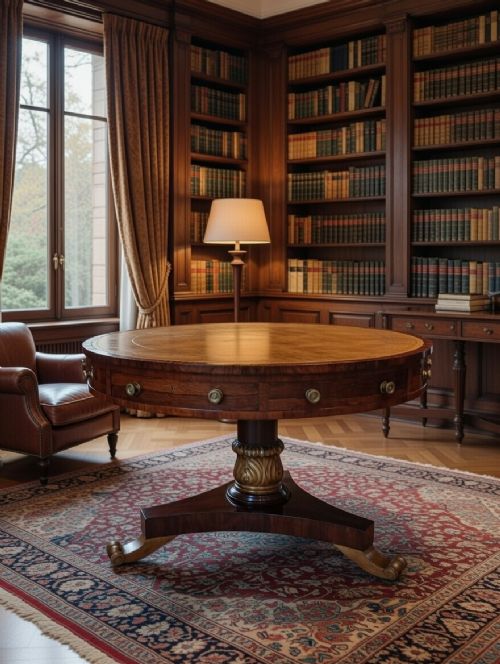
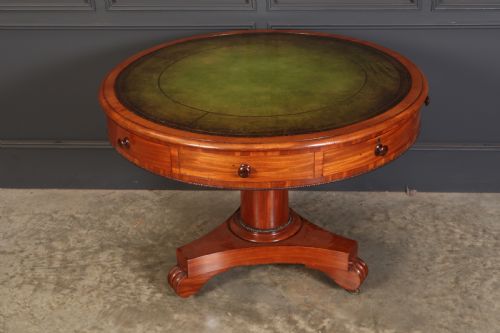
A victorian drum table is a circular library piece with frieze drawers, designed to anchor a room.
Victorian Drum Table
When you search for a victorian drum table, you encounter circular library tables that typically rotate on a central pillar and feature multiple drawers set into the deep frieze. These pieces originate primarily from the nineteenth century, spanning from early periods through the late Victorian era.
While round mahogany forms predominate, the listings show variations in shape and timber, including oval and octagonal formats constructed from oak, walnut, rosewood, and olive wood. They function historically as centre tables for studies and libraries, often fitted with inset leather surfaces.
The selection here ranges from compact occasional pieces to large revolving rent tables designed for sorting documents and currency. Buyers meet both plain utilitarian examples and highly decorated versions inlaid with marquetry or zodiac motifs.
Materials and construction
Cabinet makers utilised dense native and imported timbers, selecting figured mahogany, flame mahogany, and burr walnut for their rich grain patterns. These veneers and solid woods are frequently paired with inset tooled leather writing surfaces on the circular tops.
The internal construction relies on a robust central pedestal or pillar rising from a platform base with shaped feet, supporting the heavy cylindrical cabinet above. Drawers are integrated radially into the frieze, often featuring concealed mechanisms to allow the entire top to revolve smoothly.
The archive reveals zodiac motifs and marquetry inlay on select pieces attributed to prominent London workshops.
Factors determining quality
Quality rests significantly on the choice of timber figure, with book-matched flame mahogany or intricate burr walnut veneers marking the upper tier of production. Finer examples display meticulous attention to secondary woods and drawer linings.
The sophistication of the revolving mechanism and the crispness of any marquetry inlay or brass detailing separate standard utility pieces from workshop masterworks.
Gillows of Lancaster·Maple and Co·Edwards and Roberts
The Victorian Drum Table Glossary
- Drum table
- A circular library table with a deep frieze containing alternating real and dummy drawers. They rotate on a central pillar.
- Rent table
- A specialised variant of the drum table featuring drawers marked with letters or numbers for sorting estate accounts and tenant payments. These incorporate a revolving top to facilitate access.
- Frieze
- The broad horizontal band beneath the tabletop that houses the drawer compartments. In drum tables, this area constitutes the primary visual weight of the piece.
- Marquetry
- Decorative veneer work forming intricate pictorial patterns using various coloured woods. Higher quality pieces utilise this technique on the circular top.
- Pedestal base
- A central column support rising from a plinth or tripod feet. It bears the weight of the rotating drum cabinet.
Victorian Drum Table: Frequently Asked Questions
What is a drum table used for?
Originally placed in libraries and studies, these pieces served as central writing desks and sorting tables for documents. The rotating mechanism allowed users to access stationery and ledgers without moving from their seat.
Today, they function well as freestanding centre tables in large hallways or living spaces, providing concealed storage within the deep frieze drawers.
Do all drum tables rotate?
Most traditional examples incorporate a pivoting or revolving mechanism built into the top of the central pillar. This allowed access to the radial arrangement of drawers situated around the perimeter.
Some stationary variants exist, particularly among simpler or later pieces, but movement remains a defining characteristic of the form.
What woods were used?
Mahogany forms the majority of surviving examples, often selected for dramatic flame or figured grain patterns. Cabinet makers also utilised walnut, burr walnut, rosewood, oak, and satinwood for finer commissions.
Inlays of lighter timbers and brass hardware frequently accent these primary woods.
How do I care for the leather top?
The inset leather writing surfaces require gentle cleaning with a slightly damp cloth followed by dry buffing. Avoid harsh chemical cleaners that can strip the original tooling and colour.
Applying occasional leather wax preserves suppleness and prevents cracking across the writing area.