


Large Oak Hall Table
A large oak hall table anchors an entrance with substantial presence, offering a practical surface and deep historical character for an interior.
Large Oak Hall Table
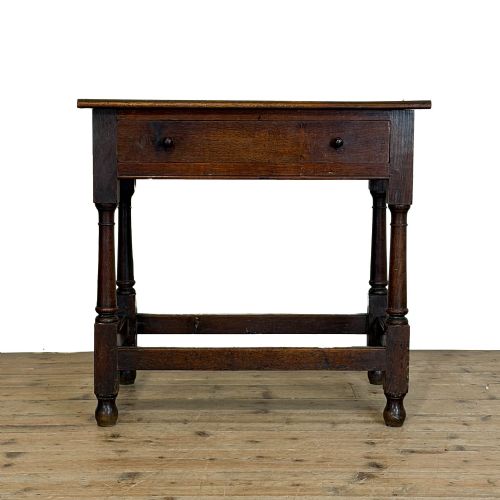
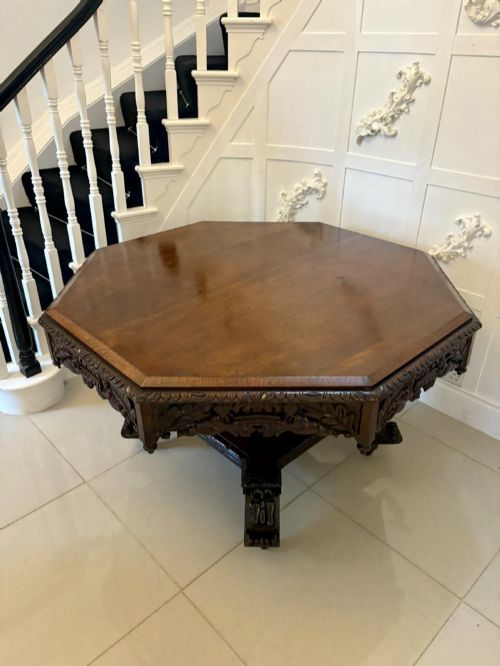
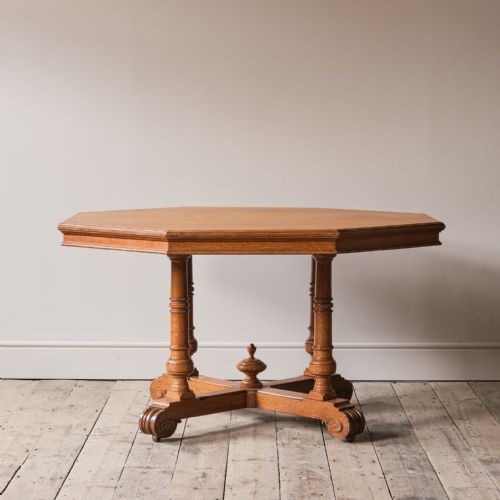
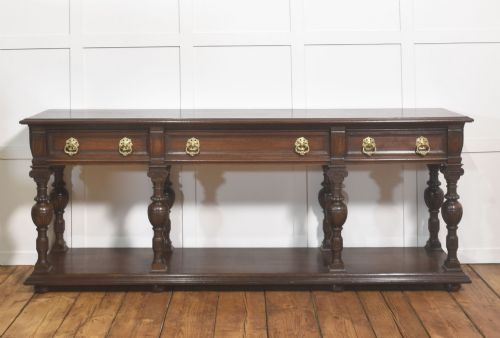
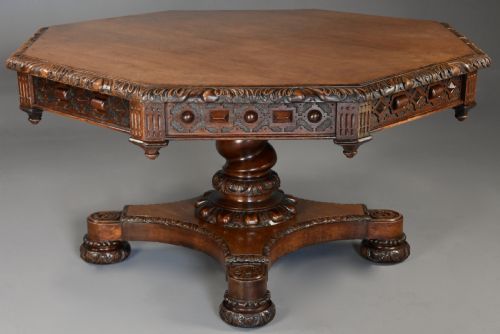
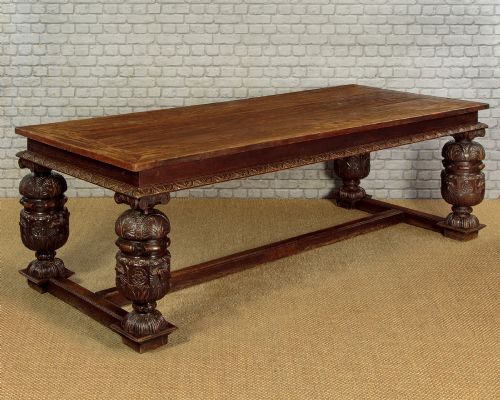
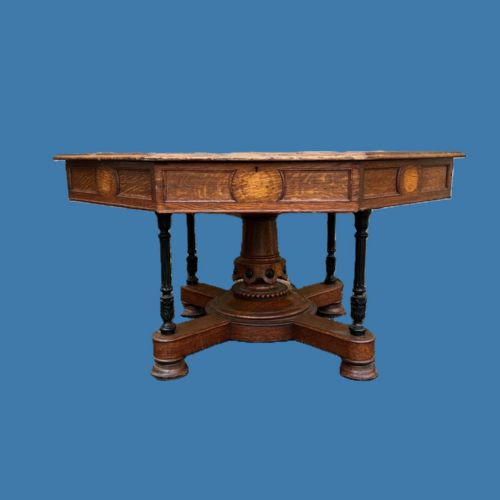
A large oak hall table spans various architectural iterations, including Jacobean revival dresser bases, Victorian Gothic centre tables, and rustic French country benches. These pieces frequently draw upon earlier periods such as the Elizabethan and Georgian eras, manifesting as heavy refectory tables, console tables, and library tables.
The selection ranges from mid-nineteenth-century Gothic reform designs to early twentieth-century carved benches and monk's seats. Solid oak and bleached oak dominate the forms, often paired with brass or iron hardware to handle daily domestic use.
Buyers encounter substantial proportions, with surfaces suited to large entrance spaces, alongside occasional adaptations like altar tables or serving tables utilised for similar structural duties.
Materials and Construction
Construction relies heavily on solid oak, frequently augmented by secondary timbers such as pine in larger country house and village hall formats. Artisans utilised traditional joining techniques to support expansive tops and heavy underframes.
Carving plays a primary role in stylistic expression, with workshops employing deep relief work to render Green Man motifs, mythical winged lions, and Gothic tracery. Surfaces range from heavily ebonised wood to lightened finishes achieved through modern or period bleaching processes.
The listings feature solid oak, bleached oak, and ebonised wood, spanning the eighteenth to the twentieth centuries with strong Victorian Gothic representation.
Assessing Quality and Execution
Quality reveals itself in the crispness of the carved ornamentation and the architectural integrity of the underframe. Tables featuring deeply articulated motifs, such as Green Man masks or winged lions, demonstrate superior craftsmanship compared to simpler, commercially produced revival pieces.
The integrity of the timber also dictates value, with solid oak construction and well-figured grain marking out superior examples. Uniformity in the bleaching process or the preservation of original patination separates finer decorator pieces from heavily altered stock.
The Large Oak Hall Table Glossary
- Dresser Base
- A low sideboard or serving table featuring drawers and cabinetry beneath the main surface. These forms often double as substantial hall furniture in larger country interiors.
- Refectory Table
- A long, narrow dining or serving table traditionally used in communal halls. They feature robust timber legs connected by heavy floor stretchers for stability.
- Green Man
- A sculptural architectural motif depicting a human face disgorging foliage or vines. This ornament frequently appears on nineteenth-century revival oak furniture.
- Gothic Revival
- An architectural and decorative movement drawing inspiration from medieval design. It is characterised by pointed arches, tracery, and heavy carved details.
- Monk's Seat
- A convertible piece of furniture featuring a pivoting back that folds down to form a table top. They often incorporate a box seat base for storage.
Large Oak Hall Table: Frequently Asked Questions
How do I fit a large hall table?
Measure the entryway thoroughly, accounting for door swings and radiator clearance. Allow sufficient perimeter space so the piece does not crowd the thoroughfare.
Position the table against a primary wall to anchor the hallway visually, leaving enough clearance for guests to pass comfortably.
What is a refectory table doing in a hall?
Refectory tables provide long, narrow surfaces well suited to narrow entrance spaces where standard square tables obstruct traffic. Their sturdy proportions handle daily dropping of post and keys.
Historically adapted from dining halls, these heavy oak formats offer generous surface area without overwhelming domestic corridors.
How do I maintain bleached oak?
Dust regularly with a soft, dry cloth to prevent grit accumulation on the lighter grain. Avoid silicone-based polishes that darken or alter the bleached finish.
Treat spills immediately using a damp cloth followed by thorough drying. Protect the surface from moisture using coasters or trays.
Are these tables solid oak?
Most listings feature solid oak construction, though larger vernacular pieces occasionally incorporate secondary timbers like pine in non-structural areas. Inspect the grain patterns and underside construction to verify the primary material.
Revival pieces from the nineteenth and early twentieth centuries generally maintained heavy solid oak standards to support elaborate hand-carved ornamentation.