


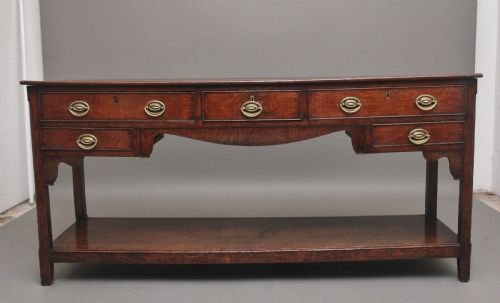


Antique Oak Board Table
An antique oak board table brings heavy timber and centuries of service into a room, offering a durable surface built from solid wood.
Antique Oak Board Table
When you search for an antique oak board table, you look for heavy timber furniture built for communal dining, working or serving. The pieces appearing here span centuries from the eighteenth through to the twentieth, reflecting both formal dining formats and utilitarian regional pieces.
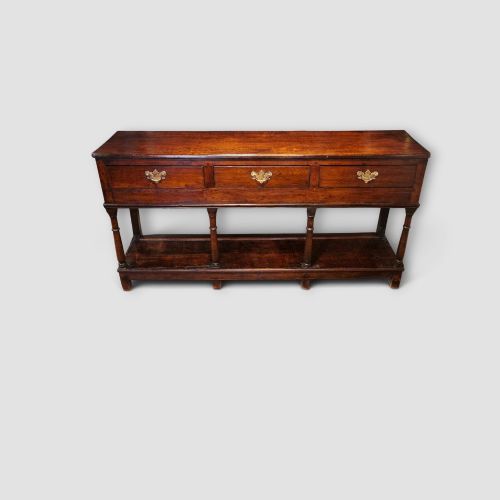
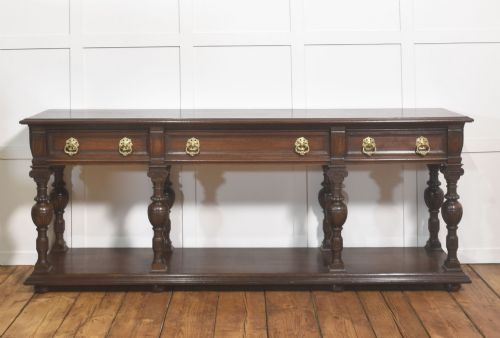
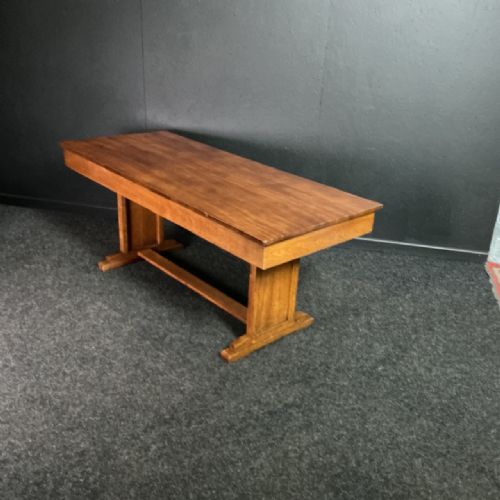
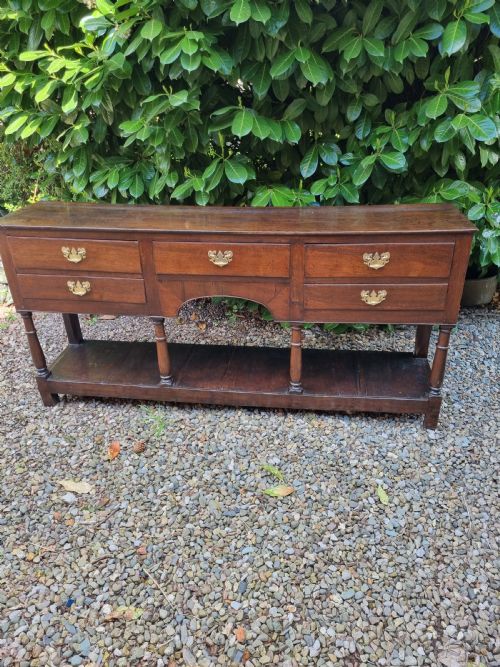
The most common forms on this page include dresser bases with potboards, library tables and refectory formats. Welsh and Georgian examples frequently feature open lower shelves, while later twentieth-century interpretations lean towards Arts and Crafts or Gothic revival styles.
Makers and workshops across Britain produced these from solid timber to withstand daily heavy use. Whether you find an eighteenth-century Welsh base or a twentieth-century school library table, the core character remains rooted in utilitarian strength.
How they were made
These tables and bases rely fundamentally on solid oak, selected for its density and resilience. Joinery relied on traditional pegged mortise and tenon joints to lock heavy boards together without relying on modern adhesives.
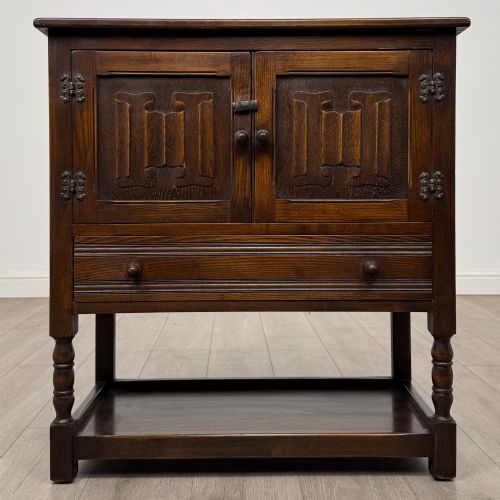
Secondary materials appear where structural hardware requires them. Iron and brass show up in hinges, drawer pulls and corner braces, reinforcing the joints of pieces designed to carry substantial weight.
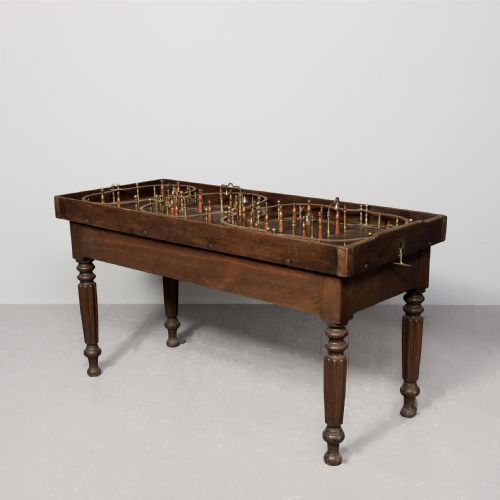
One unexpected item on record is a free-standing oak skittles game, proving oak served leisure just as readily as dining.
What varies in quality
Quality in these pieces rests upon the selection of the timber and the integrity of the original construction. Superior examples display tightly grained quarter-sawn oak boards that have aged evenly without excessive warping.
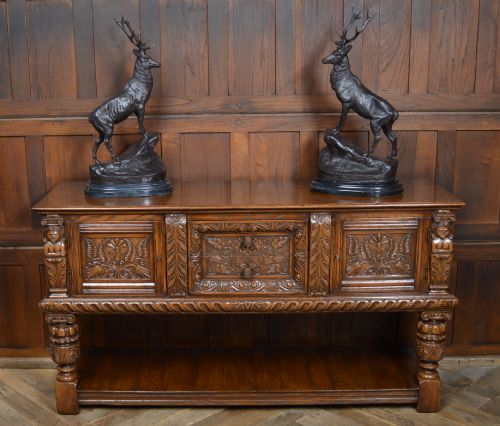
Hand-carved detailing and proportion distinguish finer examples from plain utilitarian workshop pieces. The handling of the mouldings, the depth of the drawer construction and the retention of original brass or iron hardware determine the standing of each table.
The Antique Oak Board Table Glossary
- Potboard
- A low slatted or solid shelf positioned beneath a dresser base or table, originally designed for storing heavy pots and pans. This lower tier defines many traditional Welsh and Georgian formats.
- Refectory table
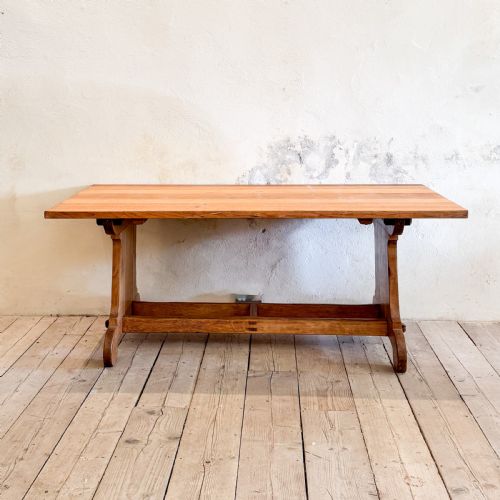
- A long, narrow dining table traditionally used in monasteries and large halls for communal meals. Later revival pieces adopted this sturdy proportions for domestic dining.
- Dresser base
- A low sideboard fitted with drawers above cupboards or an open potboard. They served as primary storage and serving surfaces in historical kitchens and dining rooms.
- Quarter-sawn oak
- Timber cut radially from the log, producing distinctive medullary ray flecks across the grain. This cutting method yields more stable boards less prone to shrinking or warping.
- Mortise and tenon
- A foundational joint where a projecting peg on one board fits tightly into a matching cavity carved into another. It provides immense structural rigidity without metal fasteners.
Antique Oak Board Table: Frequently Asked Questions
How do I care for an antique oak table top?
Keep the timber nourished by applying natural beeswax periodically to protect against dryness and minor spills. Avoid placing solid oak surfaces near direct heat sources to prevent the boards from splitting.
Use coasters and felt pads beneath heavy objects to safeguard the historic finish from rings and deep scratches. Gentle dusting with a dry cloth maintains the natural lustre without stripping the aged patina.
Are these tables suitable for daily family dining?
Solid timber construction makes these pieces exceptionally resilient for regular use in a busy household. Their robust frames easily withstand the demands of daily meals and gatherings.
Embrace minor marks and dents as part of the ongoing history of the timber. Using protective table runners helps preserve the aged surface while allowing you to use the piece daily.
How can I tell an eighteenth century table from a later revival?
Examine the underside and drawer linings for tool marks, hand-cut joinery and timber shrinkage patterns. Eighteenth-century pieces typically show irregular hand-planing and authentic peg construction unique to period workshops.
Revival pieces from the Edwardian era or the 1920s often display uniform machine milling and standardised fixings beneath the surface. Comparing the wear patterns around the stretcher bases also reveals the true age of the timber.
What is the difference between a library table and a refectory table?
Library tables generally feature integrated drawers for storing papers and small volumes, reflecting their original purpose in institutional or domestic studies. Their proportions are often scaled for reading and writing rather than large feasts.
Refectory tables prioritize length and unobstructed legroom beneath a long, thick top built for seating many diners. They lack the auxiliary drawer banks common in library tables and dresser bases.