
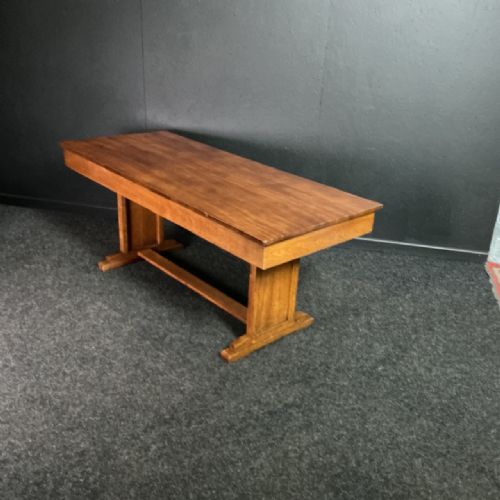
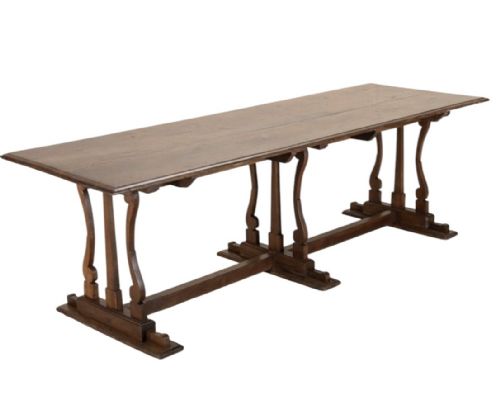


Gothic Oak Trestle Table
A gothic oak trestle table brings heavy timber, architectural framing and monastic weight directly into a room.
Gothic Oak Trestle Table
A gothic oak trestle table represents heavy timber construction rooted in nineteenth century revivals, monastery forms, and arts and crafts design. Buyers searching for a gothic oak trestle table find substantial dining surfaces, refectory styles, and altar or serving tables framed by architectural underframes.
The pieces appearing here span the Victorian era, the nineteenth century, and early decades up to nineteen thirty, drawing on gothic revival, Jacobean revival, and Flemish Renaissance styles. Most examples rely on solid oak timbers, occasionally appearing in walnut or ebonised wood.
Forms extend beyond simple dining boards to include library tables, console pieces, and galley tables paired with benches. These heavy boards suit large kitchens, halls, and dining rooms requiring architectural presence.
Markers of quality
Quality separates pieces through the selection of timber and the depth of architectural carving rather than surface decoration alone. Solid oak construction with substantial plank tops and tight joints indicates superior cabinet work.
Proportion and underframe stability dictate the success of a piece, where crisply carved tracery or figural work distinguishes workshop production from simpler vernacular joinery.
Listings feature solid oak and walnut timbers spanning the nineteenth century, Victorian era, and early twentieth century.
The Gothic Oak Trestle Table Glossary
- Trestle table
- A table comprising two or more supports carrying a horizontal top. This form allows maximum legroom along the length of the board.
- Refectory table
- A long narrow dining table traditionally used in monastic dining halls. These pieces typically feature heavy stretcher rails linking the legs near the floor.
- Gothic Revival
- An architectural and decorative style drawing on medieval forms, pointed arches, and heavy tracery. The movement gathered strength during the nineteenth century across furniture and buildings.
- Arts and Crafts
- A design movement valuing hand craftsmanship and traditional materials over industrial manufacture. Pieces from this tradition emphasise honest construction and plain timber surfaces.
- Flemish Renaissance Revival
- A decorative style incorporating elaborate carved detail, strapwork, and figural elements such as green men. It heavily influenced nineteenth century dining furniture.
Gothic Oak Trestle Table: Frequently Asked Questions
How do I seat people comfortably around a trestle table?
The absence of corner legs allows benches and chairs to slide easily along the full length of the stretchers.
Positioning depends on the placement of the trestle feet beneath the top.
Are these tables suitable for daily kitchen use?
Solid oak surfaces handle heavy daily wear and develop a rich patina over decades of use.
Treating the timber appropriately protects the grain from moisture and heat.
What is the difference between a refectory and a monastery table?
Monastery tables generally refer to massive proportions and ecclesiastical styling reminiscent of monastic dining rooms.
Refectory tables describe the long narrow format built for communal dining.
How do I distinguish nineteenth century revival from earlier pieces?
Tool marks, timber shrinkage patterns, and assembly methods help date the construction.
Revival pieces often combine gothic motifs with nineteenth century framing techniques.