
Carved Pedestal Foyer Table
A carved pedestal foyer table makes a commanding centrepiece, anchoring an entrance hall with solid timber and classical proportion.
Carved Pedestal Foyer Table
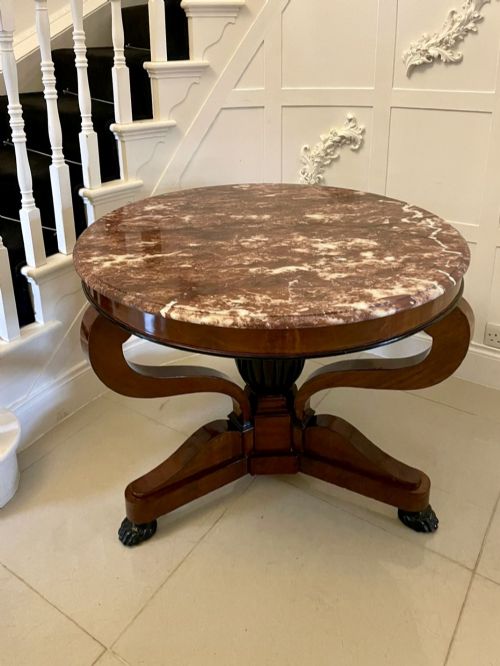
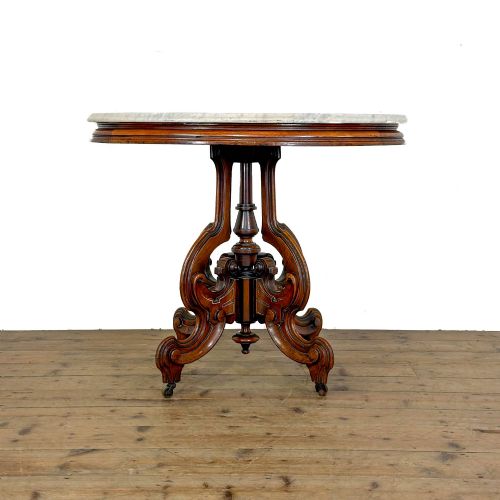
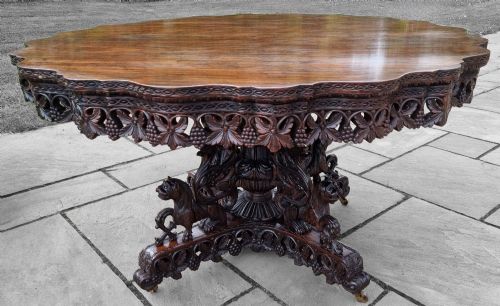
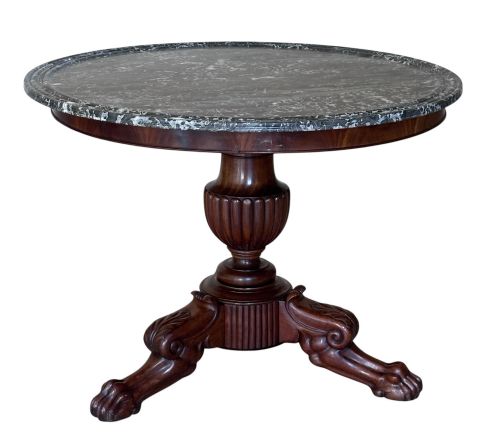
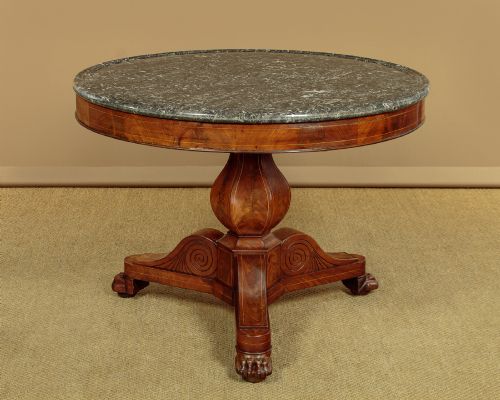
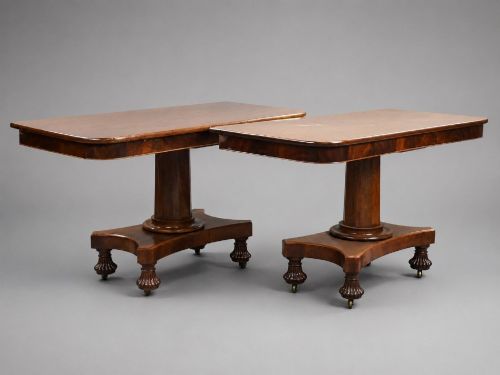
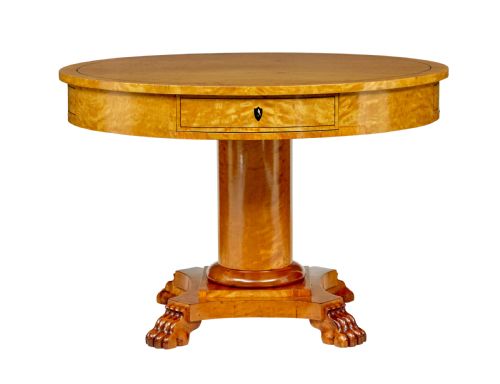
When searching for a carved pedestal foyer table, buyers encounter a selection dominated by nineteenth-century centre tables, gueridons, and occasional tables adapted from reception rooms into grand entrance halls. These pieces typically stand on a central pillar supported by a platform base or carved feet, often topped with imported marble or figured wood veneers.
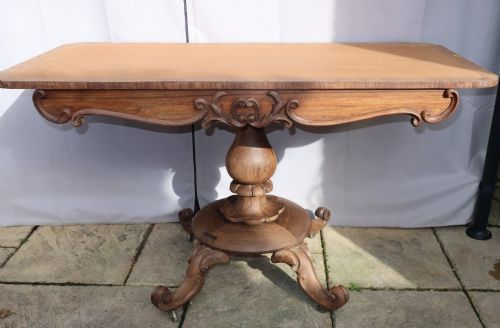
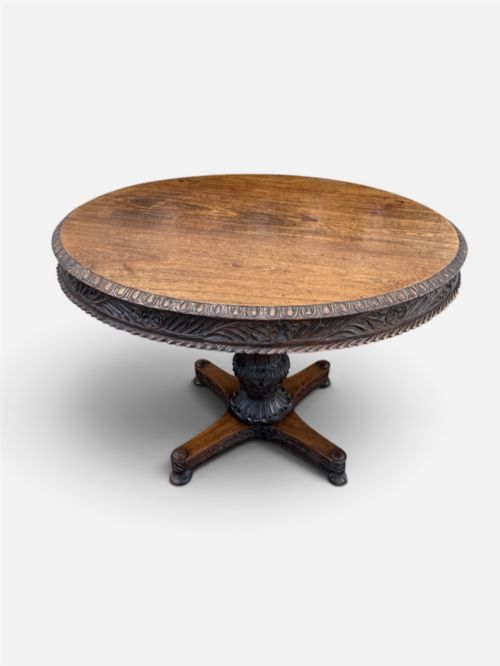
The inventory spans several distinct aesthetic traditions, including Victorian mahogany and oak works, French Empire and Restoration gueridons, and Regency rosewood designs. Regional variations appear in Swedish birch and Anglo-Indian padauk, reflecting international nineteenth-century cabinet-making trends.
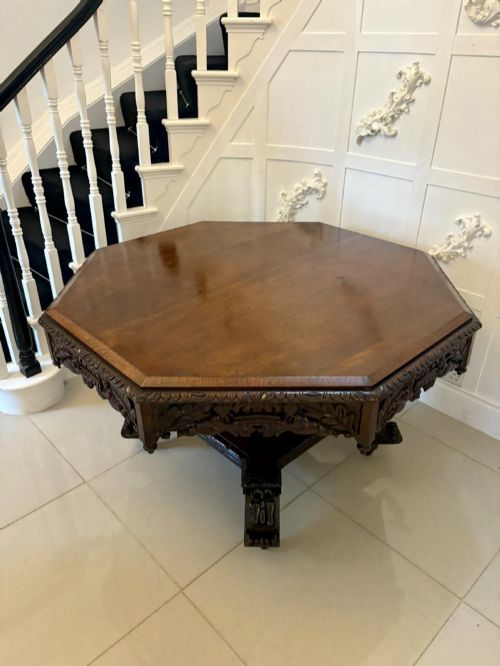
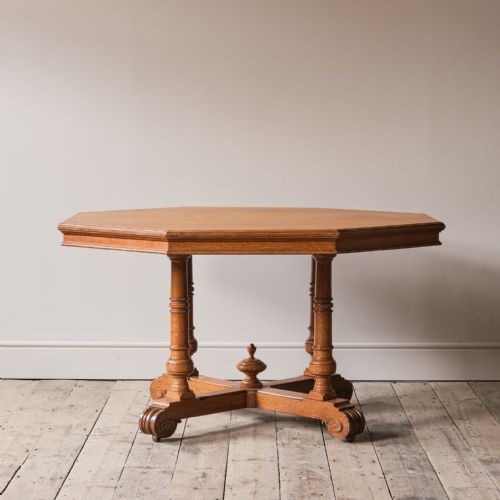
Forms range from round tilt-top breakfast tables to oval and octagonal library tables. While originally built as dining, library, or drawing-room centre tables, their substantial proportions suit spacious entrance halls.
Materials and construction
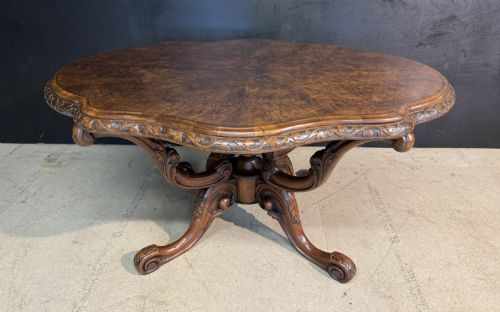
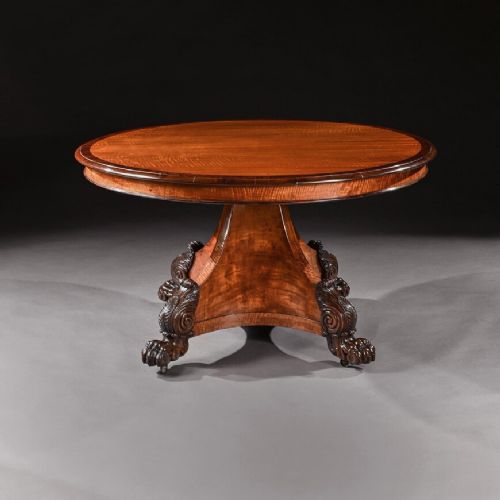
Cabinet-makers relied on dense timbers such as mahogany, rosewood, walnut, and pollard oak, frequently applying flame mahogany or burr walnut veneers over secondary woods to achieve striking surface patterns. Heavy central pedestals required stable structural framing to support substantial weight above.
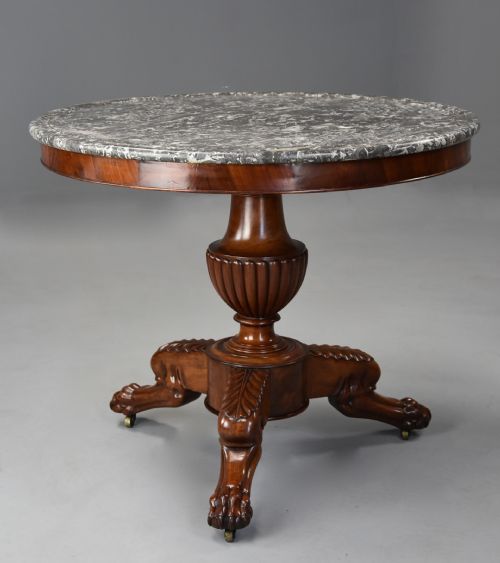
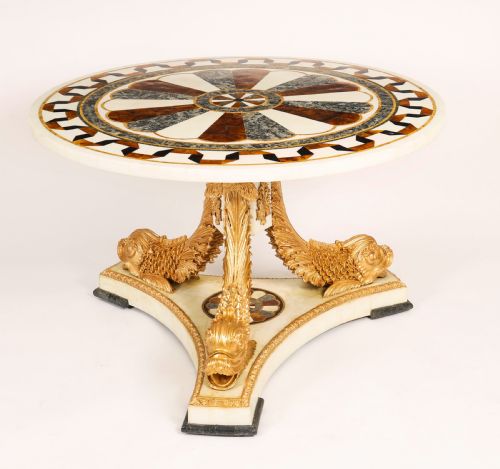
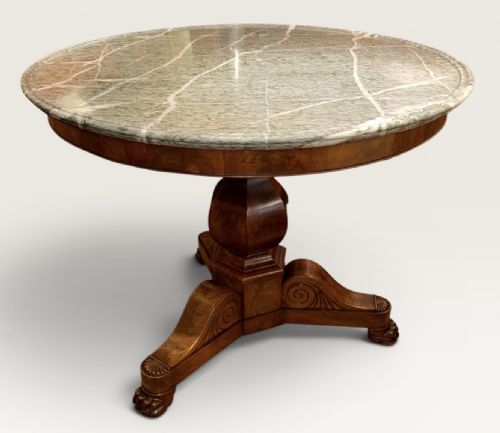
Insets of veined white or grey marble appear frequently on French gueridons, requiring precise stone-cutting and fitted wooden galleries to secure the top. Carved details - ranging from restrained moulding to figurative elements like dolphins and rams' heads - were executed by hand in solid woods or applied as gilt and ebonised ornamentation.
The listings feature nineteenth-century furniture built from mahogany, rosewood, walnut, oak, and satinwood.
Determining quality
The distinction between ordinary and exceptional examples lies in the selection of timber veneers and the crispness of the hand-carved ornamentation on the central pillar and base. Superior pieces display book-matched figure work and deeply undercut carving that retains sharp definition.
Structural integrity of the central column and its junction with the foot platform dictates longevity, as these joints bear significant downward pressure. Original fitted marble slabs and intact parcel-gilding further elevate an example above standard production.
Peters of Genoa
The Carved Pedestal Foyer Table Glossary
- Gueridon
- A small circular table on a central pillar, originating in seventeenth-century France and widely produced in mahogany and walnut during the nineteenth century. These tables frequently feature inset marble tops.
- Tilt-top
- A table mechanism allowing the top to pivot to a vertical position when not in use, saving space and displaying the timber grain. This construction requires secure brass catches and stable pedestal locking mechanisms.
- Veneer
- A thin layer of figured timber applied to a stable secondary wood body to create decorative surfaces without warping. Master cabinet-makers utilised flame mahogany and burr walnut for this purpose.
- Parcel-gilt
- Wood or metal partially gilded with thin gold leaf to highlight carved mouldings and decorative motifs. This technique contrasts metallic brilliance with dark polished timbers.
- Console table
- A table designed to stand against a wall, frequently supported by wall brackets or front pedestals. In nineteenth-century interiors, pairs of these tables served grand reception spaces.
Carved Pedestal Foyer Table: Frequently Asked Questions
Where do I place a pedestal table?
These tables function best freestanding in the middle of a spacious entrance hall or large landing, allowing access from all sides.
Ensure adequate clearance around the perimeter for movement and door swings.
Can I use a marble top daily?
Marble provides a durable, hard-wearing surface suitable for dropping keys and placing decorative bowls or flower arrangements.
Acidic liquids can etch polished stone, so coasters and mats remain advisable.
How do I identify a Gueridon?
A gueridon is distinguished by its single central column and circular top, often featuring a raised wooden rim or inset marble slab.
Originating in France, nineteenth-century versions frequently employ mahogany or walnut.
What is a tilt-top mechanism?
The tabletop pivots on a hinge mechanism, locking flat for use or vertical for storage against a wall.
Inspect the pivot block beneath the top to ensure the brass hardware remains secure.