
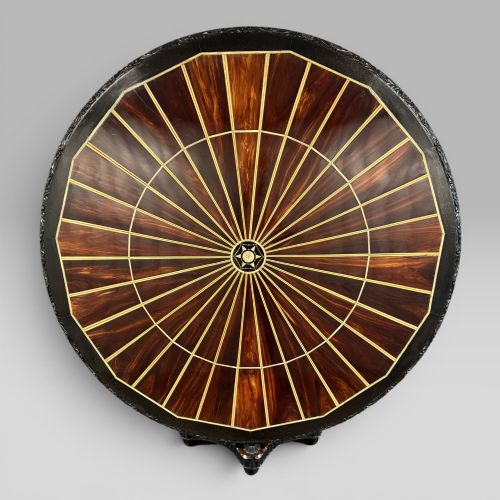


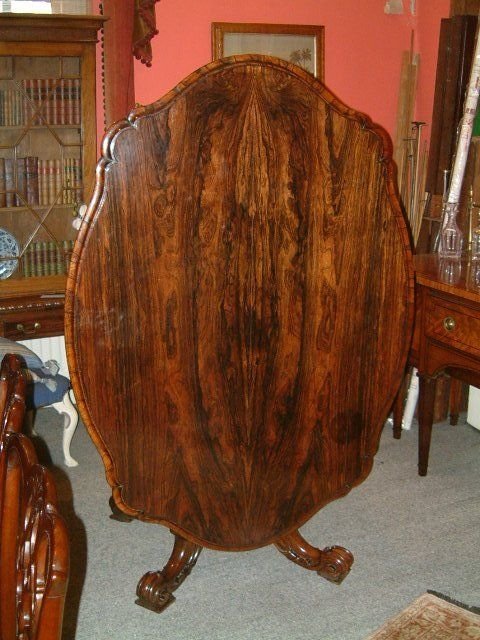
Calamander Wood Table
These calamander wood table pieces are striking exotic timber items that collectors prize for their rich grain and dramatic colour contrast.
Calamander Wood Table
When you search for calamander wood table examples, you encounter substantial furniture items primarily rooted in the nineteenth century alongside later twentieth-century forms. The selection commonly spans dining tables, centre tables, breakfast tables, library tables, and larger dining suites.
Origin and stylistic influence vary across the inventory, encompassing Regency, William IV, Victorian, and Anglo-Indian Colonial designs. Alongside large tables, you frequently find related items incorporating the same dense tropical timbers and decorative working methods.
How they were made
Cabinetmakers utilised dense exotic timbers, frequently pairing calamander and coromandel with contrasting woods like ebony, rosewood, satinwood, and macassar. Metal embellishments such as brass mountings appear across various items to accent the dark grain.
Construction relies upon robust framing to support heavy timber tops, with detailed crossbanding and inlay work defining the decorative surfaces of these tables and companion pieces.
Listings span the nineteenth century through nineteen thirty, incorporating brass, bone, and mother-of-pearl across various dining and library forms.
What varies in quality
The sophistication of the timber figuring and the precision of the crossbanding separate standard examples from superior items. Grain pattern depth and the complexity of timber combinations dictate the visual weight of each piece.
Stylistic purity and the execution of period details, from pedestal turnings to brass mounts, determine the overall calibre of the construction.
The Calamander Wood Table Glossary
- Calamander
- A heavy, durable tropical hardwood featuring distinctive dark brown and light brown striping. This timber provides the striking striped appearance seen on surfaces across the collection.
- Coromandel
- A closely related valuable timber often grouped with calamander due to its similar dense grain and deep colouration. It frequently forms the primary surface veneer on nineteenth-century pieces.
- Crossbanding
- A decorative technique where a border of veneer is laid perpendicular to the main grain of the table top. This method frames the central panel and highlights the contrast of exotic woods.
- Library table
- A large freestanding table designed for domestic study or reading rooms, typically finished on all sides with generous surface area. These pieces often feature sturdy pedestals or multiple supporting legs.
Calamander Wood Table: Frequently Asked Questions
How do I date a table?
Dating relies upon stylistic markers such as Regency or Victorian proportions, combined with construction methods and timber usage.
Comparing the specific joinery and decorative motifs against documented nineteenth-century examples helps establish the period.
Where were these tables made?
These pieces originate from various regions including British workshops, French studios, and Anglo-Indian colonial centres.
Makers sourced exotic woods through global trade routes before fashioning them into domestic and library furniture.
How do I care for the wood?
Maintenance requires protecting the polished timber surfaces from direct sunlight and maintaining stable indoor humidity levels.
Applying appropriate wax polishes occasionally helps nourish the dense grain without building up heavy residues.