


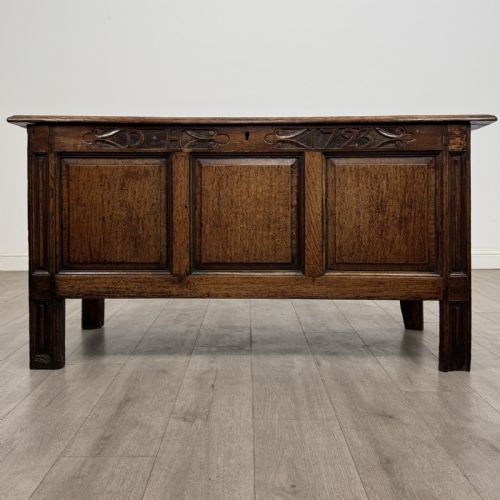
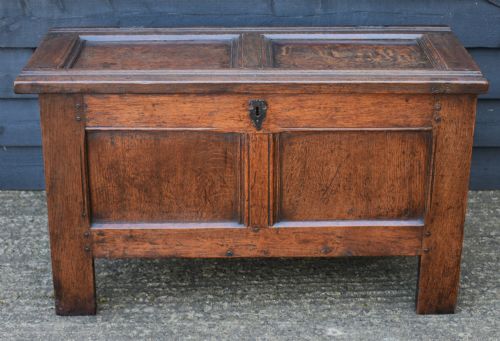
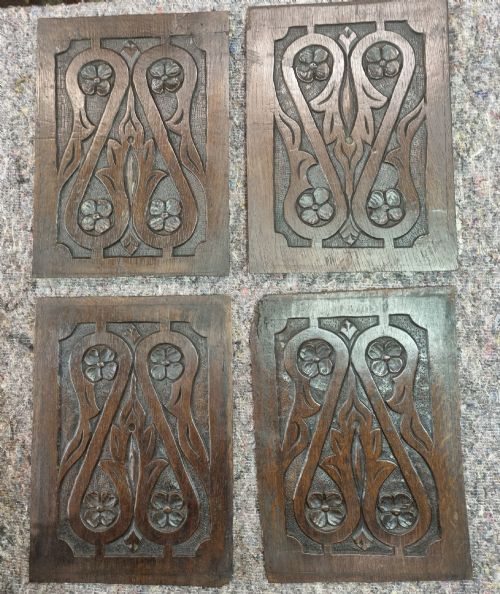
Carved Panel Oak Chest
When you search for a carved panel oak chest, you uncover robust utilitarian storage that brings centuries of British domestic history into a modern room.
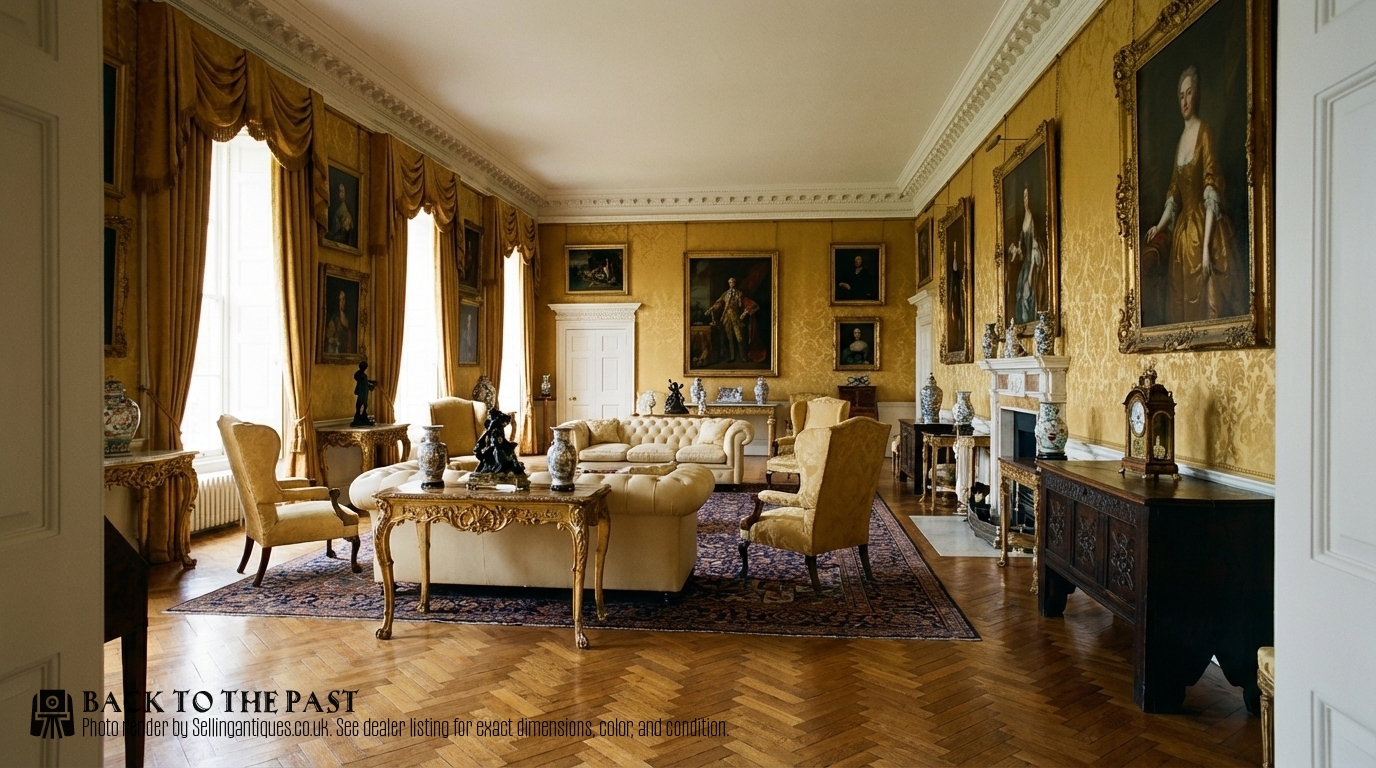
Carved Panel Oak Chest
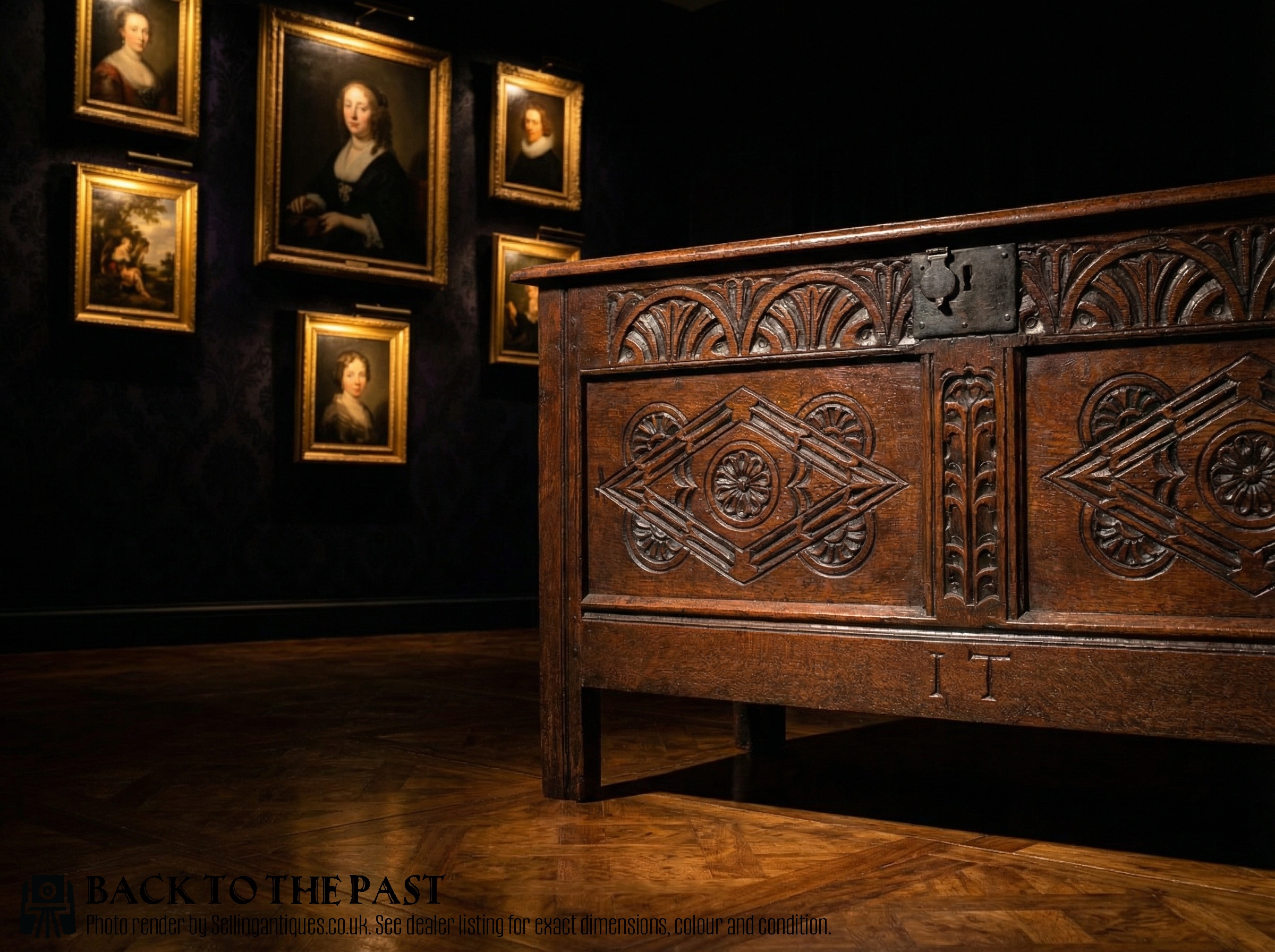
A carved panel oak chest serves as a traditional repository for household linens, valuables and dry goods, evolving from simple medieval coffers into structured storage by the seventeenth century. These sturdy wooden boxes were central to domestic life across English, Welsh and continental European provinces.
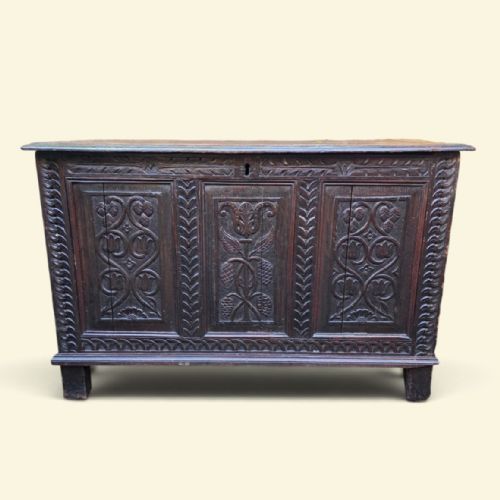
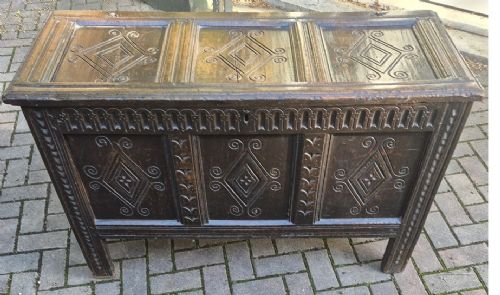
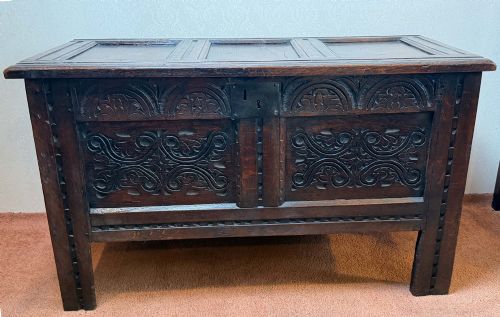
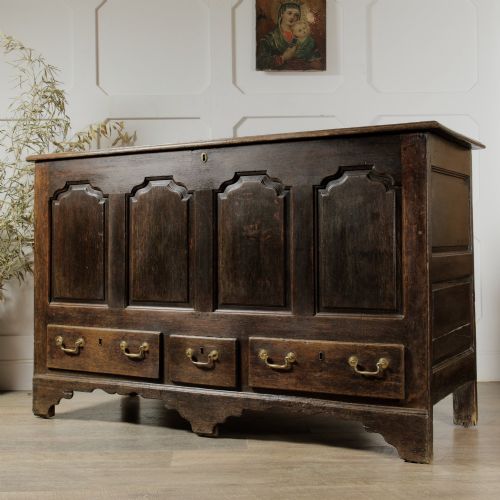
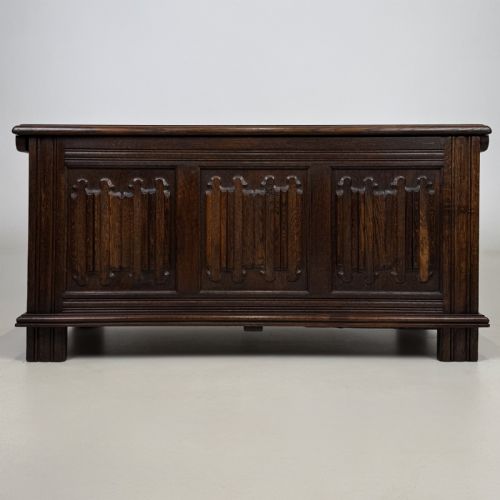
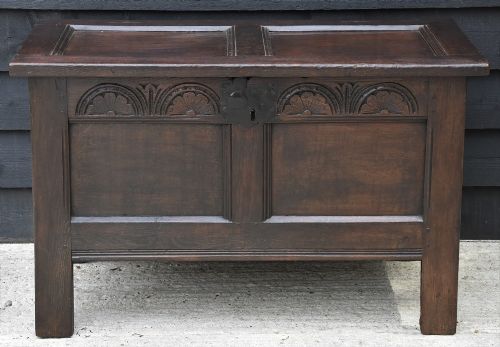
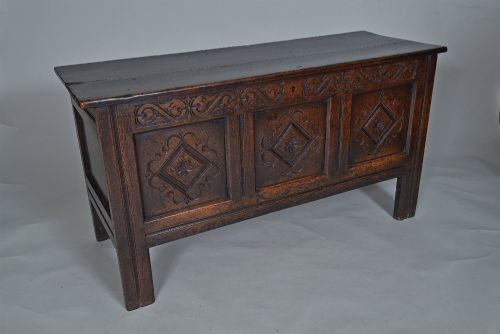
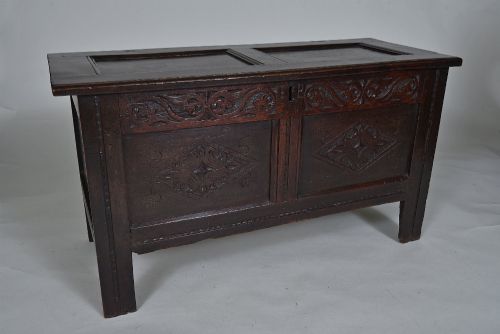
On this page, the most common form encountered is the seventeenth or eighteenth-century panelled coffer constructed with sturdy stile and rail framing. Later revivals from the Edwardian era and the 1930s also appear frequently, mimicking the earlier geometric or floral carvings.
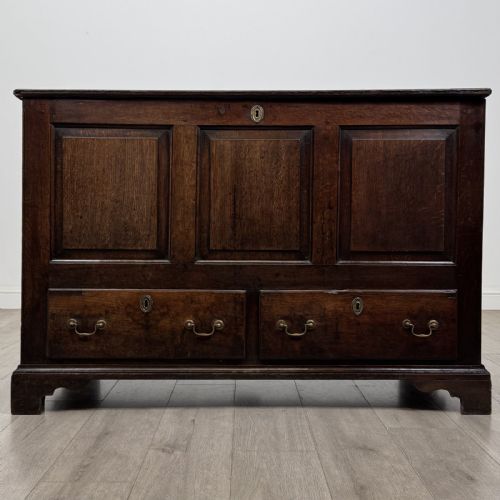
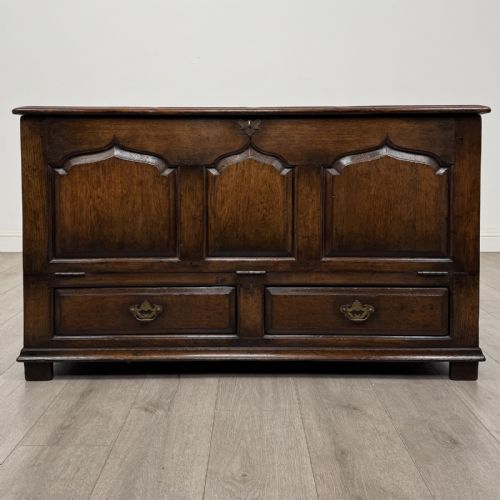
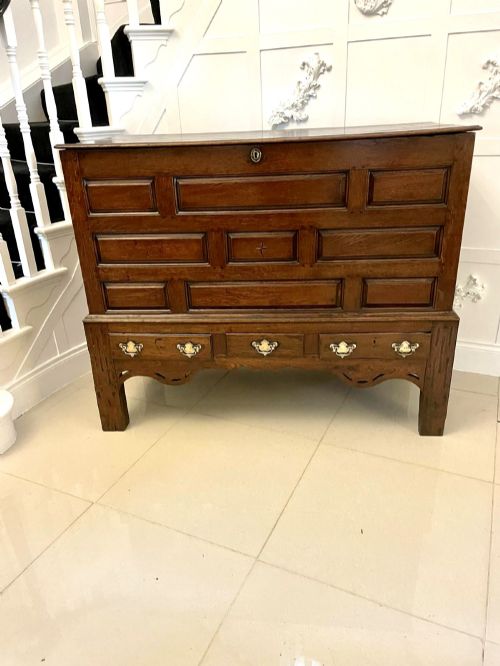
The evidence shows forms ranging from simple twin-panel blanket boxes to complex mule chests featuring lower drawer units and marquetry inlay. Regional variations such as Welsh Gower pieces alongside French provincial coffers demonstrate how local carvers adapted standard construction to their own aesthetic preferences.

Materials and construction
Solid oak provides the primary structural integrity for these pieces, selected for its density, local availability and resistance to warping when properly quarter-sawn. Secondary woods like pine occasionally appear in internal partitions or floorboards on later or provincial examples.
Joinery relies on traditional mortise and tenon frames secured with wooden pegs, holding deeply recessed panels that allow the timber to expand and contract naturally. Carving is executed directly into the solid oak boards using gouges and chisels, often supplemented by applied mouldings and occasional wood or marquetry inlay.
Carved Panel Oak Chest Retail Price Guide 2026
Typical asking prices for carved panel oak chest among the pieces listed under this phrase on Sellingantiques today, from the lower quarter to the upper quarter. They describe what is for sale here now, not the wider market.
Listings feature oak material predominantly, alongside secondary elements in iron, brass, and marquetry inlay across periods spanning the sixteenth to the twentieth century.
Distinctions in craftsmanship
Quality rests primarily on the depth and crispness of the hand carving, where confident relief work by a skilled hand distinguishes a piece from mechanical twentieth-century reproductions. The thickness of the original timber and the survival of untouched patination also elevate an example significantly.
Structural integrity depends on the retention of original floorboards, hinges and stile feet, which frequently suffer from dampness and floor rot over centuries of use. Alterations such as later lid replacements or added drawer configurations differentiate untouched survivals from heavily restored workshop composites.
The Carved Panel Oak Chest Glossary
- Cofer
- An archaic spelling for a heavy storage chest used for transporting or storing valuables. These deep boxes formed the basis of domestic furniture before fitted wardrobes became common.
- Mule chest
- A storage chest featuring one or more drawers built into the base beneath the main compartment. This form bridges the gap between the traditional cofer and the modern chest of drawers.
- Stile and rail
- A traditional frame construction method where vertical stiles and horizontal rails hold a floating central panel in place. This technique accommodates seasonal wood movement without splitting the timber.
- Marquetry inlay
- Decorative patterns formed by fitting contrasting thin slices of wood veneers into prepared recesses within the solid oak surface. It adds visual complexity to seventeenth and eighteenth-century facades.
- Trinket box
- A diminutive storage container constructed with similar panelled techniques to larger blanket chests. These smaller proportions were intended for desktop use or safeguarding smaller personal items.
Carved Panel Oak Chest: Frequently Asked Questions
How old is my carved oak chest?
Dating relies on examining the joinery marks, hand-cut iron nails, hinge types, and the style of the relief carving on the panels. Seventeenth-century examples typically display pegged mortise and tenon joints with primitive chip or strapwork carving.
Later revival pieces from the Edwardian period or the 1930s often reveal machine-cut elements, standard modern screws, and lighter, less dense oak boards. Comparing the patination and wear patterns around the feet and lid edges provides further clues to genuine age.
What is the difference between a coffer and a mule chest?
A coffer is essentially a deep lidded box designed primarily for storing blankets, woollens, and household stores in a single upper compartment. Access is strictly from the top lid.
A mule chest introduces one or two exterior drawers beneath the main box section, combining top-loading storage with easy access to garments without disturbing items piled on top. This transitional form gained popularity during the late seventeenth and eighteenth centuries.
How should I care for an antique oak chest?
Protect the timber by keeping the piece away from direct heat sources, radiators, and rapid humidity fluctuations that cause oak to split or warp. Maintain the surface using traditional beeswax rather than modern liquid polishes to preserve the historical finish.
Ensure the interior remains well ventilated and avoid placing damp items directly onto the base boards. Simple dusting with a dry, soft cloth is sufficient for routine maintenance.