
Carved Oriental Plant Table
These pieces known as a carved oriental plant table bring historic craftsmanship and rich timber into a room.
Carved Oriental Plant Table
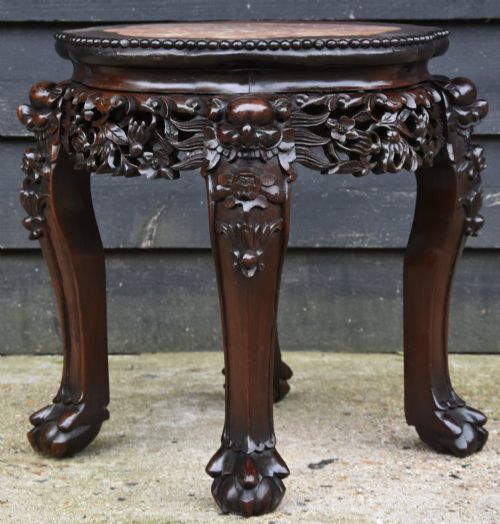
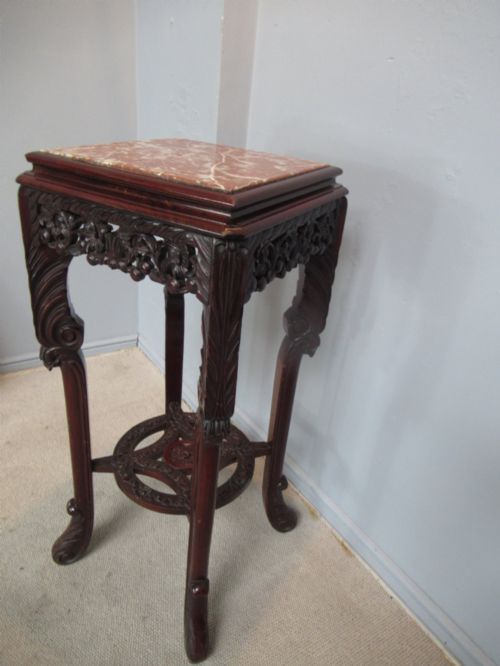
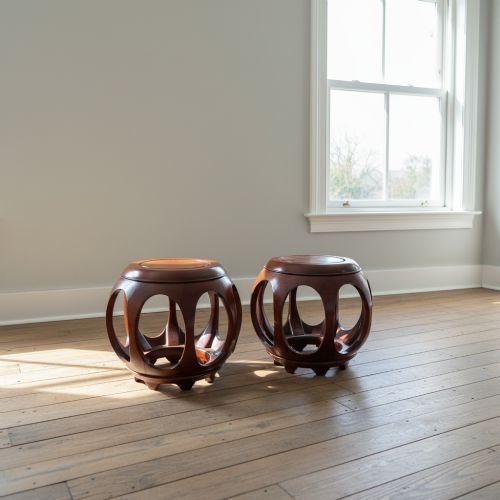
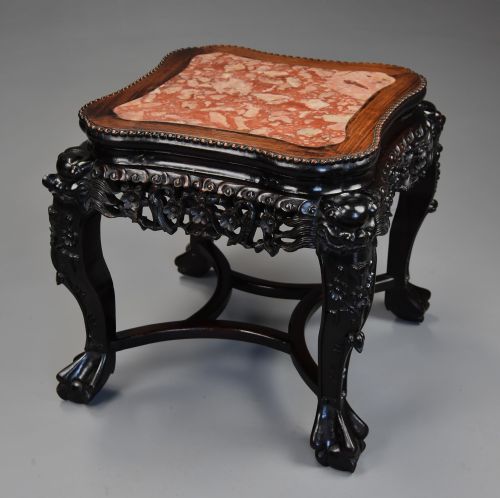
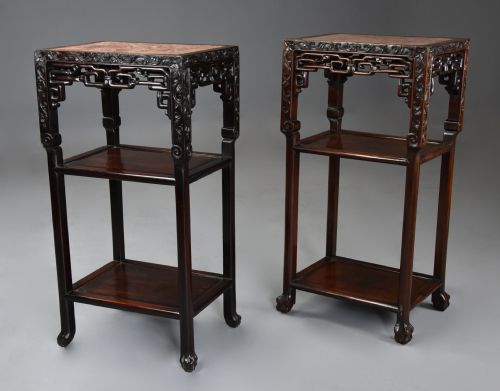
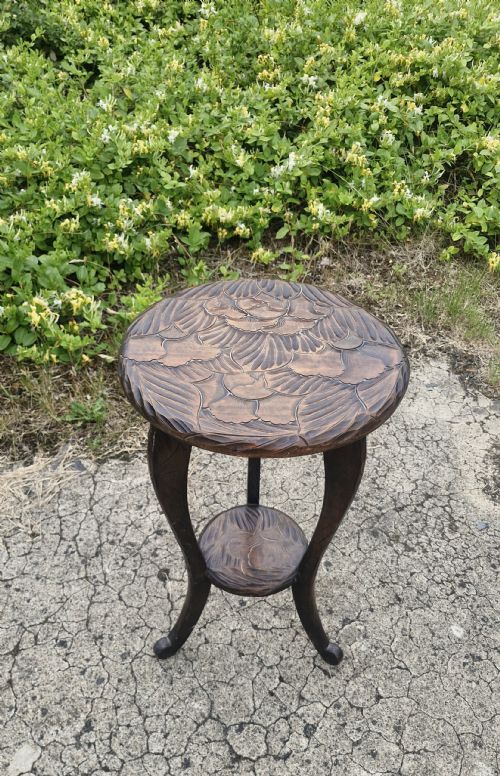
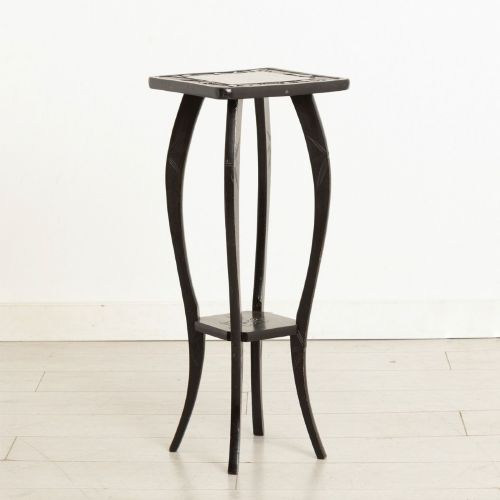
A carved oriental plant table encompasses compact stands, low tables, and jardiniere supports originating from the nineteenth and early twentieth centuries. These forms serve primarily to elevate ceramics, urns, and decorative plants within domestic interiors.
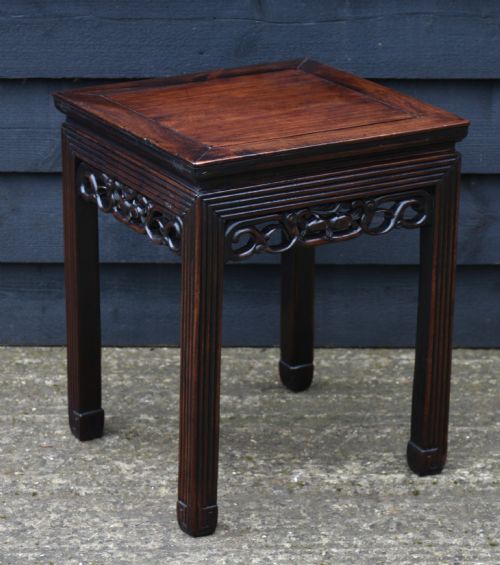
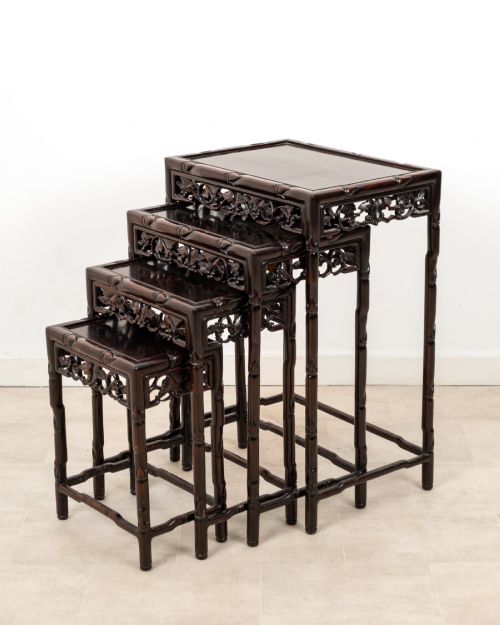
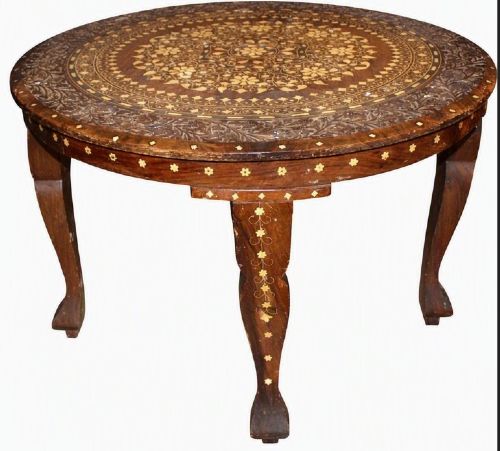
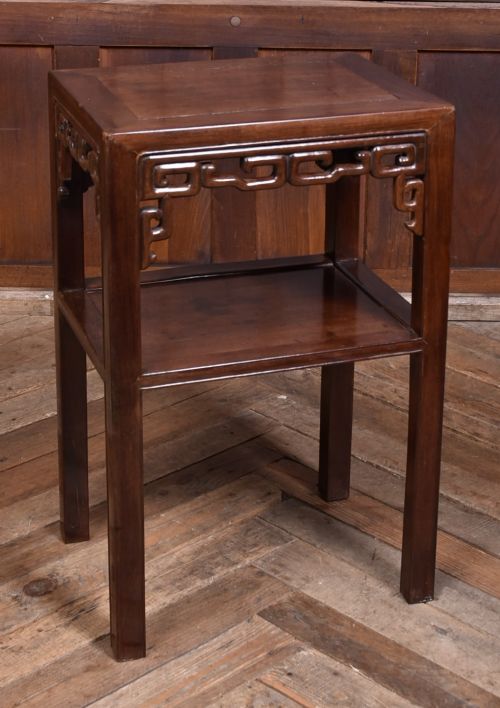
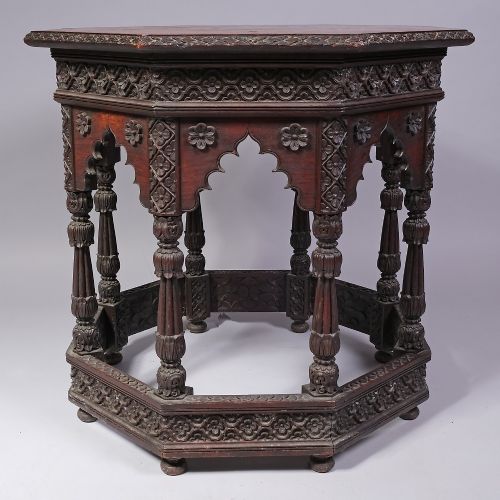
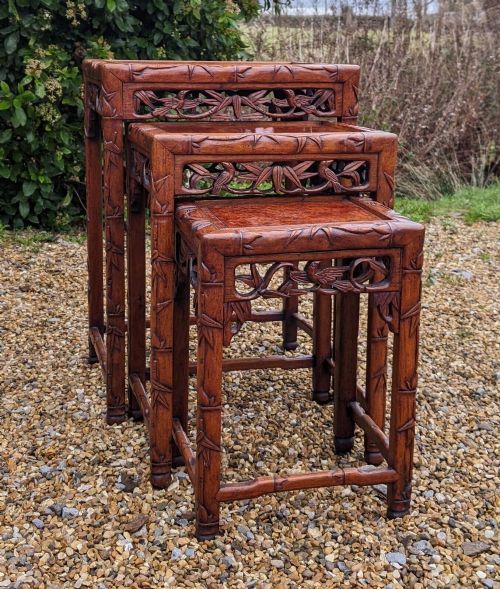
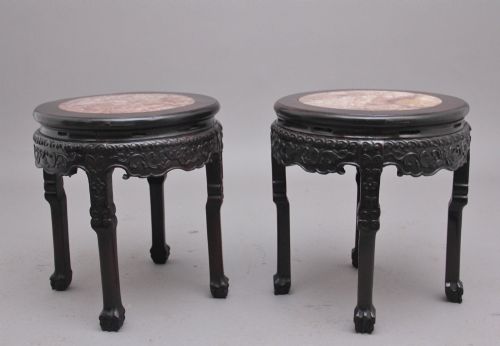
The selection on this page focuses heavily on Chinese hardwood stands, alongside Anglo-Indian, Japanese, and Moorish examples. Buyers encounter square, rectangular, and circular surfaces, often paired with matching stools or nests of tables.
Many pieces double as occasional tables or wine tables, showing the versatility of forms produced during the Qing Dynasty and later periods. The design balances utility with ornamental carving suited to traditional Asian interiors.
Materials and Construction
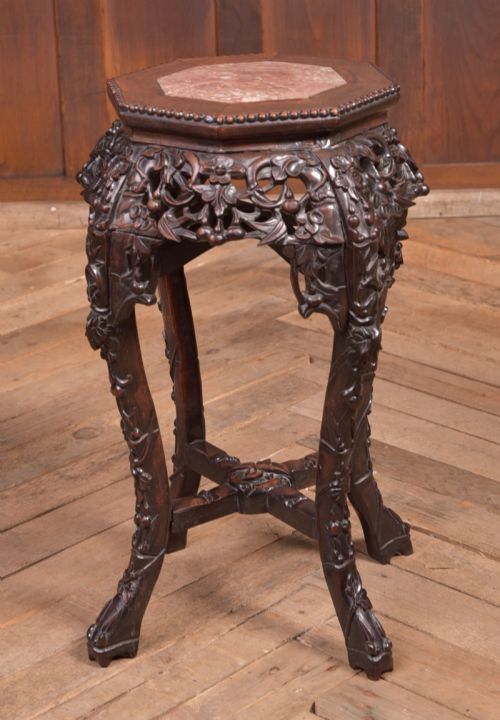
Makers utilised dense hardwoods such as rosewood, huanghuali, padouk, and hongmu, often complemented by inset marble, burr wood, or quartz tops. These heavy timbers support intricate sculptural carving without compromising structural stability.
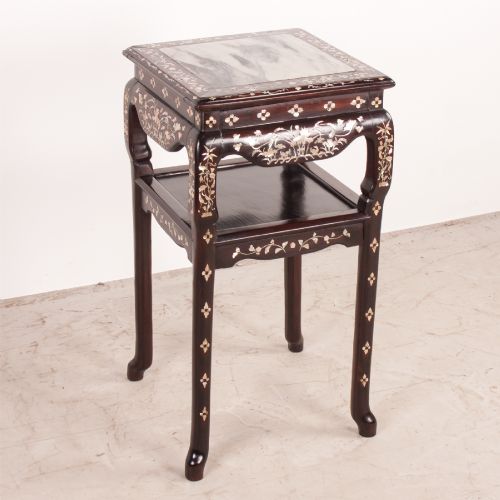
Detailing frequently involves bone or mother-of-pearl inlay, brass wire, and lacquer work to create contrasting textures against the dark wood surfaces. Joinery methods accommodate complex pierced aprons and shaped legs without reliance on modern fasteners.
Some nineteenth-century tables come accompanied by carved wooden elephants complete with sculpted tusks and lacquer detailing.
Distinguishing Quality
Superior examples display crisp, deep relief carving that retains sharp contours and expressive detail across motifs such as foliage, birds, and figures. The selection of timber grain, particularly in rosewood and huanghuali pieces, determines the visual depth of the surface.
Fit and finish distinguish finer items, notably in the integration of inset marble or stone tops that sit flush with the surrounding wooden frame. Structural integrity in pierced aprons and longevity in inlaid sections also mark out the higher tier of production.
Liberty & Co·Liberty of London·Gabriel Viardot
The Carved Oriental Plant Table Glossary
- Jardiniere stand
- A tall or low table specifically designed to hold a large ceramic plant pot or flower bowl. These stands often feature inset marble tops to resist moisture from watering.
- Hongmu
- A traditional Chinese term for dense hardwoods, literally translating to red wood. It encompasses heavy, durable timbers prized for dark red or brown hues.
- Cloisonné
- An enamelwork technique where metal wire forms raised compartments on a surface, which are then filled with coloured paste and fired. It provides decorative contrast on occasional tables.
- Rootwood
- Timber formed from the root mass of a tree, selected for eccentric, gnarled growth patterns. Tables utilising this material celebrate natural irregularities in the grain.
Carved Oriental Plant Table: Frequently Asked Questions
How do I identify the period of a carved oriental plant table?
Dating relies on timber selection, carving depth, and stylistic markers associated with the nineteenth century through the early twentieth century. Nineteenth-century examples often employ heavier dense hardwoods with deeper relief work.
Later pieces from around nineteen hundred incorporate diverse export styles, including Anglo-Indian and Japanese influences. Examining the wear patterns and construction joints helps confirm the age.
Where should I place a marble top stand in my home?
These tables suit corners, hallways, or beside seating where they can function as lamp tables or display surfaces. The stone top provides a durable barrier against moisture from plants and vases.
Positioning them away from direct heat sources protects the surrounding hardwood and prevents timber shrinkage. They work well paired with traditional ceramics or modern sculpture.
How do I care for antique hardwood tables?
Regular dusting with a soft, dry cloth preserves the finish on dense timbers like rosewood and padouk. Avoid chemical polishes that can build up a residue and dull the natural sheen of the grain.
Maintaining stable room humidity prevents the hardwood and any inset marble or quartz from shifting. Gentle wax application occasionally helps nourish older wood surfaces.
What is the difference between a plant stand and an occasional table?
Plant stands generally feature taller, narrower proportions designed to elevate a single vase or jardiniere. Occasional tables offer wider surfaces intended for general use in a room.
Many nineteenth-century forms overlap in function, serving as pot stands or low tables depending on the height and top dimensions. Both types utilise similar carved hardwood and inset stone construction.