

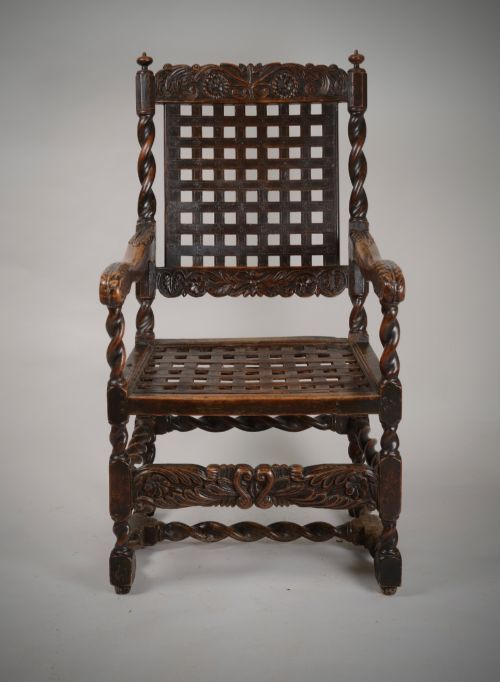
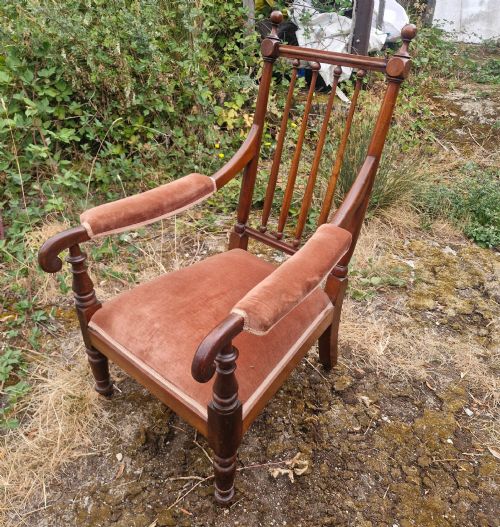
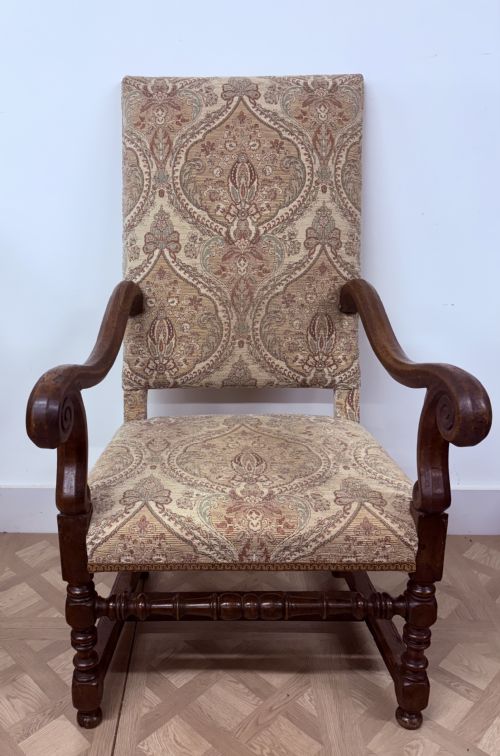
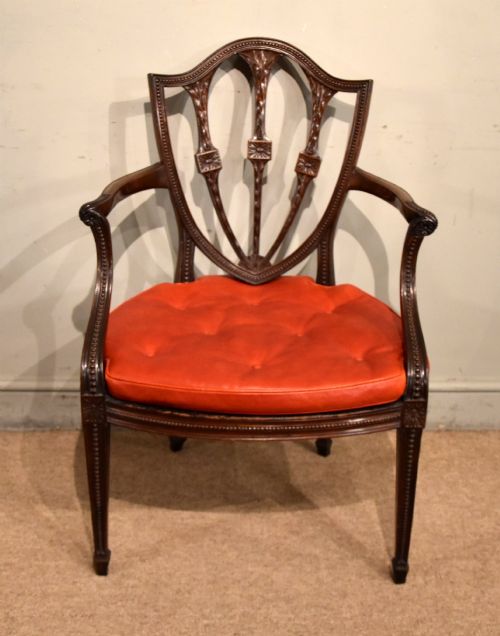
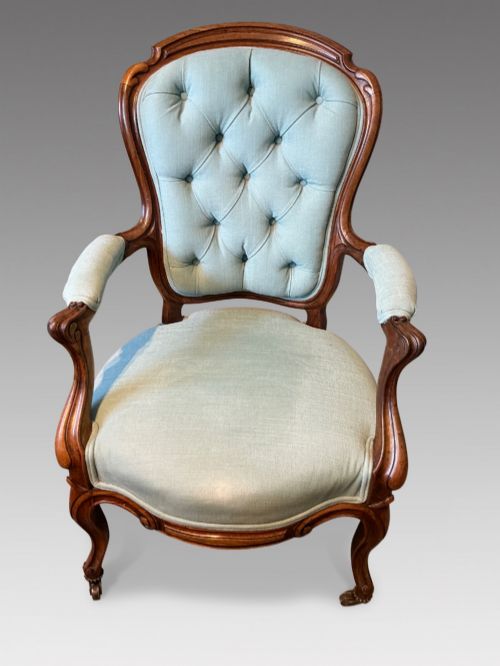
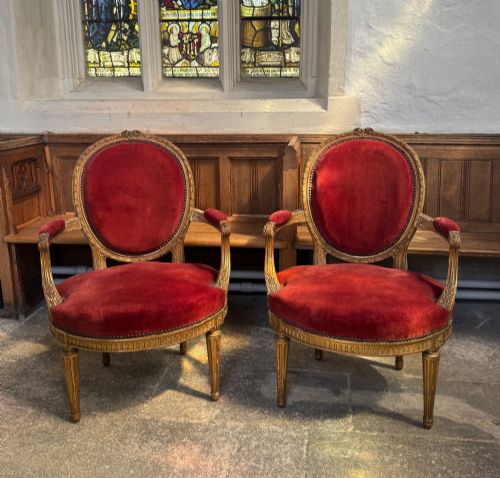
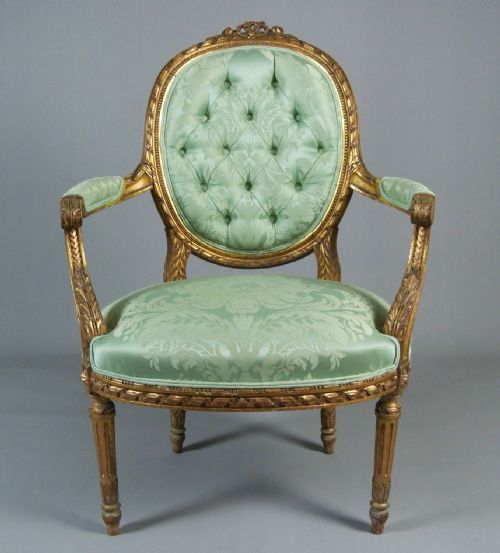
Carved Open Back Armchair
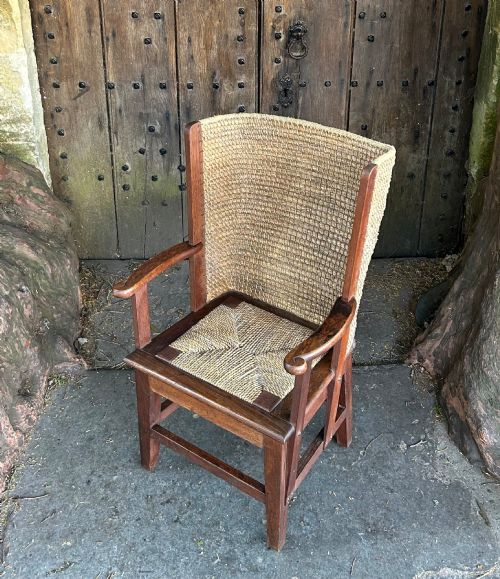
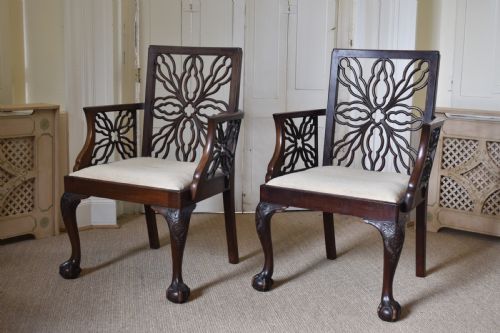
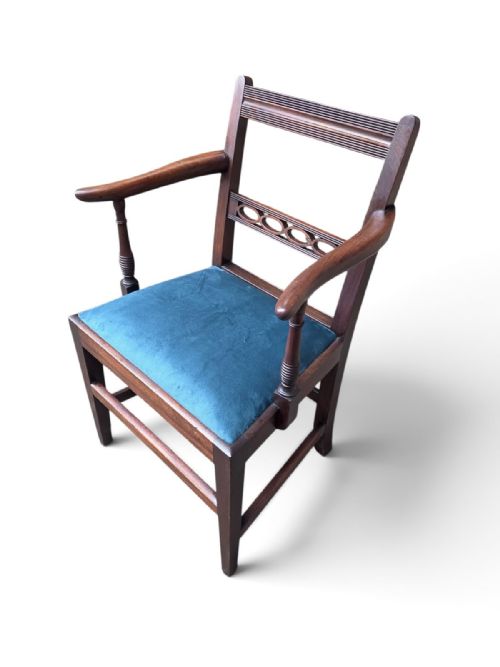
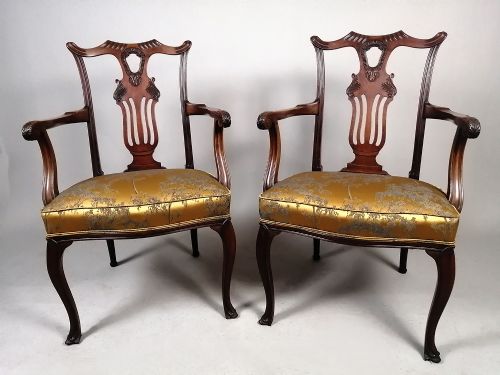
A carved open back armchair brings architectural line and tactile timber into a room, offering a supportive seat with open arms.
Carved Open Back Armchair
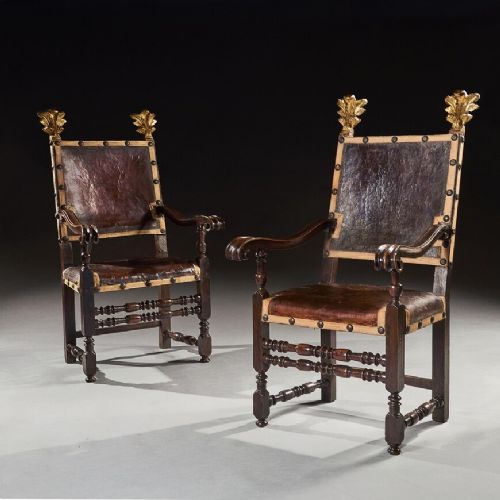
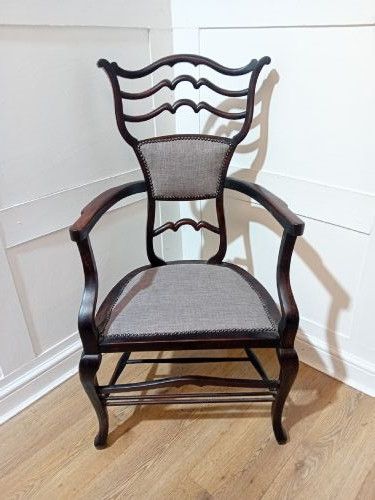
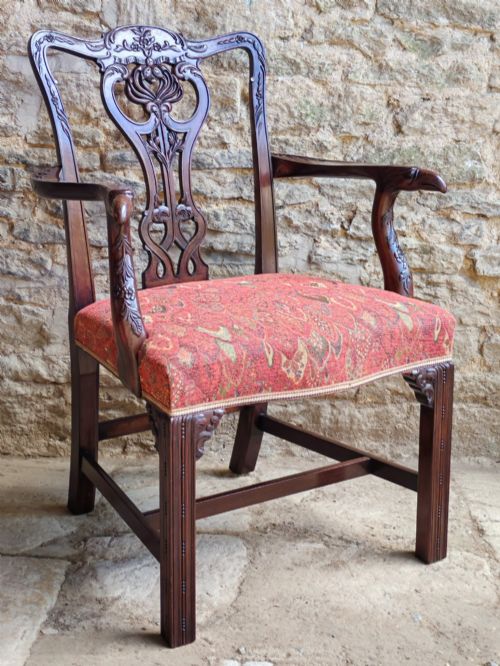
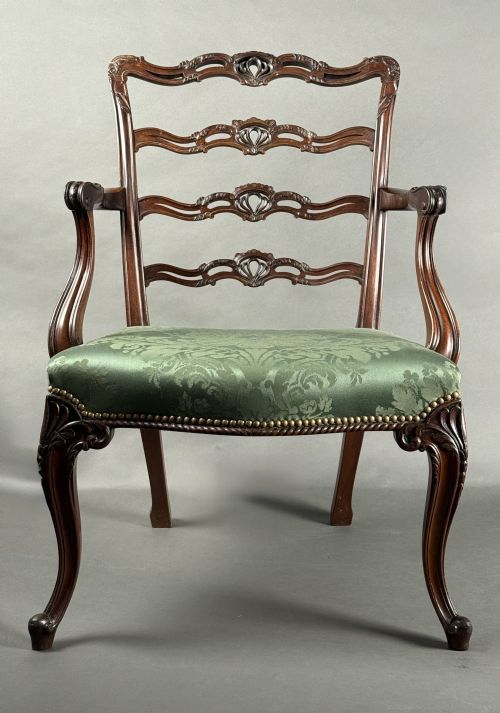
A carved open back armchair serves as a functional seat and a sculptural piece of furniture, appearing frequently in forms such as dining chairs, elbow chairs, and library armchairs. When exploring carved open back armchair options, buyers encounter centuries of cabinet-making traditions spanning English, French, Italian, and Swedish origins.
The selection ranges from early oak wainscot pieces through eighteenth-century mahogany George III examples to nineteenth-century walnut and giltwood creations. These seats function effectively as standalone statement pieces in a hallway or as functional seating around a dining table.
Proportions and backrest designs vary considerably, shifting from high panelled backs to open ladder-back, lyre-back, and shield-back configurations. The open arm construction distinguishes these chairs from fully upholstered versions, highlighting the exposed timber framework.
Materials and Construction
Cabinet-makers relied heavily on dense hardwoods such as mahogany, walnut, and oak to provide the structural integrity required for intricate hand-carving. Artisans shaped these timbers using mortise and tenon joints, securing frames to withstand daily use while maintaining refined proportions.
Surface enrichment often involved parcel-gilt details, painted finishes, or polished patination applied directly to the bare wood. Upholstered elements, where present, utilised materials such as leather, velvet, or woven cane inserted into the open frame.
Listings feature timbers including mahogany, walnut, oak, satinwood, and rosewood across periods from the seventeenth century to the Edwardian era.
Assessing Execution and Integrity
The distinction between standard execution and finer work lies in the crispness and depth of the hand-carved detail across the crest rail, arms, and legs. Superior pieces display fluid, confident tool marks where floral, scroll, or architectural motifs integrate harmoniously with the structural frame.
The choice of timber grain and the preservation of original surface patination dictate the visual richness of the piece. Chairs retaining their structural rigidity without excessive timber replacement demonstrate better historical preservation.
Thomas Chippendale·Howard and Sons·Hindley and Sons
The Carved Open Back Armchair Glossary
- Carver
- An armchair, often designed en suite with a set of smaller dining chairs to sit at the head of a table. These pieces feature open arms to accommodate formal dress.
- Giltwood
- Timber coated with a thin layer of gold leaf over a prepared gesso ground. This finish appears frequently on formal salon and baroque revival chairs.
- Wainscot
- An early heavy wooden armchair constructed primarily of panelled oak with turned supports. These substantial seats date to the seventeenth century and earlier.
- Bergère
- An enclosed or open armchair with upholstered sides and a loose seat cushion. French versions often feature exposed giltwood or painted frames.
- Lyre back
- A chair backrest shaped in the classical form of a musical lyre. This motif gained popularity during the neoclassical revival periods.
Carved Open Back Armchair: Frequently Asked Questions
Where should I place a carved open back armchair?
These armchairs suit spaces where the timber frame and carved details remain visible from multiple angles. Position one in a study, a bedroom corner, or at the head of a dining table.
Because the arms are open rather than upholstered, the chair maintains an airy visual profile in smaller rooms without overwhelming the floor plan.
How do I identify the period of an armchair?
Dating relies on combining the timber species, structural joinery methods, and the decorative vocabulary of the carving. Oak and heavy walnut typically point to seventeenth-century origins, while mahogany dominates the eighteenth century.
Revival pieces from the late nineteenth and early twentieth centuries often borrow these earlier motifs while employing machine-assisted turning or different secondary woods beneath the surface.
Are these chairs comfortable for daily seating?
Comfort depends on the specific design, seat height, and whether the piece incorporates upholstery or a cane panel. Library and desk armchairs offer supportive proportions for extended sitting.
Earlier wainscot or rigid wooden iterations prioritise architectural presence and posture over deep squabs, though many accommodate a loose squab cushion easily.
What is the difference between an elbow chair and a carver?
The terms are often used interchangeably to describe a chair with armrests designed to match a set of dining chairs. Historically, a carver denoted the larger seat reserved for the head of the household.
Both variants provide the characteristic open arm structure that distinguishes them from fully enclosed upholstered armchairs.