







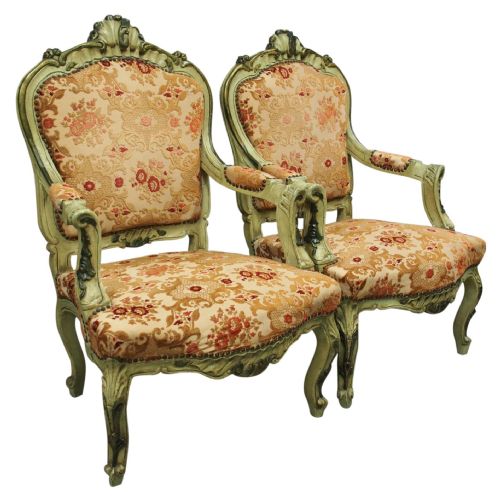
Italian Carved Open Chair
These italian carved open chair examples bring centuries of continental craftsmanship into a room.
Italian Carved Open Chair
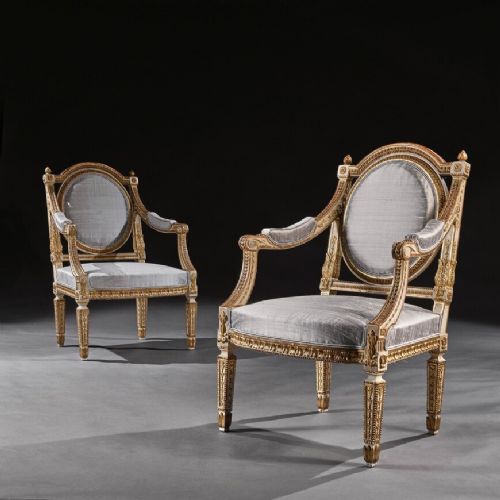
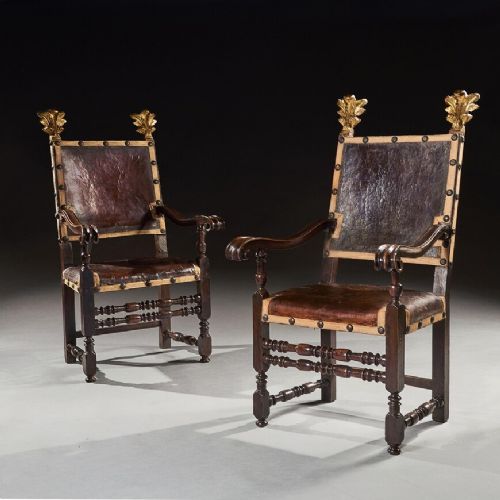
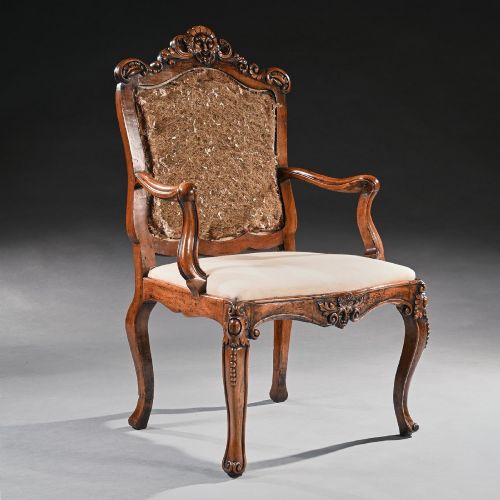
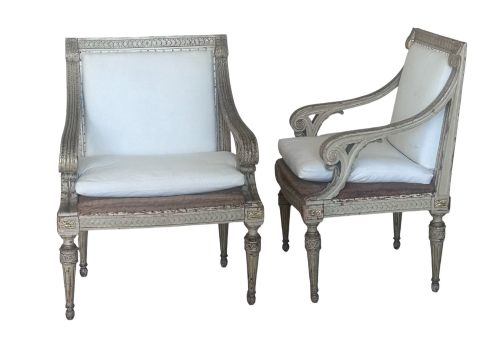
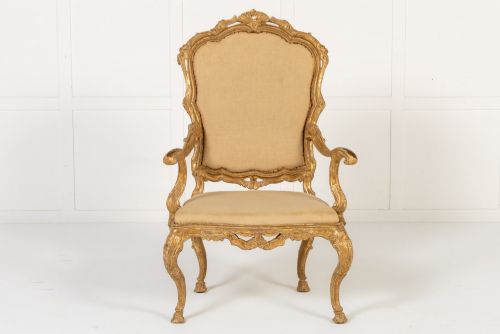
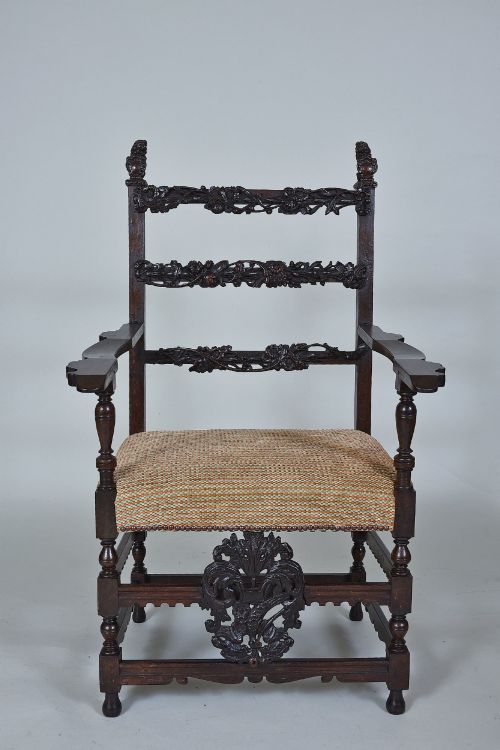
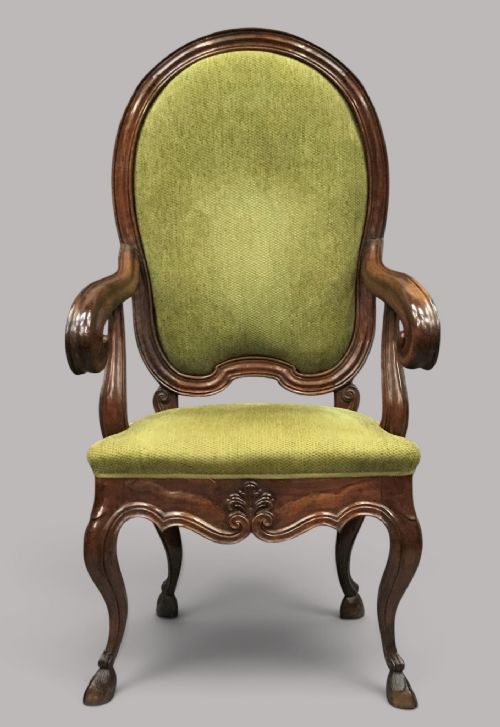
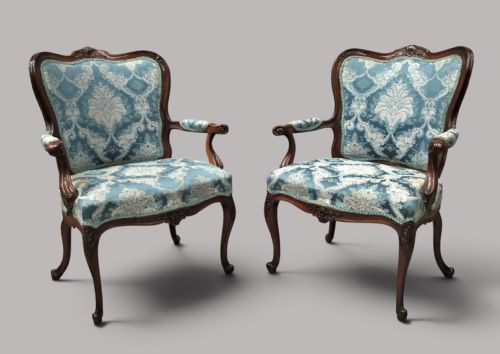
When you search for an italian carved open chair, you encounter seating forms spanning from the seventeenth century through to the early twentieth century. These pieces predominantly take the shape of armchairs, salon chairs, and grand throne chairs intended for formal interiors.
The selections on this page draw heavily from walnut, mahogany, and carved wood, frequently elevated by giltwood, gold leaf, and gesso applications. Stylistically, they traverse Italian Baroque, Rococo, Neoclassical, and various revival manners originating across different regions like Piedmont.
Most examples present open arm structures rather than upholstered enclosures, often highlighting elaborate woodwork along the head rail, frame, and legs. Buyers typically select these items to anchor a room with distinct historical presence and architectural carving.
Materials and Construction
Cabinetmakers relied on solid hardwoods such as walnut and mahogany to form the foundational framework of each seat. These durable timbers permitted deep relief carving along the arms, legs, and crest rails without compromising structural integrity.
Surface decoration frequently involved applying gesso as a base for gold leaf, silver gilt, or painted finishes. Artisans also employed parcel-gilt techniques to highlight specific carved motifs against stained or painted wooden surfaces.
Italian Carved Open Chair Retail Price Guide 2026
Typical asking prices for italian carved open chair among the pieces listed under this phrase on Sellingantiques today, from the lower quarter to the upper quarter. They describe what is for sale here now, not the wider market.
Listings feature items spanning the seventeenth, eighteenth, and nineteenth centuries, constructed predominantly in walnut, mahogany, and giltwood.
Assessing Craftsmanship and Condition
The distinction between standard and superior pieces rests in the crispness and depth of the hand carving. Finer examples display fluid, confident lines along the head rail and arm supports, whereas lesser pieces show mechanical or shallow execution.
The integrity of the original giltwood, gesso, or painted surface heavily influences the standing of a piece. Retaining historical gilding with natural ageing demonstrates better preservation than unsympathetic later overpainting.
The Italian Carved Open Chair Glossary
- Giltwood
- Wood that has been thinly coated with gold leaf or gold dust. This finish is characteristic of many Baroque and Neoclassical seating pieces.
- Gesso
- A plaster mix applied to wood surfaces to prepare them for painting or gilding. It provides a smooth base for intricate relief work.
- Parcel-gilt
- A decoration method where only specific portions of an object are gilded. This technique creates contrast against painted or natural wood backgrounds.
- Head rail
- The uppermost horizontal member of a chair back. On continental seating, this area often receives the most extravagant carving.
- Bobbin turned
- A style of turning wood on a lathe to resemble a string of bobbins or spools. It appears on regional nineteenth-century frames.
Italian Carved Open Chair: Frequently Asked Questions
How do I date an antique italian armchair?
Dating relies on observing stylistic markers such as Baroque scrollwork, Rococo asymmetry, or Neoclassical symmetry alongside wood types like walnut or mahogany.
Construction methods and the nature of the surface finishes, including gesso and giltwood layers, also provide clues to the century of origin.
Are these chairs comfortable for daily use?
These open armchairs were primarily designed for formal reception rooms rather than lounging. Their upright backs and rigid frames reflect the formal posture of past centuries.
Living with them often involves appreciating their sculptural qualities and pairing them with appropriate interior seating arrangements.
Where were regional styles like Piedmontese chairs made?
Piedmontese pieces originate from the Piedmont region in northwest Italy. They often exhibit distinct local interpretations of prevailing European design trends.
Regional workshops adapted French and Italian court styles using native timbers available to local cabinetmakers.