
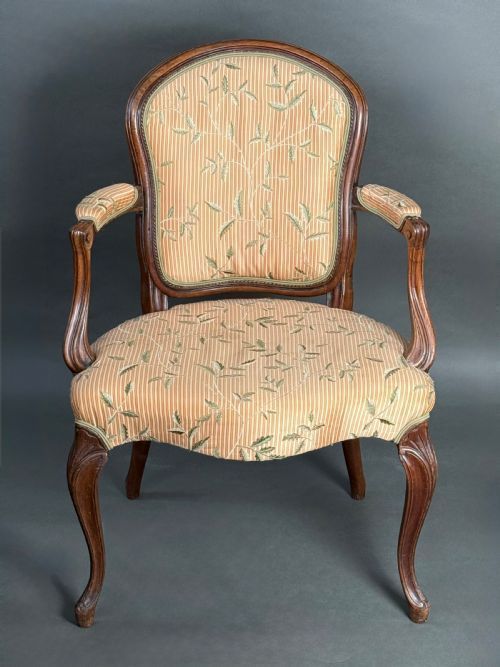
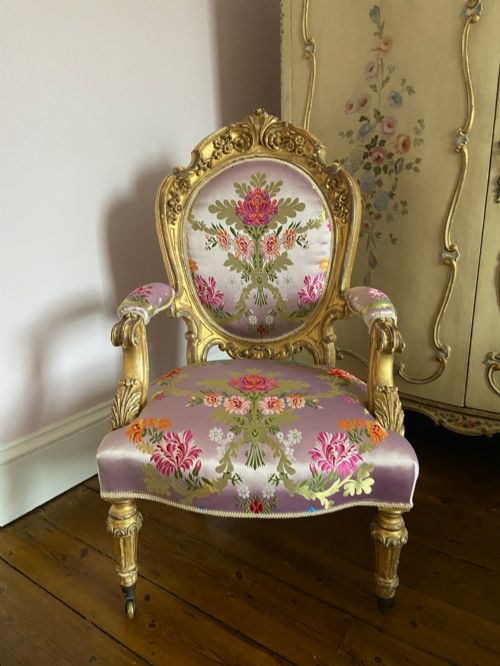
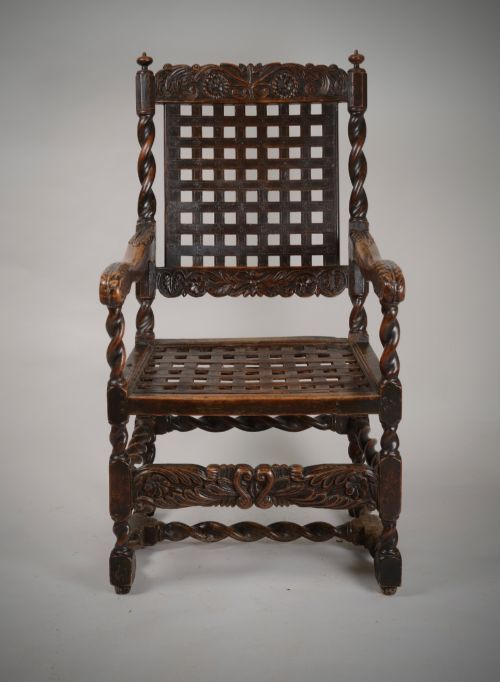
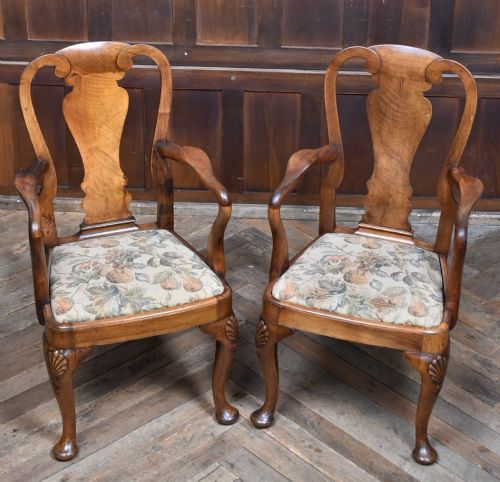
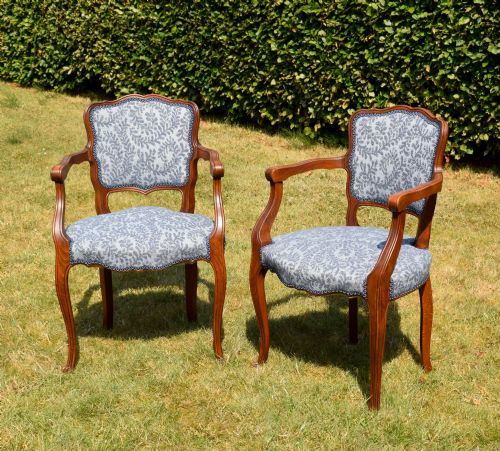
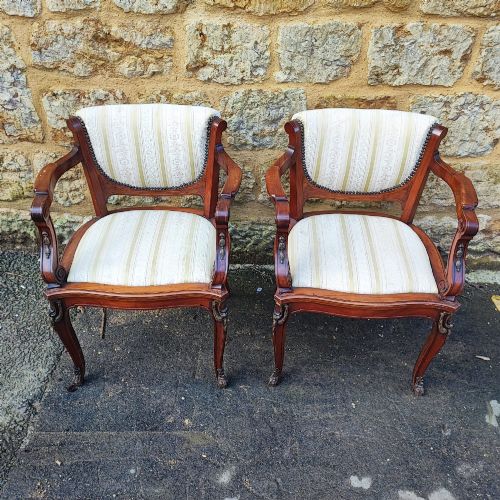
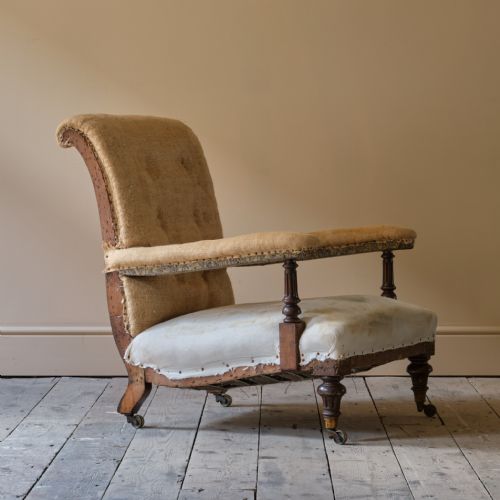


Walnut Open Arm Chair
When you search for a walnut open arm chair, you encounter a refined seating form spanning from the eighteenth century through the Victorian era and into the twentieth.
Walnut Open Arm Chair
A walnut open arm chair bridges utility and decorative arts, providing comfortable seating with exposed wooden arms rather than fully upholstered sides. These seating pieces appear frequently in Victorian designs, alongside earlier eighteenth-century examples and revival pieces from the twentieth century.
Makers produced these chairs for various domestic settings, including libraries, drawing rooms, and salons, resulting in forms ranging from low-backed library chairs to grander French-inspired fauteuils. The framing relies primarily on solid walnut, often shaped with curves or carved details that reflect the prevailing taste of the period.
Domestic walnut furniture of this type demonstrates how cabinet makers adapted historical styles such as Louis XV, Queen Anne, and Baroque revival for contemporary homes. Buyers meeting these pieces today will find diverse upholstery treatments, from period needlework and silk to modern fabric coverings.
Quality and Craftsmanship
Superior examples of walnut open arm chairs display crisp, deep hand-carving on the wooden framework, whereas lower tiers show softer, more mechanical detailing. The proportion and balance of the open arms relative to the seat rails distinguish finer cabinet work from standard production.
The choice of timber grain and the integrity of the underlying joinery dictate the longevity and structural stability of the chair. Original upholstery materials and maker stamps, where present, elevate the historical interest of an individual piece.
Several examples retain traces of historical needlework covers stitched by hands long forgotten.
Colefax and Fowler·Howard and Sons·Holland and Sons
The Walnut Open Arm Chair Glossary
- Fauteuil
- An open-armed upholstered armchair originating in France, typically featuring an exposed wooden frame and padded armrests. These chairs are common in seventeenth and eighteenth-century continental designs.
- Marquetry
- Decorative veneer work inlaid into the wooden surface to form intricate patterns or pictures. This technique appears on select eighteenth-century Dutch and English examples.
- Needlework
- Hand-stitched textile covering worked in wool or silk, frequently utilised for period upholstery. Such covers often feature floral or geometric designs.
- Carver
- A traditional term for an armchair, often matching a set of smaller dining or side chairs. These pieces generally feature prominent elbow rests.
- Rococo Revival
- A nineteenth-century stylistic movement reviving the asymmetric curves and naturalistic ornamentation of the eighteenth-century Rococo period. This aesthetic is prominent in Victorian walnut seating.
Walnut Open Arm Chair: Frequently Asked Questions
How do I date a walnut armchair?
Dating relies on examining the joinery methods, the contour of the wooden frame, and the stylistic revival indicators present in the carving. Victorian pieces often display heavier proportions compared to lighter eighteenth-century models.
Upholstery tacks, webbing materials, and secondary timbers inside the frame also provide clues to the exact period of manufacture.
Were these chairs used at desks?
Certain variations of the form, such as desk chairs and library armchairs, were specifically adapted for working or reading environments. These typically feature lower profiles and sturdy open arms to accommodate movement.
Makers designed them to provide postural support while remaining mobile enough to position around tables and writing desks.
How should I care for walnut furniture?
Walnut frames benefit from stable indoor environments away from direct sunlight and excessive humidity to prevent timber splitting. Regular dusting with a soft, dry cloth preserves the polished surface of the wood.
Upholstery care depends entirely on the specific fabric covering, requiring professional cleaning for delicate silk, needlework, or velvet materials.