




Baroque Style Armchair
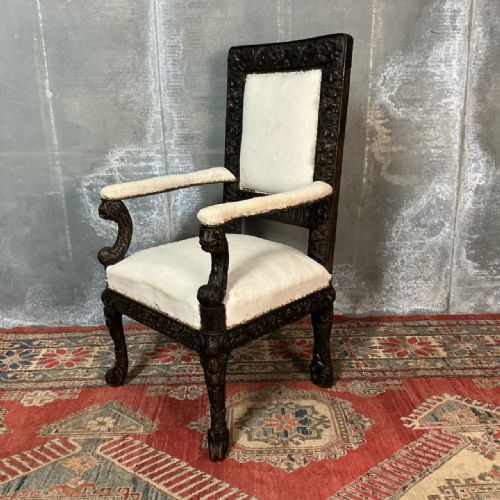
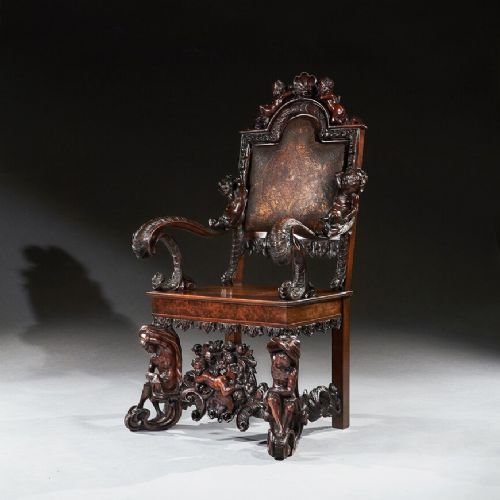
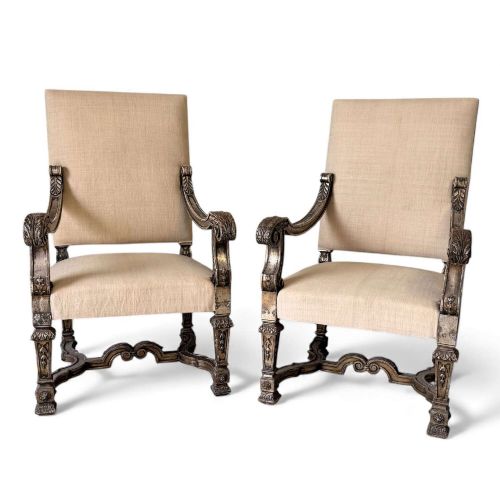
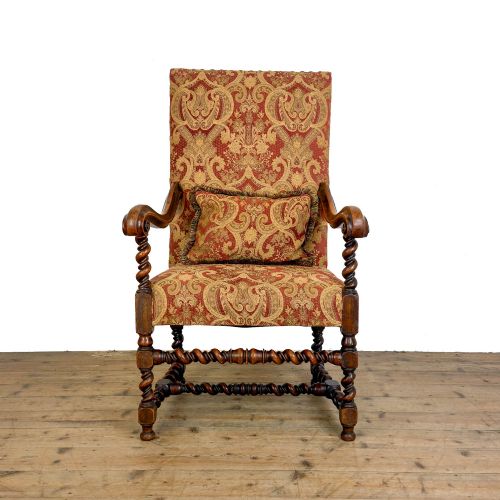
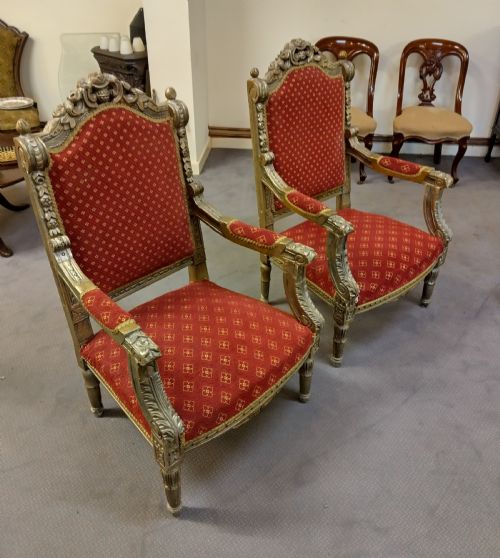
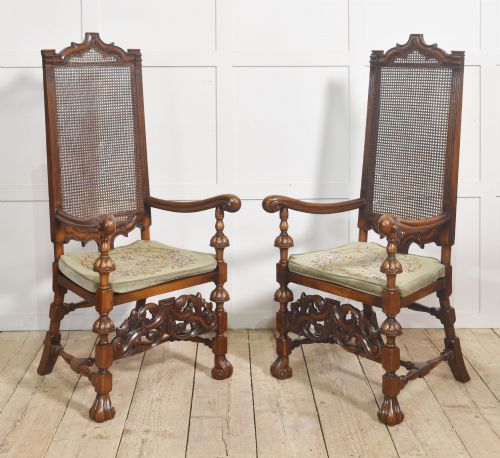
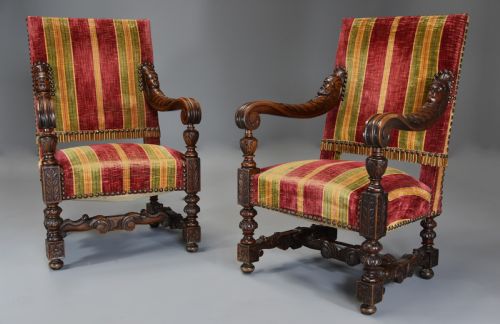
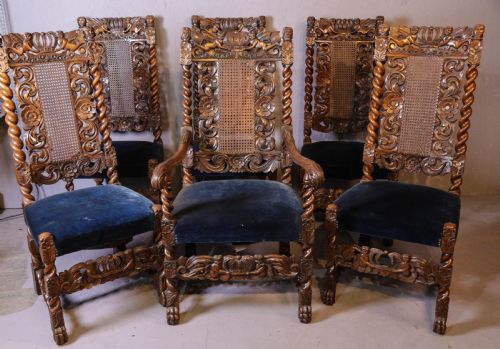
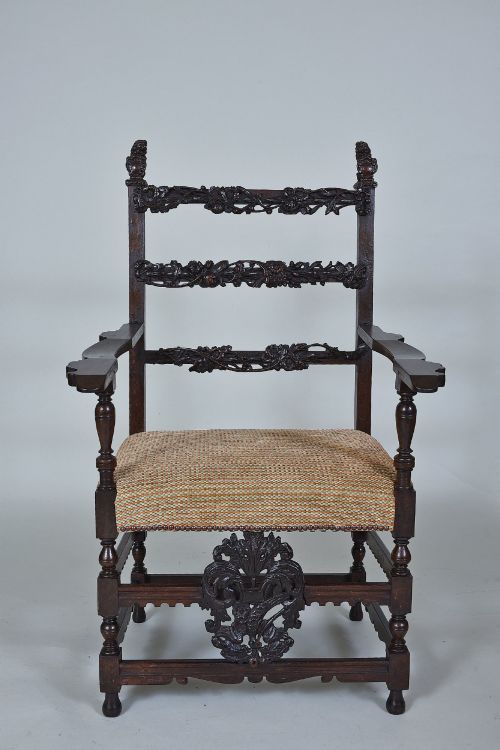
These baroque style armchair selections bring theatrical carving, high backs and rich upholstery straight into a room.
Baroque Style Armchair
A baroque style armchair serves as a commanding seating choice defined by ornate woodwork, scrolling arms and substantial proportions. When exploring this phrase, buyers encounter pieces spanning the seventeenth to the early twentieth century, alongside revival iterations.
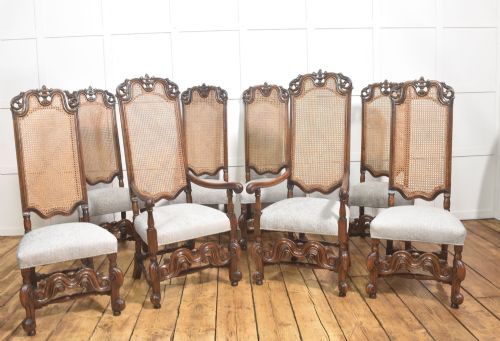
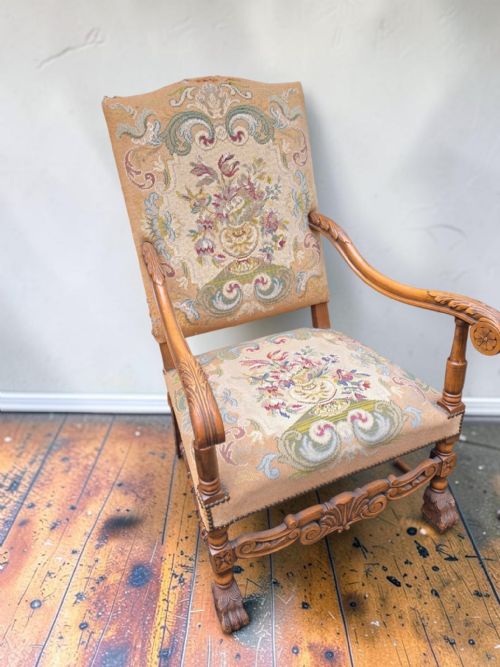
The selections here lean heavily toward walnut frames, high backs and detailed cane work or textile upholstery. Armchairs and elbow chairs dominate the offerings, often appearing in pairs or sets.
Origins stretch across English, French, Italian, Dutch and Portuguese workshops, capturing diverse regional interpretations of lavish classical design. Pieces range from seventeenth-century originals to nineteenth-century revivals following French, Italian and Carolean models.
How they were made
Carpenters and joiners built these frames primarily from solid walnut and oak, supplemented by padouk wood and gilded gesso surfaces. Timber choice dictated the depth and crispness possible for the heavy scrolling and figurative carving.
Upholstery methods utilised traditional stuffing secured beneath velvet, silk, leather, needlework and tapestry textiles. Caning featured prominently on tall back panels and seats, requiring skilled weavers to lace natural cane through drilled frame apertures.
Baroque Style Armchair Retail Price Guide 2026
Typical asking prices for baroque style armchair among the pieces listed under this phrase on Sellingantiques today, from the lower quarter to the upper quarter. They describe what is for sale here now, not the wider market.
Listings feature walnut, oak, and padouk wood frames paired with velvet, silk, leather, and cane upholstery.
What varies in quality
Structural integrity depends on the density of the primary timber and the tightness of classical joinery methods. Finer examples retain original gilding or high-grade walnut patination that responds well to age without losing definition.
Andrea Brustolon
The Baroque Style Armchair Glossary
- Baroque Revival
- A nineteenth-century movement that revived the theatrical scale, scrolling foliage and extravagant carved ornament of seventeenth-century royal furniture. This style favoured dramatic silhouettes and heavy walnut frames.
- Carolean
- A seventeenth-century English aesthetic associated with the reign of Charles II, characterised by crown and scroll motifs, rich textiles and turned woodwork. Pieces in this style often feature tall cane backs.
- Giltwood
- Timber coated with a thin layer of gold leaf over a prepared gesso ground. This finish provided opulent reflection for ceremonial throne chairs and grand salon seating.
- Fauteuil
- An open-arm upholstered armchair originating in France, featuring exposed wooden framing around the back and armrests. These pieces combine structural woodwork with comfortable padded upholstery.
- Bobbin Turned
- A form of woodturning created by shaping a series of spherical or cylindrical swellings along the length of a stretcher or leg. This technique produces rhythmic, beaded profiles common in seventeenth-century and revival seating.
- Savonarola
- A folding chair constructed from multiple intersecting curved wooden slats that form an X-shaped frame. Named after the Florentine friar, this Renaissance form persisted through later revival periods.
Baroque Style Armchair: Frequently Asked Questions
How do I date a revival armchair?
Dating relies on examining the timber patination, tool marks left by saws, and the construction methods used for joints.
Nineteenth-century revival pieces often mimic seventeenth-century models but betray their origin through machine-assisted joinery and nineteenth-century upholstery foundations.
Where were these armchairs placed historically?
Grand salons, state bedrooms and formal dining halls housed these imposing chairs to impress visitors of high rank.
Throne chairs and high-back elbow chairs typically sat at the head of a table or against panelled walls as permanent fixtures.
How should I live with one?
Position the armchair as a focal point in a study, library or drawing room where its heavy proportions have room to breathe.
Protect delicate textiles and gilt surfaces from direct sunlight and use breathable cleaners appropriate for antique walnut or gesso.