
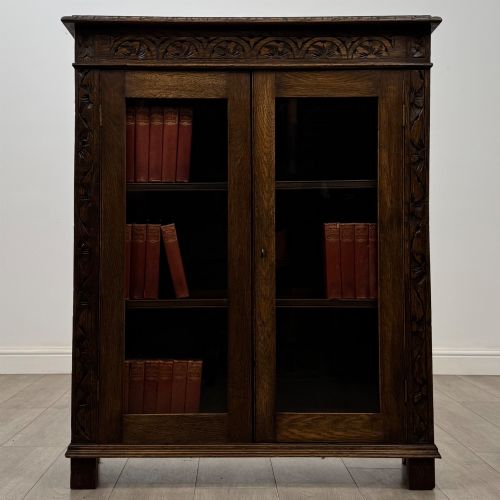
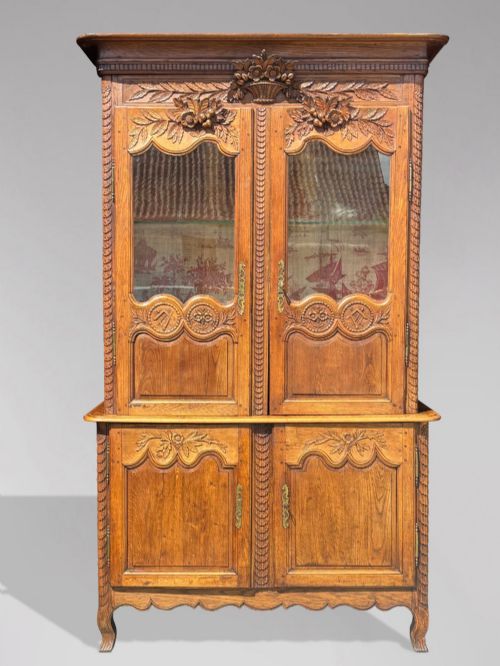
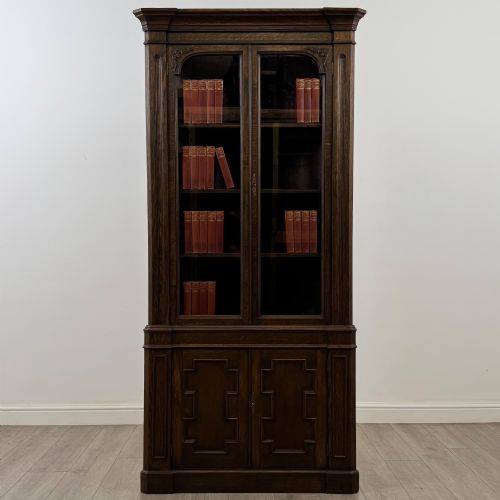
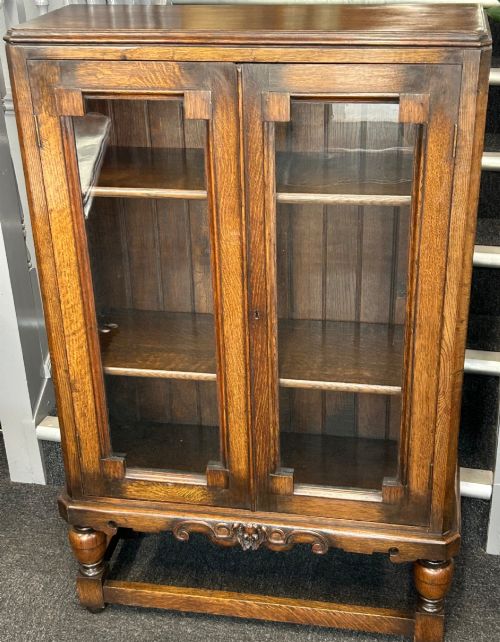
Carved Oak Glazed Display
Carved oak glazed display pieces bring together substantial timber and fitted glass to show and protect books and objects across various historical periods.
Carved Oak Glazed Display
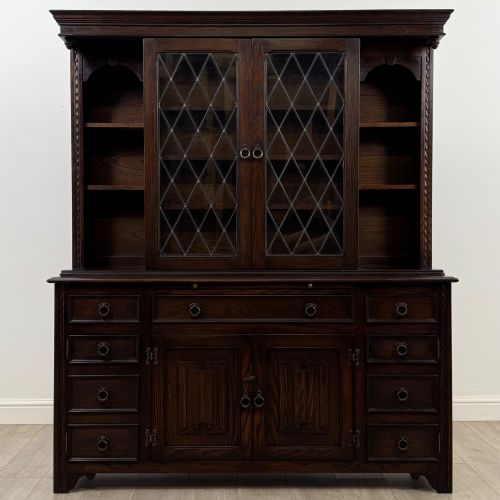
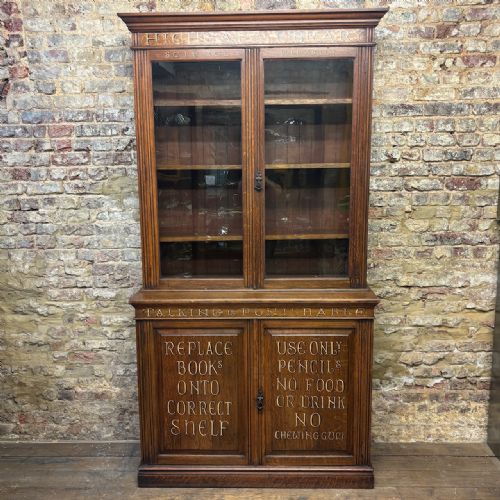
When you search for carved oak glazed display, you encounter a selection of storage furniture designed to hold books, collections, or household goods behind glass doors. These items combine timber framing with transparent panels so contents remain visible while protected from dust and handling.
The selections available range widely in form and origin, spanning display cabinets, bookcases, corner cabinets, sideboards, and dressers. Pieces date from the eighteenth century through the nineteenth century and into the twentieth century, encompassing Victorian, Edwardian, and earlier revival styles.
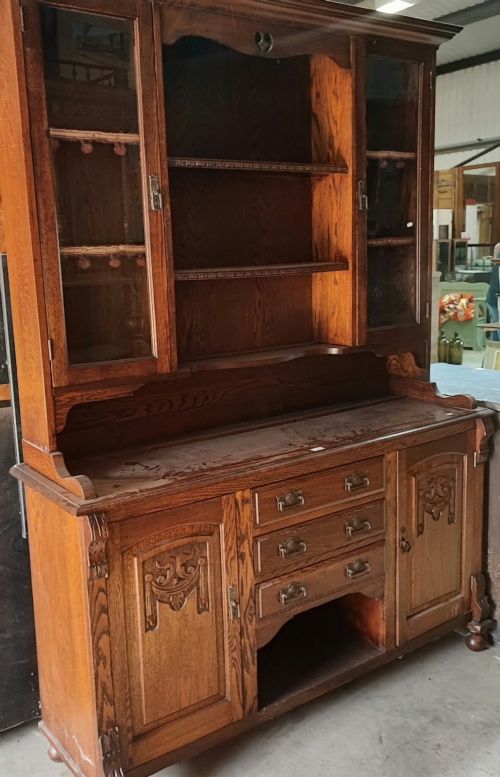
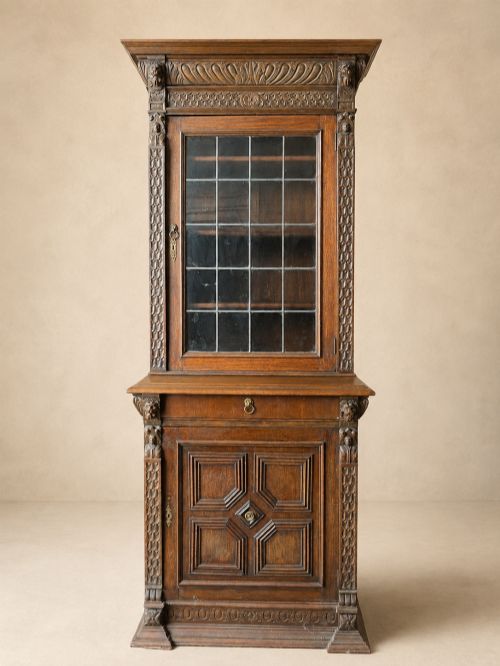
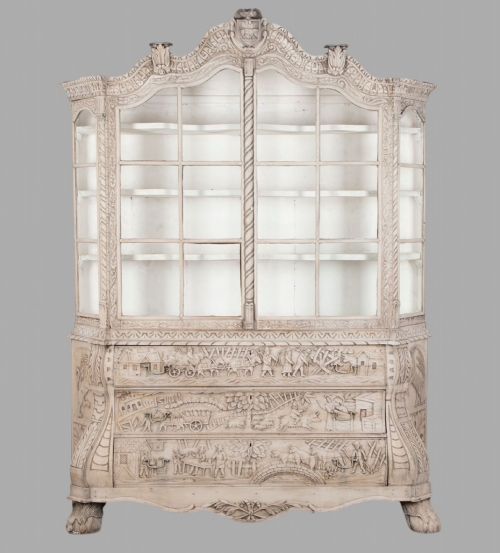
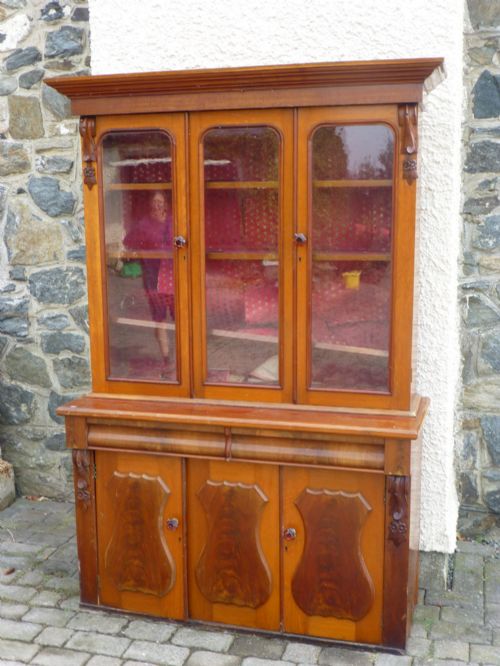
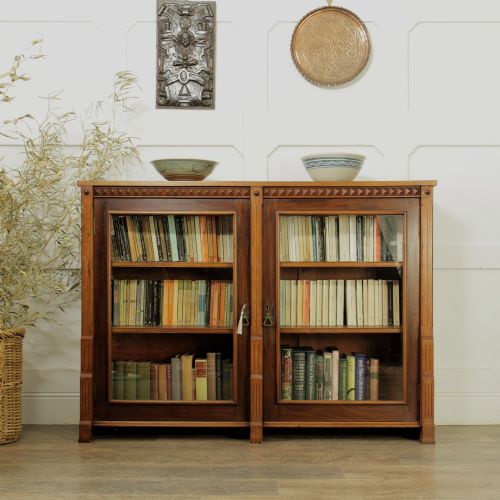
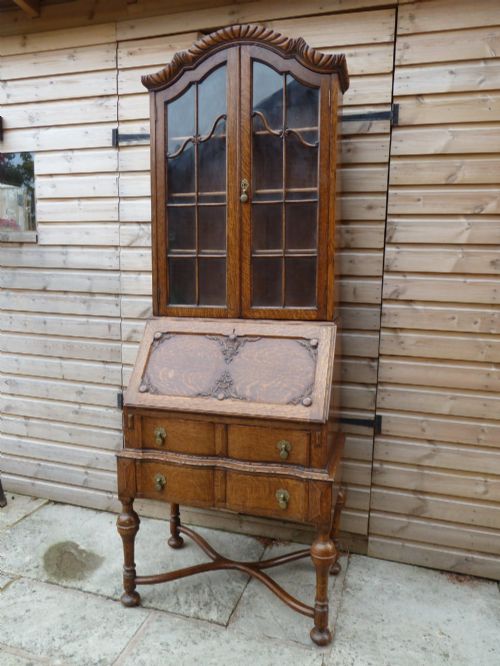
Typical examples on this page include tall library bookcases, corner cupboards, and smaller vitrines or pier cabinets. Makers utilised diverse regional traditions, resulting in French provincial buffets, Dutch bombé furniture, and Welsh dressers alongside standard British formats.
How they were made
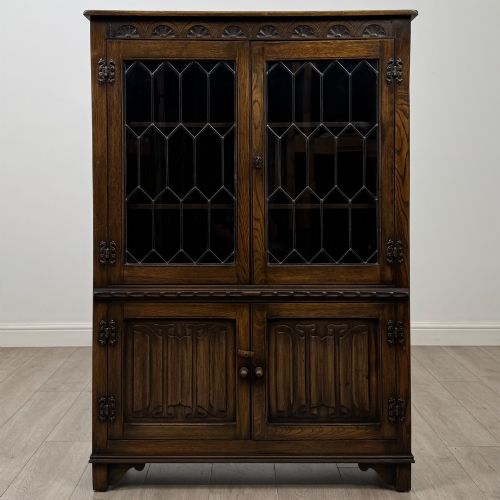
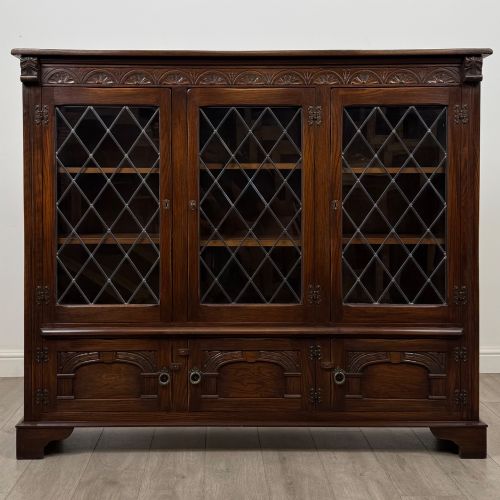
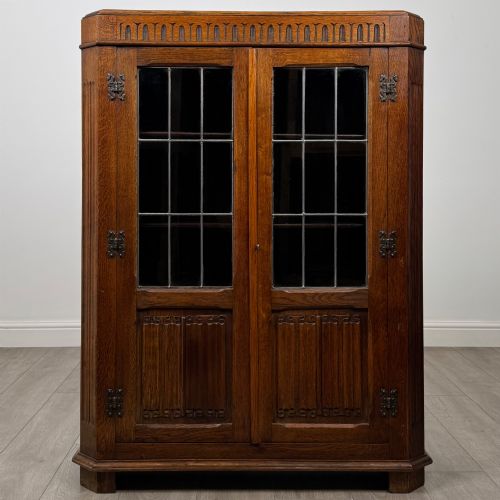
Construction relies primarily on solid oak, sometimes utilising pollard oak for distinct grain patterns or incorporating secondary timbers like mahogany. Joinery techniques connect heavy frames to support substantial glass doors, which are occasionally held in place by lead cames.
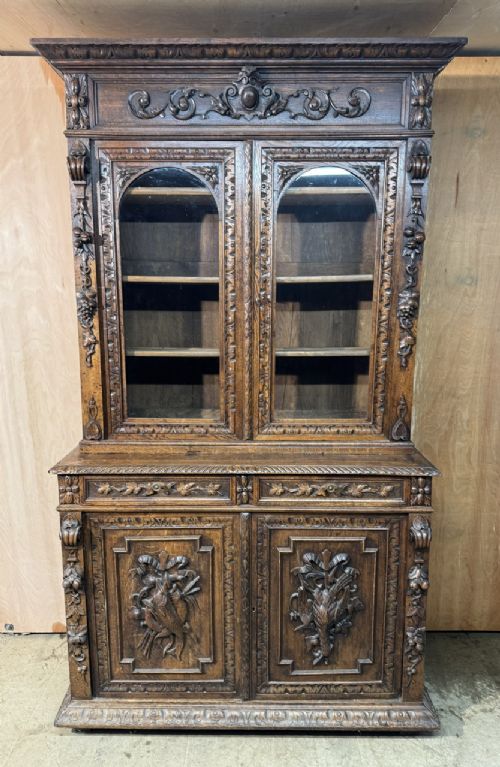
Carving serves as the primary ornamentation, with artisans cutting floral motifs, linenfold patterns, or intricate Renaissance and Gothic revival details directly into the timber surfaces. Metal components such as brass hinges, handles, and iron fittings provide structural support and operational hardware.
Materials span standard oak and pollard oak combined with glass, brass, lead, and fabric.
What varies in quality
The depth and crispness of the carved ornamentation distinguish standard production from superior examples. Skilled hand-carving yields sharp relief and dimensional stability, whereas simpler pieces exhibit softer or more mechanical detailing.
Timber selection and glass clarity also divide the range. Selection of figured pollard oak or golden oak with consistent grain commands attention, while the integration of leaded or stained glass elevates the decorative ambition of the cabinet.
Morris & Co·George W Jack
The Carved Oak Glazed Display Glossary
- Vitrine
- A glass-fronted cabinet designed for displaying fine objects or porcelain. These pieces often feature glass on multiple sides to maximise visibility.
- Linenfold
- A style of wood carving that mimics folded fabric or linen. This motif frequently appears on panels of sixteenth-century revival furniture.
- Breakfront
- A piece of furniture where the central section projects forward from the flanking wings. This architectural arrangement adds visual depth to large bookcases.
- Bombe
- A convex, swelling contour found on the front and sides of furniture. Originating in continental cabinetmaking, this profile requires advanced joinery.
- Pier cabinet
- A narrow cabinet built to fit the wall space between windows. These items often incorporate glazed doors and delicate proportions.
Carved Oak Glazed Display: Frequently Asked Questions
What rooms suit a carved oak glazed display?
These cabinets suit libraries, studies, and living rooms where books or collections require protection behind glass.
Their substantial timber presence anchors a room while keeping displayed objects clearly visible.
How do I identify Victorian examples?
Victorian pieces often display heavier proportions and deep, elaborate carvings influenced by Gothic or Renaissance revivals.
Darker oak finishes and substantial brass or iron hardware also point towards this nineteenth-century period.
What is pollard oak?
Pollard oak comes from trees that were cut back near the trunk to encourage dense branching, creating highly figured wood.
This timber produces distinctive, clustered grain patterns valued for decorative cabinet doors.
Are Edwardian cabinets different?
Edwardian versions tend to offer lighter interpretations of earlier styles, including Jacobean revivals and Arts and Crafts designs.
They frequently feature cleaner lines and brighter golden oak tones suited to early twentieth-century interiors.