
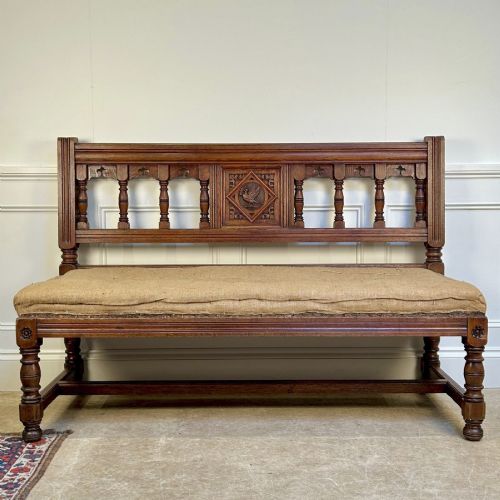
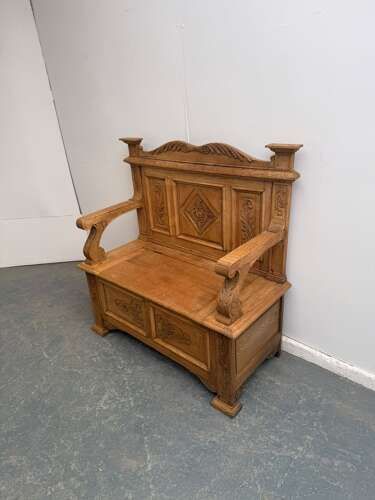
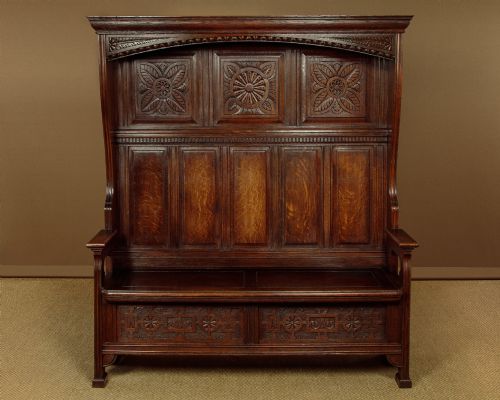
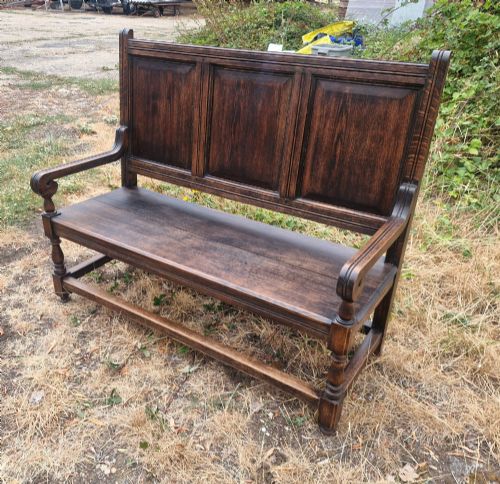
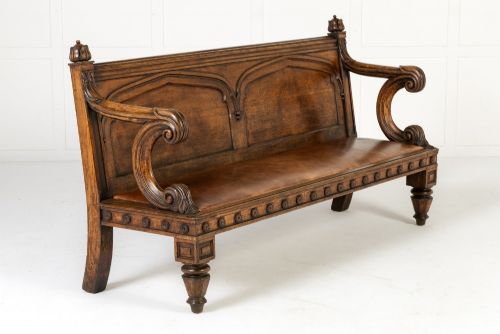
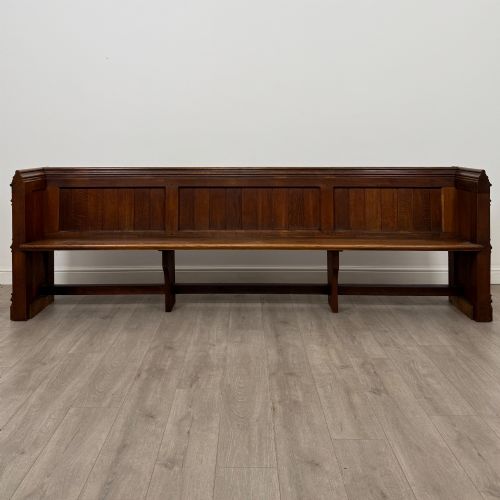
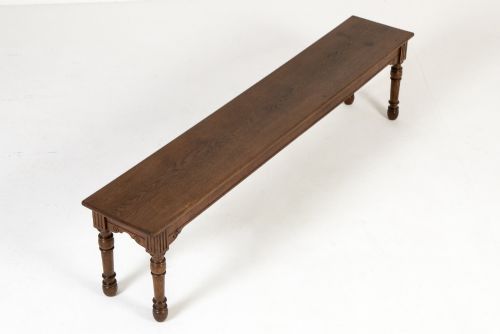
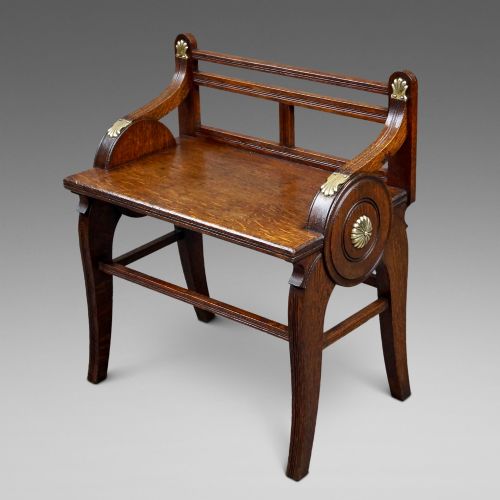
Carved Oak Entryway Bench
A carved oak entryway bench offers a sturdy seat and practical storage, anchoring a hallway with traditional woodwork.
Carved Oak Entryway Bench
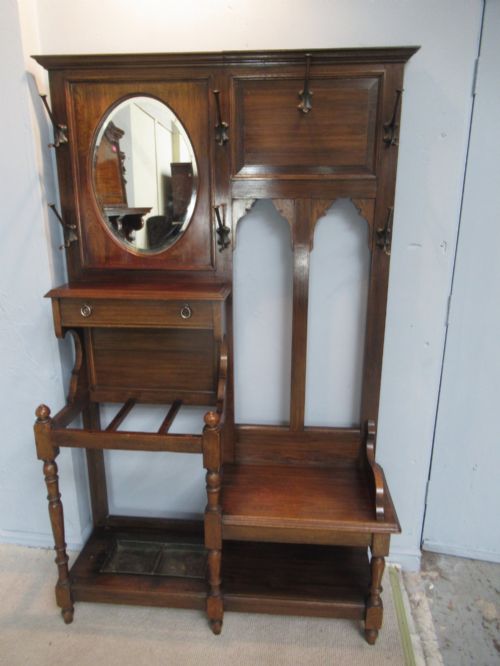
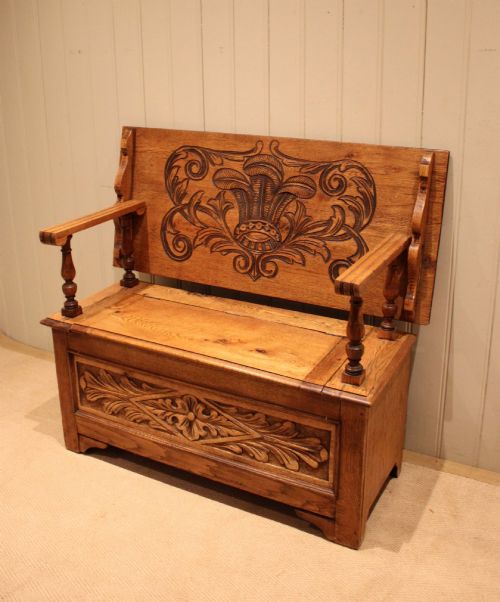
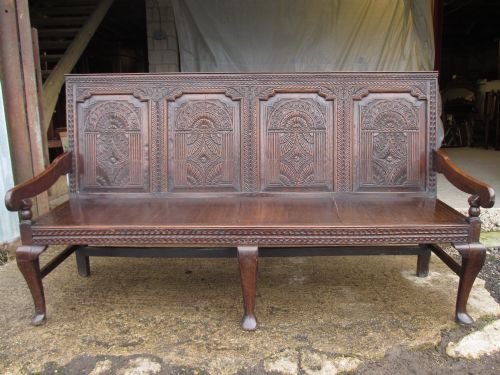
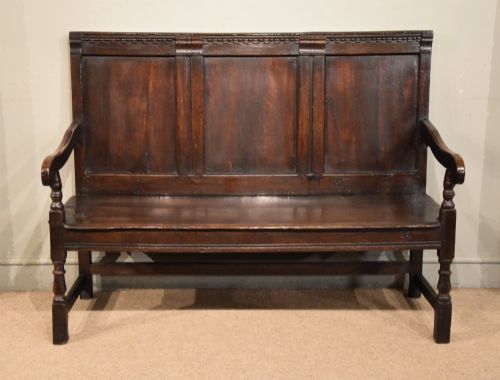
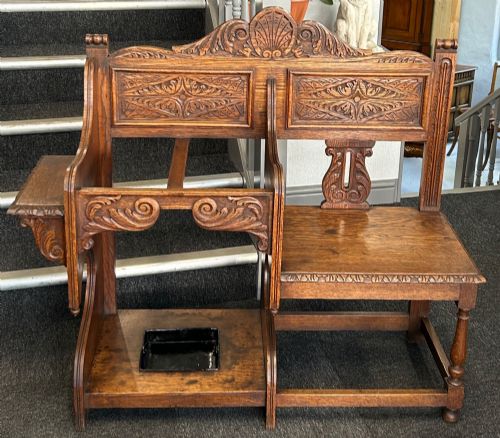
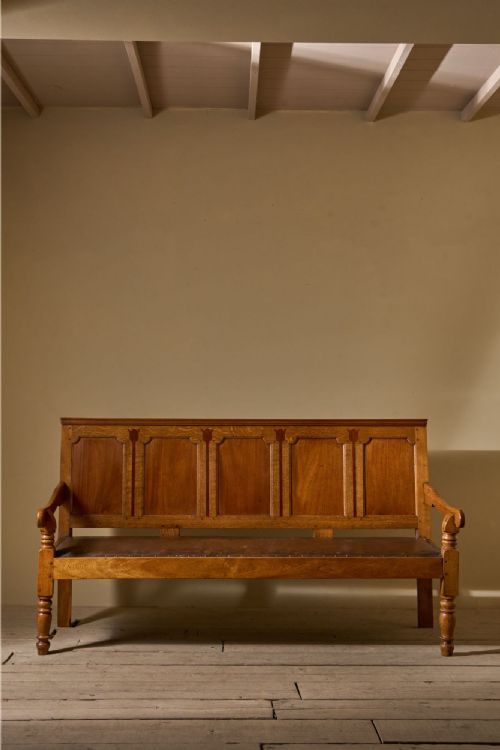
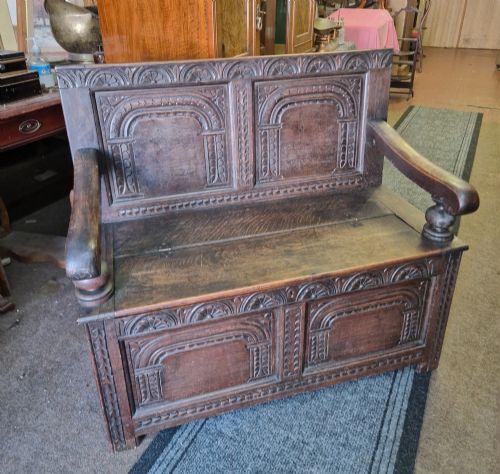
When you search for a carved oak entryway bench, you encounter a variety of traditional hall seating designed for passages and vestibules. These pieces range from tall-backed settles and box benches with lift-up lids to simpler benches incorporating umbrella stands or coat hooks.
The versions you are most likely to meet on this page date primarily from the nineteenth and twentieth centuries, spanning Victorian, Edwardian, and revival styles. Many examples utilise solid timber, reflecting the robust construction typical of English country and Gothic Revival furniture traditions.
Materials and Construction
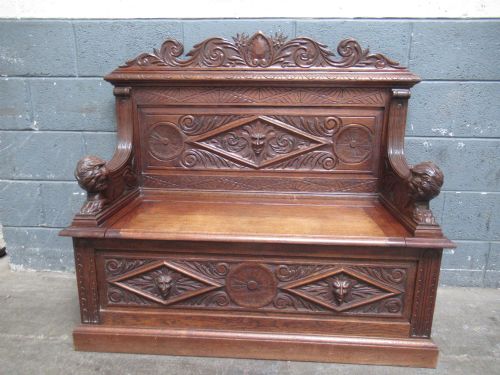
Makers relied predominantly on solid oak, frequently enhanced with detailed hand-carved panels, linenfold motifs, or figural details such as Green Man masks. Timber selection dictated durability, with dense grain providing the structural strength needed for heavy daily use in busy corridors.
Secondary materials appear selectively to complete the function of the furniture. Brass mounts, iron hooks, and leather or fabric pads supplement the wooden frames, whilst occasional pieces incorporate glass panels or burr elm accents.
Several hall seats double as umbrella stands, ensuring your damp brollies have a dignified wooden home.
Assessing Quality and Execution
The distinction between ordinary and superior pieces rests on the depth and crispness of the carving and the integrity of the joinery. Master craftsmen employed traditional mortise and tenon joints that remain tight after generations of service, whereas lesser examples rely on simpler fastenings.
Proportion and decorative harmony also separate the finer items from standard production. Well-balanced proportions, thoughtfully integrated storage compartments, and original brass or iron hardware elevate an ordinary hall seat into a piece of notable craftsmanship.
GIllows·James Shoolbred & Co.
The Carved Oak Entryway Bench Glossary
- Settle
- A wooden bench with a high solid back, solid arms, and often a box base intended to keep out draughts. This form dates back centuries and remains a staple of traditional hallways.
- Monks bench
- A convertible piece of furniture featuring a hinged top that folds down to form a table. These versatile items provide both seating and surface space.
- Box settle
- A hall bench with a compartment beneath the seat accessed via a lift-up lid. This design served originally for storing boots, blankets, and outerwear.
- Gothic Revival
- An architectural and decorative style popular during the nineteenth century that reinterprets medieval pointed arches, tracery, and heavy carving. It heavily influences many Victorian hall benches.
- Green Man
- A sculptural motif depicting a human face surrounded by or sprouting from foliage. It appears frequently as a decorative flourish on carved wooden furniture.
Carved Oak Entryway Bench: Frequently Asked Questions
What is a carved oak entryway bench used for?
These pieces provide a practical spot to sit while putting on shoes in a hallway or vestibule. Many designs incorporate built-in storage beneath the seat or integrated coat hooks and umbrella racks.
Historically, they welcomed visitors in entrance halls while keeping outer garments and footwear neatly organised out of sight.
How do I identify a Victorian hall bench?
Victorian examples frequently display Gothic Revival influences, heavy paneling, and deep hand-carved ornamentation. Look for dark waxed oak finishes and robust proportions typical of nineteenth-century production.
Maker marks or brass fittings from firms like James Shoolbred can also help pinpoint the exact era of manufacture.
How do I care for antique oak furniture?
Maintain the wood by applying quality beeswax periodically to nourish the grain and preserve the polished surface. Avoid placing the piece in direct sunlight or near heat sources to prevent the timber from splitting.
Dust regularly with a soft dry cloth to protect the antique finish from abrasive particles.