
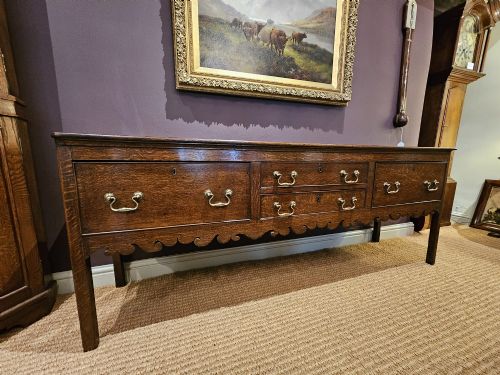
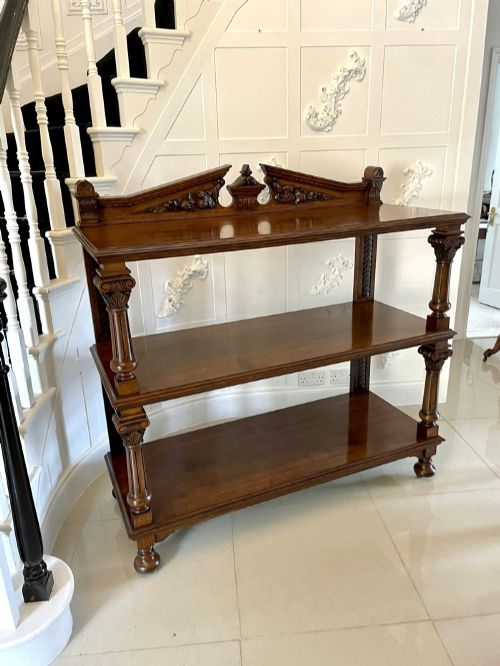
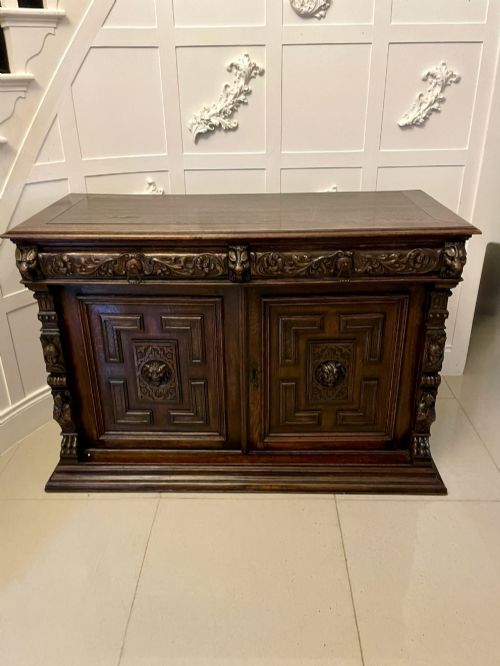
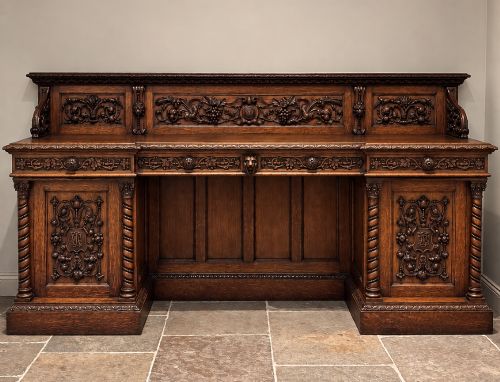
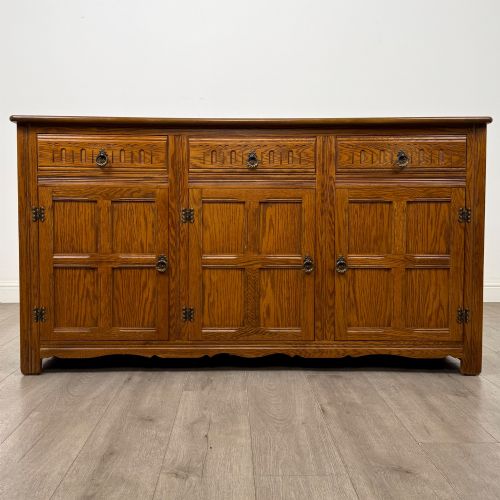
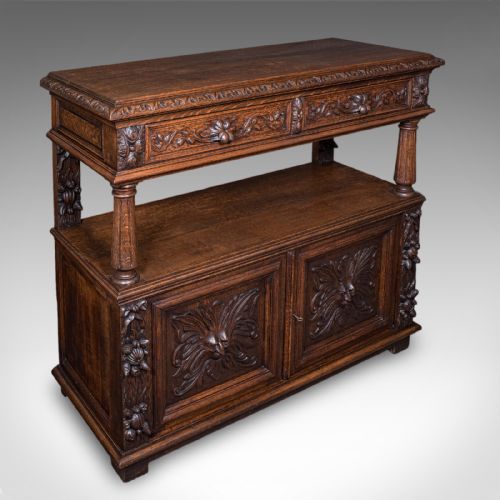
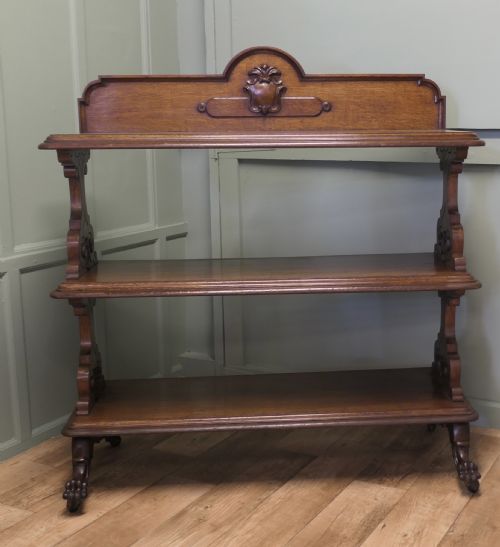
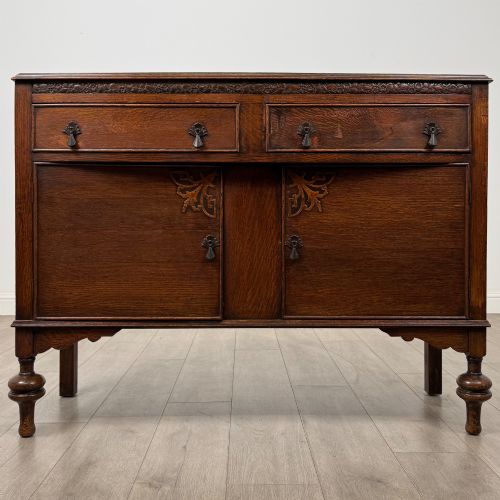
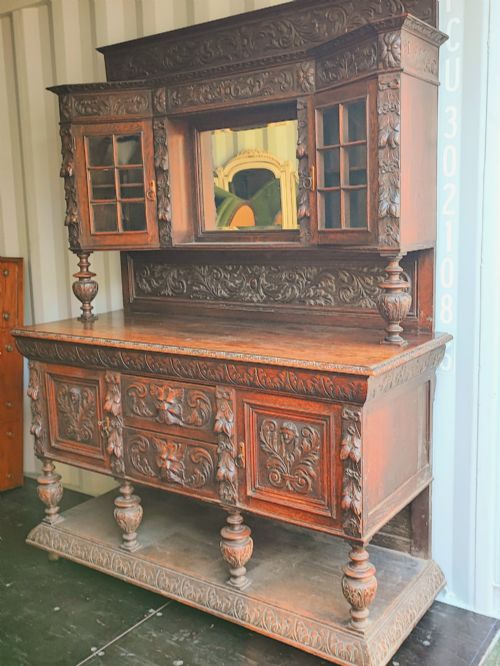
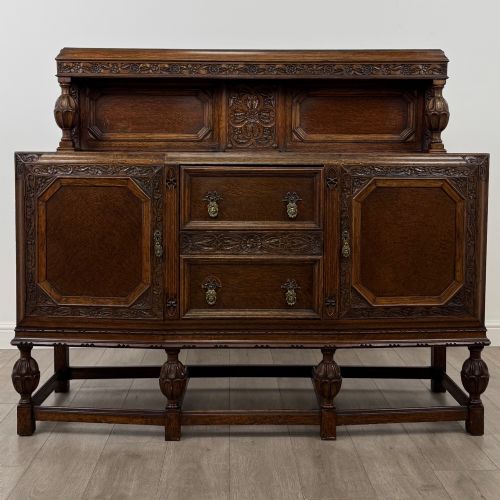
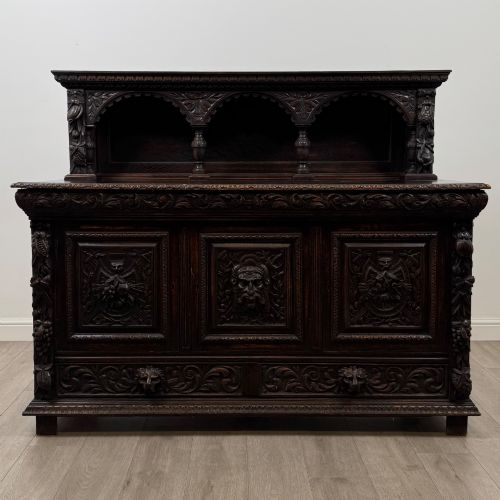
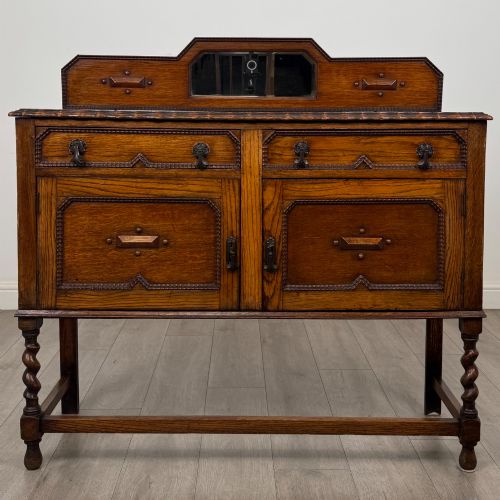
Carved Oak Dining Server
A carved oak dining server brings heavy period timber and serious presence to a room, offering sturdy surface space for food and drink.

Carved Oak Dining Server
A carved oak dining server encompasses robust storage furniture built primarily for dining rooms, drawing from nineteenth and twentieth-century traditions. When you search for a carved oak dining server, you meet a variety of heavy sideboards, buffets, dumbwaiters, and serving tables.
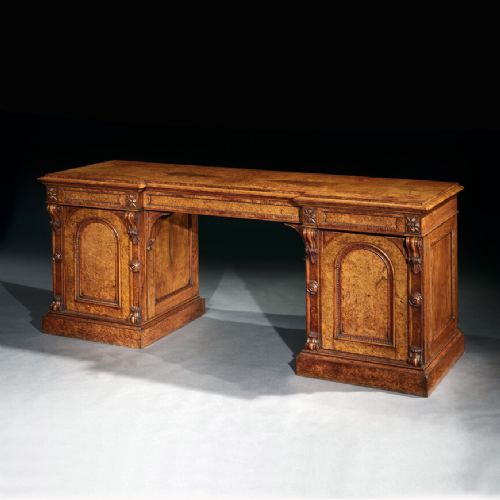
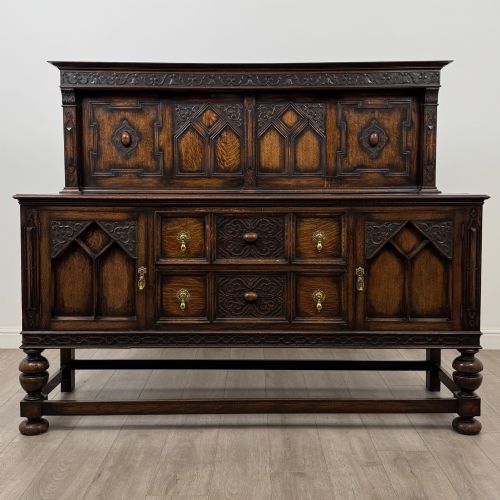
The pieces on this page span the Victorian, Edwardian, and later twentieth-century periods, showcasing revival aesthetics including Jacobean, Gothic, and Arts and Crafts designs. Most examples rely on substantial oak timbers, occasionally incorporating pollard oak or burr walnut for decorative contrast.
Forms range from compact serving tables and pedestal sideboards to large multi-door buffets fitted with top shelves or wine racks. These items served functional roles in period dining rooms for presenting dishes and storing tableware.
Materials and construction
Makers utilised solid oak, often quarter-sawn to reveal characteristic medullary rays, alongside specialised veneers like pollard oak and burr walnut for panels and drawer fronts. Secondary timbers provided structural stability within carcases and drawer linings.
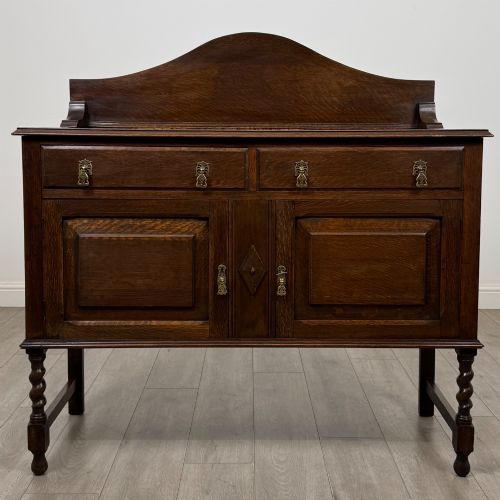
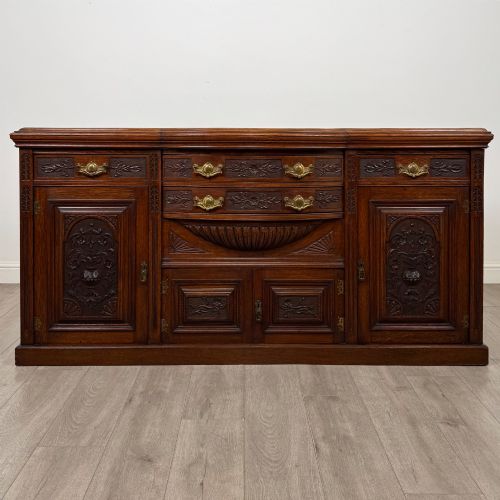
Carving formed a central part of the decorative process, with artisans executing relief work, strapwork, and figural motifs such as Green Man masks by hand. Turned elements like barley-twist supports and columnar legs added vertical interest to the heavy frames.
Hardware typically included brass handles, hinges, and key escutplements, while interior fittings sometimes incorporated mirror glass back panels or glass doors. Joinery relied on traditional mortise and tenon techniques to support the considerable weight of the timber.
Listings feature oak timbers complemented by brass, iron, glass, and mirror glass across the nineteenth and twentieth centuries.
Assessing quality in carved furniture
The depth and crispness of the hand-carving separate standard production pieces from finer examples, as skilled carvers achieved sharper relief and more expressive detail in the oak. The choice of timber also dictates quality, with figured pollard oak and burr walnut veneers commanding higher regard than plain boards.
Construction methods reveal the standard of manufacture, where tight joinery and substantial timber thickness ensure longevity in large sideboards and buffets. Original hardware, intact mirrors, and well-fitted drawers maintain the integrity and historical value of the piece.
Maple and Co
The Carved Oak Dining Server Glossary
- Pollard oak
- Oak timber taken from trees that have been pollarded, producing a dense, highly figured grain pattern used for decorative veneer panels.
- Barley-twist
- A type of turning shaped like a spiral or helix, frequently found on the legs and upright supports of Edwardian and Jacobean revival furniture.
- Dumbwaiter
- A tiered serving piece or small side table designed to hold dishes and glasses near a dining table without requiring servant attendance.
- Green Man
- A sculptural architectural ornament depicting a human face disgorged from foliage, common on nineteenth-century carved woodwork.
- Court cupboard
- A traditional enclosed piece of dining furniture featuring stacked compartments and display ledges, utilised for storing provisions and plate.
Carved Oak Dining Server: Frequently Asked Questions
What is a carved oak dining server?
A carved oak dining server is a heavy storage and display piece designed for the dining room, combining functional surface areas with decorative woodwork. These items include sideboards, buffets, and serving tables.
Originating mostly across the nineteenth and early twentieth centuries, they reflect revival styles such as Gothic, Jacobean, and Arts and Crafts. Their robust construction suits them for holding heavy tableware and serving food.
How do I date an oak server?
Dating relies on examining the style of the carving, construction methods, and secondary woods used within the drawers and carcase. Victorian pieces often display heavier proportions and Gothic or Renaissance revival motifs.
Edwardian and later examples frequently feature lighter golden oak finishes, Arts and Crafts simplicity, or characteristic barley-twist supports. Hardware styles and mirror glass backing also provide clues to the exact manufacturing era.
Where were these servers used?
These servers stood principally in formal dining rooms, acting as auxiliary surfaces for carving meats, arranging dishes, and pouring drinks before service. Their cupboards and drawers held silver, linen, and glassware.
In larger Victorian and Edwardian homes, they formed part of a matched dining suite alongside tables and chairs. Today, they transition easily into modern living spaces as credenzas or hallway consoles.
How do I care for antique oak?
Antique oak benefits from stable room temperatures and protection from direct sunlight, which can dry out the timber and fade the finish. Regular dusting with a soft, dry cloth preserves the polished surface.
Occasional application of appropriate wax feeds the wood and maintains its natural lustre without building up sticky residues. Avoid placing wet items directly on the surface to protect the vintage polish.