
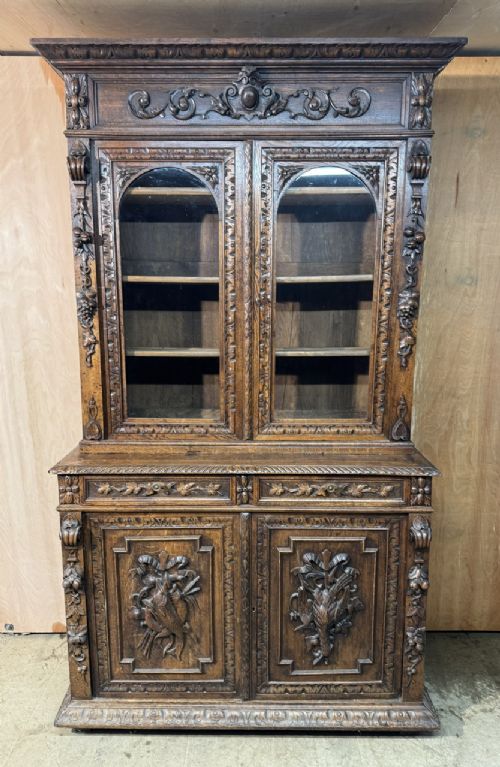
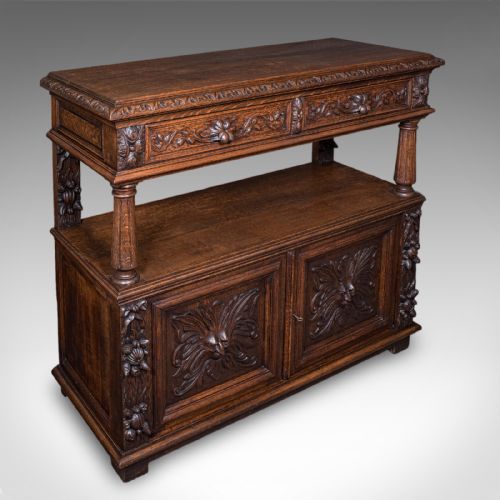
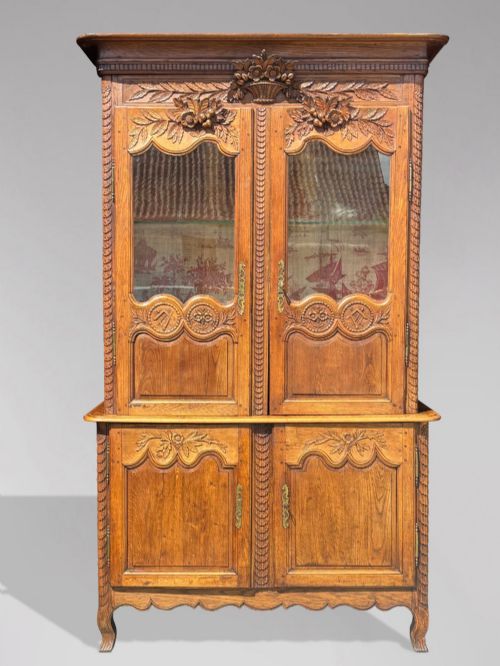


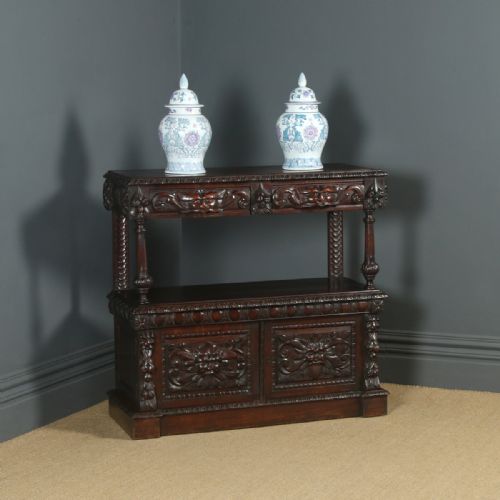


Two Tier Oak Buffet
These two tier oak buffet examples deliver robust timber storage and serving space, built from periods ranging from the eighteenth century to the Victorian era.

Two Tier Oak Buffet
When you search for a two tier oak buffet, you encounter substantial serving tables, server sideboards, and multi-level cabinets designed for dining and storage. These pieces present two distinct display or storage platforms, sometimes featuring lower cupboards or drawers beneath the main serving surface.
The selection ranges widely across regional styles and periods, including eighteenth-century French and English designs alongside Victorian revivals. You meet pieces spanning simple housekeeper cupboards and serving tables to heavily carved buffet a deux corps and hunting cabinets.
The material character is dominated by solid oak, occasionally varied with pollard oak figure work, accompanied by brass, iron, or glass details. Stylistic influences draw upon Gothic, Renaissance Revival, Louis XV, and Regency traditions.
How they were made
Makers constructed these pieces predominantly from solid oak, utilising its natural strength for large framework, panels, and structural columns. Selected examples incorporate pollard oak for decorative veneer effects on key surfaces.
Construction techniques rely on traditional joinery, panel framing, and heavy carving executed by hand across doors, cornices, and structural uprights. Metal fittings in brass and iron provide operational strength for hinges, handles, and occasional drawer pulls.
Listings feature oak material alongside brass, iron, glass, and pollard oak across eighteenth and nineteenth-century periods.
What varies in quality
Quality rests in the depth and clarity of the carved detail, from restrained eighteenth-century mouldings to intricate Victorian Green Man motifs and Gothic tracery. The choice of timber grain, particularly figured pollard oak or dense old-growth timber, elevates the visual presence.
Proportion and structural integrity separate robust utilitarian pieces from ambitious architectural cabinets like the buffet a deux corps. The integration of original hardware, sound panel construction, and balanced tier spacing dictates the overall calibre.
Edwards and Roberts
The Two Tier Oak Buffet Glossary
- Buffet a deux corps
- A tall two-part cabinet featuring an upper section set upon a larger lower cupboard base, common in French provincial cabinetry. These large pieces provide substantial enclosed storage.
- Pollard oak
- Timber taken from trees that have been pollarded, producing a clustered, highly figured grain pattern used for decorative veneer. It adds rich texture to Victorian surfaces.
- Green Man
- A sculptural architectural motif representing a human face entwined with foliage, frequently carved into nineteenth-century oak furniture. It appears across Victorian sideboards and servers.
- Dumb waiter
- A multi-tiered serving table or stand used for holding dishes during meals without requiring domestic servants. Examples often incorporate two tiers for practical utility.
- Gothic Revival
- A nineteenth-century design movement drawing inspiration from medieval architecture, featuring pointed arches, tracery, and robust proportions. This style heavily influences Victorian oak buffets.
Two Tier Oak Buffet: Frequently Asked Questions
What is a two tier oak buffet used for?
These pieces function as serving tables, sideboards, and storage cabinets in dining rooms or hallways. The two levels allow you to serve food or display decorative objects while keeping dining essentials close at hand.
Larger variants with cupboards also store china, glassware, and tableware securely behind panelled doors.
How do I date an antique oak buffet?
Dating relies on examining the construction methods, joinery marks, hardware, and stylistic details present in the timber framework. Eighteenth-century examples often show hand-planed surfaces and provincial French or English regional characteristics.
Victorian pieces frequently display heavier machine-assisted construction, revival styling like Gothic or Elizabethan motifs, and factory-made brass fittings.
What is the difference between a buffet and a sideboard?
While both provide dining room storage and serving space, a buffet often includes multi-tier open shelving or a stacked two-body construction. Sideboards typically present a single long top surface above a row of drawers and cupboards.
In practice, historical makers used these terms interchangeably depending on regional terminology and specific cabinet configurations.
How do I care for antique oak furniture?
Maintain antique oak by placing pieces away from direct sunlight, radiators, and rapid temperature shifts that cause the timber to dry and split. Clean the surface gently with a soft cloth and apply quality beeswax periodically to nourish the grain.
Avoid modern silicone sprays or harsh chemical cleaners which damage the traditional wax or polish finish over time.