
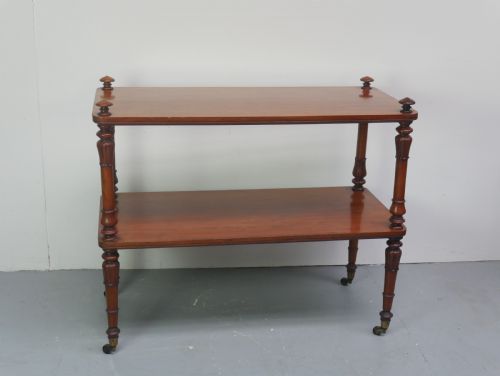


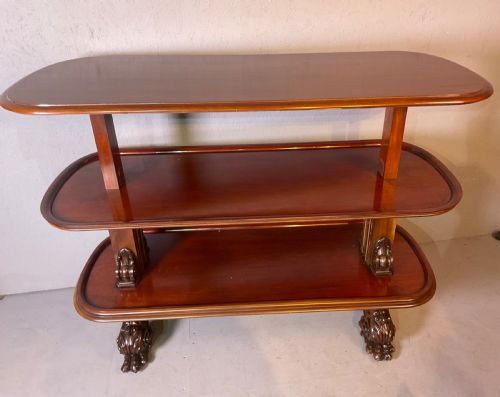


Victorian Dumbwaiter Server
A victorian dumbwaiter server is a tiered piece designed for dining room service, offering multi-level shelving that brings both practicality and presence to a room.

Victorian Dumbwaiter Server
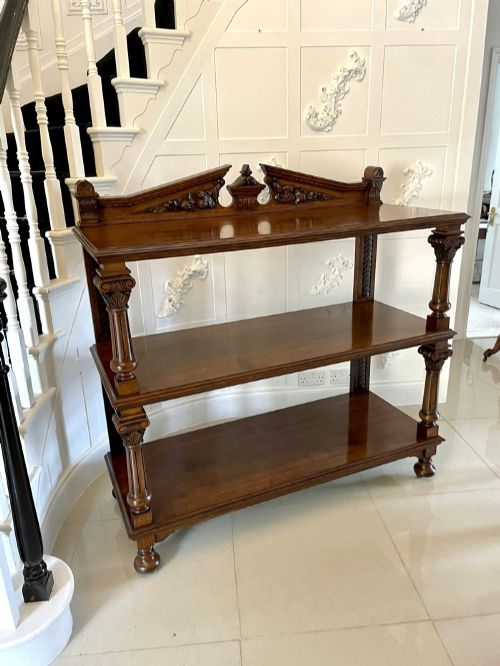
A victorian dumbwaiter server primarily takes the form of a multi-tiered buffet or serving table used to hold dishes and serving items during meals. These items appear across the nineteenth century, including specific dates from eighteen hundred through nineteen ten, with heavy representation from the Victorian era.
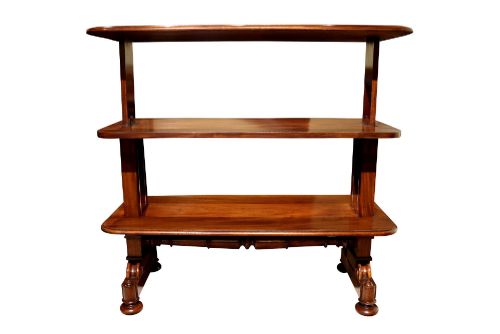
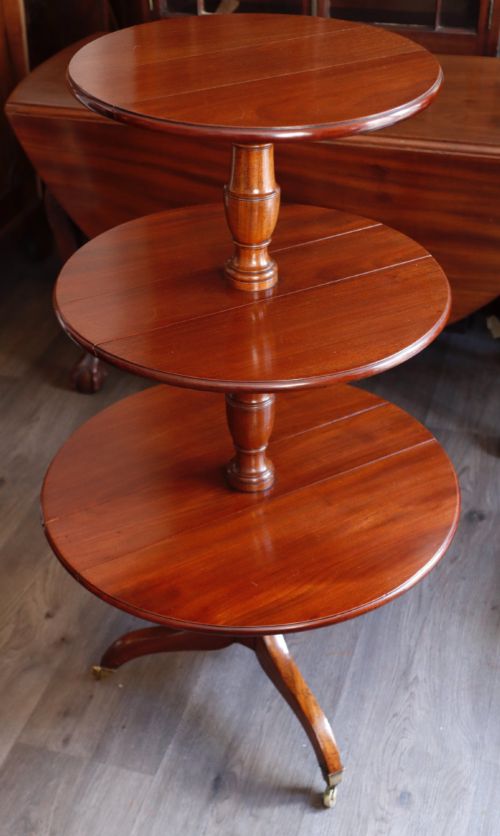
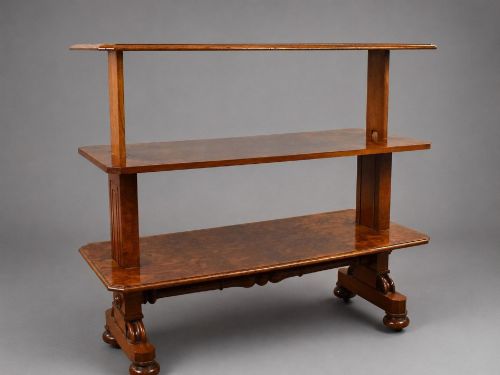
Buyers meet forms ranging from simple revolving lazy susans and three-tier stands to complex telescopic, rise and fall, and metamorphic pieces. Styles span from Georgian and William IV to Regency, Anglo-Indian, and Victorian with Gothic influences.
The objects function as both occasional tables and heavy-duty serving furniture, often fitted with original castors for mobility around the dining room or parlour.
Judging the quality
Quality rests upon the sophistication of the mechanism and the choice of timber, where burr walnut or carved padauk wood indicate higher ambition than plain secondary woods. The smoothness of a telescopic rise and fall action or a revolving lazy susan separates standard utility pieces from finer examples.
The integrity of the structural tiers and the presence of original castors or gallery backs preserve the historical balance of the server. Carving depth and proportion across the three tiers dictate the visual weight and overall success of the design.
The archive includes pieces specifically built with gallery backs for secure plate storage.
Maple & Co·Oetzmann & Co
The Victorian Dumbwaiter Server Glossary
- Dumbwaiter
- A multi-tiered serving table used in dining rooms to hold food and utensils without requiring constant servant attendance. These pieces often feature revolving or tiered shelves.
- Metamorphic
- Describing furniture designed to transform or adjust its form and height for alternative uses. Telescopic and rise and fall pieces belong to this category.
- Lazy Susan
- A revolving tray or tier placed on a table or stand to allow easy sharing of dishes. Versions appear as nineteenth-century multi-tier table stands.
- Padauk wood
- A dense tropical timber valued for its rich colour and heavy grain. Burmese examples demonstrate distinct carved detailing.
- Castor
- A small wheel fitted to the legs of furniture to permit rolling movement. Original examples assist in identifying untouched pieces.
Victorian Dumbwaiter Server: Frequently Asked Questions
What is a dumbwaiter server used for?
These pieces served as auxiliary sideboards during large meals to hold extra dishes, wine, and cutlery close to the dining table. Their multiple tiers maximised surface area in crowded dining rooms.
They also functioned as display stands for silver and ceramics when not in active dining use, adapting easily to domestic life.
How do rise and fall mechanisms work?
Mechanical telescopic shafts allow the central column to adjust the height of the tiers using internal screws or ratchets. This engineering enabled the furniture to transform according to serving needs.
Such systems require careful handling to preserve the original internal threading and wooden stops.
Are these pieces suitable for modern dining rooms?
Their vertical shelving makes them ideal for serving drinks or displaying items in smaller spaces where a traditional sideboard takes up too much floor area. The revolving and multi-tier designs offer practical access from all sides.
Living with them simply involves placing them on stable flooring where their castors can rest safely.
How do I spot a Victorian piece?
Victorian examples often feature rich mahogany or walnut veneers, heavy turned supports, and occasionally carved oak with green man motifs. Construction details like hand-cut joints and original brass castors point firmly to the nineteenth century.
Earlier Georgian and Regency antecedents tend toward simpler lines, whilst later nineteenth-century versions introduce complex telescopic hardware.