
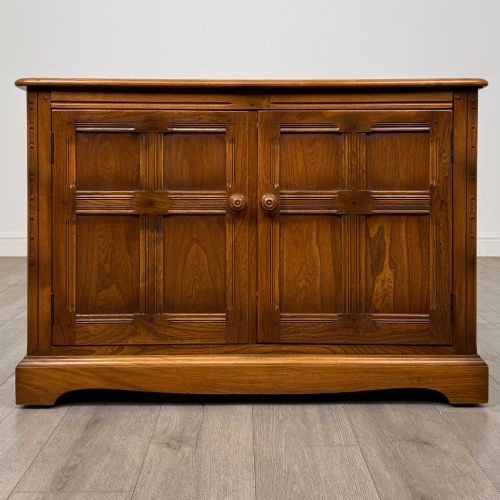
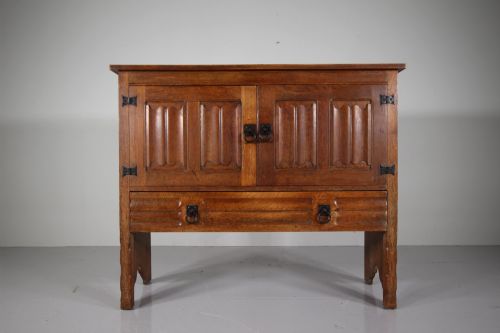
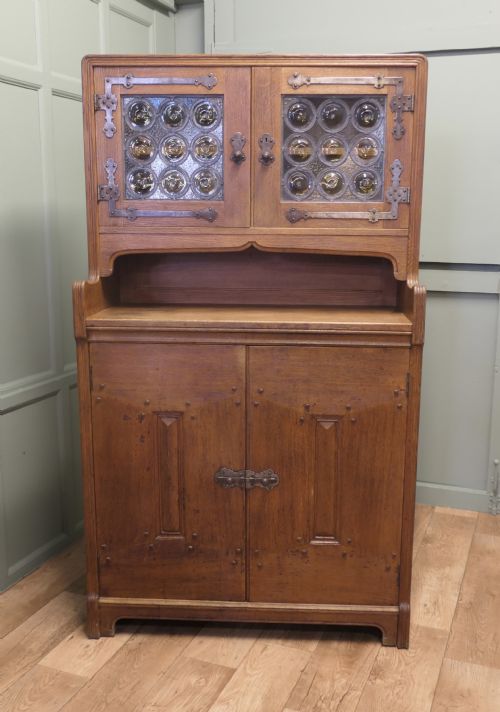
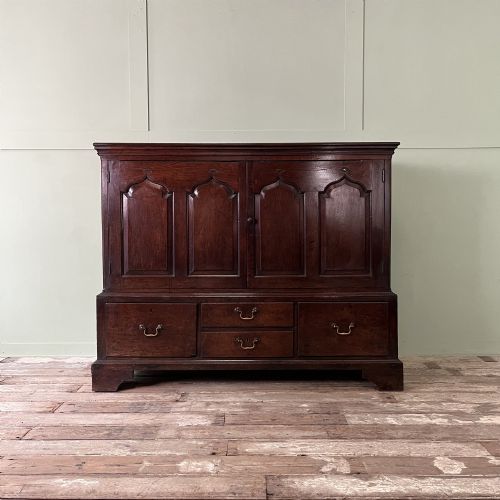

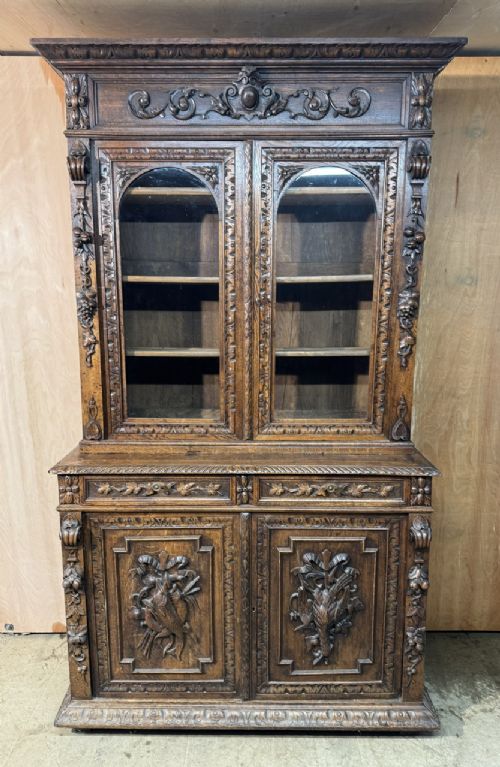
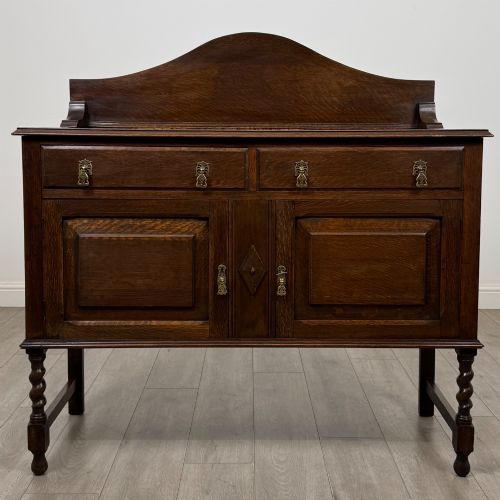
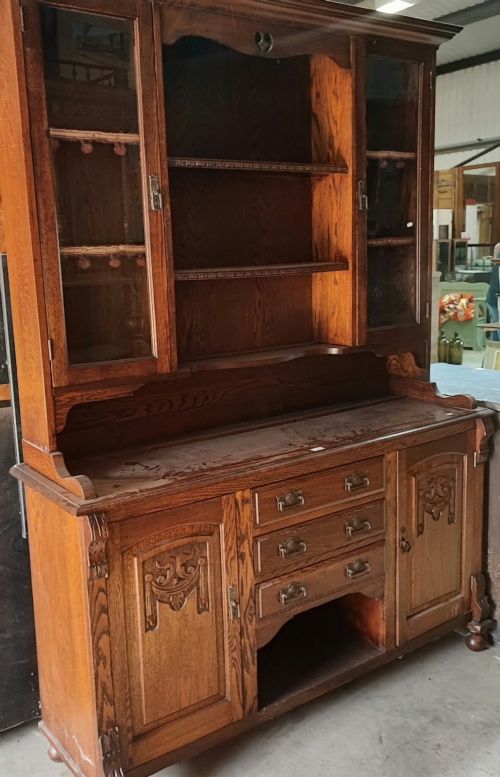
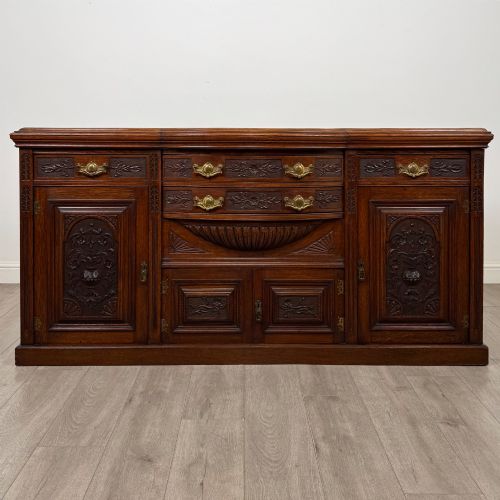
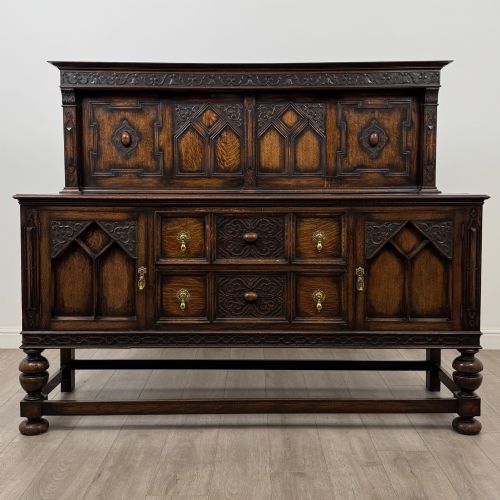
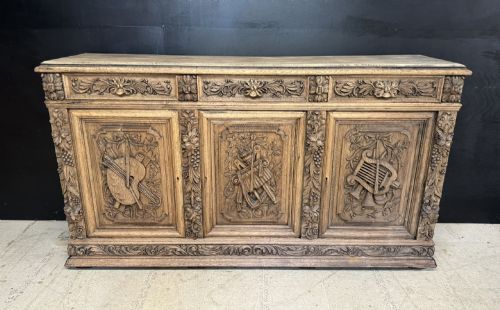
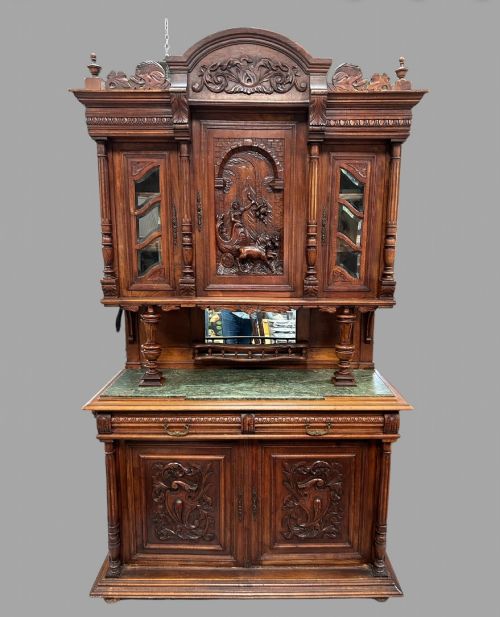
Oak Cupboard Sideboard
When searching for an oak cupboard sideboard, a buyer finds robust storage furniture spanning centuries of vernacular and formal design.
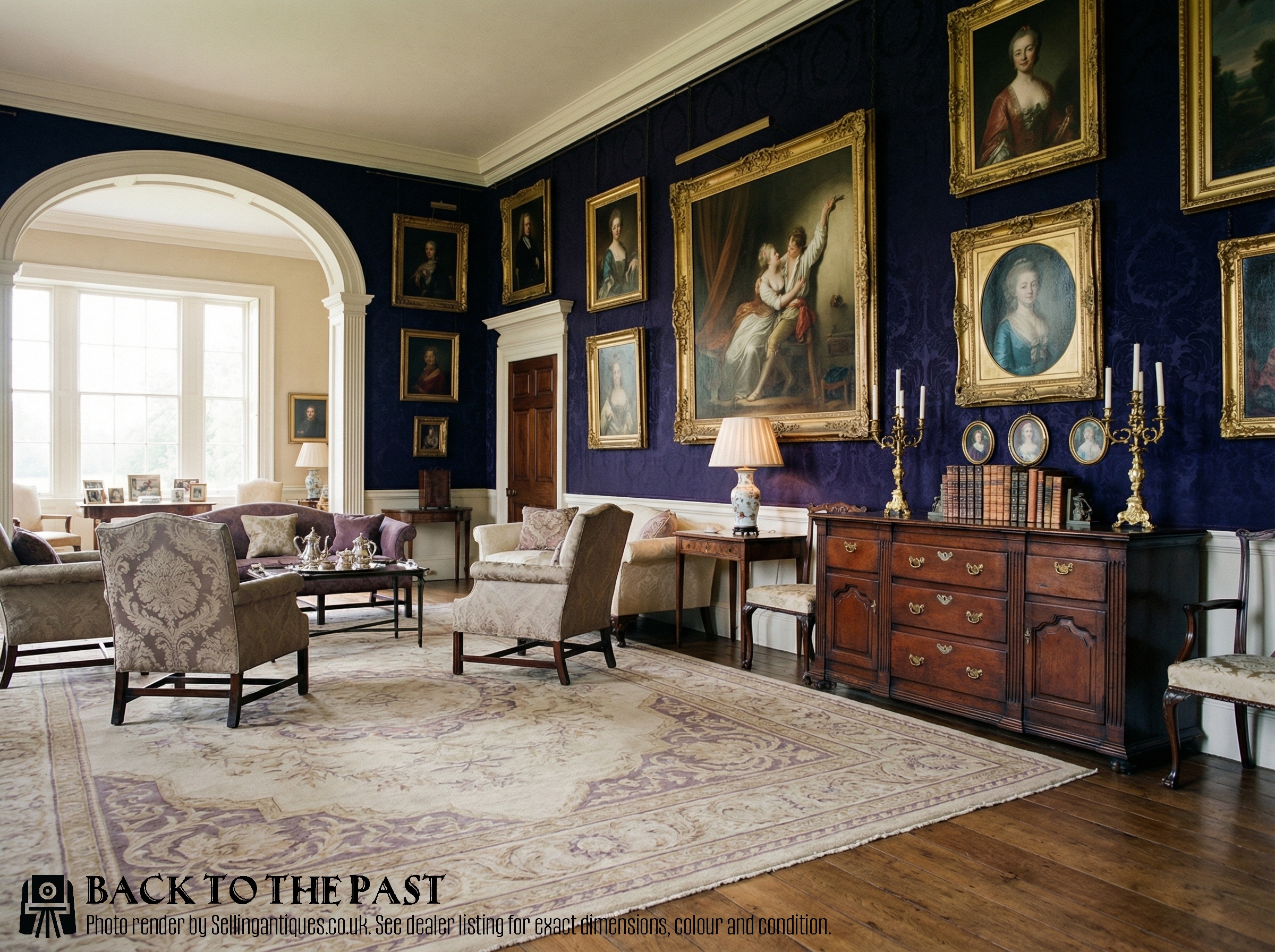
Oak Cupboard Sideboard
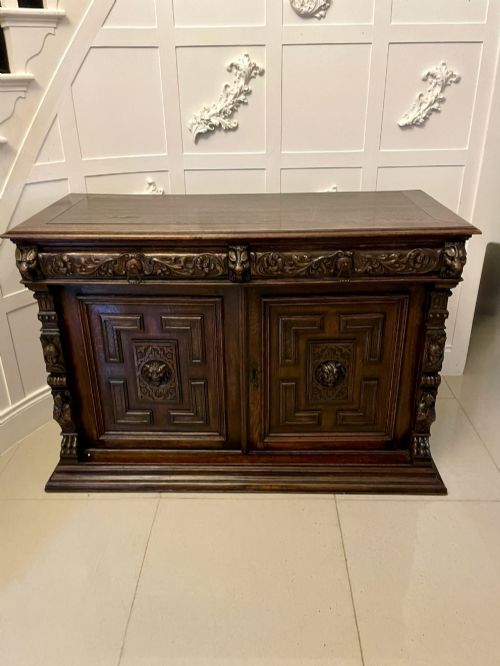
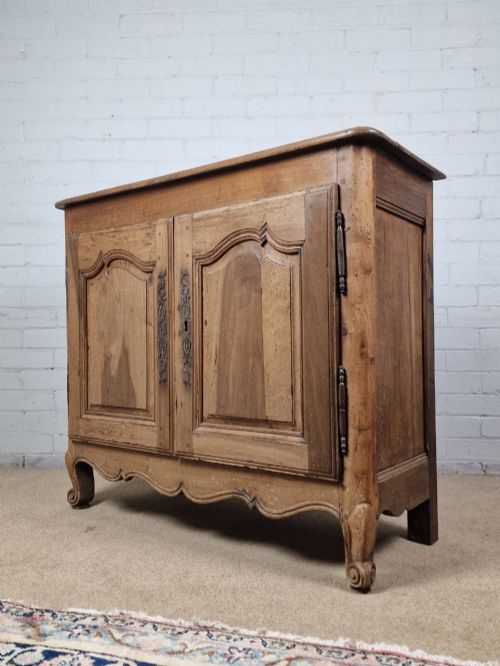
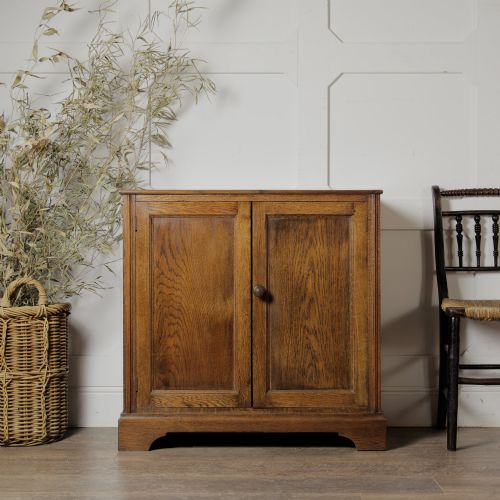
The oak cupboard sideboard category encompasses diverse heavy storage furniture, ranging from early joined and court cupboards to Georgian dresser bases, Victorian servers, and Edwardian cabinets.
Buyers frequently encounter regional variations such as Welsh dressers with plate racks, French enfilades, and compact Arts and Crafts pieces intended for domestic utility.
Periods represented stretch from seventeenth-century joined examples through eighteenth-century country workshops into twentieth-century revival styles and modernist interpretations.
Materials and Construction
Solid timber dominates production, primarily utilising English and continental oak, occasionally supplemented by secondary woods like mahogany and walnut in later regional pieces.
Construction techniques rely on traditional joinery, including panel-and-frame assembly, dovetail joints for drawer construction, and pegged tenons visible in earlier periods.
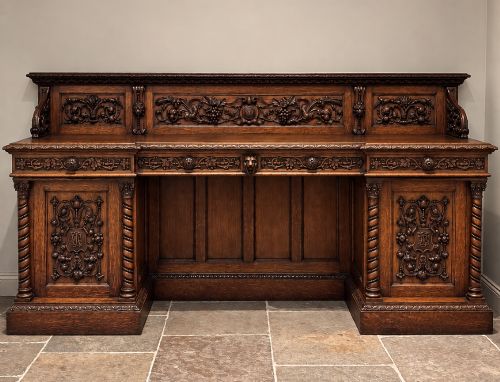
Surface ornamentation ranges from plain boards to elaborate relief carving, linenfold panels, applied mouldings, and turned elements such as barley twist legs.
Several Victorian sideboards stare back with fierce Green Man carvings, guarding the dining room crockery with leafy determination.
Assessing Standard
Quality separates through the selection of timber, the crispness and depth of hand carving, and the integrity of original construction methods rather than surface finish alone.
The retention of original brass hardware, working locks, unaltered drawer linings, and minimal structural timber replacement determine the integrity of surviving examples.
Arthur Simpson of Kendal·Gomme
The Oak Cupboard Sideboard Glossary
- Court cupboard
- A two-tier enclosed storage piece originating in the sixteenth and seventeenth centuries, often featuring a recessed upper section.
- Dresser base
- The lower section of a kitchen or dining storage unit, functioning as a sideboard with rows of drawers above cupboards.
- Linenfold
- A style of carved wooden panel popular in the Tudor and revival periods, resembling folded fabric.
- Enfilade
- A long sideboard or cabinet form originating in France, designed with multiple doors accessing a continuous interior space.
- Barley twist
- A type of turning shaped like a spiral rope, frequently found on legs and supports from the seventeenth century onward.
Oak Cupboard Sideboard: Frequently Asked Questions
What is an oak cupboard sideboard?
An oak cupboard sideboard is a sturdy storage piece combining cabinet doors and drawer space, used traditionally for dining room or kitchen provisions.
These items bridge the gap between utilitarian storage and decorative furniture, evolving across different centuries and regional workshops.
How do I date an oak sideboard?
Dating relies on examining construction marks, timber grain, and stylistic details such as hardware, joinery methods, and carving motifs.
Earlier pieces from the seventeenth century show joined frames and peg construction, whereas Edwardian and later examples utilise machine-sawn timber and different assembly techniques.
Where were these pieces used?
Historically, these items stood in country houses, farmhouses, and town dwellings, primarily in kitchens, halls, and dining parlours.
They stored serving dishes, dry goods, linens, and domestic utensils, acting as central hubs for household management.
How should I care for antique oak?
Maintain antique oak by placing it away from direct heat sources and sudden humidity changes to prevent timber splitting.
Feed the wood occasionally with appropriate wax to preserve the finish without creating a synthetic buildup.