


Heavy Carved Oak Buffet
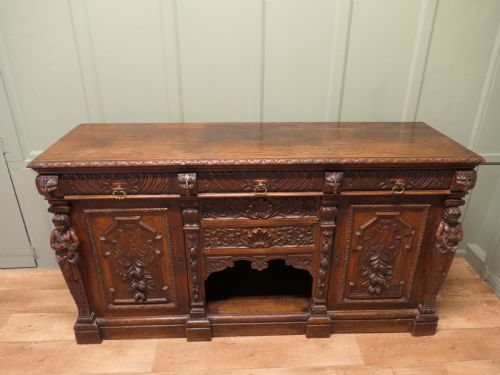
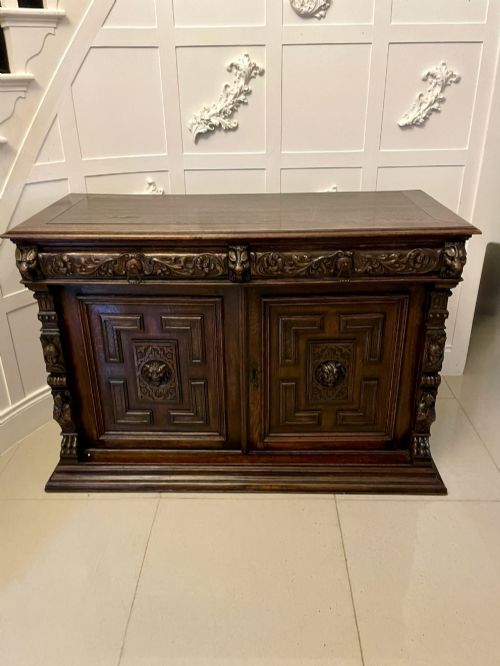
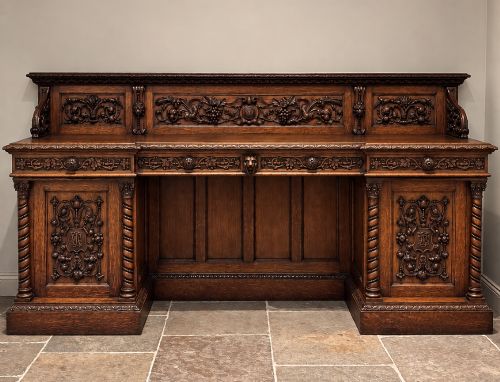
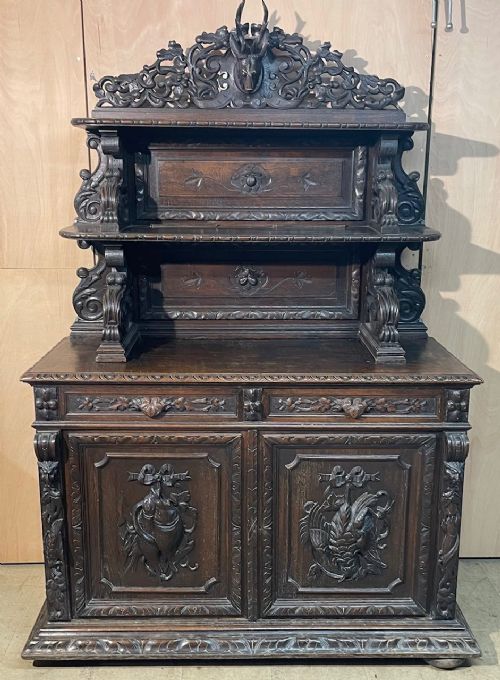
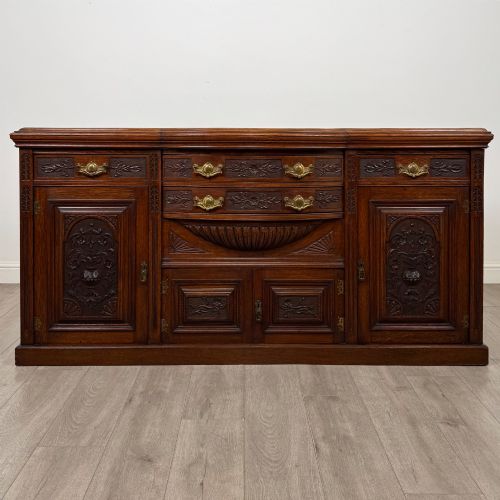
A heavy carved oak buffet brings substantial nineteenth and early twentieth century presence to a room through dense panel work and robust timbers.
Heavy Carved Oak Buffet
When you search for a heavy carved oak buffet, you encounter large storage furniture primarily from the Victorian era and the broader nineteenth century. These pieces serve as sideboards, cupboards, and serving tables within dining spaces and halls.
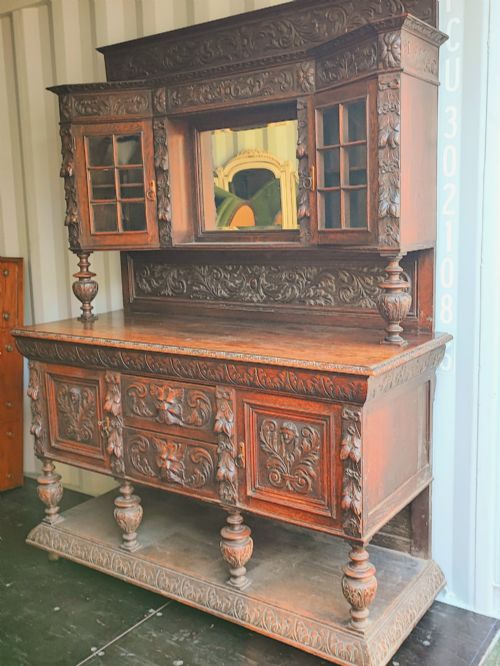
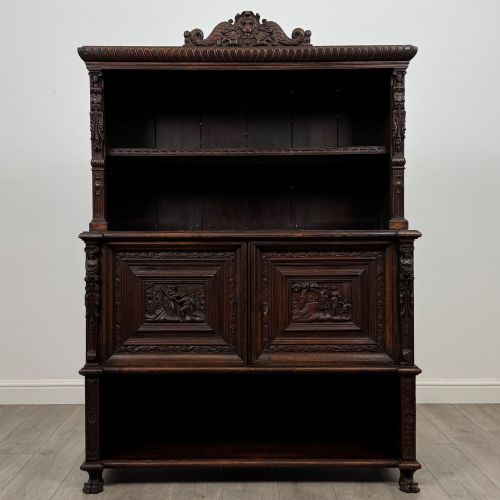
The form most frequently met on this page is the substantial Victorian sideboard or mirrored cabinet, often showing revival influences such as Jacobean, Gothic, and Renaissance styles. They stand as prominent focal points designed for practical storage and architectural display.
Makers and workshops constructed these items using timber of considerable weight, frequently integrating mirrored backs, brass fittings, and glass panels. Their substantial proportions demand adequate floor space and high ceilings to sit properly in a modern interior.
How they were made
Carpenters built these heavy buffets primarily from solid oak, sometimes utilising pollard oak for distinct grain patterns and colour variation. Secondary materials include brass for handles and hinges, along with bevelled glass and mirrors fitted into upper cabinets.
Construction relied on deep relief carving, mortise and tenon joinery, and applied mouldings to articulate the revival styles. Iron brackets and metal reinforcements frequently secured the larger framework and mirrored superstructures against the weight of the timber.
Several cabinets keep watch over the dining room through the looming gaze of carved wooden Green Man masks hiding amongst the foliage.
What varies in quality
The depth and clarity of the chisel work define the upper tier of these pieces, separating sharp architectural carving from flat or mechanised shaping. Figures, foliage, and strapwork rendered with high relief and proportion demonstrate superior workshop execution.
The selection of timber grain and the integrity of the original construction dictate overall durability and visual balance. Pieces retaining original bevelled mirrors, brass hardware, and sound structural joints command greater regard than those altered or stripped of their fitted elements.
The Heavy Carved Oak Buffet Glossary
- Pollard oak
- Timber taken from trees that were headed back to promote dense branch growth, producing a swirling, speckled grain pattern. Cabinet makers valued this wood for drawer fronts and decorative panels.
- Renaissance Revival
- A nineteenth century architectural and decorative style drawing on sixteenth century European forms. It incorporates heavy columns, cartouche work, and classical motifs.
- Gothic Revival
- An aesthetic movement reviving medieval architectural elements such as pointed arches, tracery, and quatrefoils. Furniture in this style often displays sombre oak surfaces and wrought iron hinges.
- Court cupboard
- A traditional form of enclosed sideboard featuring a recessed upper section supported by pillars. These items provide shelved storage behind panelled doors.
- Bevelled glass
- Glass panes with edges ground and polished at an acute angle to catch the light. This treatment adds depth to mirrored cabinet backs.
Heavy Carved Oak Buffet: Frequently Asked Questions
Where should I place a heavy carved oak buffet?
These substantial pieces anchor large dining rooms, spacious hallways, or expansive living areas where their dark timber and deep carving do not crowd the walls.
Ensure the floor structure supports considerable weight before positioning a large mirrored sideboard against an interior wall.
How do I care for antique oak furniture?
Maintain the timber by applying traditional beeswax sparingly and buffing with a soft cloth to preserve the natural lustre of the grain.
Keep these items away from direct heat sources and strong sunlight to prevent the oak from splitting or the polish from fading.
What styles influence these buffet designs?
Victorian cabinet makers drew heavily on Jacobean, Gothic, and Renaissance revival styles to create imposing furniture for domestic interiors.
These historicist movements manifested through strapwork panels, carved figures, and architectural cornices that echoed earlier centuries.
How do I identify a Victorian oak sideboard?
Look for dense oak construction paired with characteristic nineteenth century revival motifs, such as Green Man carvings or Flemish Baroque scrolls.
Interior framing, hand-cut dovetails on drawers, and original bevelled mirror glass typically confirm the period of manufacture.