

Carved Oak Desk with Drawer
A carved oak desk with drawer brings solid timber, historic carving and practical workspace together in a piece built to last.
Carved Oak Desk with Drawer
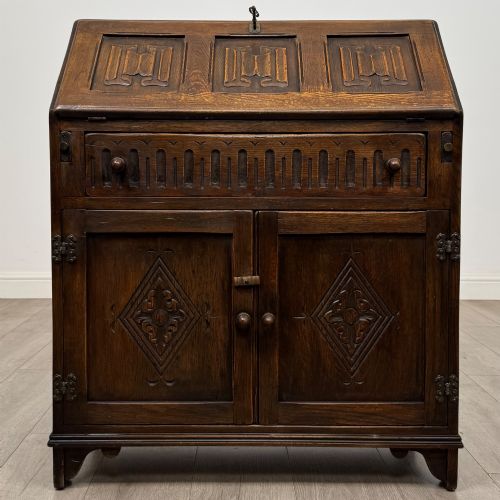
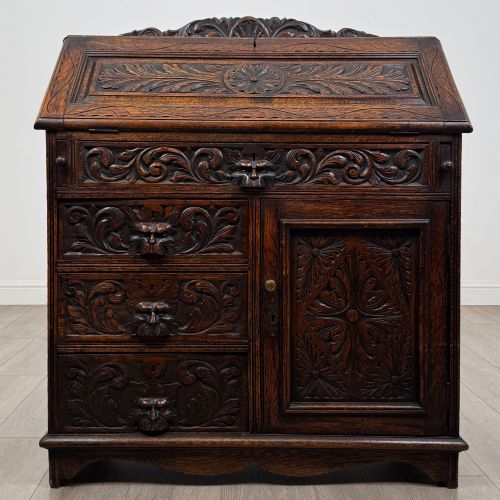
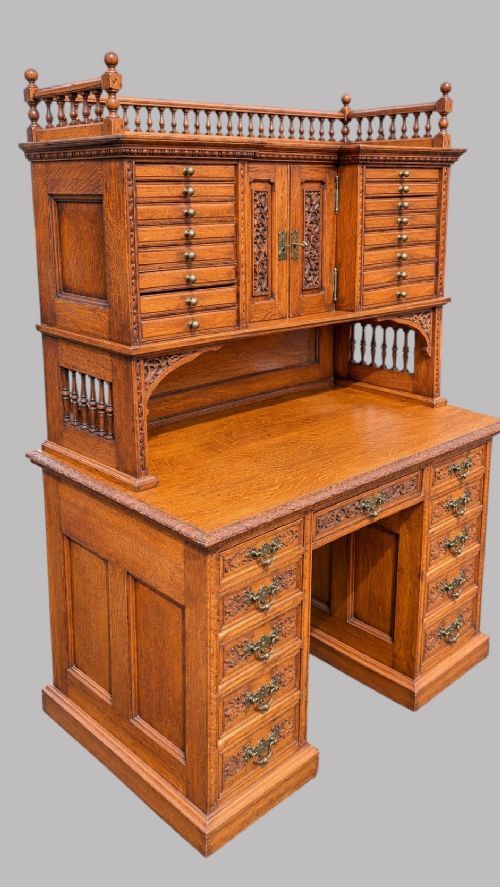
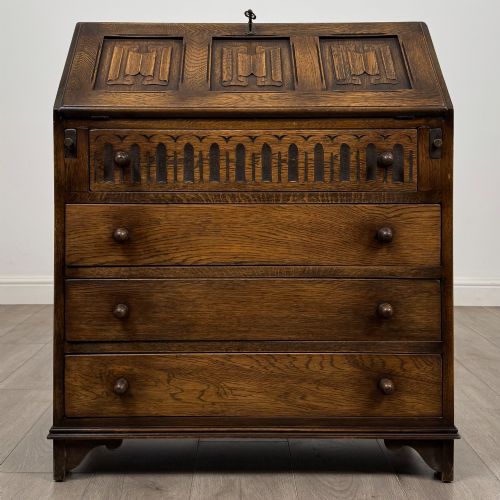
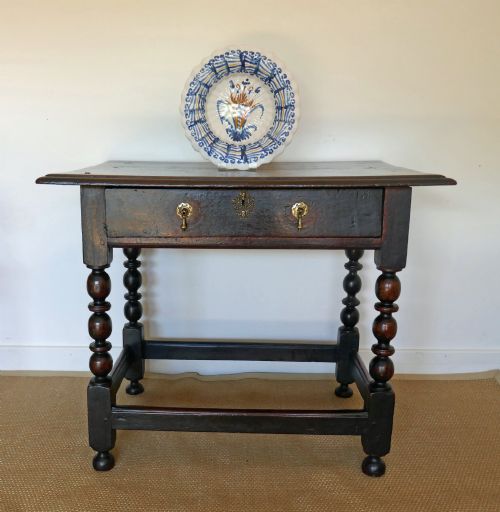
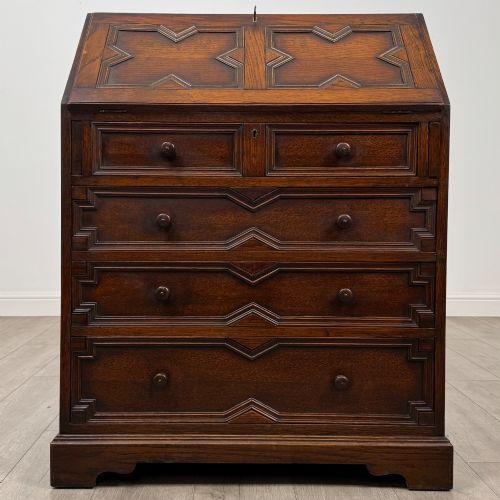
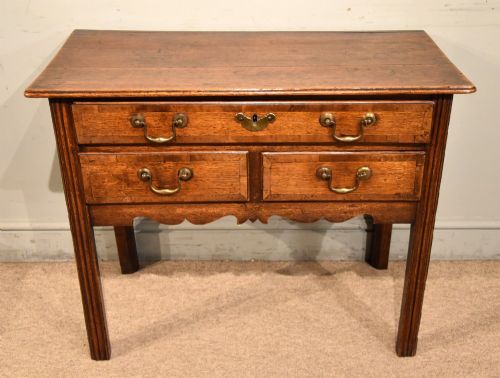
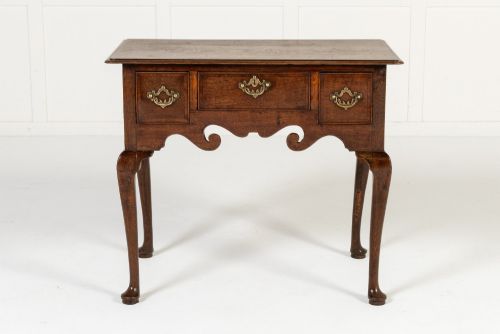
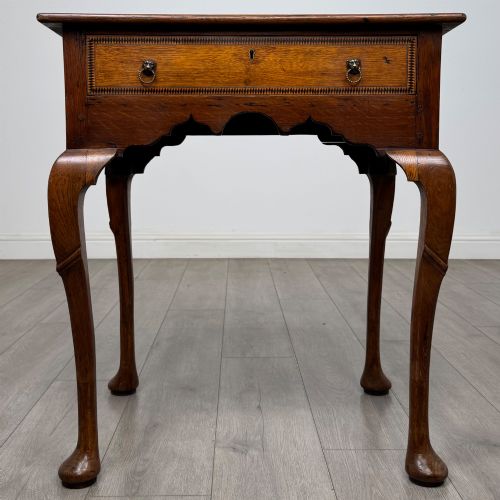
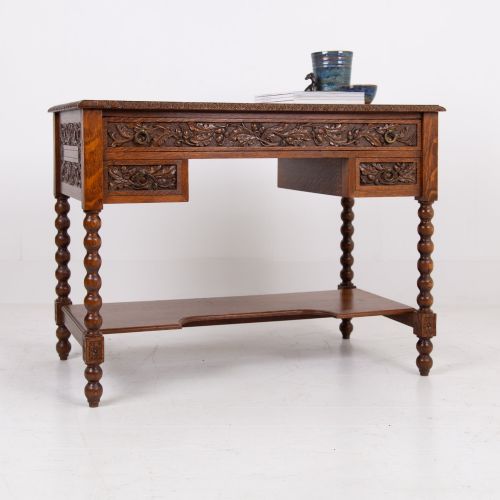
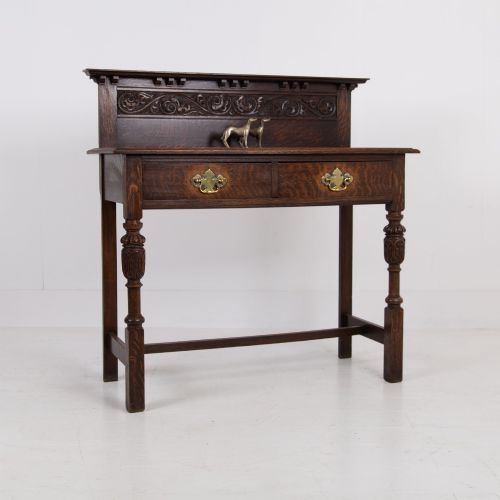
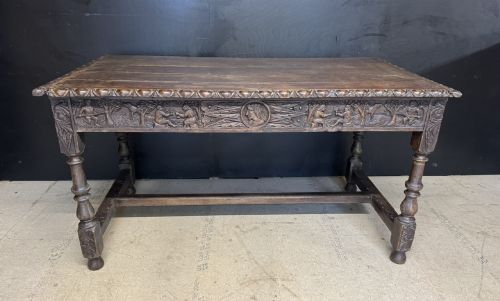
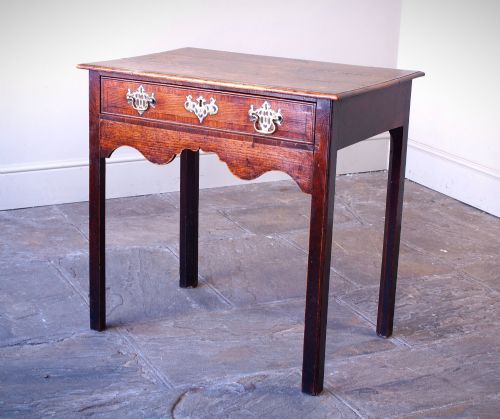
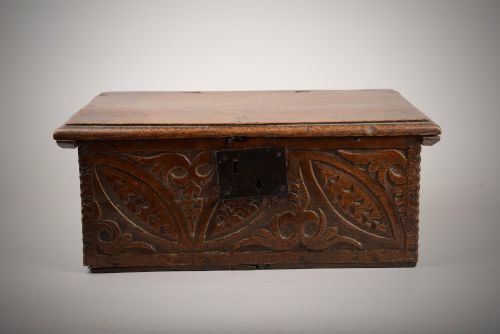
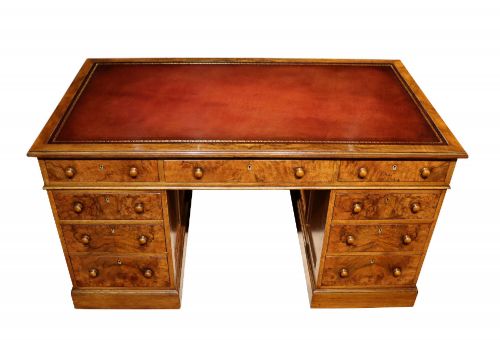
A carved oak desk with drawer covers a broad range of antique writing furniture, from seventeenth-century lowboys and table boxes to nineteenth-century Victorian libraries and Edwardian bureaus. These pieces feature working storage set beneath writing surfaces, often ornamented with linenfold, Green Man motifs or geometric relief work.
The most common examples encountered here are nineteenth-century writing tables and side desks alongside eighteenth-century lowboys. They span regional English vernacular styles as well as continental European workshops.
Makers and cabinetmakers ranged from provincial joiners working in solid oak to notable London firms utilising burr walnut or pollard oak alongside the primary timber.
Materials and construction methods
Construction relies heavily on solid oak, shaped through traditional joinery with dovetailed drawer linings and pegged mortise and tenon frames. Cabinetmakers often incorporated secondary woods such as fruitwood or maple inside the drawer compartments.
Decorative surfaces frequently showcase hand carving, linenfold panels or applied mouldings rather than veneering. Hardware typically consists of cast brass handles or iron fittings paired with leather writing inserts on later Victorian examples.
Listings feature oak alongside decorative accents of brass, leather, iron, glass, pollard oak, burr walnut and marble.
Evaluating craftsmanship and condition
Quality rests in the crispness of the hand carving and the integrity of the timber selection, where dense grain and period-appropriate patination elevate a piece. Superior examples retain original brass hardware, working locks and smoothly running drawers without extensive timber replacement.
Regional vernacular pieces demonstrate the individual hand of the maker through distinct joinery choices, whereas later revival items often display more uniform machine assistance in their carved details.
Blyth and Son London·Thomas Turner·Robert Mouseman Thompson
The Carved Oak Desk with Drawer Glossary
- Lowboy
- A small side table with one or more rows of drawers, commonly produced in the eighteenth century. These tables frequently served multiple domestic functions including writing and dressing.
- Green Man
- A sculptural architectural ornament depicting a human face disgorging foliage or vines. This motif appears frequently on nineteenth-century Gothic Revival and Victorian carved oak furniture.
- Linenfold
- A style of relief carving that imitates folded parchment or linen cloth, popular on Tudor and Jacobean panels. Edwardian pieces also utilised this historic motif.
- Bureau
- A sloping desk hinged to open for writing, enclosing small interior drawers and pigeonholes above a set of exterior drawers. They are frequently constructed from oak or walnut.
- Davenport desk
- A compact Victorian writing desk featuring a sloping top, a set of side drawers and an enclosed compartment for stationery. They often incorporate burr timber linings and brass castors.
Carved Oak Desk with Drawer: Frequently Asked Questions
How do I date an antique oak desk?
Dating relies on examining the construction methods, tool marks, hardware and timber characteristics. Hand-sawn boards and pegged joinery generally point to earlier centuries, while machine-cut elements and applied veneers suggest the Victorian era or later.
Secondary woods inside the drawers and the style of carving also provide reliable clues for distinguishing seventeenth-century vernacular pieces from nineteenth-century revivals.
How do I care for an antique oak surface?
Maintaining antique oak involves keeping the timber away from direct heat sources and dramatic humidity fluctuations to prevent splitting. Regular dusting with a soft, dry cloth preserves the finish without chemical buildup.
Applying a traditional beeswax polish occasionally helps nourish the wood and maintain the natural lustre of the patinated surface.
Are these desks suitable for daily laptop use?
Many antique oak writing desks and tables provide adequate surface area and sturdy construction for modern laptops. Drawer depths vary, so checking internal dimensions ensures your accessories fit comfortably.
Care should be taken with leather writing surfaces, which benefit from protective pads to prevent accidental scratching or wear from modern devices.