
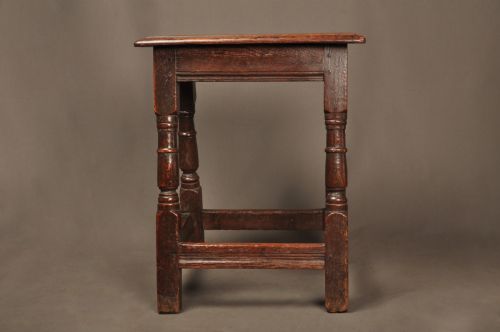
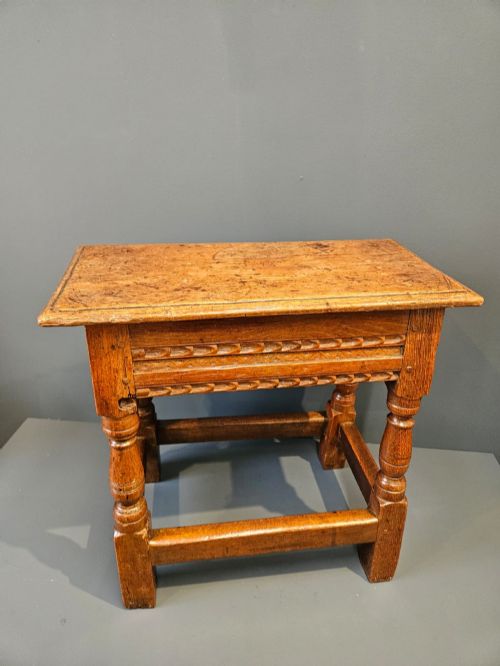


Carved Oak Coffin Stool
A carved oak coffin stool brings sturdy seventeenth-century craft into a room, offering both a compact seat and a low display surface.
Carved Oak Coffin Stool
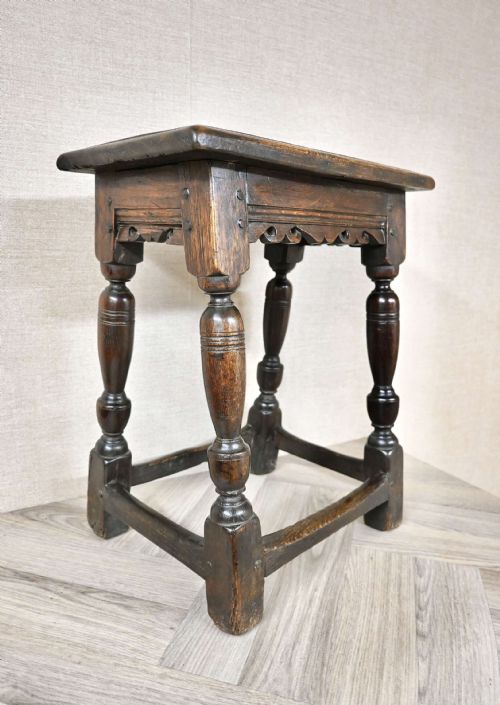
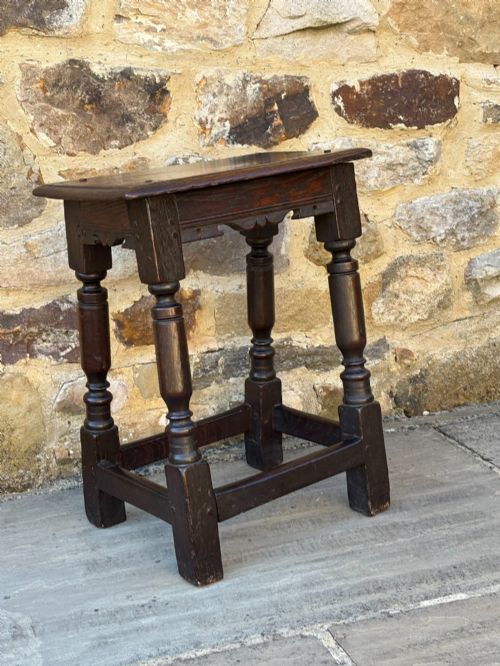
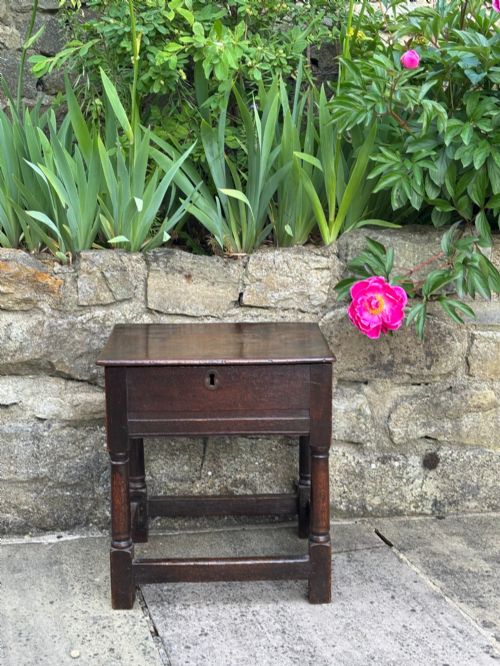
When you search for a carved oak coffin stool, you are looking at sturdy wooden seating linked to seventeenth-century domestic and ecclesiastical use. These items appear as joint stools, box stools, and occasional tables.
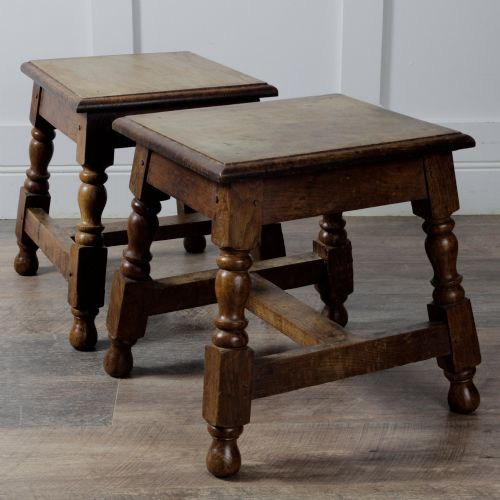
You are most likely to meet seventeenth-century originals alongside later nineteenth-century and early twentieth-century revivals. The surviving examples span Jacobean, Elizabethan, and Georgian periods of manufacture.
The forms remain remarkably consistent, featuring rectangular tops supported by pegged frames and stretcher rails. Regional English workshops produced the majority of these pieces from heavy native timber.
How they were made
Joiners built these stools using solid oak planks joined with pegged mortise and tenon construction rather than metal nails. Iron hardware appears sparingly, mostly in structural braces or hinges on box variants.
Surface decoration relies on gouge carving, chip carving, and mouldings applied directly to the framing members and rails. Turning lathes shaped the upright legs into columns, balusters, and square profiles.
One tiny oak stool listed here was purposefully built down in scale to serve as a seat for a Victorian teddy bear.
What varies in quality
The integrity of the original timber frame dictates much of the standing of an individual piece. Retaining the primary oak top without extensive board replacement elevates a stool above heavily restored examples.
Depth and crispness of the hand-carved ornamentation separate basic utility items from finer decorative pieces. Original surface patination acquired through centuries of handling also distinguishes superior specimens.
The Carved Oak Coffin Stool Glossary
- Joint stool
- A sturdy wooden seat constructed using traditional joinery rather than simple nailing. These pieces gained their name from the joined timber frame.
- Box stool
- A variant form featuring an enclosed storage compartment beneath the lift-up lid. The cavity provided secure space for small household items.
- Mortise and tenon
- A joint connecting two pieces of wood where a protruding tenon fits snugly into a matching hole. This method provides immense structural rigidity without metal fasteners.
- Stretcher rail
- A horizontal wooden brace connecting the legs of a stool to prevent lateral movement. These members often double as footrests.
Carved Oak Coffin Stool: Frequently Asked Questions
What is a coffin stool?
A coffin stool is a heavy wooden joint stool produced in seventeenth-century England for domestic use or parish duties. Despite popular folklore linking them directly to funeral processions, historians classify them primarily as household seating.
Over the centuries these versatile items adapted to serve as small tables or stands. Their robust oak construction ensured they survived generations of daily wear.
How do I date an oak stool?
Dating relies on examining the construction marks, timber shrinkage, and tool signatures left by the original joiner. Seventeenth-century pieces display hand-riven oak and pegged joints, whereas later revival items often show nineteenth-century machine sawing.
Style provides another indicator, though revival periods faithfully copied earlier Jacobean and Elizabethan motifs. Comparing the wear patterns on the feet and seat helps determine age.
How do I live with a joint stool?
Joint stools function well as compact side tables, bedside surfaces, or occasional seats in living spaces. Their modest footprint allows them to fit easily into smaller rooms without cluttering the floor plan.
Keep them away from direct heat sources and sudden humidity changes to protect the aged oak timber. Simple beeswax polish maintains the surface sheen without damaging the historic finish.