






Carved Marble Column Stand
These carved marble column stand selections offer solid architectural presence for displaying sculpture, porcelain, and plants across domestic interiors.
Carved Marble Column Stand
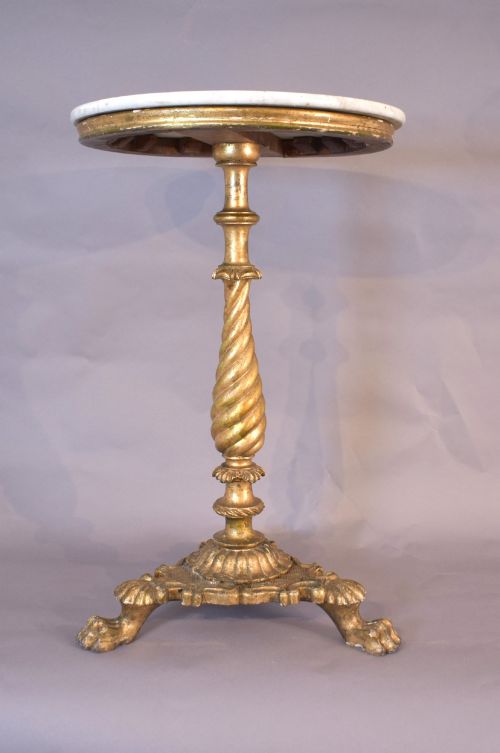
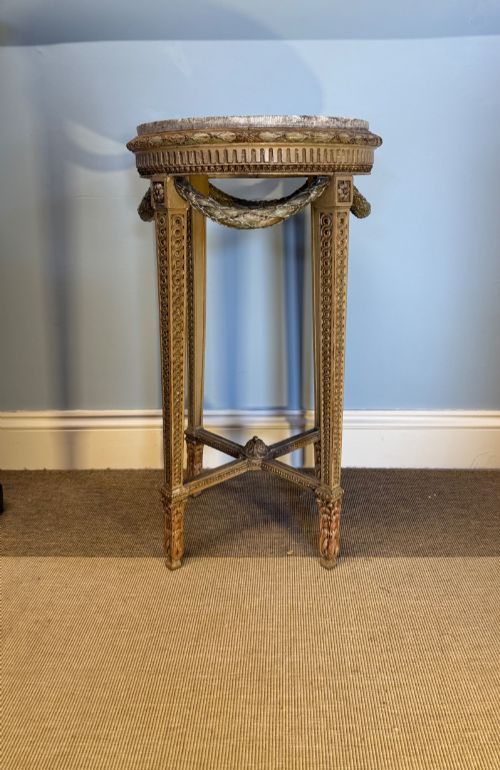
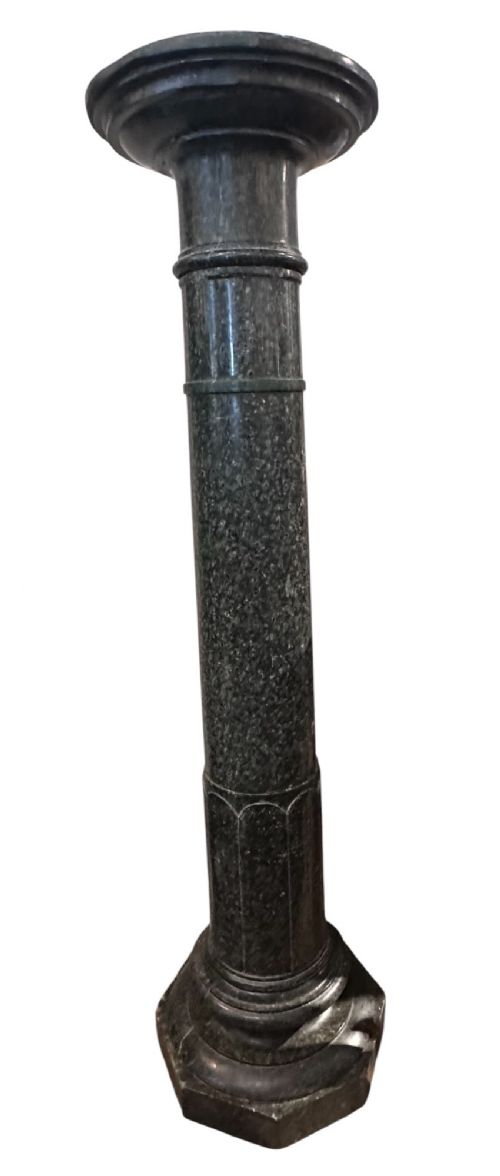
A carved marble column stand functions primarily as an elevated display surface for busts, planters, and decorative objects. When exploring this selection, buyers encounter forms ranging from strict architectural columns to triform pedestals and torchere stands.
The objects span several centuries, with a heavy concentration of nineteenth-century French and Italian pieces alongside Victorian examples. Common functional variants include plant stands, plinths, and occasional tables featuring stone tops.
Origins stretch across European workshops, taking inspiration from classical antiquity through Neoclassical, Louis XVI, and Baroque revivals. Buyers select these architectural furnishings to anchor room corners or create varied display heights.
Materials and construction methods
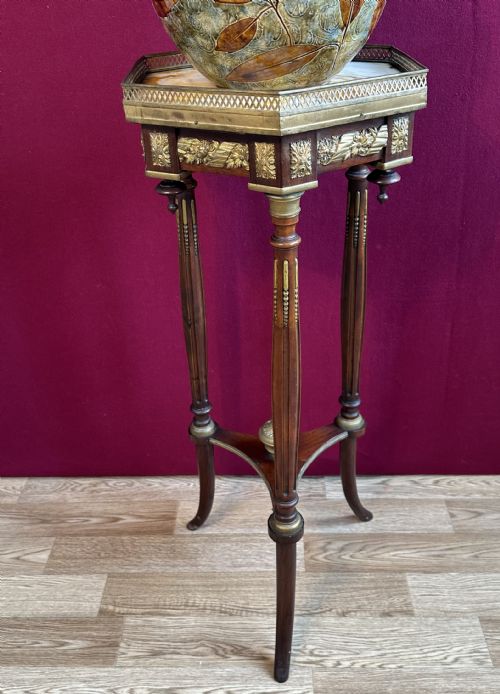
Makers utilised heavy natural stone varieties, turning and carving solid blocks of marble, alabaster, and serpentine into classical columns and shafts. Finer examples incorporate decorative mounts in cast bronze, ormolu, and brass to accent capitals and bases.
Structural support often combines carved wood elements, such as giltwood, walnut, kingwood, and pine, paired with inset stone tops. Scagliola also appears as a composite technique replicating natural marble surfaces on architectural supports.
A nineteenth-century Napoleon Bonaparte marble bust stands ready to supervise any hallway it inhabits.
Distinctions in quality
Quality rests in the precision of the stone carving and the selection of the raw material, such as variegated green serpentine, Verde Antico, or Carrara marble. Superior items demonstrate crisp fluting, finely articulated capitals, and harmonious proportions.
The integration of secondary materials defines the upper tier of the range, specifically fire-gilded ormolu mounts and intricately carved giltwood elements. The weight and consistency of the stone column relative to its base dictate structural stability and visual authority.
The Carved Marble Column Stand Glossary
- Scagliola
- A composite material made from selenite, glue, and pigments, embedded to imitate natural marble and other fine stones. Craftsmen polish the surface to achieve a convincing high gloss.
- Verde Antico
- A dark green serpentine marble heavily utilised in classical and neoclassical architecture. Italian and French workshops favoured this stone for decorative columns.
- Torchere
- A tall stand designed originally to hold a torch or candle, later adapted for lamps and urns. These slender supports frequently feature carved wood or stone shafts.
- Ormolu
- Gilded bronze mounts applied to furniture and decorative objects during the eighteenth and nineteenth centuries. The technique involves applying a mercury-gold amalgam to cast bronze.
- Triform
- Having three sides or a triangular base arrangement. This structural layout provides stability for tall display pedestals.
Carved Marble Column Stand: Frequently Asked Questions
What holds up a heavy marble column stand?
Most columns rely on a solid core of turned stone or a robust wooden internal structure. The heavy weight of the marble base and top naturally anchors the piece to the floor.
Larger pedestals distribute their load evenly across a stepped plinth or tripod feet. This engineering keeps heavy bronze busts and large planters secure during daily use.
How do I clean a marble column?
Dust the stone regularly with a soft, dry cloth to prevent grit accumulation on carved surfaces. Avoid acidic household cleaners that can etch polished marble.
For deeper cleaning, use a damp cloth with mild, pH-neutral soap followed by immediate drying. Polished alabaster requires particular care as it is softer and more sensitive to moisture than hard marble.
Can these stands support heavy outdoor planters?
Most antique columns and pedestals were designed strictly for interior domestic display in hallways and reception rooms. Temperature fluctuations and frost can damage historic stone and vulnerable joinery.
Using them inside protects delicate materials like alabaster, giltwood, and scagliola from weathering. Houseplants and indoor ceramic planters suit these surfaces best.
How do I identify a Neoclassical style stand?
Neoclassical pieces draw direct inspiration from ancient Greek and Roman architecture, featuring clean geometric lines and classical orders. Look for Corinthian capitals, fluted shafts, and restrained carved ornamentation.
These designs contrast sharply with the curving asymmetry of French Rococo or the ornate scrolls of Baroque revivals. The focus remains on classical proportion and symmetry.