
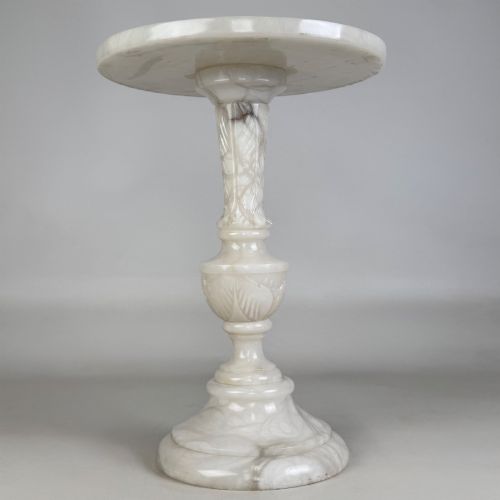
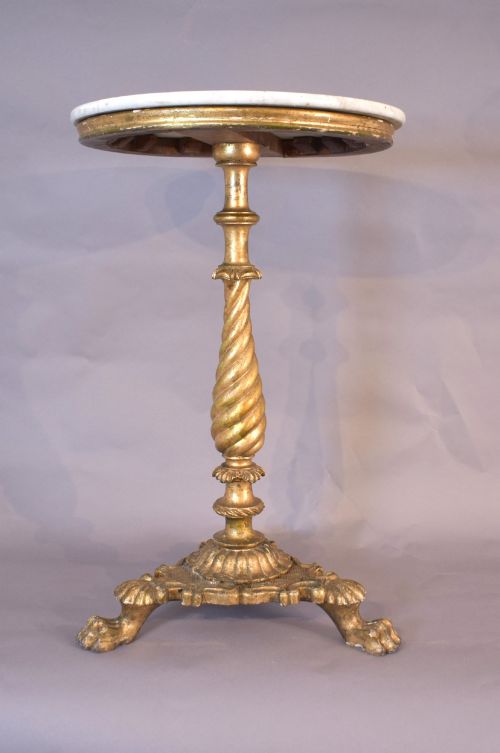


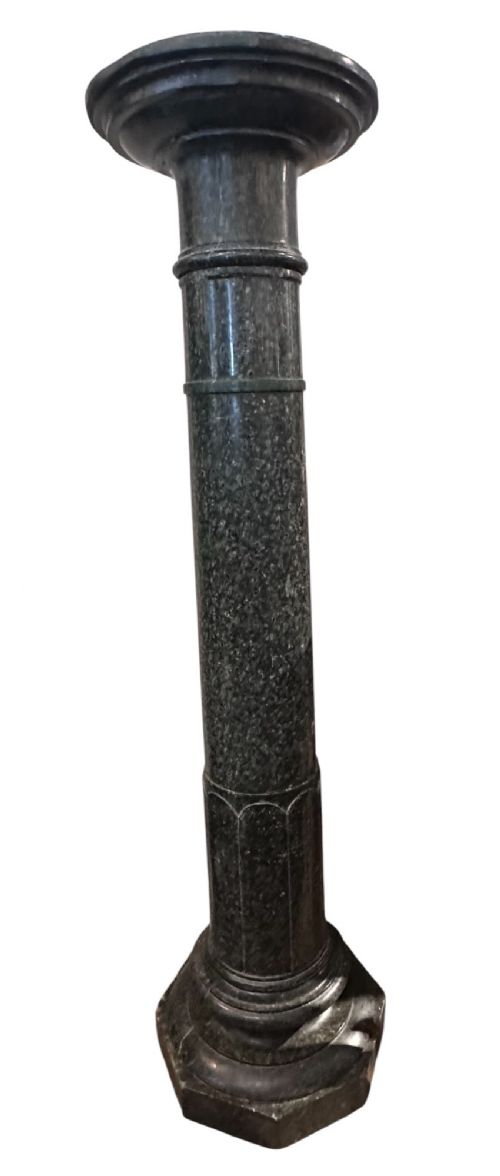


Italian Carved Marble Stand
An italian carved marble stand brings solid stone and classical form into a room, offering a sturdy perch for sculpture or plants.
Italian Carved Marble Stand
When you search for an italian carved marble stand, you look at heavy stone furniture designed to elevate objects of importance. The items meeting this description span pedestals, columns, torchere stands, and console tables.
Most examples found here date from the nineteenth century, though earlier eighteenth century pieces and twentieth century revivals also appear. Forms range from simple triform pedestals to elaborate gilded console tables topped with marble.
Makers shaped these stands to support decorative urns, lamps, and portrait busts. The heaviest versions function as permanent architectural fixtures within a hallway or drawing room.
What varies in quality
Quality rests in the crispness of the stone carving and the depth of the figural detail. Superior pieces show precise chisel work in the acanthus leaves or fluting, while lesser examples have soft, rounded edges.
Listings feature items from the eighteenth, nineteenth, and early twentieth centuries, utilising materials such as alabaster, scagliola, and giltwood.
The Italian Carved Marble Stand Glossary
- Verde Antico
- A dark green serpentine marble historically quarried in Greece and utilised extensively in Italian classical design. It is prized for its mottled white veining.
- Torchere
- A tall stand designed originally to hold a torch or candle, later adapted for lamps and sculpture. These tall supports lift light sources to eye level.
- Scagliola
- A composite material made from pigmented selenite, glue, and plaster, laid down and polished to resemble inlay marble. Artisans used this technique to create decorative panels and pedestals.
- Triform
- Having three sides or three feet, typical of classical pedestals and tripods. This design provides robust stability for heavy marble tops.
Italian Carved Marble Stand: Frequently Asked Questions
Where should I place a marble stand?
These stands suit entrance halls, corners of drawing rooms, or focal points against a plain wall. Their weight demands a stable, level floor.
Keep them away from high traffic areas where people might brush against heavy stone tops.
How do I clean carved marble?
Use a soft, dry microfiber cloth to remove dust from intricate carvings and gilded surfaces. Avoid acidic cleaners that etch marble.
For stubborn grime on stone, a damp cloth with mild soap works best, followed immediately by thorough drying.
Can these stands hold heavy items?
Solid marble and stone columns offer immense structural support for heavy bronze sculptures and large planters. The base weight keeps them secure.
Ensure the centre of gravity of the placed object aligns directly over the column to prevent tipping.
How do I spot a nineteenth century piece?
Nineteenth century stands often display Neoclassical or Baroque revival motifs combined with genuine hand-chiselled stone. Look at the underside and joints for age indicators.
Tool marks left by hand chisels distinguish older Italian stone carving from modern machinery.